More details about LittleBigPlanet 2 revealed

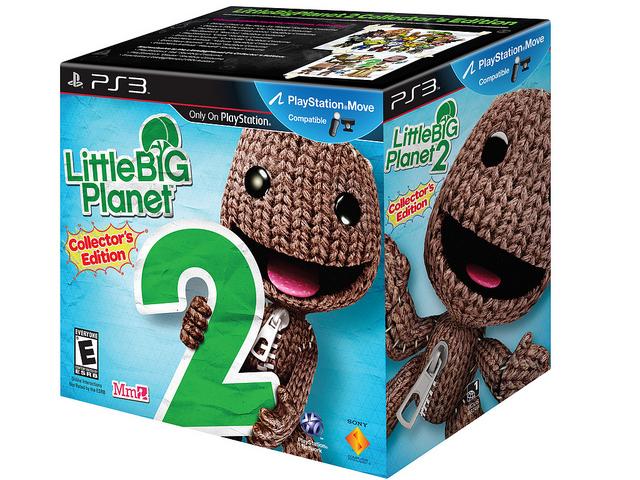
LittleBigPlanet 2 collectors edition

Media Molecule has revealed a checklist of things to do before the game that every Train2Game Games Designer should be interested in is released next month– LittleBigPlanet 2.

The US PlayStation Blog shows the full checklist of things Media Molecule have and haven’t done ahead of LittleBigPlanet’s release. It gives a little insight to Train2Game students to things away from games development that need to be completed before a new console title is released.

The final box art for both the standard and special editions has been done, and that smiling image of Sackboy you see above this Train2Game blog is what will be hitting store shelves in January. LittleBigPlanet 2 now also has its ERSB rating confirmed as E for Everyone. Be warned, the game contains comic mischief and mild cartoon violence!

Sackboy will no doubt be pleased LittleBigPlanet 2 contains only mild cartoon violence, given that during development of the original game, he was supposed to die in much more violent ways! You can read more about the development of Sackboy in this Train2Game blog post from November.

The US PlayStation Blog also reveals that a LittleBigPlanet 2 demo will be with us shortly. It’s currently being prepared and from December 22nd Train2Game students will be able to try out a little taster of the game.

We’re also shown that a Kevin Butler advert for LittleBigPlanet 2 is in the works, there’s a Sackboy costume and you’ll even be able to wrap gifts up in LittleBigPlanet 2 wrapping paper. The LittleBigPlanet 2 in-store displays for retailers have also been finalised and are ready to roll out for the game’s release next month. (Be sure to check out Gabe’s Thoughts of Train2Game blog that examines what it takes for a game to be a success at retail)

There’s also a new video that shows some of the new features Train2Game students can expect in LittleBigPlanet 2, pins and voice acting, which you can see in full below.

LittleBigPlanet 2 surely is a must for any Train2Game student, given that the beta test has shown that players can really let their creative juices flow when it comes to not only creating new levels, but entirely new games! Highlights include reimagining for classic games including Dogfight and Street Fighter and even more recent games such as Portal. Media Molecule even has a track record of hiring community designers who’ve made excellent levels, so Train2Game students really should look into LittleBigPlanet 2!

LittleBigPlanet 2 is released for the PlayStation 3 on January 18th.

You can leave your thoughts about LittleBigPlanet 2 here on the Train2Game blog, or on the Train2Game forum.

Train2Game interview with games industry consultant Nicholas Lovell – Part 3

Train2Game recently caught up with founder of Gamesbrief and industry consultant Nicholas Lovell. In a wide ranging interview he discussed subjects including the different types of game development studios, advice for small independent developers, social gaming and the business side of the industry.

The Gamesbrief founder also told Train2Game about a special offer on his book, How to Publish a Game. The 200 page book is available for half price until December 7th.

In part the final part of the interview, Nicholas Lovell tells Train2Game about good examples of independent games and how the ways they make money are changing.

Part one of the Train2Game interview with Nicholas Novell is available here and you can see part two here.

Train2Game: What do you think are the best examples of successful independently published games?

Nicholas Lovell: Best examples… [pauses] The reason I’m hesitating is because the Rovio guys, Angry Birds wasn’t their first title. Somebody told me it was their tenth, so that’s a lot of shots on goal before they scored. You’ve got to be doing that for a long time for that to work. In fact, most of these overnight sensations have been working for years, before they became over night sensations.

If you’re starting out now as an indie, I think what you should be doing is finding a way to keep putting shots on goal, rather than going for ‘I’m going to get one shot, it better be brilliant’ – because frankly that’s pretty unlikely.

It’s got to be good but I’m not saying do shovelware. I’m saying reduce the game to its basics, then put it out. See if the concept works, and then add the extra content, the extra levels, the Halloween editions, the Christmas editions, and so on.

Other titles which I think are interesting: Gourmet Ranch which is from a UK developer [Playdemic], it had Angel funding though so they didn’t do it completely just them coding in their bedroom.  That’s a Facebook game which has got 650,000 monthly active users.

Obviously there are the famous ones like Cut the Rope, Angry Birds, and my favourite which is Doodle Jump. Now Doodle Jump is a really interesting example, that’s a company [Lima Sky] who made a whole bunch of games like a pattern matching one for toddlers, and that’s still doing well, called Animatch.

Again, Doodle Jump wasn’t their first game, they did relatively low budget experimental iPhone games which were popular and then Doodle Jump really kicked off. But it’d meant they’d experienced launching on those kinds of platforms.

And then at the other end, I won’t tell you that this is  successful, but it’s a great game – it’s not a business yet – it’s an indie game I play a lot called Darkwind. One guy – he’s a lecturer in programming in Ireland – he runs it as a hobby. It’s coded in PHP and elements of the Torque Engine. One guy, a really dedicated community – only a few thousand people – post-apocalyptic, turn based, car based combat…quite niche! But its one guy running it in his spare time and it makes him decent pocket money at that level.

When you’re starting to look at platforms like PSN, Xbox Live Indie Games and so on, you’re getting fewer and fewer true Indies; you’re getting more to small studios.  And then on the PC platform, you’ve got people like Cliff Harris of Positech with Gratuitous Space Battles. That is one guy coding a relatively complex hardcore strategy game.  You can’t not mention Minecraft if you’re going to talk about those kind of titles, so there are plenty of examples.

My basic premise for an indie studio is that what you need to do is build content. Don’t assume that content is going to make lots of money, make sure throughout everything you do you have ways of talking to your customers again, and ideally have ways of charging your fans more than the 99 cent entry price. Not ripping them off, but giving them real value that the hardcore fans can really enjoy. That can be $10 worth of value, it could be $100 worth of value, and it’s much, much more than saying it’s just zero or 99 cents.

[Nicholas Lovell goes into much more detail about this on Gamesbrief. See ‘The future of the media, in 45 minutes’.]

Train2Game: Is there anything else you want to add about the area of value?

Nicholas Lovell: I think we’re hearing a lot of talk, and I think we’re going to hear a lot more about the nature of whales. The old business mode said there is only one price point, that price point is around $40 for a traditional triple-A game, and $10 to $15 a month for subscription service. That was how you charged.

We’re seeing a whole bunch of new business models, which say you play the game for free and then you can spend a dollar here, five dollars there, and that’s how people monetise. A bunch of people don’t understand that business model because they never choose to spend money. That’s fine, they’re adding value in a bunch of different ways, they’re providing a social context, they are being sorted into buckets – they don’t know that – they may be seeing advertising, they may be telling their friends.

But what you begin to see is that there are people who really value certain aspects of the game, those aspects are normally status led, or progress led, they’re very rarely content led. Those people are quite happy to spend $10, $15, $20, $100, in very occasional cases $1000, on that game. And that changes the dynamic. It means your marketing budget is much lower because the game is there for free and it’s easier to get people through the door – that’s changing.  The marketing is going up but it’s still lower than what Blizzard would spend on marketing their next World of Warcraft expansion for example.

But it means that you can offer the chance for people who love your title to spend more money on it, and I strongly believe that if you do not have that business model, you are leaving somewhere between 75% and 90% of your potential revenue from your game on the table, and there are very few indies who can afford to do that.

How to Publish a Game by Nicholas Lovell is available for half price until December 7th.

As usual, you can leave your thoughts here on the Train2Game blog, or on the Train2Game forum.

Could Train2Game students develop games for an Apple console in future?

Apple Train2Game

Train2Game students are very aware that Apple’s iPhone is one of the best platforms to start in the games industry. The App store provides a portal for small independent developers to distribute games to a very wide audience, and some like Cut The Rope go on to be very, very successful indeed.

(Games Industry consultant Nicholas Lovell recently told Train2Game about how indie games developers can distribute their games)

There was a time where nobody would have expected a mobile phone produced by Apple to become such a force in the world of mobile gaming, so what else could the company try their hand at? Well, according to EA Senior Vice President Patrick Soderlund Apple could develop a games console and challenge Microsoft’s Xbox 360 and Sony’s PlayStation.

CVG asked Soderlund if Apple were to move from mobile gaming into mainstream gaming, if they could challenge the established giants. The EA Vice President replied:

If it was anyone but Apple, I’d say that’s going to be very hard,”

“I still think it’s going to be extremely hard for them but they’ve surprised many people before.

“Look at what they did with the iPhone, right? They are a truly brilliant company so I would give them a relatively good chance to succeed if they tried.”

In October, there were rumours that Apple were going to purchase one of the giant games companies, while Nintendo boss Reggie Fils-Aime is on the record saying that Apple are the biggest threat to Nintendo.

Naturally, if Apple did decide to produce a games console of their own in the future, it could eventually provide another platform for Train2Game students to develop games for.

So Train2Game, do you think Apple will attempt a move into mainstream gaming in future? If so, do you agree with the VP of EA that they could actually succeed?

As usual, you can leave your thoughts here on the Train2Game blog, or on the Train2Game forum.

Train2Game student favourite the Xbox 360 celebrates 5th birthday

Xbox 360s

One of the most popular gaming platforms amongst students on the Train2Game forum celebrates a big milestone today. Yes, the Xbox 360 console has turned five years old in the UK, one week after it reached the grand old age in the United States.

Of course, Microsoft UK has used the occasion to big up the console:

“From the beloved Xbox 360 Arcade, Pro and Elite models of yore through numerous special editions, holiday bundles and the advent of Xbox LIVE, to the sleek new 250GB and 4GB models of 2010, Xbox has morphed into a true entertainment powerhouse, successfully delivering an amazing array of gaming, movie, music and TV experiences to millions of owners here in the UK and around the world”

Of course, Train2Game students will have already known that the Xbox 360 does all of the above! Microsoft has also listed what they see as milestones of the Xbox 360 over the last five years:

  • Xbox 360 unveils gaming with HD graphics, achievements and more in 2005. Blockbusters games on the system include Halo, Gears of War, Forza Motorsport and Fable.
  • New Xbox Experience in 2008 introduces Xbox LIVE Party, personalized Avatars and a streamlined dashboard that puts  movies, music and games at the players finger tips
  • In 2009, Xbox LIVE Gold members can stream live TV from Sky, watch movies in stunning 1080p HD video with Zune Video, listen to all their favourite music on Last.fm, and connect with friends on both Facebook and Twitter
  • And in 2010, Kinect for Xbox 360 delivers an entirely new way to play. Kinect for Xbox 360 delivers controller-free gaming.

Perhaps Train2Game students have different favourite moments to Microsoft?

More than 45 million Xbox 360 consoles have been sold worldwide, and Kinect has been selling strongly since its launch with 2.5 million having been purchased by consumers. The launch of Kinect also doubled sales of Xbox 360 consoles here in the UK, so there are plenty of new gamers’ experiencing the console for the first time, even five years after its release!

“Families are looking for more value than ever this Christmas and looking to stretch their money,” said Stephen McGill, Director of Xbox and Entertainment, UK & Ireland.

“An Xbox 360 console and Kinect can bring everyone together this season and entertain every single member of the family, from kids to grandparents. And with Kinect for Xbox 360, all you need is your voice, hands and body to jump into the controller-free fun.”

So Train2Game, what are your favourite Xbox 360 moments over the past five years? If your console is all the way back from 2005, does it still work? And what are your favourite Xbox 360 games?

As usual, you can leave your comments here on the Train2Game blog, or on the Train2Game forum.

Train2Game interview with games industry consultant Nicholas Lovell – Part 2

Train2Game recently caught up with founder of Gamesbrief and industry consultant Nicholas Lovell. In a wide ranging interview he discussed subjects including the different types of game development studios, advice for small independent developers, social gaming and the business side of the industry.

The Gamesbrief founder also told Train2Game about a special offer on his book, How to Publish a Game. The 200 page book is available for half price until December 7th.

In part two of this three part interview, Nicholas Lovell tells Train2Game about how an independent developer can go about successfully distributing and marketing their games.

Part one of the Train2Game interview with Nicholas Novell is available here, while you can see part three here.

Train2Game: How would an independent developer actually go about distributing their game be it online, through social media, or mobile phones?

Nicholas Lovell: In my definition – what I use in the book distribution involves getting code into people’s hands. But marketing and distribution start blurring because there’s a large sense that distribution is about the channels by which you encourage people to know about your product and want to buy it.

On the distribution side – the literal process of getting code from your hands into your customers’ hands – if you’re publishing on Apple, Xbox Live, PSN, Android… they handle it. You upload your game to Apple, Apple takes the money and delivers the code so you don’t have to worry about that.  You still have to worry about discoverability so we’ll move onto marketing in a second.

If you’re doing something on Facebook or the broader web you have to handle it. So I strongly recommend you would use a scalable cloud backend like Amazon Web Services – something like that – which will cost you money and if you don’t have a business model, it will cost you more money which will be more expensive. You need to make sure that the more successful you get it isn’t the case you lose more money. I’ve had one client who the more successful they got the more money they lost. We fixed that now but that was the case.

If you’re looking at Flash development – I think it’s much harder to make money from Flash development – but if you’re looking at Flash development then there are sites like Kongregate, like Newgrounds.

In fact there’s a blog post on Gamesbrief, it’s a Preloaded blog post which talks about how they consider distribution, which you might want to look at.  [How we publish an online game]

Let’s move onto the marketing side, because distribution and marketing are often very tightly linked.  In my mind, distribution is simply ‘can they get it?’ Marketing is ‘do they want to get it? And there are a bunch of ways in which you can market your content, and they don’t have to be that expensive.

My view is that the primary objective of most of the marketing you do is to be able to talk to people again.  It’s not to sell them a product, because it takes longer to sell a product than just the first time seeing your banner ad.  [The customer going] ‘Oh I’m going to see that ad, click on it and buy immediately’ …that’s pretty unusual.

What your marketing activity should be about is to try and get people to allow you to talk to them again.  So that’s about Twitter feeds, that’s about blogs. Your social media strategy should be about being open, honest and clear, and about building a persona. There’s a lot of talk about building a story;  if you’re three struggling students, ask for help from the community, ask for people who read your blogs to tell you how to do stuff, start engaging in that kind of dialogue and build that over time. So that’s one aspect.

The second aspect of it is virality. Virality is much, much harder than it used to be, march harder and particularly on Facebook. There are two different types of virality. There’s mechanical virality, that’s the kind of stuff where you get spammed on your Facebook feed.  And there’s the ‘this is really cool’ kind of virality where word of mouth is key.

Certainly I’ve discovered games like Words With Friends, like Angry Birds, like Flight Control, because everyone was talking about them.  Personally I think that’s tough to rely on because it’s really, really hard to build a game that gets that level of success. Better is to have some way of encouraging people to want to play with their friends. However, I think virality is falling in terms of its level of importance.

Where I tend to focus – and why I’m not really a big fan of a business model which involves you just selling the product for a one off fee – is less on the how do you acquire customers, but more on how do you keep them, and how do you make money from them.

So let me give you a reason why:  On the iPhone, only 1.3% of apps have in-app purchases. Most people’s business model is free plus premium at 99 cents or so. But 33% of the top 100 grossing titles have in-app purchases.  So in other words, we’re getting to the stage where it is really, really hard – you can do it, Angry Birds has made over $10 million from a 99 cent purchase – but that’s very hard.

The guys who are making more money are allowing people – if they like the game – to keep upgrading. And instead of the maximum amount of that money you can make from customer being 99c you can make $5, in some cases $30.

There’s a game called Pocket Frogs which has in app purchases of values of 99 cent, $4.99 & £29.99. Only 8% of people by the $29.99, but in revenue terms, more than half their revenue comes from those bigger packs.  And most businesses stop at the 99c level, they would make a tenth of the revenue of Pocket Frogs. [For a full run down on the success of Pocket Frogs, check out this article on Gamesbrief]

Part one of the Train2Game interview with Nicholas Lovell can be seen here. The third and final part is available here.  His book, How to Publish a Game, is available for half price until December 7th.

You can leave your thoughts here on the Train2Game blog, or on the Train2Game forum.
Turbulenz funding programme could be perfect launch pad for Train2Game students

Turbulenz Launch Pad Funding Programme

Technology company Turbulenz are providing an opportunity that is too good for any Train2Game student to ignore.

They’ve created a Launch Pad Funding Programme which will “will subsidise and promote the development of up to ten games created with Turbulenz. Awards of €10,000 to €50,000 per game are available for products that help push the social gaming revolution.”

The good news is that anyone can apply to get involved, and that of course includes Train2Game students.

The idea of the Turbulez Launch Pad Funding Programme is to help ambitious developers to build unique, new browser based games.  There’s funding for up to ten teams, to help cover salaries of the people building the games. This game doesn’t even have to have been started yet, which means this is a great opportunity for Train2Game students to pitch their original ideas to Turbulenz.

Turbulez are looking for games that take full advantage of their game engine and online platform, and they are therefore looking at four key criteria, as listed on the Launch Pad Funding Programme website.

  • Mass appeal. Games that have mass market appeal online. The more inclusive a game can be, the better. Think about something that captures everyone’s imagination and creativity. Make sure you think about boys and girls, and especially all the mums and dads. Everyone is playing games online now.
  • Online payment. Games that naturally suit the payment models which are becoming successful online. People don’t want to pay 50 bucks anymore. So how is your game going to entice people to play and ultimately pay
  • Iterative development. Games that can evolve over time. Just look at how all the Flash games have developed. They start small and light, and gradually ramp up, developing new features in response to their playing community. It’s great to have a vision, but try and pull it back to something that can grow step by step.
  • Something new. Games that can take browser games to the next level. The web gives us the opportunity to blend everything it has to offer into our new games. Social gaming is only in its infancy and we fully expect a new generation of games to blow everyone away.

The deadline for Launch Pad Funding Programme submissions is Friday 14th January.  Turbulenz say they’ll start looking at applications as soon as they receive them, so the earlier your application gets in the better chance you’ll have!

All the information required for any Train2Game student that wishes to submit an idea to Turbulenz can be found on the Launch Pad Funding Programme website.

As usual, you can discuss this here on the Train2Game blog, or on the Train2Game forum.
Train2Game interview with games industry consultant Nicholas Lovell – Part 1

Train2Game recently caught up with founder of Gamesbrief and industry consultant Nicholas Lovell. In a wide ranging interview he discussed subjects including the different types of game development studios, advice for small independent developers, social gaming and the business side of the industry.

The Gamesbrief founder also told Train2Game about a special offer on his book, How to Publish a Game. The 200 page book is available for half price until December 7th.

In part one of this three part interview, Nicholas Lovell tells Train2Game about the games industry in general and gives tips to independent developers.

You can read part two of the interview hereand see part three here.

Train2Game: Can you start by giving a general overview of how the games industry works please?

Nicholas Lovell: There are three types of companies. There are massive triple-A companies, those guys need to invest a lot of money. Modern Warfare 2 cost $50 million to develop; it cost $200 million on top of that in marketing, distribution and manufacturing. That’s a total budget of $250 million. If Wal-Mart doesn’t pay within four months – which it doesn’t – and you want to have three games of that size out at Christmas, that’s a $750 million capital requirement. If you then want to have other games in development at the same time, you’re nearer a billion dollars.

The number of people who’ve got a billion dollars a year to put at risk making triple-A titles is declining. In my opinion there’ll only be six to eight of those in the entire world of which Activision, EA and Warner are likely to be three. The other slots are up for grabs for people like Ubisoft, THQ, Take Two, those kinds of people.

But the number of them is declining and what we are unequivocally seeing is people who aren’t making blockbuster games – who are making nearly blockbuster games – they’re suffering, they’re definitely suffering.

The second group of companies make persistent social online games, games which you can release relatively cheaply and then grow over time. The interesting thing is that World of Warcraft is essentially a triple-A game, but it has that persistent element.

So, at one extreme you have games like Farmville and We Rule and the other games on Facebook. In between you’ve got games from companies like Bigpoint and Gameforge, which are either client based or browser based relatively hardcore MMOs or RPGs free to play with microtransactions.

And then the extreme, you have your traditional subscription based MMOs like World of Warcraft. I think we’ll see much fewer subscription based stuff, as the market is moving strongly in the direction of the free to play browser based games.

The third category is what I call independent developers. Those are teams of  less than fifty people – usually less than ten people – who can because of the existence of PlayStation Network, Xbox Live, iPhone, Android, the browser itself – are able to make and distribute games themselves with no publisher and make a living, a decent living. Not enough of a living to be really threatening to triple-A and the persistent social world, but drawing time and money from particularly the triple-A market, which is one of the reasons why its harder and harder for the also-ran triple-A guys to make money.

So if you’re trying to work out where to work in the games industry in the future, there will be many fewer jobs at the triple-A companies than there were this year. There will be many more jobs in the persistent social world stuff – The Bigpoint’s, the Gameforge’s, the Zynga’s, The Playfishes – and there is a new opportunity to create, launch and make games, just two or three of you making games for fun, distributed via PSN, Steam, the web itself, Kongregate, any of those kind of things. And of course iPhone and Android.

Train2Game: What advice would you give to a small two or three person team who want to make and publish an independent game?

Nicholas Lovell: The first thing is as you go through your game design document – do the first part with a lot of excitement in the pub, that’s fine – but after that take lots and lots of stuff out. Ernest Hemingway famously said about writing, ‘write drunk, edit sober’ and I think that idea could probably apply to game development. I wouldn’t necessarily be certain about that, but the principle goes that what you need to do above all things is release a product, that’s the most important bit.

Until you’ve done that you can’t make any money. So what I see often is people going ‘This is going to be the best game ever’ – That’s the end of your career, not the start of your career.  At the start of your career, you’ve just got to have a game. To be honest, what we’re seeing from employers is that they want to see people who have on their own initiative launched something, anything.  They want to see that people can see something through from the beginning to the end.

So, have your napkin with a gazillion different races and structures and plans and everything else. But then start boiling it down to go ‘What is the core of this game, what is the heart of it, and how can I get that out’

I’m a big fan of agile development methodologies and of agile business processes, and a great description of agile I’ve heard is it’s ‘half a product, not a half arsed product’ So, everything you leave in has to be good. The secret is to take stuff out that doesn’t matter.

So, the first thing I would say is as you’re trying to work out what’s in your game, try and reduce it to something which is fun – which works – and save a lot of the extra stuff for the sequel. Because you don’t know until you’ve got your first game out if anybody likes it, so why waste time building a whole load of stuff?

For example, I see a lot of people building anti-cheating mechanisms into relatively simple multiplayer games which they’re trialling. You haven’t got any cheaters until you’ve got any customers,  you don’t have any customers and the way you’re going you’re going to run out of money building the anti cheat system before you launch, at which point, what was the point of having an anti-cheat system?

Anti-cheat systems are the kind of thing you should build after you’ve launched in this indie world; the world is different if you’re Blizzard trying to launch a new mega title. But in the indie world, minimum viable product is the absolute heart of it.  That product needs to be fun.

There are a couple of other wrinkles with that; it does depend on the platform. So, with iPhone and Android, it’s pretty easy to update content, Facebook it’s easy to update content. If you’re building for PSN it’s harder, if you’re building for Xbox Live Indie Games it’s harder. Those businesses expect you to create content which feels more like a finished product.

I’m much more excited about platforms where you start off with something if people like it, you keep building it.

Part two of the Train2Game interview with Nicholas Lovell can be seen here. His book, How to Publish a Game, is available for half price until December 7th.

You can leave your thoughts here on the Train2Game blog, or on the Train2Game forum.