Train2Game interview: Bioware co-founders Dr. Ray Muzyka & Dr. Greg Zeschuk

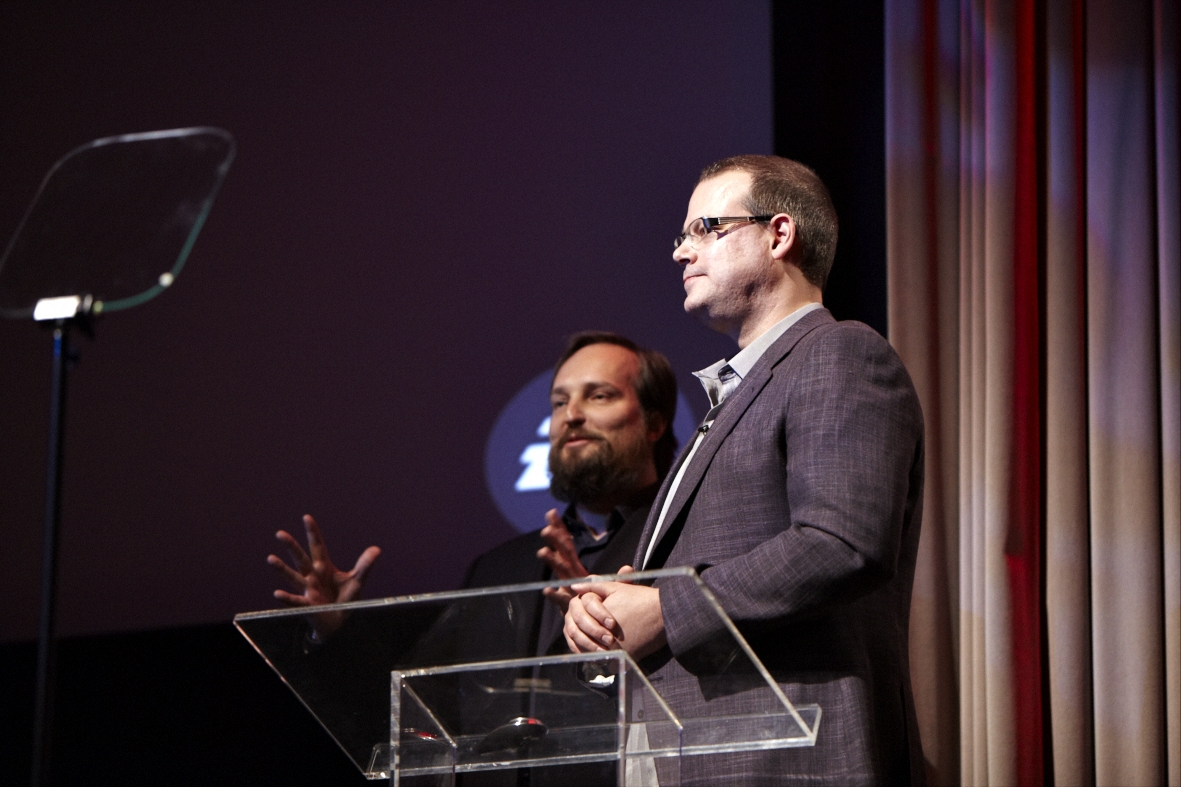
Train2Game attended the recent Bioware Lecture at BAFTA, presented by the studio founders Dr. Ray Muzyka and Dr. Greg Zeschuk. Their catalogue includes the Dragon Age and Mass Effect franchises, and their Star Wars: The Old Republic MMO is released next month.

While at BAFTA’s central London HQ, the Train2Game blog sat down with Dr. Muzyka and Dr. Zeschuk, both of whom were practicing doctors when they founded Bioware. They discussed the subject of their talk, the history of Bioware, and how they found the transition from working in medicine to working in game development. They also provided advice for those looking to get a job in the games industry.

Read the interview here on the Train2Game blog, or on the Train2Game Scribd page. Leave your comments here, or on the Train2Game forum.

We’re here at BAFTA for the Bioware Lecture, what is your talk about?

Dr. Ray Muzyka: We’re talking about games as art and we’re trying to illustrate that with some examples from Bioware, EA and other games within the industry and we’re also talking about the definition of art and games are maybe a different kind of art.  Innovative and progressive and fresh and maybe more powerful than other sorts of art. We’re going to touch on that and hopefully it’ll be interesting and provocative.

So where do you stand on the games as art debate?

Dr. Greg Zeschuk: Well it’s definitely a yes for us! What we do is we try and make the case using a definition form Tolstoy’s book ‘What is Art?’ and expand that and show how it applies to video games, looking at some examples and talking about how actually it’s a simple definition. If you convey emotion it’s art basically. So that’s really what we’re talking about, and there’s also some talk about what we do with that at Bioware, like what things do we focus on in that regard as well.

Tell us a bit about how Bioware came to be, how was the studio founded?

Dr. Greg Zeschuk: It’s funny, we’ve probably been doing this nearly 20 years. We were officially incorporated 16 years ago in 1995, but we were actually working on things a good few years before that. Ray and I met in medical school, we both loved video games. The third partner was also a doctor then but left very early in Bioware’s history and went back to medicine… of all things!

We actually practiced as doctors for a brief time back in the 90s, then transitioned into focusing just on games. Over time that’s what happened and Bioware grew and grew and grew to what it is today when it’s one of those things where you could never imagine where it would end up, like being here talking at the British Academy of Television and Arts.

Dr. Ray Muzyka: [Laughs] It’s pretty cool.

Dr. Greg Zeschuk: It’s not something you would’ve expected when we started! So it’s been an interesting and pretty remarkable journey. It’s built a lot on our core values, and the focus on humility and integrity and making sure that we always make great stuff our fans like and our people like making it. So it’s a happy eco-system that we like to drive.

How did you find the transition from medicine into game development?

Dr. Ray Muzyka: It was surprisingly easy, we didn’t stop medicine, we transitioned out of it. I did emergency medicine, I did locums basically, which are temporary replacement positions in small towns. It was exciting and exhilarating, then I went back to work at Bioware for the rest of the week. So you did that for a couple of evenings and then you did video games the rest of the time. Gradually the video games became more and more prevalent and I went back to school and got an MBA then stopped medicine at that time because I didn’t have any time. Greg you were similar weren’t you?

Dr. Greg Zeschuk: Yeah I worked one year less than Ray in medicine. I think it was making Bioware successful and making great games was just too exciting.

Dr. Ray Muzyka: There are principles that are relevant between medicine and games. The idea of having a collaborative team, working with nurses and physios and other doctors, ensuring you’re delivering high quality service experience to your consumer, the patient. There’s a lot of analogues there [between medicine and game development], especially now with the online connected experience. There’s also value in humility in medicine that really translates well to running a business or developing a game, like always trying to make sure you’re not taking anything for granted.

So if you see a bug, don’t assume it’s already known. You enter it and you fix it and try to do your best every step of the way. And if you follow those basic principles – lifelong learning is another one from medicine that’s relevant to business or gaming – never assuming you know what you need to know when entering a new market, new business model, new platform. But spending the time to play the content itself on the new platforms, listening to your fans feedback actively, it all links in some indirect hard to describe way that makes sense somehow!

And finally, what advice would you give to those looking to get into the games industry?

Dr. Greg Zeschuk: I think education is now a key part of it. One of the most important things you need to get into the games business is actually figure out what it is you want to do, whether it’s art, or design or programming and take the courses to do that. So get the training, but also do it yourself. Have fun, have a passion for it and practice outside of the formal training, and if you do those two things you’ll be in a tremendous position.

Thanks both of you for your time.

Leave your comments here on the Train2Game blog, or on the Train2Game forum. For more information, go to www.train2game.com

BAFTA’s public events and online resources bring you closer to the creative talent behind your favourite games, films, and TV shows. Find out more at www.bafta.org/newsletter,www.facebook.com/bafta or twitter.com/baftagames

Train2Game news: Bioware co-founder on getting into the industry

Train2Game students should be doing extracurricular work away from their courses in order to be in the best position to enter the games industry. That’s according to Bioware’s Dr. Greg Zeschuk, who along with co-founder Dr Ray Muzyka recently spoke to the Train2Game blog at a special BAFTA event.

Bioware, developers of the Dragon Age and Mass Effect fanchises, are currently gearing up for the release of MMO Star Wars: The Old Republic.

“One of the most important things you need to get into the games business is actually figure out what it is you want to do, whether it’s art, or design or programming and take the courses to do that.” said Dr. Zeschuk on how to get into the games industry.

Current Train2Game students are already a step ahead there given the fact their on a Train2Game course. The Bioware co-founder added that if you also practice skills outside of formal training, you’ll be in a great position to get that first job in the games industry.

“So get the training, but also do it yourself Have fun, have a passion for it and practice outside of the formal training, and if you do those two things you’ll be in a tremendous position.” said Dr. Zeschuk.

Bioware co-founders Dr. Greg Zeschuk and Dr. Ray Muzyka were speaking to the Train2Game blog as part of an interview conducted before their lecture at BAFTA. The interview, to be published shortly, sees the two former medical professionals talk about games as art, founding Bioware and similarities between working in medicine and working in the games industry.

So Train2Game, what are your thoughts on Dr. Zeschuk’s advice? Does his focus on the importance of training give you encouragement? Are you also working on a side-project?

Leave your comments here on the Train2Game blog, or on the Train2Game forum.

BAFTA’s public events and online resources bring you closer to the creative talent behind your favourite games, films, and TV shows. Find out more at www.bafta.org/newsletter,www.facebook.com/bafta or twitter.com/baftagames
Train2Game interview: Brink Lead Writer Ed Stern Part 2 – Game Design

Train2Game was at last month’s Games Writers Panel at BAFTA’s headquarters in London. There, the Train2Game blog spoke with panellist Ed Stern, Lead Writer at London studio Splash Damge. In an in-depth interview, Ed discusses development of Brink, game design and game writing and offers advice to Train2Game students on how to get into the industry.

Part 2 focuses on narrative in games, what makes a good game designer and advice on how aspiring writers can get into the industry. It’s on the Train2Game blog, or alternatively you can read it on Train2Game’s Scribd page. Part 1 of our interview with Ed Stern is available here.

We’re here at BAFTA for the Games Writers Panel, the theme is ‘Putting the protagonists in the hands of player kills traditional narrative concepts,’ what are your views on that?

It’s really interesting because we’re so used to, as writers, we think about character a lot and we think about action a lot. But compared to prose or theatre, stage play or screenplay, we just have to empty out our tool kit almost completely. All we’ve t left is a hammer and when you’ve got a hammer everything looks like a nail!

It’s really hard, we’re giving up control to players most of the time. Basically, if it’s a cinematic, players resent it because they’re not in control. If the player is control you’ve given up all control of the pacing and meaning to the player, what happens if they just don’t want to look at the thing you’re claiming is important?

I think part of the answer is what Bernard Herrmann did with movie scores. He realised the symphonic form or the classical form, it needs too long to develop, you need to write in tiny little dramatic units that’ll work no matter how short the scene is. It’s kind of like that and you just get used to writing at postcard length, or Tweet length.

So what do you think makes a good game designer?

I don’t think there’s any one quality but I guess adaptability because your Plan A will never work out. It’s like they treat you at Sandhurst, no battle plan suffice contact with the enemy, battles only ever take place on the edge of maps, never  in towns you can’t pronounce. It’s kind of like that! It’s the art of the possible and there’s and old joke; you finish up the game with the team you should have started with and a month after it shipped you find out what it was about.

So you want people who are flexible enough to not get too up or too down about stuff, but still remain completely passionate and committed to it. I think it’s hard for people when they first join the industry as they can do the passion but they can’t do the pragmatic. Or you get people who are a bit too pragmatic and won’t stand up to fight their corner and be passionate about it and then accept the production decision when it’s made.  So as in all things, balance.

How did you get started in the games industry?

It was just dumb luck. I was working in TV production making TV about computer games, or out of computer games, and one of the guys we had as a consultant was setting up a studio and needed a part-time writer to do press releases and I just fell arse backwards into it…Which I realise isn’t a replicable step but there’s lots of stuff now as then.

There’s a huge mod scene, there’s lots of teams making games out of existing games using existing technology, changing the look and changing the meaning. No one is stopping anyone from making game; it’s just very hard to get paid for it. But when you’re in that initial phase there are certainly projects out that that need writers or need designers, it’s just whether anyone is going to pay you for that time.

But it’s always more important to finish something than to start something, that’s what we look for when we’re hiring, what people finish in their portfolio, not what they start then kind of get a bit bored with and give up on.

Carrying on from that, what advice would you give to a writer or designer looking to break into the industry?

Learn to code, learn Unity, learn Flash, be able to make a game. Because even if you’re not great a graphics or great at sound you’ll understand what the issues are. You know that game Game Dev Story? You want to have at least a couple of stats in the other disciplines. Even if you’re never going to be hired to do sound, have some idea what the issues are with sound. If you’re a writer have some idea what the graphic issues are so you don’t inadvertently end up writing a cheque that no one else can cash.

I think that’s a problem for people coming into the games industry from other industries, they just don’t realise some things are incredibly cheap. I mean in games it’s not that much more expensive to make a building fly through the air then it is to just sit there. By the time you’ve made it you might as well move it around.

But some things are incredibly expensive. Like facial animation; that’s ridiculously expensive and that’s something you get for free in theatres and movies.  Close-ups are incredibly hard for us; they’re way more expensive than any other shot. But then again by the time we’ve built a set we can fly the camera around for free, that’s cheap for us to do, we don’t need to hire a helicopter. So yes, have some awareness of the other disciplines and the relative costs, I think that’s the most useful thing.

Speaking of facial animation, do you believe games will get on a par with films and television? We saw it earlier this year with L.A. Noire but it takes a lot of time and effort right now.

Possibly, it always sounds like it’s just around the corner. Maybe it will be with enough computing power. Photorealism, it’s a blind alley; games are a million times more expensive to make than Tetris now, they’re not twice as much fun as Tetris. Games like Limbo, now that’s not a realistic art style but it’s a fantastically immersive one.

Project Zomboid is a very unpromising sounding game, it’s about a zombie invasion, surely that’s been done to death? They do amazing things with that premise, Will Porter, the writer does incredible work within four lines; I was totally, absolutely obsessed with the fate of those characters. Graphically that’s not enormously complex and it’s just text on screen but it’s enormously effective. Now that’s not expensive, but it’s bloody good writing and it’s really effective on the player. So maybe that’s a more effective way of doing it because it’s not as expensive, but it’s not trying to be movie and as a result you get playing immersion and dramatic involvement much cheaper that way.

Thanks for your time Ed.

No problem, thank you.

Leave your comments here on the Train2Game blog, or on the Train2Game forum. 

For more information, go to www.train2game.com

BAFTA’s public events and online resources bring you closer to the creative talent behind your favourite games, films, and TV shows. Find out more at www.bafta.org/newsletter, www.facebook.com/bafta or twitter.com/baftagames
Train2Game interview: Brink Lead Writer Ed Stern – Part 1

Brink Train2Game blog imageTrain2Game attended last month’s Games Writers Panel at BAFTA’s headquarters in London. There, the Train2Game blog spoke with panellist Ed Stern, Lead Writer at London studio Splash Damge. In an in-depth interview, Ed discusses development of Brink, game design and game writing and offers advice to Train2Game students on how to get into the industry.

Part 1 focuses on Ed’s role as Lead Writer, the design and art of Brink. Read it below here on the Train2Game blog, or alternatively you can read it on Train2Game’s Scribd page. Part 2 of the interview is here on the Train2Game blog.

First of all, can you tell us a bit about your role as Lead Writer at Splash Damage involves?

It’s an odd one. It’s sort of a narrative designer director role which means lots of things. It can end up being virtual location scout and production designer and wardrobe guy. I think a lot of it is giving design documents and reference images to artists, environment artists and level designers and so on. And it’s tough for writers because we’re used to working with words but lots of people who make games aren’t textually inclined, you’ve got to give them images. So, photo research is bizarrely a lot of the writing I do.

Because it doesn’t matter if I write a document that I think describe what’s going on, that’s not the target audience, the target audience is the team making the game and quite often they’re more visually inclined. So yes, writing back-story, creating the world, writing cinematics, storyboarding cinematics, writing dialogue, directing performance capture, directing voiceover and trying to do localisation as far as possible. Well it’s not so much trying to do that as building in localisation, so something like ‘here’s a text box, I can’t fill it with text in English because in German it’ll be a third longer so whatever I write has to be a bit shorter than that” That’s the glamorous world of games writing!

Splash Damage released Brink earlier this year, how did you go about writing it?

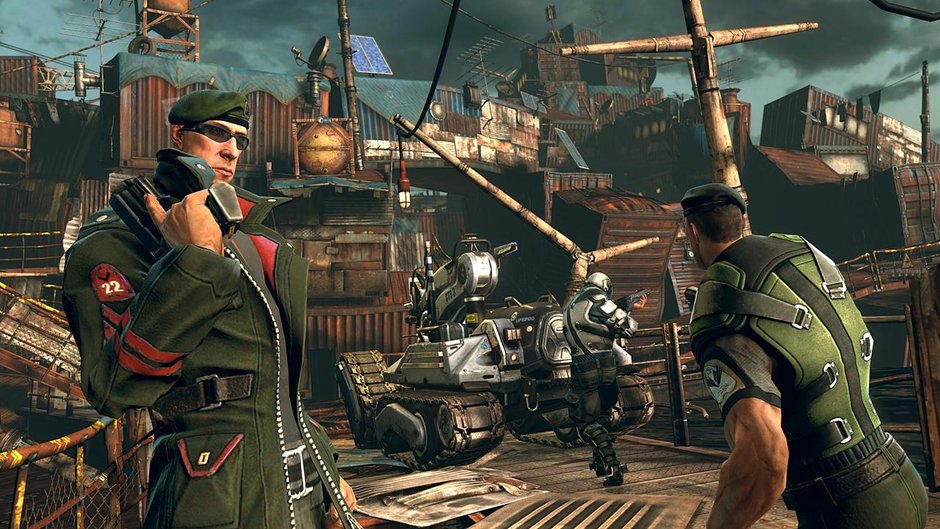
Well that was really fun because that was the first time we at Splash Damage produced our own original IP. Previously we got to work on Quake and Doom and Wolfenstein which is fantastic, because if you’re working on other people’s IPs that isn’t a bad place to start! So we needed to demonstrate we come up with a world. Arguably we overwrote that, that’s kind of an RPGs worth of back-story and world for pretty much just a multiplayer shooter. But it was great! It was great fun to do and the goals were it couldn’t look like anything anyone had seen before, and we wanted to be sticky, it’s a great test of a character. You turn the page and do they still linger in your mind?

Dickens is a great example of that. He’s got characters who only have a detail of their costume, he only talks about the guys’ waistcoat, but he’s really memorable, even after you put the book down you think what was it about that guy? So the goal was that the world itself would be the games main character and it would be memorable and even when you’ve finished playing you’re thinking ‘What was the deal with…Oh that, that’s the half of that that was in that other level there!’ It was trying to create a world complex and sticky enough so players will think about it even when they weren’t playing.Train2Game blog Brink image

Is that the reason behind the very distinctive art style Brink has?

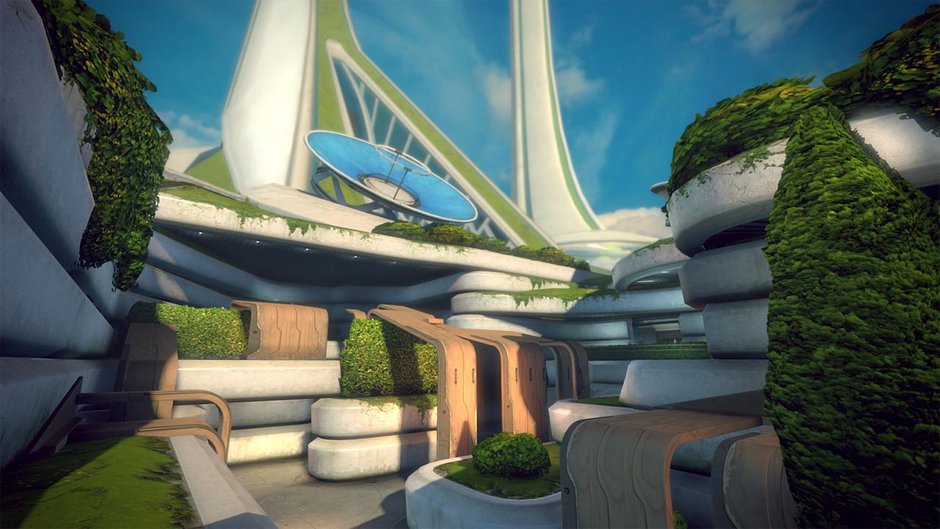
Partly. I mean partly that’s just to get away from photorealism because there are enough dark brown or green shooters and so it was a unique thing. Also for immersion, I mean realism doesn’t actually engender believability. In fact it turns out that you can exaggerate facially quite a bit, it’s whether there’s an immersive character or situation. But yes, partially it was also to be visually distinct. It made it interesting trying to direct for that with performance capture, because the actor makes a subtle gesture, but by the time it’s been replayed on this enormous hand model with these huge great meaty fingers, quite a subtle gesture turns into this huge operatic gesture. We didn’t see that coming, we should have anticipated that.

What were the challenges of writing a mainly multiplayer focused game in Brink?

The problem is that you’ve got is all the writers tools are generally about a protagonist and you stick with this hero who works their way through. We didn’t have one – we had these three characters depending on what faction you chose and you saw cutscenes with them – but you weren’t one of them, you were just a member of their team.  The challenge is to make the player interactions meaningful so that when they press a button, they don’t just feel like ‘I’m running around and pressing a button on a controller or clicking a mouse.’ You’re feeling like ‘I’m one member of this team and I’ve picked this faction rather than the other and I’m in this location and I give a hoot about what the objective is.’

One of the things we did – for instance there’s a level called Container City and it’s a kind of slum – and if you go there as Security you’re told ‘They’re building a bio weapon, you’ve got to get this thing,’ and that’s a pretty important reason to go and get that thing, fair enough. But if you’re as Resistance you get told ‘They’re stealing our vaccine.’ So hopefully they care about that. Or my personal goal if they’re paying attention to the story – and lots of people don’t, that’s another thing – is they go which is it? And we’re never going to tell you definitively and it’s entirely plausible that it’s both because what do you make vaccines out of other than viral particles which could be used as a bioweapon?

The goal was that it wasn’t just ‘Take objective to place B,’ that we were going to dress it up in a fiction, so that even though it’s all just chaotic being shot in the head action, the narrative carries on even though the cinematic was over. That was the challenge.Brink

And what was the thinking behind adding the alternative game endings as missions?

Well we didn’t want to privilege one story over the other: if you win fantastic, if not that other thing happened. We didn’t want there to be a canonical ‘this is correct and all the other ones are wrong.’ Actually it turns out there is kind of a storyline but we didn’t want to collapse all the possibilities down unless we absolutely had to.

I think it’s a problem with lots of games that in their urge to explain everything they kind of explain everything away and it’s like an equation where it all factors out and there’s nothing left, it just goes, and it’s an exhaustive explanation of what’s going on and there’s nothing left to think about. So we quite like that there were these loose ends and the loose ends themselves would join up, and so players should have questions should have questions about ‘Why are they doing that?’ If they’re of a disposition to listen to audio diaries, ‘Oh that’s what that was about!’ Even if players aren’t into that I think they can sniff it in the time and trouble that’s been taken.

So that was the goal, even if people didn’t watch all of the cinematics or read all of the diaries, somebody has done the work and it does all add up to something.

Looking back at a Brink, if you could change anything, what would it be?

We weren’t able to do it, unfortunately, but it was very much the plan that you would be one of the characters in the cinematics, it would be you doing those things. But because we really wanted to let people choose their voice packs; that would’ve meant recording every line of dialogue in every single one of the voice packs and we just didn’t have the budget to do it. That I think would’ve changed the sense of story, because it would’ve been you going through it, not just three guys you might or might not care about. That would’ve been one thing that would’ve changed the meaning of the game and it’s a shame we weren’t able to do that.

Read part 2 of our huge interview with Ed Stern here.

Leave your comments here on the Train2Game blog, or on the Train2Game forum.

For more information, go to www.train2game.com

BAFTA’s public events and online resources bring you closer to the creative talent behind your favourite games, films, and TV shows. Find out more at www.bafta.org/newsletter, www.facebook.com/bafta or twitter.com/baftagames
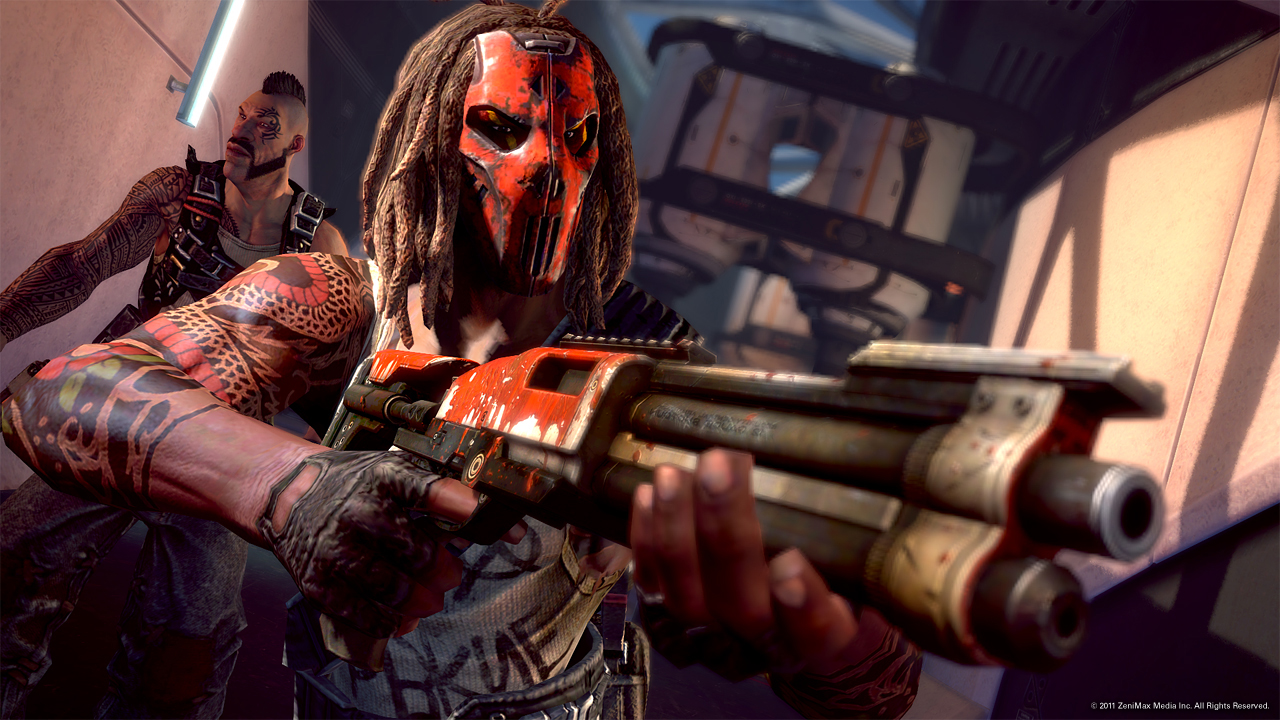
Train2Game news: Clue to the future is in Game Dev Story – Brink writer

Brink Train2Game blog imageTrain2Game students should learn alternative game development disciplines in addition to their chosen field to increase their chances of finding work in the industry.

That’s according to Splash Damage’s Ed Stern, writer of Brink, who likened hiring employees in the industry to mobile title Game Dev Story.

“Learn to code, learn Unity, learn Flash, be able to make a game. Because even if you’re not great a graphics or great at sound you’ll understand what the issues are.” Stern told the Train2Game blog when asked advice he’d give a game designer looking to break into the industry.

“You know that game Game Dev Story? You want to have at least a couple of stats in the other disciplines. Even if you’re never going to be hired to do sound, have some idea what the issues are with sound.”

The Splash Damage Creative Director used an example of a game designer knowing what game artists are capable of as an example.

“If you’re a writer have some idea what the graphic issues are so you don’t inadvertently end up writing a cheque that no one else can cash.”

He also told the Train2Game blog what he looks for when hiring a new employee, and that’s to have completed projects.

“It’s always more important to finish something than to start something, that’s what we look for when we’re hiring,” he said.  What people finish in their portfolio, not what they start then kind of get a bit bored with and give up on”

Of course, Train2Game students have the opportunity to complete projects and the Train2Game & Epic Game Jam this weekend.

Stern’s comments echo those of ID Software’s Tim Willits, who in an interview with the Train2Game blog, said that completing a mod is a great way to get noticed.

“Lots of times we have people who send resumes’ in with 20 half completed mods; we don’t want that, we want a handful of one’s that are actually done, and that’s really important” he said.

Ed Stern was speaking to the Train2Game blog in an interview about Brink, games writing and how to get into the industry. It’ll be published on the Train2Game blog in full on Monday.

So Train2Game, what are your thoughts on the Brink Creative Director’s advice? Have you been looking into learning other disciplines? Do you already have skills in other areas?

Leave your comments here on the Train2Game blog, or on the Train2Game forum.

Train2Game interview: Deus Ex: Human Revolution writer James Swallow – Part 2

Train2Game recently attended the Games Writers Panel at BAFTA’s headquarters in London. There, the Train2Game blog sat down with panellist Deus Ex: Human Revolution writer James Swallow. In an in-depth interview, Swallow discusses writing Deus Ex: Human Revolution, games writing in general, DLC, what makes a good games writer and much more.

Read part 2 below on the Train2Game blog, or onthe Train2Game Scribd page.  Part 1 is available here, Leave your comments here on the Train2Game blog, or on the Train2Game forum.

Going back to Deus Ex, how have you fleshed out the narrative not only for the game, but for the novel, Deus Ex: Icarus Effect,  which you wrote as well?

That was a lot of fun to do because I’ve already got experience as a novelist and when Del Rey Books approached Eidos and said they’d like to do a novel, they said ‘Why don’t you hire Jim, he already has experience?’ Basically I was the right guy at the right time in the right place because I had experience on both mediums so I could bring story that we hadn’t been able to put in the game. Say stuff that ended up on the cutting room floor, or stuff we couldn’t explain or explore in the in the game because we didn’t have enough time, I got a chance to bring it out in the novel and flesh out elements of story you don’t get.

With a novel you have the opportunity to get inside a characters head, you can show stuff from a completely different viewpoint. It was fun for me personally to revisit a world I had great time writing then write a story in a completely different way to writing a game narrative story.

You’re here at the BAFTA Games Writers Panel to talk about ‘Putting the protagonist in the hand of a player kills traditional narrative concepts,’ what’s your opinion on this as a writer?

When you’re a writer and you’re writing for a TV show or a movie or a book, you’re directing where a character goes, when stuff happens to them. You work that narrative and development for the right dramatic impetus.

In a game you can’t always do that because you can’t always know exactly where a player is going to be and you can’t railroad their experience and say ‘I want this dramatic turn to happen exactly here and you have to be standing here and do this thing exactly!’ because players might not want to do that, they might be looking at something else, they might want to be interacting with a completely different character. So you have to approach it in a very, very different way and it can be very difficult because you want to deliver story, players want to have a story delivered to them, but at the same time they don’t want to be railroaded.

So there’s a peculiar dynamic tension you get as a writer. On the one hand you’re being pulled towards the idea of giving players agency, having the ability to discover the narrative themselves. On the other hand you’re being pulled in the opposite direction which is you want to have a structured narrative that makes senses, that delivers the right dramatic impact at the right dramatic time. It isn’t an easy line to walk but it’s fun to do and I really relish the challenge of it because it isn’t often as a writer you get a chance to work in a medium that is so dynamic and so diverse.

What are the key skills a good games writer should have?

Play lots of games, I can’t underline that enough. A lot of the games writers I know are people who have experience from other areas of gaming. The people on panel with me, for example, Andy Walsh has experience working in soap operas and theatre, there’s me with experience of working in radio. Rhianna Pratchett has experience of working as games journalist before she was a writer whereas my buddy Ed Stern has come up through the ranks purely involved in game design and games writing.

So there’s no one course into it you can take. I would say be a good writer first, obviously, you can’t be a writer without being a writer.  But play lots of games, understand games, and try not to come at it just from a writer’s standpoint, but understand a bit about design and the way games are constructed. Listen to what level design guys and art design guys talk about, producers and directors, understand how they do their job because ultimately if you want to be a games writer you are going to have to interface and mesh with these people. So if you have an idea of what it’s like to walk a mile in their shoes, you can do your job a little better.

How did you get started in the games industry?

Purely by accident. I’ve been a games fan all my life and I love playing video games, I stay up way to late playing them all the time. I was actually doing some work for a magazine where I just happened to be covering a preview of a game release and one of the guys working on this game was actually using some material I’d written. He’d no idea that I’d actually written it. He said ‘We’re using this source material’ and I said ‘Really? I wrote that!’ ‘Really? We should probably hire you then!’ and that was it, I kind of stumbled into it.  And once the opportunity came to get involved behind the curtain with games writing I thought this is something I really want to do.

Since then, for about the last 10 or 12 years now I’ve been working on one or two game projects a year as well as doing prose and script writing. It’s great fun, such a fantastic medium to be working with. It’s really rich for a storyteller because it’s so new and dynamic and I’m fond of saying this: there are no maps for these territories.  What we’re doing is breaking new ground and a new way of telling story. I mean, who would not want to be involved in a new way of expressing your medium.

So people who want to get involved in the games industry, with games writing, what advice would you give to them in order to get that critical first step in?

Definitely get yourself a good grounding in writing and don’t be afraid to work in a games project perhaps in a facility that might not involve being a games writer, like working in QA Testing. That’s always the sharp end of anybody, working in QA which is unforgiving grunt work but there’s no way you’re not going to learn about games other than that job. If you’re going to take that job, that’ll be what teaches you the most about the way that games work and the way games don’t work.  I think it’s very important to play a lot of games to understand games and to understand narrative. If you can get those two things, you’re o n the road to becoming somebody who can write good game story.

Anything else you’d like to add about anything you’ve spoken about?

I’m really pleased with the way people have taken to Deus Ex: Human Revolution. Four years of my life went into working on that. I’m fiercely proud of it; it is without doubt the best games project I’ve worked on in my entire career because the story was really respected on that game and I’ve just really enjoyed being part of it. I want to thank everyone who bought a copy of it and I hoped they all enjoyed it!

Thanks for your time James.

Thank you.

Part 1 of the Train2Game interview with games writer James Swallow is available here.

For more information, go to www.train2game.com

BAFTA’s public events and online resources bring you closer to the creative talent behind your favourite games, films, and TV shows. Find out more at www.bafta.org/newsletter, www.facebook.com/bafta or twitter.com/baftagames
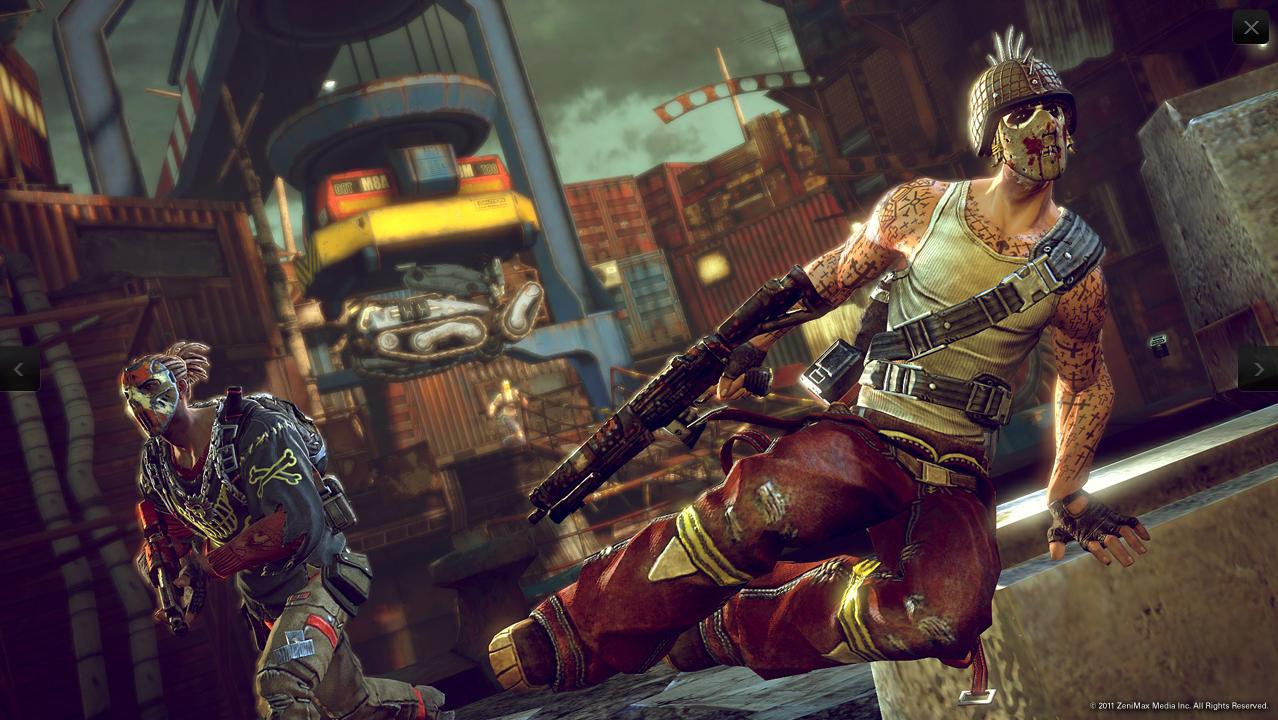
Train2Game interview: Deus Ex: Human Revolution writer James Swallow – Part 1

Deus Ex Human Revolution Train2Game blog imageTrain2Game recently attended the Games Writers Panel at BAFTA’s headquarters in London. There, the Train2Game blog sat down with panellist Deus Ex: Human Revolution writer James Swallow. In an in-depth interview, Swallow discusses writing Deus Ex: Human Revolution, games writing in general, DLC, how to get into the games industry and much more.

Read part 1 below on the Train2Game blog, or on the Train2Game Scribd page, while Part 2 of our huge interview is here. Leave your comments here on the Train2Game blog, or on the Train2Game forum.

First of all, can you tell us what your role as a games writer on Deus Ex: Human Revolution involved?

Wow, that’s kind of a ‘how long is a piece of string’ question really! The job of games writer isn’t like saying ‘I’m a journalist’ or ‘I’m a novelist,’ games writer is a very broad church because there are so many different things you can do in it. You can be writing cutscene dialogue, you can be writing dialogue for the third tier characters you bump into in the street, you could be writing text for text boxes that’ll pop up on screen. There are a million little jobs that fall underneath the term of games writer and I think I did a little bit of all of that stuff on Deus Ex.

It’s kind of fun to be able to do that because it gives you a broad understanding of the entire game and a feeling like you’ve really invested narrative in every single element, from basically what’s written on the back of a gum wrapper you find in the street to the main cutscene where you’re confronting the villain of the piece.

How do you even begin to create the narrative for the in-depth world of Deus Ex: Human Revolution?

In a lot of ways it’s similar to the process of working on a television series because the game is made up of episodic sections in the different levels, hubs or mission sections you get. You break the story. We sit down in the beginning and we say ‘OK, what’s the story we want to tell? What is the motivation and the concept of it? Where’s the very highest level of what we want the story to bring to the player?’ And then it’s a question of back engineering it, constructing the skeleton of the storyline, the narrative beats of it, and then trying to find a structure that works with level design, with character design and hopefully the whole thing meshes together nicely and you get an interactive, dynamic , story experience.

 Deus Ex: Human Revolution Train2Game blog image


How difficult was it to link the Narrative of Human Revolution to the original Deus Ex game, released over 10 years ago

Well the original Deus Ex has such a strong narrative to it and so much back-story that it was an embarrassment of riches, we had tonnes and tonnes of back-story we could use. One of my earliest projects on the job was actually writing a timeline that went from 2027, when Human Revolution is set, to 2052 when the original Deus Ex was set.

As we did that we started back engineering elements of the story and saying here are plot threads we can bring back and we can connect them together and hopefully people who are fans of the original Deus Ex games will appreciate the little kisses of history we put in there. I love doing that kind of stuff, I think it’s great fun to bury these Easter Eggs in there and make the story mesh together.

Such as the one after the end credits that links the two games together?

I can neither confirm nor deny that!

With all the choice available to the player in Deus Ex: Human Revolution, how do you go about writing the narrative so it doesn’t become too overly muddled during the course of the game?

You do a lot of writing, lots and lots of stuff.  It is a difficult thing to do because when you start a game you have no idea how your player is going to play it. The thing with Deus Ex is we had the four main pillars of gameplay; you could play aggressively, you could play it stealthily, you could play it in an adaptive way, you could play it with a social approach. There are a lot of different ways you can go through the sections of the game, you could try and mix and match. When I played it personally I found that I’d bounce backwards and forwards between the pillars of gameplay depending on how my mood took me. You can play it as a nice guy if you want by helping people, getting cats out of trees, or you can be a scumbag kicking the dog and mugging the old lady, and all those options are open to you.

How do you construct a game where all of those possibilities are open to a player where they’ll feel real?  It’s hard to do because you have to write dialogue that reacts to the events and the style of gameplay. Do you write hundreds and hundreds of different versions of dialogue? That’s not possible with the technology that exists right now.  You have to try and write dialogue that’ll be generic enough but at the same time not too generic that it’s bland, to try and make it so it’ll fit multiple levels of encounter and multiple levels of narrative.

It’s not easy to do, it’s a big challenge because you think of where you are in a game, of the information you have to put across, you want to give pitch and moment and drama to a character… But you also want to be able to say ‘The princess is in another castle’ and you want to be able to deliver feeling and emotion and you have to do that in one line of dialogue. It’s not easy, but it’s an interesting challenge though.

What are the different challenges of writing for the Missing Link DLC instead of the full game?

Away from Deus Ex I’ve worked on some other DLC as well; I worked on Pigsy’s Perfect 10 which was an add-on for Enslaved: Odyssey to the West. Working on that what we realised was that generally with a game you have a discreet beginning, middle, end experience and to build on story DLC you have to find a place where you can connect it. With the Enslaved stuff, what we did is we took a character who was playing a supporting role in the original game and we spun out an entire storyline out for him. So it’s kind of a side story, almost a prequel because the DLC ends with the characters introduction into the storyline of the main game, so it connects that way.

With the Missing Link we created a very discreet, compact narrative for our hero Adam Jensen and when we were approached and asked to do DLC we had to work quite hard to find somewhere we could fit it.  And we realised that we had this point in the game where the character is off the grid and this is the perfect opportunity for us to put in almost a missing episode of the story.

It’s interesting with DLC because you want to produce a dynamic, interactive, interesting and ultimately rewarding experience for the player. But you have to do it in such a way that it doesn’t break the story that you’ve already created for the source material. I guess that’s the unique challenge of it, to find a way to make a story that parallels what you’ve got without overwriting it.

Part 2 of the Train2Game interview with games writer James Swallow is here.

For more information, go to www.train2game.com

BAFTA’s public events and online resources bring you closer to the creative talent behind your favourite games, films, and TV shows. Find out more at www.bafta.org/newsletter, www.facebook.com/bafta or twitter.com/baftagames
Train2Game news: Deus Ex writer on what makes a good game designer

Train2Game recently had a chat with Deus Ex: Human Revolution writer James Swallow at the BAFTA Games Writers Panel where he discussed various aspects of game writing and game design.

But does the he think is the key skills a good video game writer should have?

“Play lots of games, I can’t underline that enough.” he told the Train2Game blog in an interview to be published on Monday.

“I would say be a good writer first, obviously, you can’t be a writer without being a writer.  But play lots of games, understand games, and try not to come at it just from a writer’s standpoint, but understand a bit about design and the way games are constructed”

Swallow argued that a good game designer needs also needs to understand the roles of the rest of the game development team in order to do the best work.

“Listen to what level design guys and art design guys talk about, producers and directors, understand how they do their job because ultimately if you want to be a games writer you are going to have to interface and mesh with these people.” said the Deus Ex: Human Revolution writer.

“So if you have an idea of what it’s like to walk a mile in their shoes, you can do your job a little better.” he added

Train2Game’s in-depth interview with Swallow covering Deus Ex: Human Revolution, writing for games and how to get into the industry will appear here on the Train2Game blog next Monday.

So Train2Game, what do you make of the advice from the Deus Ex: Human Revolution writer? Do you think about game design while playing video games?

Leave your comments here on the Train2Game blog, or on the Train2Game forum.

Train2Game news: BAFTA Games Writers Panel tomorrow

Brink Train2Game blog imageTrain2Game blog readers may have seen a post earlier this month about a special Games Writers Panel event at BAFTA in central London

The event is tomorrow, so if Train2Game students in the London area want to see top games writers discuss game design, there isn’t long to book tickets for just £5 for what’s sure to be an interesting talk.

Speaking on The BAFTA Game Writers Panel are:

Jim Swallow (Deus Ex: Human Revolution, Killzone 2, Star Trek: Invasion)
Ed Stern (Brink)
Rhianna Pratchett (Mirror’s Edge, the Overlord series, Heavenly Sword)

The event will be chaired by Andrew S Walsh who has experience as a writer and director on over 50 games including Prince of Persia, Harry Potter, and Medieval II: Total War.

The Train2Game blog will be speaking the high profile game designers taking part in the panel. What would you like us to ask?

Leave your suggestions here on the Train2Game blog, or on the Train2Game forum.

For more information, see the original Train2Game blog post, or the official BAFTA website.

Last week, three Train2Game students had lunch at BAFTA with director and writer Trix Worell to celebrate winning Train2Game & BAFTA’s Avenging Angels competition.

BAFTA’s public events and online resources bring you closer to the creative talent behind your favourite games, films, and TV shows. Find out more at www.bafta.org/newsletter, www.facebook.com/bafta or twitter.com/baftagames

Train2Game students celebrate Avenging Angels competition win at BAFTA

Train2Game students Amanda Blatch, Akos Nemes and Steven Wiseman, winners of the Avenging Angel Competition, joined BAFTA nominated director and writer Trix Worell and Brett Findlay for a celebration lunch and creative discussion at BAFTA last Friday.

Having beaten several very high quality entries, the winning Train2Game team were invited to meet the Director and Producer of the forthcoming film. The lunch was a really great celebration of the teams efforts with discussions of how the game mechanics were developed and how the game might develop given more time and access to the script.

The lunch ended with a few choice team photos and a commitment to continue to develop the game concept by the original winning team for further consideration by Trix and Brett

“We were really excited by the competition entries from the Train2Game students, and based on ideas from the winning team really pleased to be moving onto the next stage of development with Train2Game students and industry professionals bringing it to V.S. and beyond.” said director Trix Worrell

“We have all confidence that working with the highly motivated Train2Game students together with hardened industry stalwarts will mean this essential component of the project will be as exciting and dramatic as the movie and graphic novel, and a crucial part of the Avenging Angels experience.” he added

Avenging Angels, a £5M independent movie written and set to be directed by BAFTA nominee Trix Worrell is scheduled to shoot in London in spring with a Hollywood ‘A’ list cast and crew and scheduled for release in October 2012.

The movie the first of a trilogy is part of a trans-media project including a graphic novel to be released worldwide by an established international publisher and a video game developed by the Train2Game students and team at DR Studios alongside the team from A Box of Trix productions.

Train2Game congratulates Amanda, Akos and Steven!

Leave your comments here on the Train2Game blog, or on the Train2Game forum.