Train2Game news: Your chance to join The Settlers Online open beta

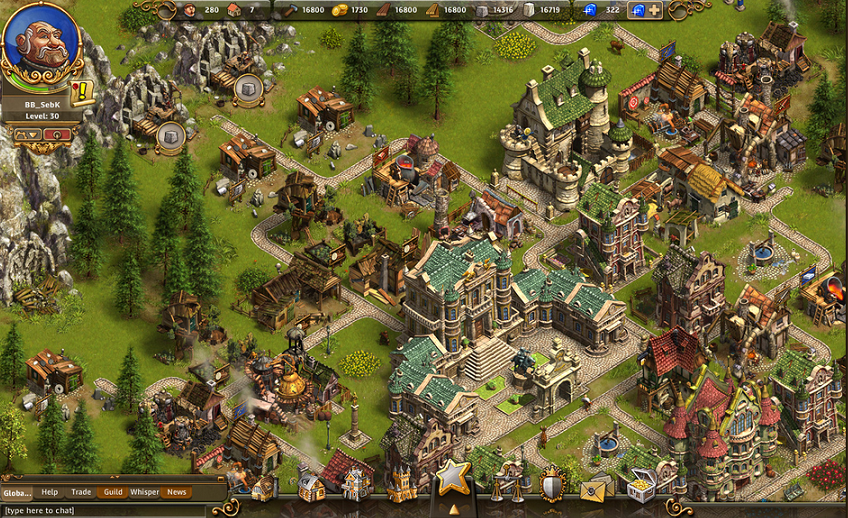
Train2Game students have the opportunity to join the open beta for Ubisoft’s The Settlers Online, a browser based free-to-play strategy game set in the Settlers Universe.

The Settlers Online combines the game design of The Settlers franchise with new features designed specifically for a web based browser game.

The English language version of The Settlers Online European beta is now open, and interested Train2Game students can sign up via the game’s official website.

The Settlers is a beloved, enduring franchise which strategy players from all over the world enjoy and it’s exciting to be able to offer those fans a new way to interact with the Settlers Universe,” said Publishing Director Thomas Paincon.

“The success of the free-to-play model is very encouraging and with the rollout of the English language European Open Beta beginning today, we are very optimistic about the future of the Settlers Brand.”

Beta testing is an excellent way for Train2Game students, especially those on the Games QA Tester course to practice their bug hunting skills. Not only that, but in an interview with the Train2Game blog, Trion Worlds Senior QA Tester Karl Tars said that beta testing is potentially a way to get into the industry.

The Train2Game Blog will be sure to keep you up to date with the latest beta testing opportunities.

So Train2Game, is The Settlers Online beta something you’ll be getting involved with?

Leave your comments here on The Train2Game Blog, or on The Train2Game Forum.

Train2Game student Daniel Parkes December update with 100% TMA

Train2Game QA Tester Daniel Parkes has posted a December update on his blog, and it has good news, Daniel scored 100% on his latest TMA.

“Everything about being a QA Tester has ticked a box for me. The last TMA I submitted was on lesson 3-practical video capture and editing: after going over it a few times I was happy enough to hand it in, within a few days I had the result back. I’m so happy to say it has been my best result to date, I got 100%.” said Train2Game QA Tester Daniel.

Daniel adds that the Train2Game course has helped him keep on top of and understand developments in the games industry.

“When I read game reviews and look for the latest gaming news if can understand heaps more about what they are saying than I could before I started this course.” he said

Read the full entry here on Daniel Parkes blog. Alternatively, see Daniel’s previous blog posts here.

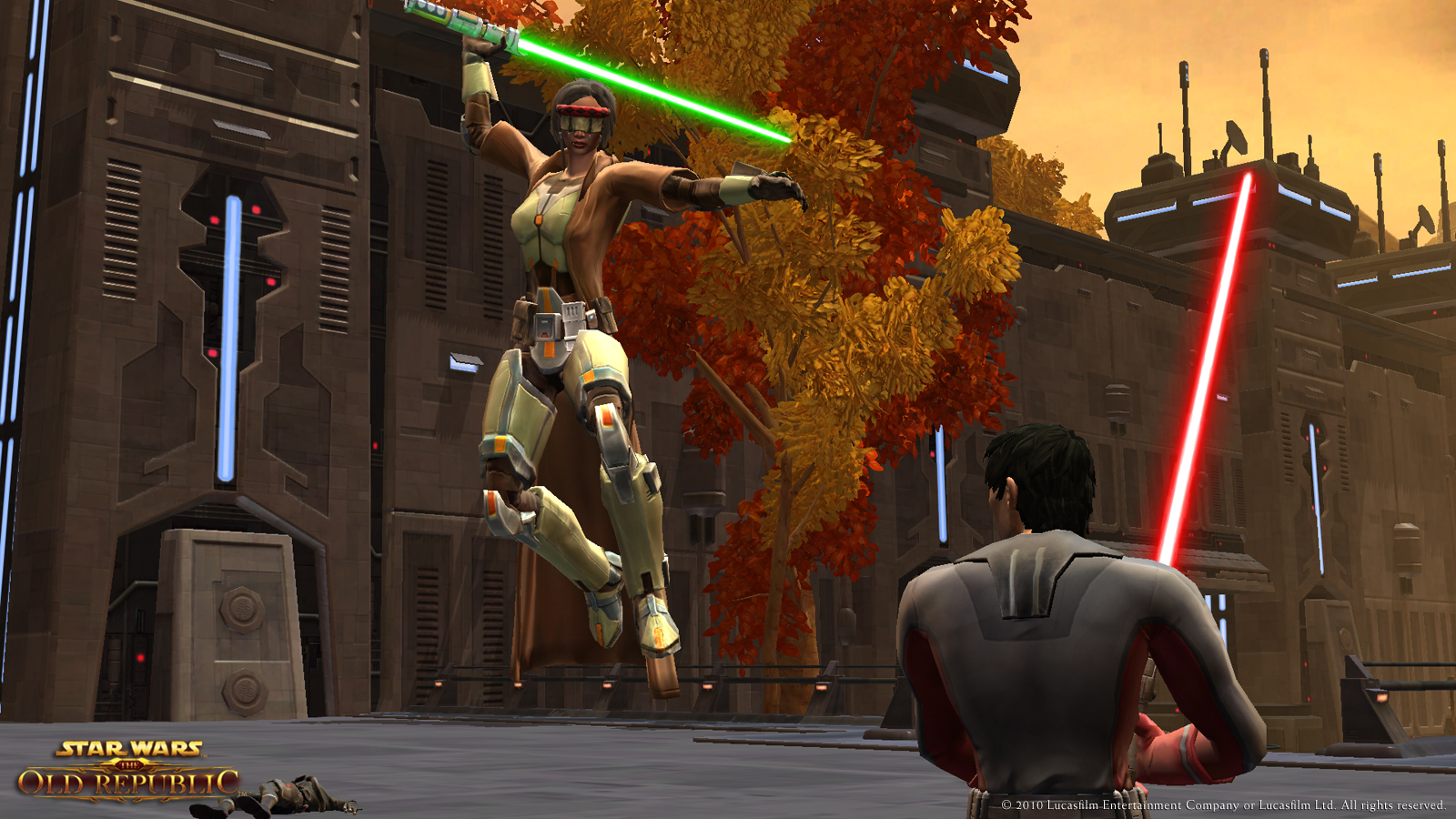
Train2Game news: Get involved with Star Wars: The Old Republic Beta Test

Train2Game students can get their hands on a Star Wars: The Old Republic beta thanks to EA providing tens of thousands of beta codes to various outlets of the UK gaming press.

The Star Wars: The Old Republic beta keys, give Train2Game students the opportunity to take part in an upcoming beta weekend where EA and Bioware plan to stress test their servers ahead of the MMO’s December release.

While the Train2Game blog doesn’t have any Star Wars: The Old Republic beta keys to give away itseld, you can pick of thousands up from UK outlets including CVG, NowGamer, and Rock, Paper, Shotgun.

Just choose one of the links, then follow the instructions to receive your key for the Star Wars: The Old Republic beta weekend. The exact time for the STWOR beta will be revealed by email at a later date.

As previously reported by the Train2Game blog, Bioware have spoken about the importance of playtesting to game development.  Meanwhile, for an in-depth look at the development of Star Wars: The Old Republic, check out the Train2Game blog interview with Associate Lead Game Designer Emmanuel Lusinchi

Train2Game blog readers will be aware that beta tests are an important part of video game development as thousands of beta testers can find issues that may slip past a handful of QA Testers.

And in an interview with the Train2Game blog, End of Nations Senior QA Tester Karl Tars said that getting involved with lots of beta tests for one studio is potentially a way to get into the games industry.

So what are you waiting for Train2Game? Sign up for the Star Wars: The Old Republic beta now.

Have you been involved with beta tests before? Will you get involved with this one?

Leave your comments here on the Train2Game blog, or on the Train2Game forum

Train2Game interview with Trion Worlds Senior QA Tester Karl Tars – Part 3

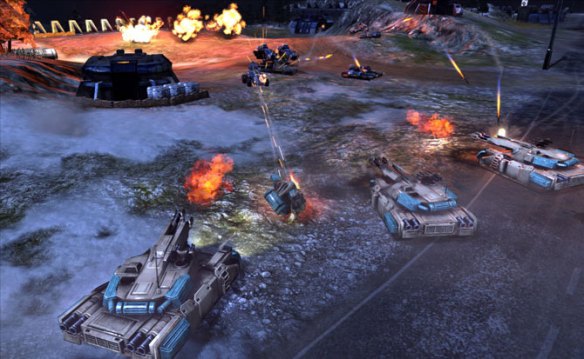
End of Nations is an upcoming MMORTS from Petroglyph Games and Trion Worlds. The game was on display at the Eurogamer Expo, and the Train2Game blog caught up with Trion Worlds Senior QA Tester Karl Tars to find out more about the game, QA Testing and how to get into the industry.

In the final part of an in-depth three part interview, Karl Tars tells the Train2Game blog what his role as Senior QA Tester involves, the importance of QA in game development, how he got into the games industry and he offers advice on finding work as a QA Tester.

Read it below here on the Train2Game blog, or on the Train2Game Scribd page.

Part 1 and Part 2 of our interview are both available to read here on the Train2Game blog.

So, tell us a bit about your role as Senior QA Tester.

My role is…Petroglyph gives us the build then we go in to find all the bugs. We’ll report them so they get fixed so that the game itself plays smoothly, no crashes, no textures going weir. But we also go in and look for gameplay fun bugs, like ‘This feels overpowered, this feels underpowered, it’s not really clear when I’d ever use this, special ability,’ things like that.

That’s what we do, we’re officially called Quality Assurance but the actual role is more quality assessment; we don’t assure quality, we don’t fix the bugs, we just assess what the game is and tell them ‘Hey, this is how the game is, is that what you really want?’ and let them make the decision as to whether they want to fix it or whether they want to change it or drop it. A lot of times they’ll say ‘You know what, we can’t make this work, you’re right it’s not going to work right’ so they’ll drop a feature and change it to something new entirely.

How important is the QA process to game development?

I’d say it’s a critical step. In previous times there was a period where it was kind of neglected, they wanted to know does the game crash, does the game function, but they didn’t really care about the actual quality in terms of fun gameplay values. Trion certainly doesn’t do that and other companies have caught on that ‘Hey, we can’t just keep pushing out these terrible games forever,’ and eventually the consumer catches on too and stops buying them.

So the QA process is really critical, and it frees up the developers. Instead of having to spend 3 hours figuring out how to cause this crash, we do that: we figure out exactly how to cause it and it gives them the time to keep working on the game, keep programming, keep adding new units. And then once they know how to break it, they can go in and fix it quickly and get their jobs done much more efficiently.
How did you get into your role in the games industry?

I took a rather long path for it; I actually have a Computer Science degree, I can programme but when I graduated it was a terrible time for programming and so I picked up a QA job at Vivendi Games in L.A. They’ve since been bought out by Activision, but basically it was a temporary position and I was good enough that they kept me on a lot longer than the average temp.

After it was bought out by Activision, I thought ‘I’m not too interested in working for them, they don’t treat their employees as well as I’d like,’ so I moved onto Trion Worlds who have been fantastic.  For the most part, anyone who has a good eye, likes playing games and can clearly, precisely say what they did and how to reproduce what they just caused, they can have a job in QA.

What advice would you give to anyone looking to work in QA?

The main thing to do if you want a job in QA is working on your skills at spotting things. A lot of us are game players, and that’s not necessarily what you’re going to be doing in testing. Testing isn’t just playing the game; a lot of it is very repetitive, where we’ll go through every single unit, make sure that every single ability works, make sure every single texture on a map looks correct.

So as you’re playing through a game and you spot a texture out of alignment? That’s something that QA would do. If you can cause the game to crash consistently in a certain way, that’s something QA have to do.

So spotting a bug is the first half of it, the second half of it, is having good English skills or whatever other languages your company works in.  Being able to clearly say ‘do this, do this, do this’ – the way I was told to practice that was imagine you have an alien, they understand the language in some respects, but they don’t necessarily know a lot of the noun, they wouldn’t know what a fork this, they wouldn’t know what a knife is.

Now try and tell them how to make a peanut butter and jelly sandwich when they don’t know what any of those things are. And you have to describe them being very descriptive and giving a good guide of exact steps and also including things like ‘it doesn’t work if you do this,’ so that when the developer gets it they can just immediately go click, click, click, straight through your steps and ‘Oh there’s the issue, I can see it now, and now that I can see it on my machine I can fix it really easily.”

Thanks for your time Karl.

End of Nations is scheduled for release next year.

Leave your comments here on the Train2Game blog, or on the Train2Game forum.
Train2Game interview with Trion Worlds Senior QA Tester Karl Tars – Part 2

End of Nations is an upcoming MMORTS from Petroglyph Games and Trion Worlds. The game was on display at the Eurogamer Expo, and the Train2Game blog caught up with Trion Worlds Senior QA Tester Karl Tars to find out more about the game, QA Testingand how to get into the industry.

In the second part of an in-depth three part interview, Karl Tars tells the Train2Game blog about the team behind End of Nations, the importance of beta testing during game development and how it can be useful for those with aspirations to work in the games industry. Read the interview below, or on the Train2Game Scribd page.

Part 1 is available to read here on the Train2Game blog.

Tell us about the team behind End of Nations

The way it works is Petroglyph Games are the developer, that’s a studio founded by a bunch of former developers from Westwood Studios, the guys who did Dune and Command & Conquer. So veterans’ of those games are designing and developing the game. Trion Worlds is publishing, we’re giving them the servers and a lot of the back end infrastructure that makes the game work. That’s the studio that’s behind it.

When is End of Nations scheduled for release, will there be a beta?

We have a beta coming up, so if you go to www.endofnations.com you can sign up for the beta right now. If you have an existing Rift account, that account will work for End of Nations as well. We’ll have more information in the next few months as we don’t have a confirmed time for that for the release, but it’s going to be a lot of fun and I’m looking forward to playing it on my own!

How important is the beta for the game development process?

Betas are really critical in terms of making sure the live servers can handle the real loads that players will put on our servers. We can test some of that in our labs but we certainly don’t have the manpower to try having 100,000 people connecting at once and with every single weird configuration of computer that’s out there. We don’t have the resources regularly do that.

Also, as clever as we are in QA, we’re not as good as every single player out there. We’re not going to be able to figure out all the interesting ways of using abilities that just break the game and make it un-fun for the other team. And so it’s also really important to have people go out there and try random things and finding ways of exploiting it so that we can tone those down or make them work within the system so it doesn’t feel unbalanced.

Is getting involved with beta testing a good way of getting a job in QA?

It can be. It used to be that was one of the primary ways of getting in in older days. However, more recently betas have become almost a marketing type of thing where the majority of people playing in a beta, they don’t really want to test, they just want to play the game early and see as they like it more like a demo than a testing environment.

However, if you can find a lot of good bugs and you can report them to the team in a good way, you can develop a fairly good rapport with some of the developers and that can get you in.  And if nothing else it gives you a chance to see these incomplete builds where it’s more likely to have bugs in it and so you can learn how to deal with that type of thing.

It’s definitely a way of getting in, but I wouldn’t say it’s a good way of doing it these days, but it’s definitely a good way to practice, get started and if you apply to the same company that you did a beta for, you can say ‘hey, I found this bug and these are the steps for it.’ That’s going to really impress the QA leads who are reviewing it and saying ‘This guy knows exactly how to write a bug report, he knows our game, he knows how to look for a bug and report it.’ That’s really what’s going to get you in.

Part 3 of our interview with Trion Worlds Senior QA Tester Karl Tars will be available soon. End of Nations is scheduled for release next year.

Leave your comments here on the Train2Game blog, or on the Train2Game forum. Part 3 of the Train2Game interview with End of Nations Senior QA Tester Karl Tars is here.
Train2Game interview with Trion Worlds Senior QA Tester Karl Tars – Part 1

End of Nations is an upcoming MMORTS from Petroglyph Games and Trion Worlds. The game was on display at the Eurogamer Expo, and the Train2Game blog caught up with Trion Worlds Senior QA Tester Karl Tars to find out more about the game, QA Testing and how to get into the industry.

In the first part of an in-depth three part interview, Karl Tars tells the Train2Game blog about End of Nations and the reasons behind key game design features. Read it below, here on the Train2Game blog, or on the Train2Game Scribd page.

So, what is End of Nations?

End of Nations is an MMORTS. The basic idea is we looked at Starcraft and said ‘8 players in the game? That’s not enough.’ What we’re showing off here is 16 players and we have a couple of maps that are going up to 50 players and we’re hoping that we can push it further than that and just have massive real time strategy combat.

The back story for the world is that there’s been an economic collapse, and so a group called The Order of Nations has come in and started to establish order.  They’ve gone through and destroyed some of the other nations that were still OK, then the people after they realise ‘Order’s restored, that’s great, but I’d like to be able to go outside and do my own thing’ – and that’s not being allowed, they’re very anti-freedom, very totalitarian – and so a couple splinter groups have shown up.

There’s a Liberation Front which are very pro-freedom, patriotic, and they’re going to be our brute force faction with big armour, big weapons and not a lot of subtly. The Shadow Revolution is the other faction, they are a lot more about stealth, tactics, hit and run strikes…they’re going to have a lot of little tricks where they can leave that’ll weaken the enemy and then they’ll strike. Or they’ll come out of stealth and they’ll have an invisibility cloak that allows them to hide, wait for the right time to strike and then launch their attack when they’re ready.

The basic idea is that these two groups are trying to take down The Order of Nations in their own ways and for their own reasons, and since they don’t see eye to eye you’ll also have a lot of times where they’re going to be fighting each other.

How does the gameplay work?

All the units you’re going to see today are from the Liberation Front because they’re the most balanced and the most ready to go and so the most fun to play with at the moment.  What we have here is am Infiltration loadout, its infantry, a couple of artillery units and flame tanks.

Your basic gameplay is your standard top down Real Time Strategy; you get to move your units forward. What you’re going to want to do, for example, here we have a resource point. You have resources on the corner [of the screen] and they trickle in very slowly at the start, and it’ll allow you to respawn your units if they get destroyed. But if you take a resource point they start coming in faster so the majority of each map is going around capturing strategic points that are needed.

There are also Landing Zones. If you capture a Landing Zone you can bring your units into the front line when they get destroyed. We have a Bombing Run and when this happens when it’s captured, the enemy area will start coming under attack.

So if I’ve captured this resource point and we’re trying to gain resources a little bit faster – every time it ticks we’ll get a little bit more than we did previously. That’s going to allow me for example put down a turret [to defend against enemy forces]

And so rather than doing the normal base building, instead we have these structures you can place temporarily. They’re good for small temporary bases but not a standard build up your infantry, build up your main defences and turtle on your side while you wait for the enemy.

From a game design perspective, what were the main reasons for including these mini-bases?

What they allow you to do is to make a temporary base; it’s a way of getting that little extra push to get in. So, for example, that’s going to take their attention off my units so they can come in and attack more freely. Or if they’ve captured my units in it’s going to help me fire off at them. It’s possible to get a depot that’ll allow your units to have more armour so they can take more damage.

There’s a repair depot so your units can get repaired in a forward location. But there are specific structures, and a lot of easy ways to take out other structures so they’re not going to last forever…you can have up to six of them, but the idea is you have to think about where you want to put them. I remember when I used to play Starcraft, you used to do a Proton turret tree where I’d keep adding turrets in front of my other turrets and I wouldn’t even attack with units, just push turrets more.

You can’t really do that here, you’ve got to think ‘I want this point’ right now so you set up your turrets offensively to take that point, capture it and then move on and then you remove your last set of turrets to assault the next sector.

So the game design makes the gameplay a bit more challenging and more interesting to play?

Yeah, it’s less defensive and less turtling; it’s more about constant movement and you’ll want to be always looking at your next objective or looking at the next point to defend, but you never have a time where you just sit, turtle up and wait for the enemy to attack you. You’re always going to want to keep moving, because there’s also, like I said the Liberation Front has got a nuke, they will launch it at you and they’ll wipe out all your little turrets and you’re not going to have anything left.

Or the Shadow Revolution, they can deploy a system virus which will degrade all of your units over time but if you’re not ready for it, it’ll wipe out your units pretty quickly.

End of Nations is scheduled for release next year. Click here for Part 2 of our huge interview with Trion Worlds.

Leave your comments here on the Train2Game blog, or on the Train2Game forum. Part 2 of the Train2Game interview with End of Nations Senior QA Tester Karl Tars is here.

Train2Game student advice from Trion Worlds on QA reports: write for an alien

Train2Game Games QA Testing students should find this blog interesting, as it features some interesting advice from a Trion Worlds Senior QA Tester on how to write a great QA Report.

Trion Worlds are the developer behind MMO Rift and the upcoming strategy title End of Nations.

And in a soon to be published interview with the Train2Game blog, Karl Tars, Senior QA Tester at the Austin Studio has some great advice for Train2Game QA Testers about producing bug reports.

“Imagine you have an alien, they understand the language in some respects, but they don’t necessarily know a lot of the noun, they wouldn’t know what a fork this, they wouldn’t know what a knife is.”

“Now try and tell them how to make a peanut butter and jelly sandwich when they don’t know what any of those things are.” Tars told the Train2Game blog.

The Trion Worlds Senior QA Tester argued that a well written, easy to follow bug report written by a QA Tester means that the developers can easily fix any issue that’s been found.

“You have to describe them being very descriptive and giving a good guide of exact steps and also including things like ‘it doesn’t work if you do this,” he said.

“So when the developer gets it they can just immediately go click, click, click, straight through your steps and ‘Oh there’s the issue, I can see it now, and now that I can see it on my machine I can fix it really easily.” Tars added.

The full interview with Trion Worlds Senior QA Tester Karl Tars, featuring an extensive insight into QA Testing and a look at upcoming title End of Nations, will be published on the Train2Game blog in the near future.

In the meantime, feel free to check out this post from earlier this week in which Valve discuss the importance of playtesting to game development.

Full details on the Train2Game Game QA Tester course are available here on the official Train2Game website.

So Train2Game, what are your thoughts on Tars advice for writing bug reports? Will you take it on board?

Leave your comments here on the Train2Game blog, or on the Train2Game forum.

Train2Game news: Valve on playtesting

Train2Game students, especially the QA Testers, will be aware of the importance of testing games in development.

In an interview with the Train2Game blog last month, Valve’s Chet Faliszek revealed that testingto be an important part Counter-Strike: Global Offensive development. Now other leading Valve developers have given further insight into how testing works at the studio.

Gamasutra report that speaking at GDC Online in Texas, Valve writer Erik Wolpaw said they take it very seriously. They start testing internally during game’s early development before bringing in testers from outside the studio.

“We definitely do playtest. We’ll ask people after they play to recount the story to us and gauge their comprehension of their experience…” he said.

Of course, Valve fans among the Train2Game community will know the developer like to put humour in their games. However, Wolpaw added that testing this aspect of game design can be difficult.

“Comedy stuff is tougher [to evaluate] because it’s more subjective and it’s really hard to gauge peoples’ reaction,” he said.

“Pretty much no one that played Portal 2 cracked a smile, but testers still said the game was funny. It’s hard to tell if a joke is failing or not.” Walpaw added.

Nonetheless, the testing process is useful to Valve and they’re happy to make changes if something isn’t working.

“We fail all the time, we just don’t advertise it too much,” said studio writer Marc Laidlaw.

Excerpts of the GDC Online Valve Q&A session can be found on Gamasutra and it should make interesting reading for Train2Game students, especially those on the Game Design course.

Of course, Valve aren’t the only game developers who value playtesting, with the Train2Game blog recently reporting that Bioware see it as a key part of developing Star Wars: The Old Republic.

Flower and Journey developers Thatgamecompany have also stated that testing is a crucial part of the game design process.

Find out more about the Train2Game QA Tester course here!

So Train2Game, what are your thoughts on the testing process at Valve? How important is it to get both an internal and external opinion on games in development?

Leave your comments here on the Train2Game blog, or on the Train2Game forum.

[Source: Gamasutra]

Train2Game news: Gamers misunderstand meaning of ‘beta test’ say DICE


Train2Game students – at least a few of them are – are likely to involved with the current Battlefield 3 beta, which a runs through to 10th October.

And while Train2Game students – especially the QA Testers – will understand that beta tests are an important part of game development, there filtering out bugs and tweaking gameplay, it seems gamers in general are less aware of this!

Some have criticised the bugs that have appeared while playing Battlefield, or the fact that’s only one map, but according DICE’s Patrick Liu, it’s because these people don’t get the reasons for an open beta.

“I think there’s been a misunderstanding of the term ‘beta test’!” the Battlefield 3 producer told The Guardian.

“We ran the alpha tests with a rush map and we wanted to have some sort of reference so we could compare results – so we needed to have more-or-less the same map.”

“But we do understand the concerns that we didn’t show a conquest map, but we have demoed Caspian Border, and we did run a conquest map as a limited PC-only test.

According to Liu, one of the main reasons for the Battlefield 3 beta test is to make sure the backend systems work when the game is release.

“He just wanted to know it wouldn’t crash and burn at launch” he said.

“It was horrible with Battlefield 1943 – it sold ten times the numbers we thought it would, and it was down for three or four days which is really bad. We don’t want to go through that again.”

As reported by the Train2Game blog, DICE have stated that positive feedback from the open beta is helping them tweak the multiplayer aspect of Battlefield 3.

So Train2Game, what are your thoughts on Liu’s comments? Do gamers misunderstand the meaning of a beta test? And have you been testing Battlefield 3?

Leave your comments here on the Train2Game blog, or on the Train2Game forum.

[Source: The Guardian]

Train2Game news: Battlefield 3 beta aiding game development


Train2Game students will be aware of the importance of testing games during development, and the significance of this is already being displayed in the Battlefield 3 Open Beta.

According to the Battlefield blog, the feedback from players is providing useful information to developers DICE when it comes to improving the game.

“The amounts of people flocking to our Open Beta is fantastic! We are happy to see so many players enjoy this Open Beta, and giving us their valuable feedback on the experience on the Battlelog forums,” the blog post says.

Train2Game students can see the Battlefield 3 blog for a full rundown of the changes that have been made as a result of testing during the Open Beta, and DICE say they’ll be updating the blog with further tweaks they make as more people provide them with feedback about Battlefield 3.

The Battlefield 3 beta for Xbox 360, PlayStation 3 and PC runs through to October 10th, and Train2Game students who wish to get involved can find out how to do so here on the Train2Game blog.

It could provide Train2Game students, especially those on the QA Tester course, with experience of properly testing a game in development.

Last week, the Train2Game blog reported that Bioware also feel that playtesting is an essential part of game development.

So Train2Game, are you involved with the Battlefield 3 beta? Have you spotted any bugs? How important do you think this Open Beta is to the development of the game?

Leave your comments here on the Train2Game blog, or on the Train2Game forum.

[Source: Battlefield blog]