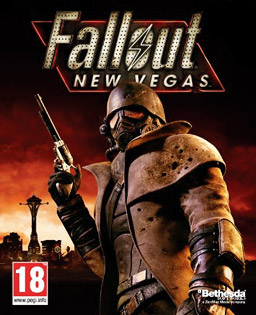
Fallout: New Vegas is released October 22
Fallout: New Vegas is probably one of the most anticipated games of the year, and naturally many of us are excited about the game from Obsidian. Chris Avellone is a Senior Designer working on Fallout: New Vegas, and he recently spoke to Planet Fallout about the latest instalment of the post-apocalyptic RPG which is released next month.
Naturally, we’re all very interested in Fallout: New Vegas, but Chris Avellone starts the interview talking about how he got into the games industry. Train2Game students feast your eyes on what he says below, because it could be very useful to your future career!
“I got into the industry through pen-and-paper gaming, notably Champions, where Bruce Harlick gave me my first shot at doing a published product. Writing for pen and paper games doesn’t really pay the bills, though, and the pay scale ended up being about 50 dollars every two months, which you can’t live on.
Then I heard a company called Interplay Productions were starting up their own Dungeons and Dragons division, and they asked if I wanted to come on board as a junior designer. My first reaction was, “you mean there’s a steady pay check for what I do?”, so I said sure, I’ll drive to California.
I met with the division director of Dragonplay (Mark O’ Green), he asked if I had any ideas for a Planescape RPG, I told him I’d start in the mortuary after the player died and the game would go from there. He hired me. Ever since, I’ve been working in design all the way up, out of Interplay and into my current job at Obsidian.
Advice for getting into the industry? That’s a long one, but here goes: One, always be persistent in applying – even if you get rejected from one game company once. Keep applying; get to know the people there. Generally what happens at game companies is they find themselves in crunch or badly needing employees at a certain time and then they will go back to the resumes and look for someone urgently. Those battlefield promotions can get you into the industry pretty fast. Also when applying at a game company, always choose the game company that you actually want to work for.
I know some people think “I need to start in a crap designer job” or making My Little Pony or whatever before I can get into the job I really want to do. My recommendation is apply to the places you want to work at first don’t worry about the consequences or requirements. A good cover letter and a good resume can sell an applicant who thinks they may not meet all the requirements.
When hiring at Obsidian, we look for people that did a lot of game building on their off duty time, if they’re members of mod communities, or have actually gone through the process of making a game – they’re able to answer questions and understand how the whole process works, more so than applicants that are more geared towards theory. It’s one of the reasons we hired Jorge Salgado (Oscuro’s Oblivion mod fame), and we’re glad we did.”
Of course, Avellone goes into plenty of detail about Fallout: New Vegas, and if you’re interested you can read about it over at Planet Fallout. Alternatively, you can watch the first part of the Fallout: New Vegas developer diaries. Fallout: New Vegas is released in Europe on October 22nd for the PlayStation 3, Xbox 360 and PC.
Can’t wait that long to get your hands on Fallout: New Vegas? A playable version will be available at the Eurogamer expo from October 1st and 3rd.
Train2Game will also be at Eurogamer, and will be giving away the new PlayStation Move controller with a PlayStation 3 320GB slim. To enter the prize draw pick up a entry form at Stand 12 in the Career fair. We look forward to seeing you there.
What are your thoughts about the advice from the Fallout: New Vegas senior designer? Do you find it helpful? And what feature about Fallout: New Vegas are you looking forward to the most?
Leave your thoughts here on the Train2Game blog, or on the Train2Game forum.

 The Train2Game Blog