Could Train2Game students develop games for an Apple console in future?

Apple Train2Game

Train2Game students are very aware that Apple’s iPhone is one of the best platforms to start in the games industry. The App store provides a portal for small independent developers to distribute games to a very wide audience, and some like Cut The Rope go on to be very, very successful indeed.

(Games Industry consultant Nicholas Lovell recently told Train2Game about how indie games developers can distribute their games)

There was a time where nobody would have expected a mobile phone produced by Apple to become such a force in the world of mobile gaming, so what else could the company try their hand at? Well, according to EA Senior Vice President Patrick Soderlund Apple could develop a games console and challenge Microsoft’s Xbox 360 and Sony’s PlayStation.

CVG asked Soderlund if Apple were to move from mobile gaming into mainstream gaming, if they could challenge the established giants. The EA Vice President replied:

If it was anyone but Apple, I’d say that’s going to be very hard,”

“I still think it’s going to be extremely hard for them but they’ve surprised many people before.

“Look at what they did with the iPhone, right? They are a truly brilliant company so I would give them a relatively good chance to succeed if they tried.”

In October, there were rumours that Apple were going to purchase one of the giant games companies, while Nintendo boss Reggie Fils-Aime is on the record saying that Apple are the biggest threat to Nintendo.

Naturally, if Apple did decide to produce a games console of their own in the future, it could eventually provide another platform for Train2Game students to develop games for.

So Train2Game, do you think Apple will attempt a move into mainstream gaming in future? If so, do you agree with the VP of EA that they could actually succeed?

As usual, you can leave your thoughts here on the Train2Game blog, or on the Train2Game forum.

Train2Game student favourite the Xbox 360 celebrates 5th birthday

Xbox 360s

One of the most popular gaming platforms amongst students on the Train2Game forum celebrates a big milestone today. Yes, the Xbox 360 console has turned five years old in the UK, one week after it reached the grand old age in the United States.

Of course, Microsoft UK has used the occasion to big up the console:

“From the beloved Xbox 360 Arcade, Pro and Elite models of yore through numerous special editions, holiday bundles and the advent of Xbox LIVE, to the sleek new 250GB and 4GB models of 2010, Xbox has morphed into a true entertainment powerhouse, successfully delivering an amazing array of gaming, movie, music and TV experiences to millions of owners here in the UK and around the world”

Of course, Train2Game students will have already known that the Xbox 360 does all of the above! Microsoft has also listed what they see as milestones of the Xbox 360 over the last five years:

  • Xbox 360 unveils gaming with HD graphics, achievements and more in 2005. Blockbusters games on the system include Halo, Gears of War, Forza Motorsport and Fable.
  • New Xbox Experience in 2008 introduces Xbox LIVE Party, personalized Avatars and a streamlined dashboard that puts  movies, music and games at the players finger tips
  • In 2009, Xbox LIVE Gold members can stream live TV from Sky, watch movies in stunning 1080p HD video with Zune Video, listen to all their favourite music on Last.fm, and connect with friends on both Facebook and Twitter
  • And in 2010, Kinect for Xbox 360 delivers an entirely new way to play. Kinect for Xbox 360 delivers controller-free gaming.

Perhaps Train2Game students have different favourite moments to Microsoft?

More than 45 million Xbox 360 consoles have been sold worldwide, and Kinect has been selling strongly since its launch with 2.5 million having been purchased by consumers. The launch of Kinect also doubled sales of Xbox 360 consoles here in the UK, so there are plenty of new gamers’ experiencing the console for the first time, even five years after its release!

“Families are looking for more value than ever this Christmas and looking to stretch their money,” said Stephen McGill, Director of Xbox and Entertainment, UK & Ireland.

“An Xbox 360 console and Kinect can bring everyone together this season and entertain every single member of the family, from kids to grandparents. And with Kinect for Xbox 360, all you need is your voice, hands and body to jump into the controller-free fun.”

So Train2Game, what are your favourite Xbox 360 moments over the past five years? If your console is all the way back from 2005, does it still work? And what are your favourite Xbox 360 games?

As usual, you can leave your comments here on the Train2Game blog, or on the Train2Game forum.

Train2Game interview with games industry consultant Nicholas Lovell – Part 2

Train2Game recently caught up with founder of Gamesbrief and industry consultant Nicholas Lovell. In a wide ranging interview he discussed subjects including the different types of game development studios, advice for small independent developers, social gaming and the business side of the industry.

The Gamesbrief founder also told Train2Game about a special offer on his book, How to Publish a Game. The 200 page book is available for half price until December 7th.

In part two of this three part interview, Nicholas Lovell tells Train2Game about how an independent developer can go about successfully distributing and marketing their games.

Part one of the Train2Game interview with Nicholas Novell is available here, while you can see part three here.

Train2Game: How would an independent developer actually go about distributing their game be it online, through social media, or mobile phones?

Nicholas Lovell: In my definition – what I use in the book distribution involves getting code into people’s hands. But marketing and distribution start blurring because there’s a large sense that distribution is about the channels by which you encourage people to know about your product and want to buy it.

On the distribution side – the literal process of getting code from your hands into your customers’ hands – if you’re publishing on Apple, Xbox Live, PSN, Android… they handle it. You upload your game to Apple, Apple takes the money and delivers the code so you don’t have to worry about that.  You still have to worry about discoverability so we’ll move onto marketing in a second.

If you’re doing something on Facebook or the broader web you have to handle it. So I strongly recommend you would use a scalable cloud backend like Amazon Web Services – something like that – which will cost you money and if you don’t have a business model, it will cost you more money which will be more expensive. You need to make sure that the more successful you get it isn’t the case you lose more money. I’ve had one client who the more successful they got the more money they lost. We fixed that now but that was the case.

If you’re looking at Flash development – I think it’s much harder to make money from Flash development – but if you’re looking at Flash development then there are sites like Kongregate, like Newgrounds.

In fact there’s a blog post on Gamesbrief, it’s a Preloaded blog post which talks about how they consider distribution, which you might want to look at.  [How we publish an online game]

Let’s move onto the marketing side, because distribution and marketing are often very tightly linked.  In my mind, distribution is simply ‘can they get it?’ Marketing is ‘do they want to get it? And there are a bunch of ways in which you can market your content, and they don’t have to be that expensive.

My view is that the primary objective of most of the marketing you do is to be able to talk to people again.  It’s not to sell them a product, because it takes longer to sell a product than just the first time seeing your banner ad.  [The customer going] ‘Oh I’m going to see that ad, click on it and buy immediately’ …that’s pretty unusual.

What your marketing activity should be about is to try and get people to allow you to talk to them again.  So that’s about Twitter feeds, that’s about blogs. Your social media strategy should be about being open, honest and clear, and about building a persona. There’s a lot of talk about building a story;  if you’re three struggling students, ask for help from the community, ask for people who read your blogs to tell you how to do stuff, start engaging in that kind of dialogue and build that over time. So that’s one aspect.

The second aspect of it is virality. Virality is much, much harder than it used to be, march harder and particularly on Facebook. There are two different types of virality. There’s mechanical virality, that’s the kind of stuff where you get spammed on your Facebook feed.  And there’s the ‘this is really cool’ kind of virality where word of mouth is key.

Certainly I’ve discovered games like Words With Friends, like Angry Birds, like Flight Control, because everyone was talking about them.  Personally I think that’s tough to rely on because it’s really, really hard to build a game that gets that level of success. Better is to have some way of encouraging people to want to play with their friends. However, I think virality is falling in terms of its level of importance.

Where I tend to focus – and why I’m not really a big fan of a business model which involves you just selling the product for a one off fee – is less on the how do you acquire customers, but more on how do you keep them, and how do you make money from them.

So let me give you a reason why:  On the iPhone, only 1.3% of apps have in-app purchases. Most people’s business model is free plus premium at 99 cents or so. But 33% of the top 100 grossing titles have in-app purchases.  So in other words, we’re getting to the stage where it is really, really hard – you can do it, Angry Birds has made over $10 million from a 99 cent purchase – but that’s very hard.

The guys who are making more money are allowing people – if they like the game – to keep upgrading. And instead of the maximum amount of that money you can make from customer being 99c you can make $5, in some cases $30.

There’s a game called Pocket Frogs which has in app purchases of values of 99 cent, $4.99 & £29.99. Only 8% of people by the $29.99, but in revenue terms, more than half their revenue comes from those bigger packs.  And most businesses stop at the 99c level, they would make a tenth of the revenue of Pocket Frogs. [For a full run down on the success of Pocket Frogs, check out this article on Gamesbrief]

Part one of the Train2Game interview with Nicholas Lovell can be seen here. The third and final part is available here.  His book, How to Publish a Game, is available for half price until December 7th.

You can leave your thoughts here on the Train2Game blog, or on the Train2Game forum.
Turbulenz funding programme could be perfect launch pad for Train2Game students

Turbulenz Launch Pad Funding Programme

Technology company Turbulenz are providing an opportunity that is too good for any Train2Game student to ignore.

They’ve created a Launch Pad Funding Programme which will “will subsidise and promote the development of up to ten games created with Turbulenz. Awards of €10,000 to €50,000 per game are available for products that help push the social gaming revolution.”

The good news is that anyone can apply to get involved, and that of course includes Train2Game students.

The idea of the Turbulez Launch Pad Funding Programme is to help ambitious developers to build unique, new browser based games.  There’s funding for up to ten teams, to help cover salaries of the people building the games. This game doesn’t even have to have been started yet, which means this is a great opportunity for Train2Game students to pitch their original ideas to Turbulenz.

Turbulez are looking for games that take full advantage of their game engine and online platform, and they are therefore looking at four key criteria, as listed on the Launch Pad Funding Programme website.

  • Mass appeal. Games that have mass market appeal online. The more inclusive a game can be, the better. Think about something that captures everyone’s imagination and creativity. Make sure you think about boys and girls, and especially all the mums and dads. Everyone is playing games online now.
  • Online payment. Games that naturally suit the payment models which are becoming successful online. People don’t want to pay 50 bucks anymore. So how is your game going to entice people to play and ultimately pay
  • Iterative development. Games that can evolve over time. Just look at how all the Flash games have developed. They start small and light, and gradually ramp up, developing new features in response to their playing community. It’s great to have a vision, but try and pull it back to something that can grow step by step.
  • Something new. Games that can take browser games to the next level. The web gives us the opportunity to blend everything it has to offer into our new games. Social gaming is only in its infancy and we fully expect a new generation of games to blow everyone away.

The deadline for Launch Pad Funding Programme submissions is Friday 14th January.  Turbulenz say they’ll start looking at applications as soon as they receive them, so the earlier your application gets in the better chance you’ll have!

All the information required for any Train2Game student that wishes to submit an idea to Turbulenz can be found on the Launch Pad Funding Programme website.

As usual, you can discuss this here on the Train2Game blog, or on the Train2Game forum.

Train2Game interview with games industry consultant Nicholas Lovell – Part 1

Train2Game recently caught up with founder of Gamesbrief and industry consultant Nicholas Lovell. In a wide ranging interview he discussed subjects including the different types of game development studios, advice for small independent developers, social gaming and the business side of the industry.

The Gamesbrief founder also told Train2Game about a special offer on his book, How to Publish a Game. The 200 page book is available for half price until December 7th.

In part one of this three part interview, Nicholas Lovell tells Train2Game about the games industry in general and gives tips to independent developers.

You can read part two of the interview hereand see part three here.

Train2Game: Can you start by giving a general overview of how the games industry works please?

Nicholas Lovell: There are three types of companies. There are massive triple-A companies, those guys need to invest a lot of money. Modern Warfare 2 cost $50 million to develop; it cost $200 million on top of that in marketing, distribution and manufacturing. That’s a total budget of $250 million. If Wal-Mart doesn’t pay within four months – which it doesn’t – and you want to have three games of that size out at Christmas, that’s a $750 million capital requirement. If you then want to have other games in development at the same time, you’re nearer a billion dollars.

The number of people who’ve got a billion dollars a year to put at risk making triple-A titles is declining. In my opinion there’ll only be six to eight of those in the entire world of which Activision, EA and Warner are likely to be three. The other slots are up for grabs for people like Ubisoft, THQ, Take Two, those kinds of people.

But the number of them is declining and what we are unequivocally seeing is people who aren’t making blockbuster games – who are making nearly blockbuster games – they’re suffering, they’re definitely suffering.

The second group of companies make persistent social online games, games which you can release relatively cheaply and then grow over time. The interesting thing is that World of Warcraft is essentially a triple-A game, but it has that persistent element.

So, at one extreme you have games like Farmville and We Rule and the other games on Facebook. In between you’ve got games from companies like Bigpoint and Gameforge, which are either client based or browser based relatively hardcore MMOs or RPGs free to play with microtransactions.

And then the extreme, you have your traditional subscription based MMOs like World of Warcraft. I think we’ll see much fewer subscription based stuff, as the market is moving strongly in the direction of the free to play browser based games.

The third category is what I call independent developers. Those are teams of  less than fifty people – usually less than ten people – who can because of the existence of PlayStation Network, Xbox Live, iPhone, Android, the browser itself – are able to make and distribute games themselves with no publisher and make a living, a decent living. Not enough of a living to be really threatening to triple-A and the persistent social world, but drawing time and money from particularly the triple-A market, which is one of the reasons why its harder and harder for the also-ran triple-A guys to make money.

So if you’re trying to work out where to work in the games industry in the future, there will be many fewer jobs at the triple-A companies than there were this year. There will be many more jobs in the persistent social world stuff – The Bigpoint’s, the Gameforge’s, the Zynga’s, The Playfishes – and there is a new opportunity to create, launch and make games, just two or three of you making games for fun, distributed via PSN, Steam, the web itself, Kongregate, any of those kind of things. And of course iPhone and Android.

Train2Game: What advice would you give to a small two or three person team who want to make and publish an independent game?

Nicholas Lovell: The first thing is as you go through your game design document – do the first part with a lot of excitement in the pub, that’s fine – but after that take lots and lots of stuff out. Ernest Hemingway famously said about writing, ‘write drunk, edit sober’ and I think that idea could probably apply to game development. I wouldn’t necessarily be certain about that, but the principle goes that what you need to do above all things is release a product, that’s the most important bit.

Until you’ve done that you can’t make any money. So what I see often is people going ‘This is going to be the best game ever’ – That’s the end of your career, not the start of your career.  At the start of your career, you’ve just got to have a game. To be honest, what we’re seeing from employers is that they want to see people who have on their own initiative launched something, anything.  They want to see that people can see something through from the beginning to the end.

So, have your napkin with a gazillion different races and structures and plans and everything else. But then start boiling it down to go ‘What is the core of this game, what is the heart of it, and how can I get that out’

I’m a big fan of agile development methodologies and of agile business processes, and a great description of agile I’ve heard is it’s ‘half a product, not a half arsed product’ So, everything you leave in has to be good. The secret is to take stuff out that doesn’t matter.

So, the first thing I would say is as you’re trying to work out what’s in your game, try and reduce it to something which is fun – which works – and save a lot of the extra stuff for the sequel. Because you don’t know until you’ve got your first game out if anybody likes it, so why waste time building a whole load of stuff?

For example, I see a lot of people building anti-cheating mechanisms into relatively simple multiplayer games which they’re trialling. You haven’t got any cheaters until you’ve got any customers,  you don’t have any customers and the way you’re going you’re going to run out of money building the anti cheat system before you launch, at which point, what was the point of having an anti-cheat system?

Anti-cheat systems are the kind of thing you should build after you’ve launched in this indie world; the world is different if you’re Blizzard trying to launch a new mega title. But in the indie world, minimum viable product is the absolute heart of it.  That product needs to be fun.

There are a couple of other wrinkles with that; it does depend on the platform. So, with iPhone and Android, it’s pretty easy to update content, Facebook it’s easy to update content. If you’re building for PSN it’s harder, if you’re building for Xbox Live Indie Games it’s harder. Those businesses expect you to create content which feels more like a finished product.

I’m much more excited about platforms where you start off with something if people like it, you keep building it.

Part two of the Train2Game interview with Nicholas Lovell can be seen here. His book, How to Publish a Game, is available for half price until December 7th.

You can leave your thoughts here on the Train2Game blog, or on the Train2Game forum.


Kinect sales pass over 2.5 million

Microsoft Kinect for Xbox 360

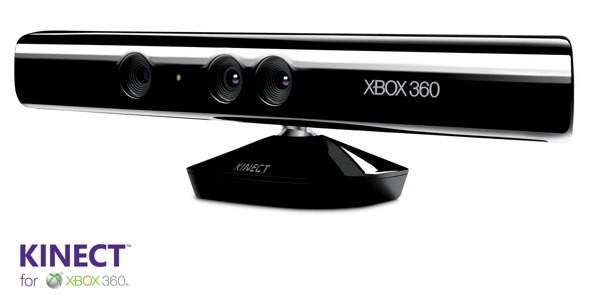
Microsoft has announced that 2.5 million Kinect units for the Xbox 360 have been sold since it was launched worldwide 25 days ago.

That means in the two weeks since Microsoft revealed one million Kinect devices had been sold in its first ten days on sale, 1.5 million more motion controllers for the Xbox 360 have been purchased by consumers. The numbers mean that Microsoft are close to beating their initial sales target of three million by the end of the year, and could reach the revised target number of five million.

“We are thrilled about the consumer response to Kinect, and are working hard with our retail and manufacturing partners to expedite production and shipments of Kinect to restock shelves as fast as possible to keep up with demand,” said Don Mattrick, president of the Interactive Entertainment Business at Microsoft.

“With sales already exceeding two and a half million units in just 25 days, we are on pace to reach our forecast of 5 million units sold to consumers this holiday.”

“Kinect on Xbox 360 was a top performer at Target this weekend,” said Nik Nayar, VP of merchandising at the US retailer. “We expect Kinect will be a must-have gift this holiday season, so Target will continue to receive consistent shipments of Kinect throughout December.”

Microsoft’s Kinect for Xbox 360 is now available at over 60,000 retailers in 38 countries, and its launch helped double Xbox 360 console sales in the UK.

However, not everyone has positive things to say about Kinect, with a Sony engineer recently claiming that the Xbox 360 device isn’t capable of handling a good Star Wars lightsaber game. But with sales going so well, it’s unlikely Microsoft will be too bothered by the comments.

So Train2Game, what are your thoughts on the sales numbers for Kinect? Are you surprised to see it selling so well? Do you think that ‘hardcore’ Xbox 360 gamers are buying the device, or is it the more ‘casual’ fans that are boosting sales? And can Microsoft reach five million Kinect sales by Christmas?

You can have your thoughts about Kinect for the Xbox 360 here on the Train2Game blog, or on the Train2Game forum.

Gamesbrief founder Nicholas Lovell speaks to Train2Game about ‘How to Publish a Game’

The games industry is a competitive place, with many independent developers each trying to produce, and make money from, games.

It’s possible that a relatively inexperienced developer could think of and produce what could be great online or iPhone game. But without knowledge about how to market and distribute it correctly, the game this would be classic could disappear without a trace.

Fortunately, there are professionals who are experts in this area, and one of them is games industry consultant, Gamesbrief founder, and author of ‘How to Publish a Game’ Nicholas Lovell. The former investment banker spent a decade helping media companies – including those in the business of games – adapt their strategies right through the dot com boom of the late 1990’s.

Train2Game recently met with Nicholas Lovell, and discussed many aspects of the games industry. He begun by telling us how since leaving the world of investment banking, he’s struck out on his own and helped various developers with the distribution of games:

“In 2003 I set up a small corporate finance boutique, who helped games companies raise money and with strategy”, he told Train2Game. “We worked with companies like Blitz and Kuju, EIDOS, we worked with Codemasters, so we worked with a number of different games design companies.”

“I then decided I actually wanted to get my hands dirtier, and joined a gaming portal called Game Shadow to run that business, to turn it from a subscription based business to a free to play business growing revenues by a factor of ten,”

“Did that for two years and for the last three years I’ve been helping companies make money from games.”

“So at one level I’ve worked with investors trying to understand the industry from the very small up to the people where a $500 million investment is too small. I’ve worked with publishers like Square Enix and Atari and Channel 4 to help think about their game strategy, and I’ve worked with developers to launch new projects.

“Pretty much all of those developers have been who’ve been trying to move from console or mobile to this new world of Facebook or free to play social, online titles.”

Away from consulting, Lovell writes about the business of the games on his blog, Gamesbrief. However, it isn’t only a blog that the consultant writes. Nicholas Lovell has also written a book called How to Publish a Game.”

He told Train2Game about what’s in the book; how it can help developers publish games and about the promotional offer running until Tuesday 7th December:

“It’s about what are the different business models, what are the four key skills you need to get a game to market – sales, distribution, finance and marketing. It’s about different ways of using free as a marketing technique, and it’s all structured around giving you a framework about how to publish a game rather than a playbook.”

“Until December 7th – at midnight- the book is half price. It’s not the worlds cheapest book… it’s aimed at prosumers, the people who expect to make money from that game, so the standard price is £100 and it’s currently going for £49.50.”

“You can get the first the first two chapters for free, and there’s also valuable stuff on GamesBrief, so check out Gamesbrief, if there’s stuff you like, then you’re more likely to want to buy the book.”

Nicholas Lovell discussed many subjects about the games industry in a wide ranging interview which will appear on the Train2Game blog in the near future. Be sure to stay tuned for that, but in the meantime, you can get an overview of some of the subjects discussed – including how freemium games make up 34 of the top 100 grossing iPhone apps – on Gamesbrief.

If you do want to buy ‘How to Publish a Game’ while the half price offer is on, you can do so here.

As usual, you can leave your thoughts here on the Train2Game blog, or on the Train2Game forum.

UK Charts: Gran Turismo 5 races past Call of Duty: Black Ops to take No. 1

Gran Turismo 5

It may have been years in the making, but Gran Turismo 5 has made an immediate impact on the UKIE GfK Chart-Track All Formats Top 40 by taking top spot.

After a long wait, Gran Turismo 5 was finally released last Wednesday to generally positive reviews. The icing on the cake for Sony and Polyphony Digital is that the racer has reached number one in its debut week by knocking the mighty behemoth that is Call of Duty: Black Ops from the top spot.

Activision’s first person shooter was number one for two weeks following its record breaking release. The arrival of Gran Turismo 5 also pushes Assassin’s Creed: Brotherhood down one spot to third place in this weeks chart.  FIFA 11 is still selling strongly almost two months after its chart topping debut, and holds onto fourth place. Just Dance 2 is also a non-mover and remains in fifth.

Need for Speed: Hot Pursuit has moved down three places from third to sixth in its second week on sale, while Nintendo Wii Party has also moved down the top ten, dropping one place to seventh spot.  Art Academy for the Nintendo DS is the big winner in this weeks Top 40, jumping almost 20 places from 27th to eighth place. It overtakes another Nintendo Title, Wii Sports Resort which has dropped two to ninth.

Former number one Fallout: New Vegas, rounds out the top ten, having clawed its way back in after dropping to 13th place last week.

Elsewhere, Red Dead Redemption expansion pack Undead Nightmare enters the UK Chart in 14th place, while Ubisoft’s Michael Jackson: The Experience is a new entry in 32nd.

Disney’s brand new – and heavily advertised – Epic Mickey has failed to even reach the Top 40 and only managed to reach 11th in the Nintendo Wii chart.

The full UKIE GfK Chart-Track All Formats Top Ten for the week ending November 27th is as follows:

1. Gran Turismo 5 (Sony)
2. Call of Duty: Black Ops (Activision)
3. Assassin’s Creed: Brotherhood (Ubisoft)
4. FIFA 11 (EA)
5. Just Dance 2 (Ubisoft)
6. Need for Speed: Hot Pursuit (EA)
7. Wii Party (Nintendo)
8. Art Academy (Nintendo)
9. Wii Sports Resort (Nintendo)
10. Fallout: New Vegas (Bethesda)

So Train2Game, do you think Gran Turismo 5 deserves the honour of number 1? Can it go on to be ‘the biggest selling PS3 game of the year’ or will sales drop next week? And are you surprised to see Epic Mickey fail to even make the Top 40?

You can leave your thoughts about Gran Turismo 5, Epic Mickey or any other game in the UK Top 40 here on the Train2Game blog, or on the Train2Game forum.
Kinect can’t do a good lightsaber game says Sony engineer

Lightsaber battle

The man behind the PlayStation Eye thinks the upcoming Star Wars game for Kinect won’t be up to much.

SCEE Software Engineer Anton Mikhailov told Eurogamer that “There’s no way Kinect can do a good lightsaber game”.

And while Sony and Lucasarts have yet to announce a Star Wars compatable game for the PlayStation move, Mikhailov boldly claims “It’ll be damn better than Kinect’s.”

When asked about the possibility of a PlayStation Move Star Wars game, the SCEE Software Engineer replied: “I’m not in the product planning division so unfortunately I can’t tell you much more about that, but technologically it’s 100 per cent feasible.

“We can overlay objects over the controller in AR. You’ve seen that in Start the Party, and swords are a really popular one. The fidelity is certainly there to do all sorts of Star Wars kid-style action. You can very well do the lightsaber.”

He went on:

I’m usually not very aggressive, but I will say it’ll [Move’s Star Wars game] be damn better than Kinect could ever do.

“There’s no way Kinect can do a good lightsaber game. Just never. Unless they give you a stick. If they give you a stick then they can do OK, but then they’re going to ruin their whole no controller motto.

“I’ve seen the demo but it’s so scripted, and wasn’t it like, faked?

“Technologically I find it hard how you can do a lightsaber, because there are so many ambiguities, and it’s nearly impossible to track the angles of your wrists.

“I can sort of see them doing it, like hold your hands together and move like this [holds them out in front of his body], and then from the x, y, position and for the angle. If anyone’s listening, you guys should try that. That would probably work all right.”

Earlier this month, Sony said that the PlayStation Move has greatly exceeded expectations.

So Train2Game, what do you think about the Sony mans comments? Is he right? Is the PlayStation Move naturally more suited to the motion control required for swinging a lightsaber around? Or is this just pure trolling of Microsoft and the Xbox 360?

You can leave your thoughts on a PlayStation Move Star Wars game here on the Train2Game blog, or on the Train2Game forum.

Analyst: No Grand Theft Auto V until 2012

Grand Theft Auto IV

Grand Theft Auto V won’t arrive until at least 2012 according to Janco Partners analyst Mike Hickey.

According to GameSpot, the analyst says that Grand Theft Auto V will arrive in Take Two’s financial year 2012 which runs from April 2012 until March 2013. Yes, that mean’s if Hickey is correct, we might not see seeing Grand Theft Auto V until almost the middle of 2013.

However, he believes that despite the possibly no new Grand Theft Auto game being released, Take Two will remain profitable during the 2011 fiscal year because of releases including Max Payne 3, LA Noire and Duke Nukem Forever

The Janco analyst also predicts that Grand Theft Auto V will be a massive success selling over 16 million copies and generating $750 million in sales.  He also suggests that Bioshock  Infinite will arrive in the same fiscal year, and that the first person shooter will sell over 4 million units and generate $182 million.

One of the main reasons Hickey expects the big sales numbers is increased ownership of PlayStation 3 and Xbox 360 consoles, suggesting 41 million units will be in American homes by the end of this year.

It’s not the first time an analyst has made predictions about Grand Theft Auto V, with one suggesting we’d see it at E3 earlier this year. That didn’t happen.

So Train2Game, do you agree with the analyst? Are you expecting to wait at least another 18 months before seeing Grand Theft Auto V? And do you think it’ll really sell that many more copies than Bioshock Infinite?

As usual, you can leave your thoughts here on the Train2Game blog, or on the Train2Game forum.