Train2Game news: Naughty Dog want to “raise the bar” of game design with The Last of Us

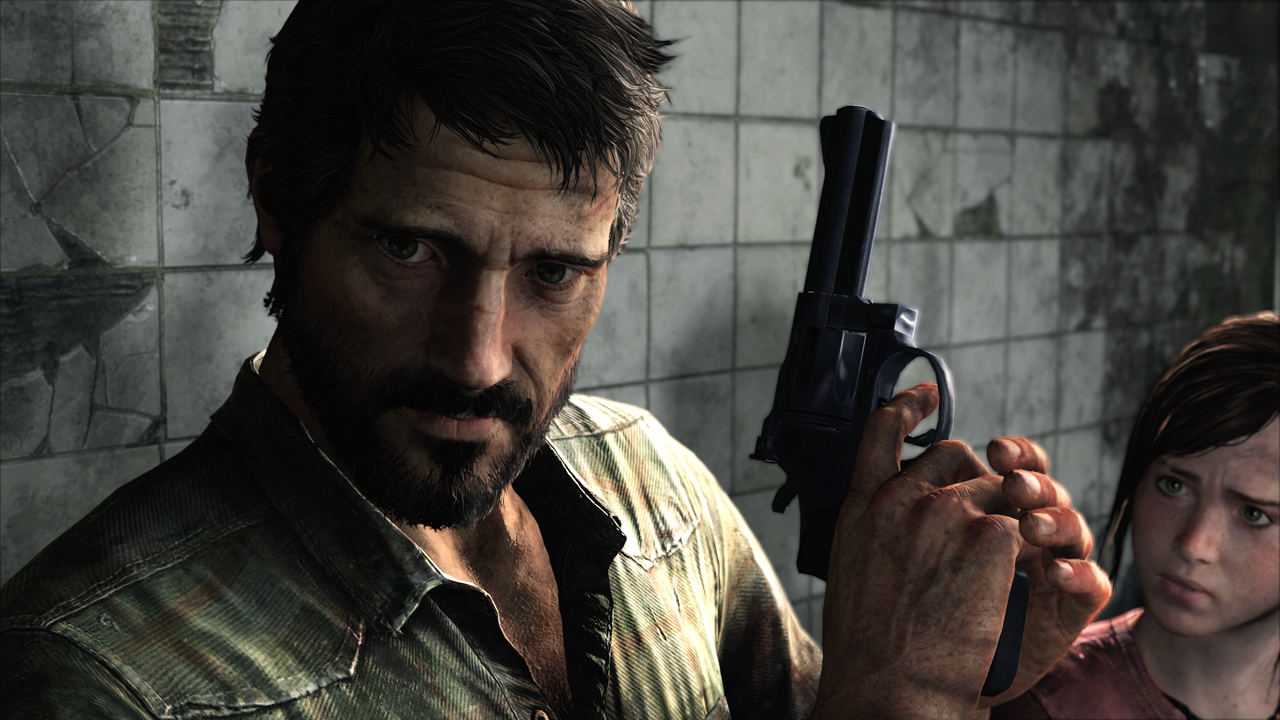
Naughty Dog want to “raise the bar” for the “poor” storytelling in video games with their new title, The Last of US.

The new game from Uncharted developer Naughty Dog was revealed at last weekend’s VGAs and will be exclusive to PlayStation 3.

“We try so hard at Naughty Dog to push things,” The Last of Us Creative director and writer Neil Druckmann told Eurogamer 

“And then games come out that are fun and exciting and get visceral things right, but to read in reviews that they have an amazing story is disheartening to us because we work so hard at it.

“As critics we need to raise the bar, otherwise no-one’s going to change. We’re going to keep pushing ourselves, and kill ourselves to make this story happen – but hope that by doing it, the rest of the industry is going to take notice and try to do the same thing.”

Druckmann says that The Last of Us is a love story between father and daughter and that they’re doing it because ‘love’ isn’t something that’s often properly explored in games writing.

“We approached this genre because we felt no-one is getting to the heart of it. It tells you something about the human condition – that’s what you want to do as a storyteller.” he said

“We’re not saying every game needs a strong, compelling and dramatic story, but if you are going to make a narrative-based game then you better learn the craft.” Druckmann added.

Naughty Dog describe The Last of Us as “a genre-defining experience that blends survival and action elements to tell a character driven tale about a modern plague decimating mankind. Nature encroaches upon civilization, forcing remaining survivors to kill for food, weapons and whatever they can find. Joel, a ruthless survivor, and Ellie, a brave young teenage girl who is wise beyond her years, must work together to survive their journey across what remains of the United States.”

Train2Game blog readers can see the first trailer for The Last of Us below.

So Train2Game, what are your first impressions of The Last of Us? Is a ‘love story’ a bold move for Naughty Dog? Do you believe game writers need to raise the bar?

Leave your comments here on the Train2Game blog, or on the Train2Game forum.

[Source: Eurogamer]


Train2Game news: Obsidian Chief Writer on digital distribution and ‘stabbing the used game market in the heart’

Fallout New Vegas DLCTrain2Game students will be highly aware of the rise of digital distribution, and Obsidian Chief Creative Officer Chris Avellone believes digital is good for game developers and good for the games industry, especially if it can help stop second hand game sales.

Avellone has over 20 years experience of writing and designing RPGs with titles under his belt including Fallout 2, Star Wars: Knights of the Old Republic II, Neverwinter Nights 2 and most recently, Fallout: New Vegas.

“I love digital distribution. For one thing, being environmentally conscious, I really appreciate that we’re not making more boxes and shipping them and creating all that waste. It’s better just to download the game through Steam and not have to have all that packaging.” he told Industry Gamers.

However, it isn’t just the green factor that Avellone sees as a positive of digitial distribution, he also believes it allows game development studios to be more flexible thanks to not having to rush towards deadlines.

“One of the things I enjoyed with Fallout: New Vegas was that digital distribution of the DLC made things more flexible in terms of getting the content done. You didn’t have to worry about production times for discs, and so you could take an extra week if you needed that to get things right.” said Avellone.

The Fallout: New Vegas writer also added, with some aggression, that digital distribution can kill off second hand games.

“Of course, one of the greatest things about digital distribution is what it does to reduce the used game market. I hope digital distribution stabs the used game market in the heart.” he said.

The Train2Game blog has previously reported on the extensive advice the game design veteran has given on getting into the games industry.

So Train2Game, what are your thoughts on Avellone’s comments on digital distribution? Does it help game developers? And will it ‘stab’ the second hand games market?

Leave your comments here on the Train2Game blog, or on the Train2Game forum.

[Source: Industry Gamers]

Train2Game news: Minecraft’s Notch steps down, replaced by ‘mod friendly’ Jens Bergensten

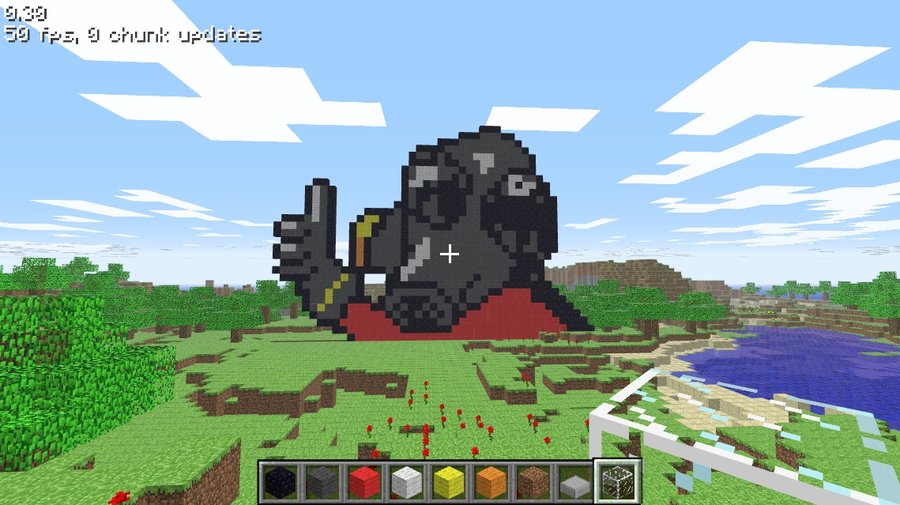
Train2Game forum users have a special place for Minecraft, so many of them will be interested to hear that creator Markus ‘Notch’ Persson is leaving his position as the games’ lead designer to rest and work on a new project.

Mojang developer Jens Bergensten will be taking over the position of Minecraft lead designer, Notch posted on his blog.

“As of yesterday, Jens Bergensten is the new lead developer on Minecraft. He will have the final say in all design decisions, so he will kinda sorta become my boss, I guess. I’ve promised him to not pull rank” wrote Notch, who has high praise of Bergensten, revealing a little about the game design process at Mojang.

“We’ve been working together on Minecraft for a year now, and I’m amazed at how much in synch we two are when it comes to how to design the game” he said.

“And when we don’t agree, we discuss it and something much better comes out at a result. He’s truly a great person to work with, and I feel very confident handing over the leadership of Minecraft to him.”

Notch told Gamasutra that Bergensten will mean more modding opportunities for Minecraft.

“He’s exactly what Minecraft needs right now. He’s a bit more mod friendly than I am, and we need to embrace mods more.” he said.

So Notch will still be involved with Minecraft, which finally received its full release earlier this month. It’s been downloaded over 4 million times since it was made available in its Alpha stage of development. Not bad for a completely independent studio.

For more about Minecraft, see the Train2Game blog.

So Train2Game, what are your thoughts on Notch stepping down as lead developer of Minecraft?

Leave your comments here on the Train2Game blog, or on the Train2Game forum.

Train2Game news: Mode 7 Games on Steam, indie development and free-to-play

Frozen Synapse by Mode 7 Games is published through SteamTrain2Game students should find this Gamesbrief guest post by Frozen Synapse developer Mode 7 Games very interesting.

The bulk of the post sees developer Paul Taylor take a look back at how both business and design influenced the design and marketing of their turn based tactical title.

As previously reported by the Train2Game blog, Mode 7 Games have argued that getting onto Steam is essential for an indie PC game developer. Taylor reiterates that this was vital to the success of Frozen Synapse.

“Steam’s position in terms of digital distribution right now is well documented; having seen the results, there is no doubt in my mind that aiming to create a game which would stand up against other titles on there was the right thing for us to do in this instance.” he said in the Gamesbrief post.

Taylor also suggests that release timing was an element in the success of Frozen Synapse, with Mode 7 Games releasing it in a quiet time for PC releases. His advice to indie developers is to avoid releasing titles during busy periods, such as the run up to Christmas.

“The end of May turned out to be a fairly quiet time and a good time to launch for us: I’d just suggest that indie devs focus on avoiding busy periods (e.g. Christmas and late June to early August) when they’re shaping up for launch.” wrote Taylor.

The Frozen Synapse developer also discusses the growth of Free-to-play, but insists that the ‘pay-once’ model was right for their game.

“Pay-once is the most maligned business model out there right now:I would suggest that even the most hardcore entrenched old-school developers have been won round by the raw data that free-to-play games have generated, so pay-once is in decline.” said Taylor.

“I’m yet to hear a sane scheme for an F2P Frozen Synapse – I don’t think that a free-to-play game along similar lines would be impossible; however I have not heard any viable suggestions for how we could have done it with this game, the game we cared so much about making.” he added.

The Gamesbrief post certainly makes interesting reading for Train2Game students and it can be read here.

Gamesbrief examines the business of games, and Train2Game students can watch an insightful interview with website founder Nicholas Lovell here on the Train2Game blog.

Lovell also spoke in-depth to the Train2Game blog last year, providing useful advice about indie and social game development.

So Train2Game, what are your thoughts on Mode 7’s post-mortem of Frozen Synapse? Will you take the advice on board?

Leave your comments here on the Train2Game blog, or on the Train2Game forum.

[Source: Gamesbrief]

Train2Game news: Fighting games haven’t changed much – Dead or Alive dev

Train2Game students are slightly spoiled when it comes to fighting games right now. Street Fighter is going strong, Tekken is still very popular and these two franchises are even coming together with Street Fighter X Tekken set for release in 2012.

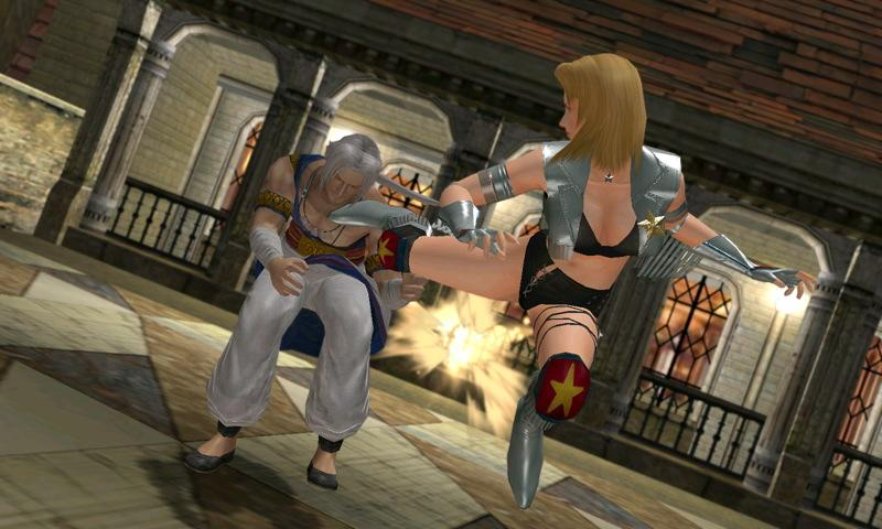
And while fighting games may be booming, Team Ninja’s Yosuke Hayashi, believes that the game design of fighters hasn’t changed much. Hayashi is currently leading development of Dead or Alive 5. Dead or Alive Dimensions for the 3DS was released earlier this year.

“To be completely honest, after Dead or Alive 4 we weren’t sure what the future was going to be.”

We were trying to think of something new, but we weren’t getting any ideas of what to do for 5,” Hayashi told Siliconera.

“Then we saw Street Fighter IV and the fighting genre come back because in a large part of Capcom and what they were doing. For all of the fighting games that came out we looked at them, but there was something wrong”

They looked great with updated graphics and had online gameplay, but the gameplay itself hasn’t changed. It’s still the gameplay we’ve had for years.” he said, adding that Team Ninja want to change the fighting genre.

Hayashi describes Dead or Alive 5 as ‘Fighting Entertainment”

“We’re looking for simple, but deep fighting entertainment. We’re not looking to be a technical hardcore fighter. We want a game that a lot of people can have fun with, but people who want that depth can find it.” he said.

As reported by the Train2Game blog, Tekken director Katsuhiro Harada believes that simple game design helps encourage people to try out the series.

So Train2Game, what are your thoughts on Hayashi’s comments? Do fighting games need to evolve, or can they survive without changing?

Leave your comments on the Train2Game blog, or on the Train2Game forum.

[Source: Siliconera]

Train2Game news: Ultima creator Richard Garriott on game design

Ultima series creator Richard Garriott  believes game design need to be more creative if the medium is going to continue to advance.

“There are tons of free-to-play, beautiful looking MMOs that are feature-complete and challengers in theory to World of Warcraft, they come across from Asia every day.” said Garriott, also known as ‘Lord British,’ in an in-depth interview with Industry Gamers.

“They’re all beautiful, they’re all full-featured – if you try to go why is this game not as good as World of Warcraft, you’d have a hard time picking individual features as to why, but with all of them you go, “look, it’s free to play, free to download, I’ll try it!”

But the man behind Ultima Online believes that rather than trying to introduce new features, many developers are just trying to recreate game design elements of their competitions titles.

“You go, “OK, kind of looks the same, here’s my town, here’s my shop, here’s my level one monsters I have to fight,” he said. “And you spend an hour or two going through the play cycle and finishing a quest and levelling up, and you go… well “OK, it works, but why do I care?”

“The vast majority of people are making these me-too games, they’re quality, there’s nothing wrong with them, there’s just nothing compelling about them.”

Garriott added that he hopes to be able to look at his own work, including Ultima and Ultima online and be satisfied with what he did to change games.

“And I’m hoping that if I look back on my career down through the years, I’m very proud of the fact that with some periodicity, I have truly advanced the art form in some meaningful way.”

The full interview with Richard Garriott, an interesting read for Train2Game students, can be seen on Industry Gamers.

So Train2Game, what do you make about his comments on game design? Does more need to be done in order to make games innovative?

Leave your comments here on the Train2Game blog, or on the Train2Game forum.

[Source: Industry Gamers]

Train2Game industry experience diaries of Guy Mayne weeks 1&2

Train2Game Game Designer Guy Mayne has begun a a Train2Game work placement at DR Studios.

Read Guy’s  first industry experience diaries about how he’s settling into a game development studio environment here on the Train2Game blog, on the Train2Game Scribd site, or on the official Train2Game industry experiences website.


Train2Game interview: Brink Lead Writer Ed Stern Part 2 – Game Design

Train2Game was at last month’s Games Writers Panel at BAFTA’s headquarters in London. There, the Train2Game blog spoke with panellist Ed Stern, Lead Writer at London studio Splash Damge. In an in-depth interview, Ed discusses development of Brink, game design and game writing and offers advice to Train2Game students on how to get into the industry.

Part 2 focuses on narrative in games, what makes a good game designer and advice on how aspiring writers can get into the industry. It’s on the Train2Game blog, or alternatively you can read it on Train2Game’s Scribd page. Part 1 of our interview with Ed Stern is available here.

We’re here at BAFTA for the Games Writers Panel, the theme is ‘Putting the protagonists in the hands of player kills traditional narrative concepts,’ what are your views on that?

It’s really interesting because we’re so used to, as writers, we think about character a lot and we think about action a lot. But compared to prose or theatre, stage play or screenplay, we just have to empty out our tool kit almost completely. All we’ve t left is a hammer and when you’ve got a hammer everything looks like a nail!

It’s really hard, we’re giving up control to players most of the time. Basically, if it’s a cinematic, players resent it because they’re not in control. If the player is control you’ve given up all control of the pacing and meaning to the player, what happens if they just don’t want to look at the thing you’re claiming is important?

I think part of the answer is what Bernard Herrmann did with movie scores. He realised the symphonic form or the classical form, it needs too long to develop, you need to write in tiny little dramatic units that’ll work no matter how short the scene is. It’s kind of like that and you just get used to writing at postcard length, or Tweet length.

So what do you think makes a good game designer?

I don’t think there’s any one quality but I guess adaptability because your Plan A will never work out. It’s like they treat you at Sandhurst, no battle plan suffice contact with the enemy, battles only ever take place on the edge of maps, never  in towns you can’t pronounce. It’s kind of like that! It’s the art of the possible and there’s and old joke; you finish up the game with the team you should have started with and a month after it shipped you find out what it was about.

So you want people who are flexible enough to not get too up or too down about stuff, but still remain completely passionate and committed to it. I think it’s hard for people when they first join the industry as they can do the passion but they can’t do the pragmatic. Or you get people who are a bit too pragmatic and won’t stand up to fight their corner and be passionate about it and then accept the production decision when it’s made.  So as in all things, balance.

How did you get started in the games industry?

It was just dumb luck. I was working in TV production making TV about computer games, or out of computer games, and one of the guys we had as a consultant was setting up a studio and needed a part-time writer to do press releases and I just fell arse backwards into it…Which I realise isn’t a replicable step but there’s lots of stuff now as then.

There’s a huge mod scene, there’s lots of teams making games out of existing games using existing technology, changing the look and changing the meaning. No one is stopping anyone from making game; it’s just very hard to get paid for it. But when you’re in that initial phase there are certainly projects out that that need writers or need designers, it’s just whether anyone is going to pay you for that time.

But it’s always more important to finish something than to start something, that’s what we look for when we’re hiring, what people finish in their portfolio, not what they start then kind of get a bit bored with and give up on.

Carrying on from that, what advice would you give to a writer or designer looking to break into the industry?

Learn to code, learn Unity, learn Flash, be able to make a game. Because even if you’re not great a graphics or great at sound you’ll understand what the issues are. You know that game Game Dev Story? You want to have at least a couple of stats in the other disciplines. Even if you’re never going to be hired to do sound, have some idea what the issues are with sound. If you’re a writer have some idea what the graphic issues are so you don’t inadvertently end up writing a cheque that no one else can cash.

I think that’s a problem for people coming into the games industry from other industries, they just don’t realise some things are incredibly cheap. I mean in games it’s not that much more expensive to make a building fly through the air then it is to just sit there. By the time you’ve made it you might as well move it around.

But some things are incredibly expensive. Like facial animation; that’s ridiculously expensive and that’s something you get for free in theatres and movies.  Close-ups are incredibly hard for us; they’re way more expensive than any other shot. But then again by the time we’ve built a set we can fly the camera around for free, that’s cheap for us to do, we don’t need to hire a helicopter. So yes, have some awareness of the other disciplines and the relative costs, I think that’s the most useful thing.

Speaking of facial animation, do you believe games will get on a par with films and television? We saw it earlier this year with L.A. Noire but it takes a lot of time and effort right now.

Possibly, it always sounds like it’s just around the corner. Maybe it will be with enough computing power. Photorealism, it’s a blind alley; games are a million times more expensive to make than Tetris now, they’re not twice as much fun as Tetris. Games like Limbo, now that’s not a realistic art style but it’s a fantastically immersive one.

Project Zomboid is a very unpromising sounding game, it’s about a zombie invasion, surely that’s been done to death? They do amazing things with that premise, Will Porter, the writer does incredible work within four lines; I was totally, absolutely obsessed with the fate of those characters. Graphically that’s not enormously complex and it’s just text on screen but it’s enormously effective. Now that’s not expensive, but it’s bloody good writing and it’s really effective on the player. So maybe that’s a more effective way of doing it because it’s not as expensive, but it’s not trying to be movie and as a result you get playing immersion and dramatic involvement much cheaper that way.

Thanks for your time Ed.

No problem, thank you.

Leave your comments here on the Train2Game blog, or on the Train2Game forum. 

For more information, go to www.train2game.com

BAFTA’s public events and online resources bring you closer to the creative talent behind your favourite games, films, and TV shows. Find out more at www.bafta.org/newsletter, www.facebook.com/bafta or twitter.com/baftagames

Train2Game news: “Dude in a suit” not involved with game development at Ubisoft Montreal

Train2Game blog readers, aside from those who’ve been on Train2Game industry experience placements, may not know much about what happens behind closed doors at a game development studio.

Thankfully for them, Ubisoft Montreal creative director Jason Vandenberghe – who the Train2Game blog interviewed  at Gamescom earlier this year – has offered an insight into how the Canadian outfit works, revealing that the studio is a suit free zone in the process!

“The dude in a suit saying ‘Our studies show that we’re missing a marketing opportunity here’?” said Vandenberghe in a video Q&A for CVG that makes interesting viewing for Train2Game students, “It doesn’t work like that! None of us would work like that.”

“I’ve seen those kinds of presentations, and when they’re made the creative folks in the room are like ‘Wha? What are you doing? Why are you doing this?”

Vandenberghe goes onto speak about how those building Ubisoft’s games work together.

“Creating a video-game is incredibly complex, and it comes from teams – it comes from groups of people who are collaborating together. Who trust each other, who’ve learned to work together, who’ve learned to fight together and who’ve learned to challenge each other’s ideas.” he explained.

“What happens to Ubisoft is that you have these creative people with lots of opinions and lots of experience about what makes great games.”

“They come together in a room and they fight. You walk out and what’s left on the whiteboard is a bunch of great stuff. That’s how we do it here, and I don’t know a better way to do it.” Vandenberghe concluded.

Train2Game students can get a bigger insight into what it’s like to work in the games industry, and some advice on how to get themselves in, in the Train2Game interview with Jason Vandenberghe from Gamescom earlier this year.

So Train2Game, what do you make of the comments about life at Ubisoft Montreal? Does it sound like an environment you’d relish working in?

Leave your comments here on the Train2Game blog, or on the Train2Game forum.

[Source: CVG]

Train2Game interview: Brink Lead Writer Ed Stern – Part 1

Brink Train2Game blog imageTrain2Game attended last month’s Games Writers Panel at BAFTA’s headquarters in London. There, the Train2Game blog spoke with panellist Ed Stern, Lead Writer at London studio Splash Damge. In an in-depth interview, Ed discusses development of Brink, game design and game writing and offers advice to Train2Game students on how to get into the industry.

Part 1 focuses on Ed’s role as Lead Writer, the design and art of Brink. Read it below here on the Train2Game blog, or alternatively you can read it on Train2Game’s Scribd page. Part 2 of the interview is here on the Train2Game blog.

First of all, can you tell us a bit about your role as Lead Writer at Splash Damage involves?

It’s an odd one. It’s sort of a narrative designer director role which means lots of things. It can end up being virtual location scout and production designer and wardrobe guy. I think a lot of it is giving design documents and reference images to artists, environment artists and level designers and so on. And it’s tough for writers because we’re used to working with words but lots of people who make games aren’t textually inclined, you’ve got to give them images. So, photo research is bizarrely a lot of the writing I do.

Because it doesn’t matter if I write a document that I think describe what’s going on, that’s not the target audience, the target audience is the team making the game and quite often they’re more visually inclined. So yes, writing back-story, creating the world, writing cinematics, storyboarding cinematics, writing dialogue, directing performance capture, directing voiceover and trying to do localisation as far as possible. Well it’s not so much trying to do that as building in localisation, so something like ‘here’s a text box, I can’t fill it with text in English because in German it’ll be a third longer so whatever I write has to be a bit shorter than that” That’s the glamorous world of games writing!

Splash Damage released Brink earlier this year, how did you go about writing it?

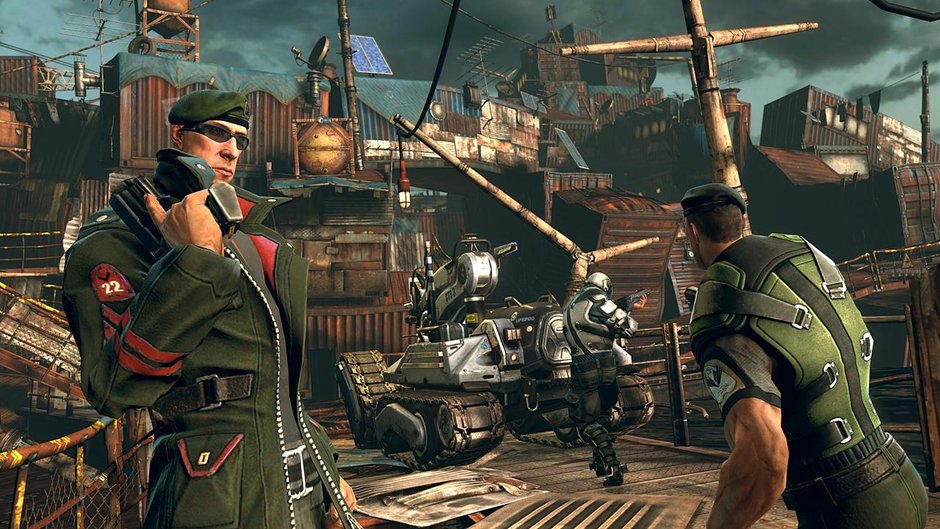
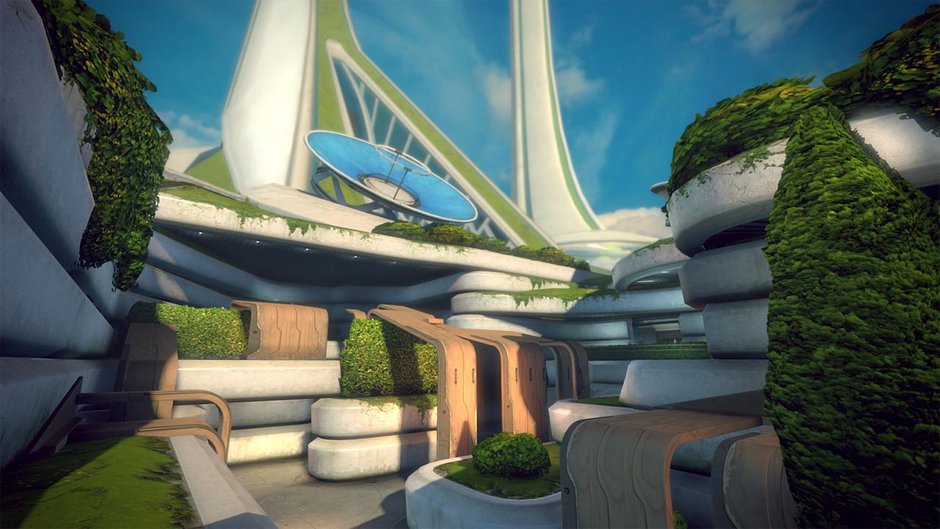
Well that was really fun because that was the first time we at Splash Damage produced our own original IP. Previously we got to work on Quake and Doom and Wolfenstein which is fantastic, because if you’re working on other people’s IPs that isn’t a bad place to start! So we needed to demonstrate we come up with a world. Arguably we overwrote that, that’s kind of an RPGs worth of back-story and world for pretty much just a multiplayer shooter. But it was great! It was great fun to do and the goals were it couldn’t look like anything anyone had seen before, and we wanted to be sticky, it’s a great test of a character. You turn the page and do they still linger in your mind?

Dickens is a great example of that. He’s got characters who only have a detail of their costume, he only talks about the guys’ waistcoat, but he’s really memorable, even after you put the book down you think what was it about that guy? So the goal was that the world itself would be the games main character and it would be memorable and even when you’ve finished playing you’re thinking ‘What was the deal with…Oh that, that’s the half of that that was in that other level there!’ It was trying to create a world complex and sticky enough so players will think about it even when they weren’t playing.Train2Game blog Brink image

Is that the reason behind the very distinctive art style Brink has?

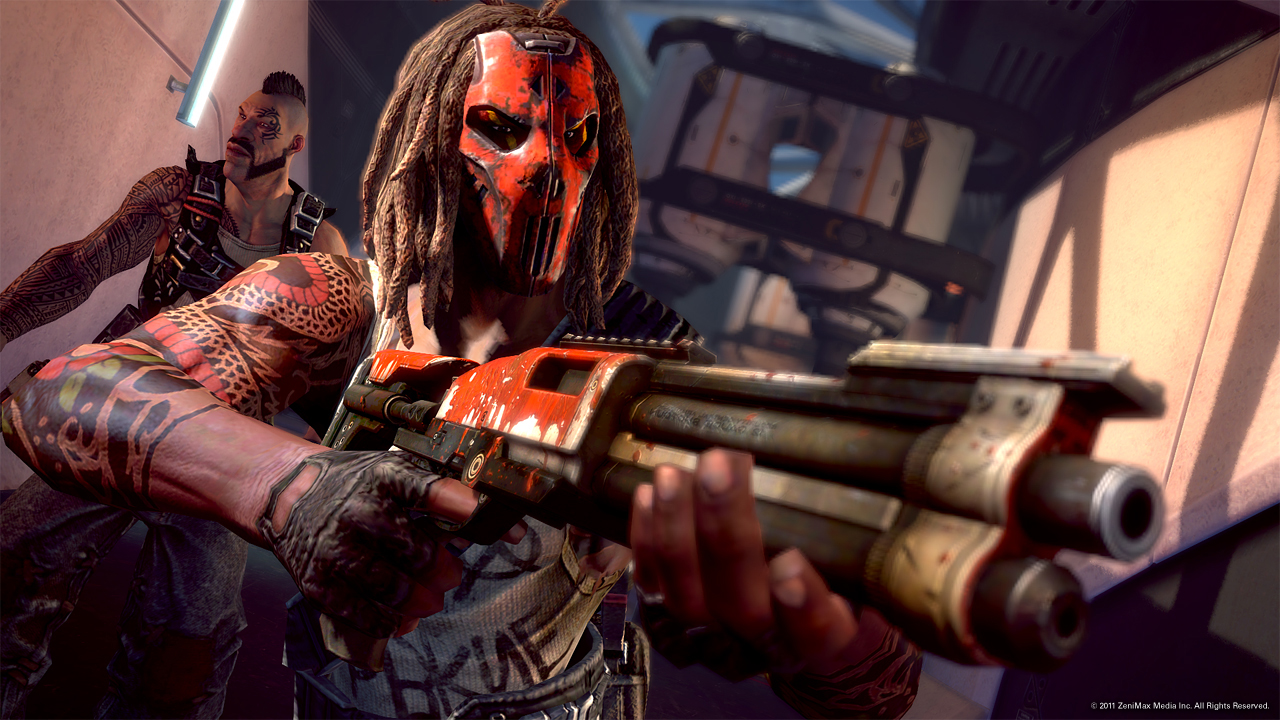
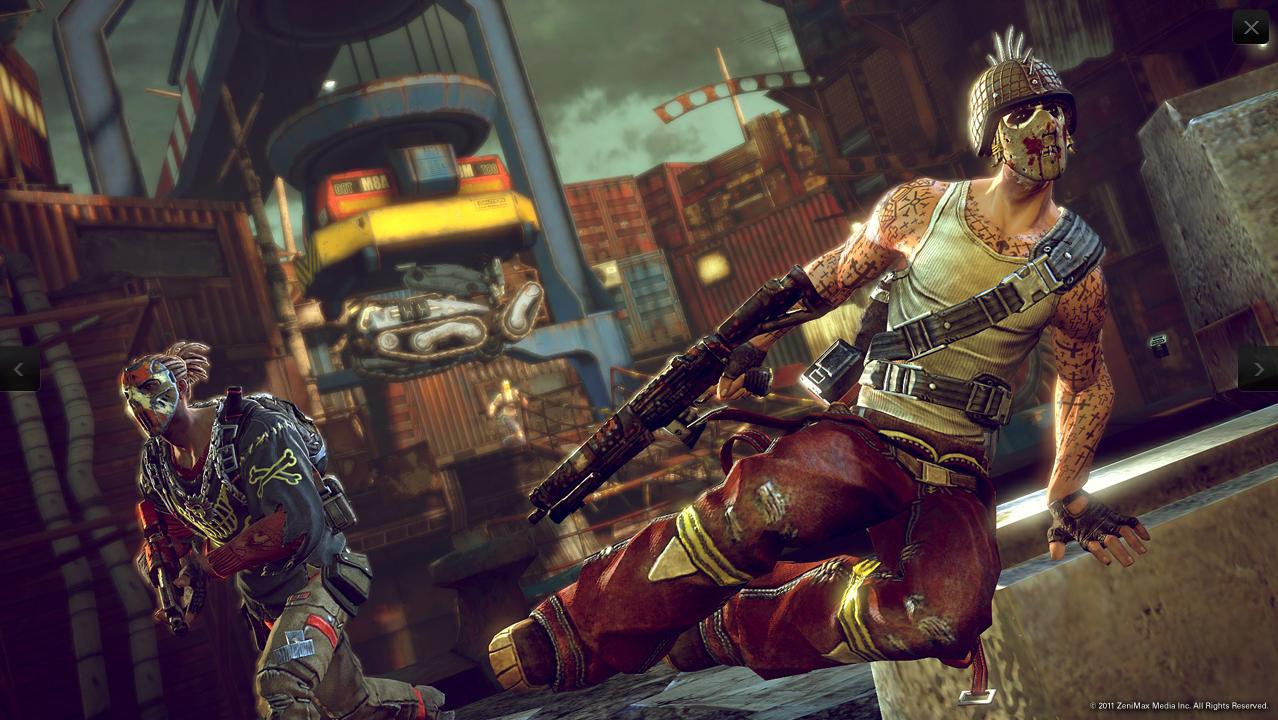
Partly. I mean partly that’s just to get away from photorealism because there are enough dark brown or green shooters and so it was a unique thing. Also for immersion, I mean realism doesn’t actually engender believability. In fact it turns out that you can exaggerate facially quite a bit, it’s whether there’s an immersive character or situation. But yes, partially it was also to be visually distinct. It made it interesting trying to direct for that with performance capture, because the actor makes a subtle gesture, but by the time it’s been replayed on this enormous hand model with these huge great meaty fingers, quite a subtle gesture turns into this huge operatic gesture. We didn’t see that coming, we should have anticipated that.

What were the challenges of writing a mainly multiplayer focused game in Brink?

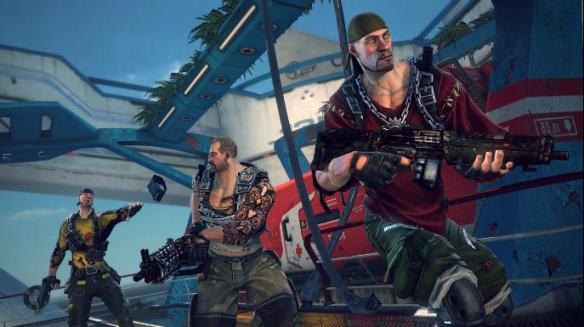
The problem is that you’ve got is all the writers tools are generally about a protagonist and you stick with this hero who works their way through. We didn’t have one – we had these three characters depending on what faction you chose and you saw cutscenes with them – but you weren’t one of them, you were just a member of their team.  The challenge is to make the player interactions meaningful so that when they press a button, they don’t just feel like ‘I’m running around and pressing a button on a controller or clicking a mouse.’ You’re feeling like ‘I’m one member of this team and I’ve picked this faction rather than the other and I’m in this location and I give a hoot about what the objective is.’

One of the things we did – for instance there’s a level called Container City and it’s a kind of slum – and if you go there as Security you’re told ‘They’re building a bio weapon, you’ve got to get this thing,’ and that’s a pretty important reason to go and get that thing, fair enough. But if you’re as Resistance you get told ‘They’re stealing our vaccine.’ So hopefully they care about that. Or my personal goal if they’re paying attention to the story – and lots of people don’t, that’s another thing – is they go which is it? And we’re never going to tell you definitively and it’s entirely plausible that it’s both because what do you make vaccines out of other than viral particles which could be used as a bioweapon?

The goal was that it wasn’t just ‘Take objective to place B,’ that we were going to dress it up in a fiction, so that even though it’s all just chaotic being shot in the head action, the narrative carries on even though the cinematic was over. That was the challenge.Brink
And what was the thinking behind adding the alternative game endings as missions?

Well we didn’t want to privilege one story over the other: if you win fantastic, if not that other thing happened. We didn’t want there to be a canonical ‘this is correct and all the other ones are wrong.’ Actually it turns out there is kind of a storyline but we didn’t want to collapse all the possibilities down unless we absolutely had to.

I think it’s a problem with lots of games that in their urge to explain everything they kind of explain everything away and it’s like an equation where it all factors out and there’s nothing left, it just goes, and it’s an exhaustive explanation of what’s going on and there’s nothing left to think about. So we quite like that there were these loose ends and the loose ends themselves would join up, and so players should have questions should have questions about ‘Why are they doing that?’ If they’re of a disposition to listen to audio diaries, ‘Oh that’s what that was about!’ Even if players aren’t into that I think they can sniff it in the time and trouble that’s been taken.

So that was the goal, even if people didn’t watch all of the cinematics or read all of the diaries, somebody has done the work and it does all add up to something.

Looking back at a Brink, if you could change anything, what would it be?

We weren’t able to do it, unfortunately, but it was very much the plan that you would be one of the characters in the cinematics, it would be you doing those things. But because we really wanted to let people choose their voice packs; that would’ve meant recording every line of dialogue in every single one of the voice packs and we just didn’t have the budget to do it. That I think would’ve changed the sense of story, because it would’ve been you going through it, not just three guys you might or might not care about. That would’ve been one thing that would’ve changed the meaning of the game and it’s a shame we weren’t able to do that.

Read part 2 of our huge interview with Ed Stern here.

Leave your comments here on the Train2Game blog, or on the Train2Game forum.

For more information, go to www.train2game.com

BAFTA’s public events and online resources bring you closer to the creative talent behind your favourite games, films, and TV shows. Find out more at www.bafta.org/newsletter, www.facebook.com/bafta or twitter.com/baftagames