Train2Game news: Auto Club Revolution dev Eutechnyx to open London office

British racing game developer Eutechnyx are to open a new publishing office in London.  The Gateshead studio is expanding to London in order to support the launch of its next title, Auto Club Revolution, due for release in 2012.

Train2Game students may have previously seen Eutechnyx Lead Programmer Dave Hawes give advice on getting into the games industry in this Train2Game video interview.

“We’re building a dedicated publishing team to support the global launch of Auto Club Revolution in key markets around the world” said Eutechnyx COO Darren Jobling.

“Our strategy is to secure the best people from the online games industry, and London gives us great access to an amazingly rich talent pool.”

“The development team in the North East of the UK includes some of the best people in the sector, and the opening of a London office will allow us to attract the right calibre of candidate to build a team with the publishing power behind it that the game deserves.”

As reported by the Train2Game blog, Eutechnyx were recently nominated for a global award.

Train2Game students can find out more about Eutechnyx in this feature about 7 UK game studios to keep an eye on.

So Train2Game, what are your thoughts on Eutechnyx creating jobs in London?

Leave your comments here on the Train2Game blog, or on the Train2Game forum.

[Source: GI.biz]

Train2Game interview: Bioware co-founders Dr. Ray Muzyka & Dr. Greg Zeschuk

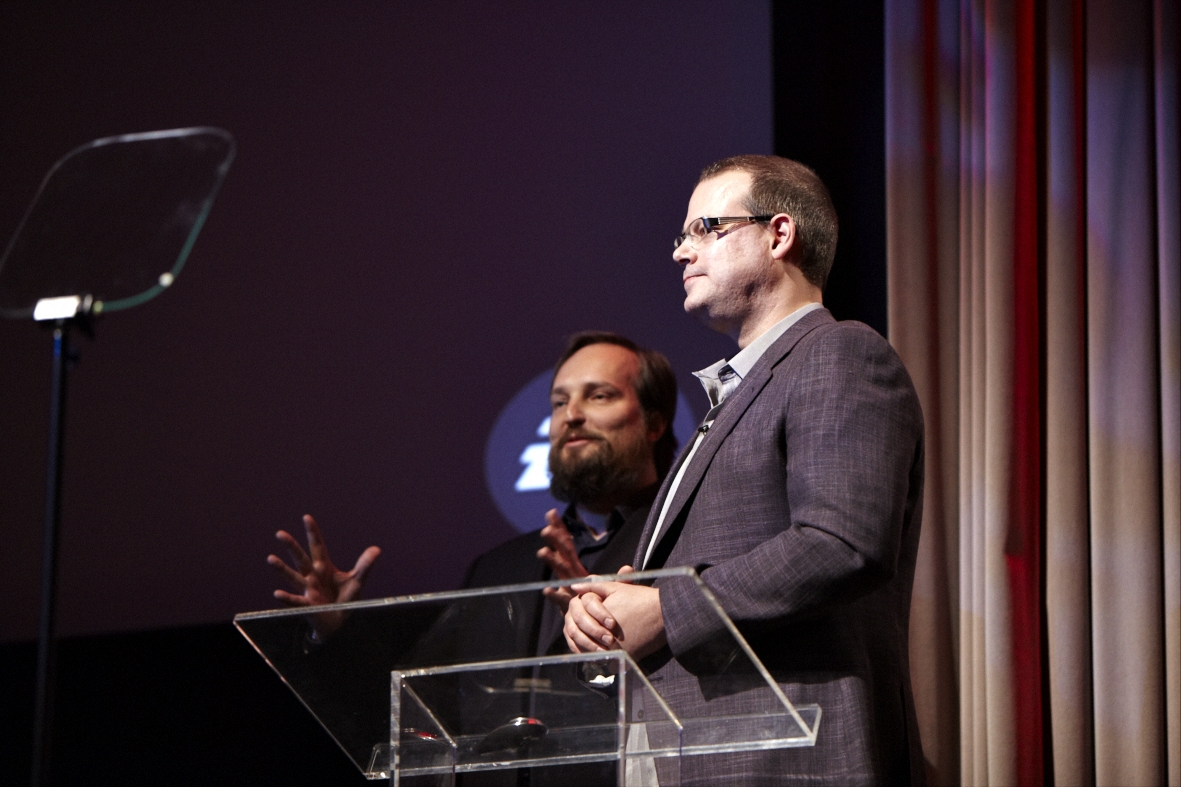
Train2Game attended the recent Bioware Lecture at BAFTA, presented by the studio founders Dr. Ray Muzyka and Dr. Greg Zeschuk. Their catalogue includes the Dragon Age and Mass Effect franchises, and their Star Wars: The Old Republic MMO is released next month.

While at BAFTA’s central London HQ, the Train2Game blog sat down with Dr. Muzyka and Dr. Zeschuk, both of whom were practicing doctors when they founded Bioware. They discussed the subject of their talk, the history of Bioware, and how they found the transition from working in medicine to working in game development. They also provided advice for those looking to get a job in the games industry.

Read the interview here on the Train2Game blog, or on the Train2Game Scribd page. Leave your comments here, or on the Train2Game forum.

We’re here at BAFTA for the Bioware Lecture, what is your talk about?

Dr. Ray Muzyka: We’re talking about games as art and we’re trying to illustrate that with some examples from Bioware, EA and other games within the industry and we’re also talking about the definition of art and games are maybe a different kind of art.  Innovative and progressive and fresh and maybe more powerful than other sorts of art. We’re going to touch on that and hopefully it’ll be interesting and provocative.

So where do you stand on the games as art debate?

Dr. Greg Zeschuk: Well it’s definitely a yes for us! What we do is we try and make the case using a definition form Tolstoy’s book ‘What is Art?’ and expand that and show how it applies to video games, looking at some examples and talking about how actually it’s a simple definition. If you convey emotion it’s art basically. So that’s really what we’re talking about, and there’s also some talk about what we do with that at Bioware, like what things do we focus on in that regard as well.

Tell us a bit about how Bioware came to be, how was the studio founded?

Dr. Greg Zeschuk: It’s funny, we’ve probably been doing this nearly 20 years. We were officially incorporated 16 years ago in 1995, but we were actually working on things a good few years before that. Ray and I met in medical school, we both loved video games. The third partner was also a doctor then but left very early in Bioware’s history and went back to medicine… of all things!

We actually practiced as doctors for a brief time back in the 90s, then transitioned into focusing just on games. Over time that’s what happened and Bioware grew and grew and grew to what it is today when it’s one of those things where you could never imagine where it would end up, like being here talking at the British Academy of Television and Arts.

Dr. Ray Muzyka: [Laughs] It’s pretty cool.

Dr. Greg Zeschuk: It’s not something you would’ve expected when we started! So it’s been an interesting and pretty remarkable journey. It’s built a lot on our core values, and the focus on humility and integrity and making sure that we always make great stuff our fans like and our people like making it. So it’s a happy eco-system that we like to drive.

How did you find the transition from medicine into game development?

Dr. Ray Muzyka: It was surprisingly easy, we didn’t stop medicine, we transitioned out of it. I did emergency medicine, I did locums basically, which are temporary replacement positions in small towns. It was exciting and exhilarating, then I went back to work at Bioware for the rest of the week. So you did that for a couple of evenings and then you did video games the rest of the time. Gradually the video games became more and more prevalent and I went back to school and got an MBA then stopped medicine at that time because I didn’t have any time. Greg you were similar weren’t you?

Dr. Greg Zeschuk: Yeah I worked one year less than Ray in medicine. I think it was making Bioware successful and making great games was just too exciting.

Dr. Ray Muzyka: There are principles that are relevant between medicine and games. The idea of having a collaborative team, working with nurses and physios and other doctors, ensuring you’re delivering high quality service experience to your consumer, the patient. There’s a lot of analogues there [between medicine and game development], especially now with the online connected experience. There’s also value in humility in medicine that really translates well to running a business or developing a game, like always trying to make sure you’re not taking anything for granted.

So if you see a bug, don’t assume it’s already known. You enter it and you fix it and try to do your best every step of the way. And if you follow those basic principles – lifelong learning is another one from medicine that’s relevant to business or gaming – never assuming you know what you need to know when entering a new market, new business model, new platform. But spending the time to play the content itself on the new platforms, listening to your fans feedback actively, it all links in some indirect hard to describe way that makes sense somehow!

And finally, what advice would you give to those looking to get into the games industry?

Dr. Greg Zeschuk: I think education is now a key part of it. One of the most important things you need to get into the games business is actually figure out what it is you want to do, whether it’s art, or design or programming and take the courses to do that. So get the training, but also do it yourself. Have fun, have a passion for it and practice outside of the formal training, and if you do those two things you’ll be in a tremendous position.

Thanks both of you for your time.

Leave your comments here on the Train2Game blog, or on the Train2Game forum. For more information, go to www.train2game.com

BAFTA’s public events and online resources bring you closer to the creative talent behind your favourite games, films, and TV shows. Find out more at www.bafta.org/newsletter,www.facebook.com/bafta or twitter.com/baftagames

Train2Game news: Game developers need to make new IP a franchise from the start say id Software

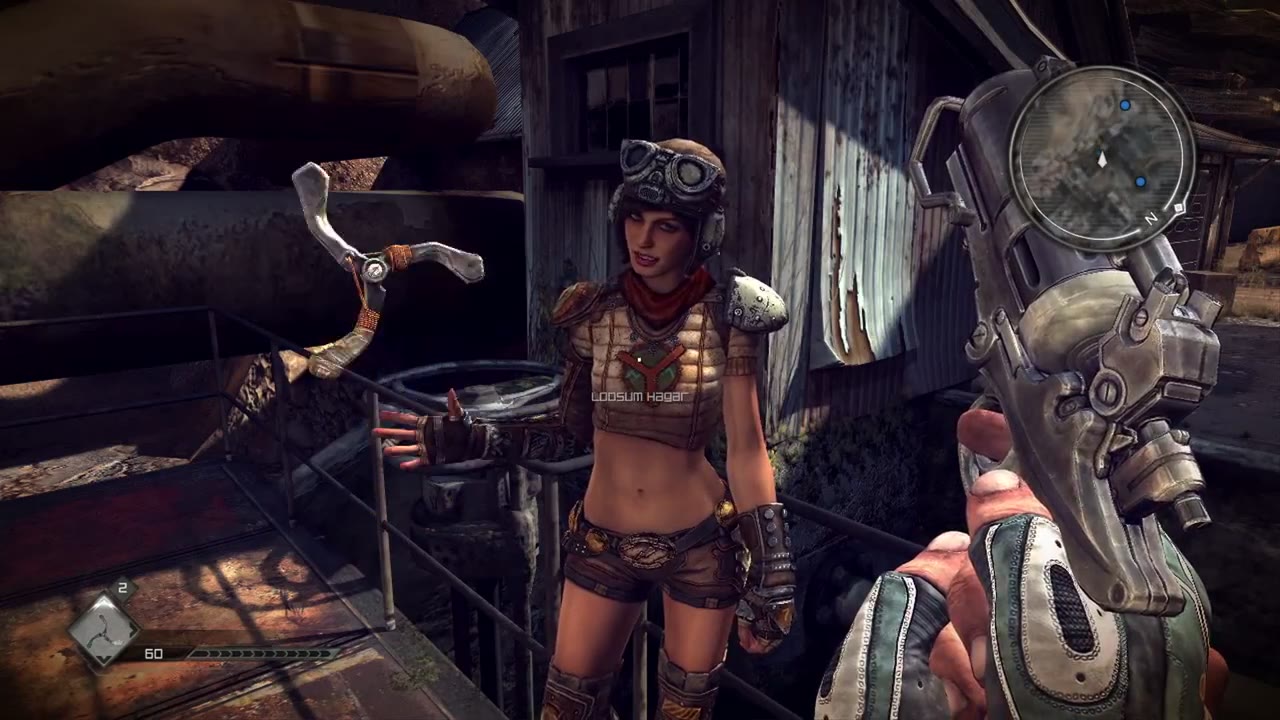
Train2Game students who go onto work on Triple-A titles will need to be ready to develop whole game franchises. At least that’s the case if id Software Creative Director Tim Willits.

“You need to make a franchise, especially for us. We’re doing everything we can to turn it into a franchise, “please let it sell so we can make another one!” he told GamesIndustry.biz.

And Willits said they needed to make sure the story was deep enough to do this from the start.

“Even from the beginning when we talked about the story and the setting, we said we need to make it rich, we need to have deep environment,”

“We have the comic books that we’ve used to support the game, we have the book we use to support the game, the iPhone – heck, the whole iPhone game was about Bash TV, which is only a ten minute experience in the overall game.” said id Software Creative Director.

He suggests that the RAGE franchise could even expand to include mobile and social games.

“So we definitely, from the get go, planned to make this a much bigger franchise, a much richer world, that allows us to have different games, and we can make more mobile games, heck, we could make a social game with Rage if we wanted to. And hopefully we can make a Rage 2. Hopefully.”

In an his in-depth interview with GI.biz, Willits handed out advice to those looking to get into the games industry: make sure you create things and finish them.

“If you want to make levels, make levels in you spare time, all the time. If you want to be an artist you always have to be drawing. If you want to be a programmer you need to make small apps. You have to have a passion to do it for free if you ever want to really get paid for it.” he said.

It’s very similar to the advice Willits gave Train2Game students about how to get into the games industry in an interview with the Train2Game blog last month.

Interested Train2Game students will be able to use RAGE’s mod tools following its release next month.

So Train2Game, what are your thoughts on Willits comments? Does new IP need to be considered a franchise from its inception? Or can games still be one offs?

Leave your comments here on the Train2Game blog, or on the Train2Game forum.

[Source: GI.biz]

Train2Game interview: Valve’s Chet Faliszek on CS:GO


Train2Game attended the Eurogamer Expo, and during our time there we had a chat with Valve Software writer Chet Faliszek about Counter-Strike: Global Offensive. In an in depth interview, Faliszek discusses the reasons for making CS: GO, bringing the PC title to consoles,  the importance of beta testing and much more.

The Valve Software writer also tells the Train2Game blog how important modding can be as part of finding work in the games industry.

Read the interview below, on Train2Game’s Scribd page, or listen to it via Train2Game Radio.

We’re over ten years on from the original Counter-Strike, why is the time right for CS: GO now?

Counter-Strike: Global Offensive started because we were actually originally just going to do a port of Counter-Strike: Source for XBLA. Internally we started playing it a lot and released that ‘Oh, this is a lot of fun’ We forgot how much fun this translates over to the 360 now we’ve got really good at this, so we should make a bigger investment, a full game and expand out what it is.

What are the main Game Design changes that have been made to CS: GO?

One of the cool things with Counter-Strike is it’s been around for so long, that there’s a lot of feedback we can get about what works and what doesn’t work. So we’ve taken a look at 1.6, we’ve taken a look at Counter-Strike: Source, we’ve kind of taken the best of both worlds and we think we’ve created the best version of Counter-Strike.

Which modes will be available in the upcoming game?

We’re going to have the classic bomb planting and hostage and rescue, and were also going to have – again looking back to the community, they had worked on gun game – and so we’re incorporating gun game directly into what we call ‘Arsenal modes.’  We have two of those modes; one is Demolition and that’s about bomb planting and team based Gun Game. And then we also have Arms Race which is the classic Gun Game where every kill you get, you get a new gun and then eventually you get to the knife round.

How difficult has  it been to bring what’s fundamentally a PC game onto consoles?

We don’t really ever look at games that way. As a company, as gamers ourselves, we play on too many different platforms just to think of a game being that anymore. I mean, I play Left4Dead on console as much as I play it on PC, so you know, I think we’ve become accustomed to that.

It’s been fun watching people jump down here and say ‘Oh man, I can’t believe you don’t have keyboard and mouse here,’ and then they play on the PS3 and go ‘Oh yeah, that works pretty well.’

It’s had a good reaction from the hardcore Counter-Strike fans then?

Yeah, actually what’s really funny is at PAX back in Seattle, we were showing it on the 360 and we had a pro-gaming website come in really dissing that we had it on the 360. And they sat down and ran over everybody and they loved it.
Is there a mode for players who might be new to Counter-Strike, but don’t want to get run over by veteran players?

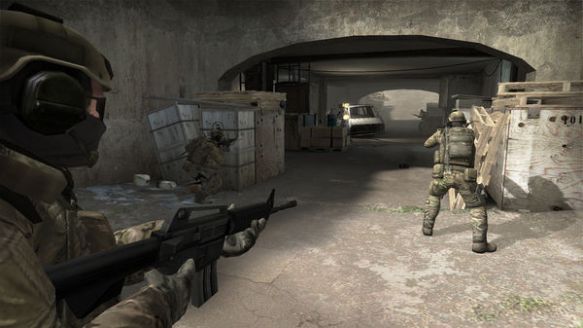
Well actually in all of our modes we’re going to make sure that doesn’t happen, but we have the Social Mode which you’re seeing here. You get all the weapons, there’s no friendly fire, all talk is on and it’s a place to have fun with your friends and you’re talking about your girlfriend’s or what you’re talking about on TV while you’re playing the game.

But also there’s also a skill based mode which is all about the skill based matchmaking, so that’ll always make sure you’re having a competitive game without getting owned by someone who’s been playing for  ten years and is tonnes better than you – they’re going to be playing against different people than you will.

You’re giving out beta keys here, how important is that phase in the development of a game?

It’s really important to us because we’re going to let that drive the release date, because we’re really looking to get the feedback from the community over the changes we’ve made. We’ve brought over some stuff that was good from Counter-Strike: Source and we’ve brought over some stuff that was good from 1.6, so it’s going to be interesting to see how the communities react.

Already we’ve got some positive feedback from some of the pros, but we’re telling the communities it’s not going to be either, it’s going to be something new so let’s play it, let’s give feedback and let’s go from there.

Valve Software has a reputation for hiring modders, is modding therefore a good way for a budding game developer to get noticed?

It’s a really good way for someone to get noticed because it shows that you’re able. Normally modders have to work as a team and that’s important, and they also have to be able to finish something and that’s really important. So those two things together are a really good way to demonstrate that you’re ready to work in the industry.

What other advice would you give to someone looking to work in the games industry?

Make sure you’re doing something.  Do whatever you’re doing, like we (at Valve) weren’t necessarily writing for games when Gabe (Newell) tapped us, but do whatever you do as well as you can and with a view as to what your eventual goal will be.

Anything else you’d like to add about CS: GO?

We’re going to have the beta starting in October, check it out. We think it’s the best version of Counter-Strike there is, and you can help us make it the best version.

Thanks for your time.

The CS:GO beta begins in October, with a Xbox 360, PlayStation 3 and PC released scheduled for early 2012.

Leave your comments here on the Train2Game blog, or on the Train2Game forum.

For more information about Train2Game, go to www.train2game.com
Train2Game industry experience diaries from Darren Price & Laurence Gee

Train2Game Game Designer Darren Price is on a Train2Game work placement at DR Studios. In his latest Train2Game industry experience diary, Darren discusses building the in-game user interface.

Meanwhile, Train2Game industry experience placement student Laurence Gee looks back at what he’s learned during his time in a game development studio.

Read both entries below here on the Train2Game blog.

Train2Game student Jonny Robinson industry experience diary No.8

Train2Game Game Designer Jonny Robinson is on a Train2Game work placement at DR Studios. In his latest Train2Game industry experience diary, Jonny discusses designing levels for iPhone title Bug Wings.

Read Jonny’s latest industry experience diary here on the Train2Game blog, or on the official Train2Game industry experiences website.

You can also get a taste of Jonny’s experiences at DR Studios by watching his industry experience video diaries.

Train2Game industry experience diaries from Darren Price & William Alexander

Train2Game Game Developer Darren Price and Train2Game Artist & Animator William Alexander are on Train2Game industry experience placements at DR Studios.

In their latest industry experience diaries, Darren discusses the Alpha build of their game, while William writes about creating an art style.

Read the industry experience diaries below here on the Train2Game blog, or on the official Train2Game industry experience diaries website.

Leave your comments here on the Train2Game blog

Train2Game student Jonny Robinson industry experience diary No.7

Train2Game Game Designer Jonny Robinson is on a Train2Game work placement at DR Studios. In his latest Train2Game industry experience diary, he discusses what makes an ‘awesome Game Designer’

Read Jonny’s latest industry experience diary here on the Train2Game blog, or on the official Train2Game industry experiences website.

You can also get a taste of Jonny’s experiences at DR Studios by watching his industry experience video diaries.


Train2Game at gamescom Tim Willits Creative Director of ID Software talks about Rage to Danny Palmer

Train2Game at gamescom Tim Willits Creative Director of ID Software talks about Rage to Danny Palmer and he shares his tips to working in the games industry.