Train2Game’s Eurogamer 2011 Competition winner!

Train2Game are pleased to announce that Train2Game Designer student Kren Cooper is the winner of our Eurogamer competition!

Kren’s excellent photo of him showing off his blinding Train2Game t-shirt at the Eurogamer Expo has gained a whopping 668 ‘likes’ on Facebook, netting him a brand new iPad2!

Well done Kren, your iPad2 will be with you soon!

Find out more about Kren in his interview with the Train2Game blog earlier this year.

Train2Game Game Designers still have time to enter the Train2Game Design Constructor competition for an Apple iPod Touch. The competition closes on Sunday.

Train2Game news: DICE detail how open beta changed Battlefield 3

Train2Game students were among the millions who took part in the Battlefield 3 open beta.  Developer DICE have has thanked everyone who took part, and has detailed some of the changes to Battlefield 3 as a result of the open beta.

“On behalf of the entire team at DICE, I wanted to say thanks to everyone who played and participated in our Battlefield 3 Open Beta. The information that we’ve gathered from your play time is invaluable. It will help to make Battlefield 3even better!” DICE’s Tommy Rydling wrote on the PlayStation Blog.

“But before I leave you, here is a short selection of just some of the hundreds of changes and additions we are making to the game before launch, as a direct result of your feedback in the Open Beta:

Improved Squad Functionality

There will be improved squad functionality in the retail game (including but not limited to): the ability to create squads prior to launching into a game, sticking with your squad when joining a game and continuing together through future games (if team balance on the server allows it), inviting friends to a squad, and changing squads once in game.

More Accessible Settings Menu

The ability to modify your settings via the deploy screen has been added into the retail game.

Improved Kill Cam

In the Open Beta, the Kill Cam would sometimes behave erratically. This has been fixed for the launch of the retail game.

Netcode Optimization

The netcode is one of the many things that we tested as part of the Open Beta and it was not necessarily reflective of the final retail game. The DICE team appreciates, and has heard, the feedback you’ve provided and is further optimizing online play.

Train2Game students will be aware that beta tests can be a hugely important part of game development, but as previously reported by the Train2Game blog, DICE believe players who complained about bugs didn’t understand the meaning of a beta test.

Train2Game students can get an in-depth look at the importance of beta testing as part of a huge Train2Game blog interview with Trion Worlds.

So Train2Game, what are your thoughts of DICE’s reaction to the Battlefield 3 beta? What are your thoughts about the changes? And are you looking forward to Battlefield 3?

Leave your comments here on the Train2Game blog, or on the Train2Game forum.

[Source: PlayStation Blog

Train2Game news: Next-Gen Xbox console ‘Xbox Next’ rumoured for 2013 launch

Train2Game students will get their hands on the next-gen Xbox console during 2013. That’s according to sources of Develop Online.

Reportedly codenamed ‘Xbox Next,’ Develop reveals sources ranging from chip manufactures to middleware firms say they expect the next-gen Xbox console to be revealed at E3 2013 before going on sale in the months afterwards.

It’d point towards a release in the run up to Christmas 2013, and if true, Train2Game students may want to start saving now!

Develop also report that British developer Lionhead are working on an internal project called ‘Fable Next’ and Unreal Engine 4 could be available before the 2014 release date reported on by the Train2Game blog.

Develop report that Microsoft has declined to comment.

So Train2Game, what are your thoughts on the reports? Do you believe we’ll see ‘Xbox Next’ before the end of 2013?

Leave your comments on the Train2Game blog, or here on the Train2Game forum.

[Source: Develop Online]

Train2Game news: EA’s Peter Moore questions role of handheld consoles

Train2Game students will be aware the impact the iPhone has had on the games industry, with millions of people carry devices which allow them quick access to cheap games.

With the success of smartphones, EA COO Peter Moore believes there could be problems for dedicated portable gaming units like the PlayStation Vita and Nintendo 3DS.

“I think Sony does brilliant hardware, as we all know. I think the broader question is what is the role of dedicated handheld gaming years from now?” Moore told The Sydney Morning Herald when asked about the PlayStation Vita.

“More and more we see the ubiquity of smart-phones and tablets, how does a dedicating gaming device fit in, add value, and still get the same volumes that it needs in terms of hardware that we were used to in the golden days of Game Boys and PSP?”

“So I think the broader question is what is the role of a dedicated device compared to these relatively cost-effective tablets and smart-phones that have great screens and plenty of buttons to control the game with?” he said.

As previously reported by the Train2Game blog, Nintendo have stated that they don’t believe they’re competing with gaming on increasingly powerful smartphones. Capcom however, believe the rise of the iPhone is drawing users away from traditional handheld consoles.

Meanwhile, Sony’s PlayStation Vita will be able to play Android games. See the Train2Game blog for more.

So Train2Game, what are your thoughts? Are mobiles a threat to the likes of the PlayStation Vita and Nintendo 3DS? Or will there always be a market for dedicated handheld consoles?

Leave your comments here on the Train2Game blog, or on the Train2Game forum.

[Souce: Sydney Morning Herald via Industry Gamers]

Train2Game news: Life experience great for game design ideas – Blizzard

Train2Game Game Designers will appreciate this, it’s advice from Blizzard on how to keep your stories and ideas fresh, and it’s to base concepts on your own life experience, even if it’s only loosely.

Train2Game students will know that Blizzard know a bit about successful game design, with 12 million still playing World of Warcraft.

“I’ve been in this racket about 17 years, and you tire out. How do you keep your ideas fresh? Well, the one thing that never stops is living.”  Blizzard Vice President of Creative Development Chris Metzen told PC Gamer.

“We have experiences. We grow as people. And really letting those experiences come forward – kind of being naked with them – that’s the kind of thing people can’t compete against. Everyone can come up with a new Trilithium Crystal Warp Drive, but what you can’t argue with is a person’s experience and the truth of it.”

And Metzen says Blizzard encourages their Game Designers to use their own experiences to create in-game content.

“So the trick from a leadership standpoint at Blizzard is to make it OK for these writers to really bring themselves out to affect these quests and characters. Ultimately, that’s what sings forward.”

“The clever shit will get trounced in no time. It’s like gameplay mechanics. You can put out an RTS with the best mission ever. Well, another company will put out something even better, because we’re all learning from each other.” he added.

So Train2Game, what are your thoughts on Metzen’s comments? Could you use your own experiences to create characters and scenarios?

Leave your comments here on the Train2Game blog, or on the Train2Game forum.

[Source: PC Gamer]

Train2Game news: GTA only “scratching the surface” of open world game design

Train2Game students will naturally be very aware of iconic Grand Theft Auto series and how it has arguably revolutionised gaming. Various other titles have used game design elements, such as open world environments, pioneered by the games in the series and Grand Theft Auto III in particular.

But despite Grand Theft Auto III breaking new ground with open worlds when it was released a decade ago, Rockstar’s Dan Houser believes there’s still plenty to come from that particular type of game design.

“I think there’s something really interesting in the open world experience. Obviously we’ve made like ten of them now and they still don’t feel boring to me. It still feels that we’re only scratching the surface of that potential. But who knows what we’ll be doing?” he told IGN.

When asked what Rockstar will be working on in future, Houser says he doesn’t mind so long as the games are of high quality and the developer is still running well in another ten years.

“We’ll hopefully have done a bunch of interesting games in the next ten years. That’s always the goal. I’ve never been that good at the futureology side of game-making. We never really care what the name is on the box, either. The name Grand Theft Auto, the name Max Payne, the name’s Red Dead, the name’s Table Tennis, it doesn’t really matter as long as the game’s cool,” he said.

“I would never have believed you would have been talking about this in ten years time. We were still talking about Space Invaders [ten years ago], and that was already 20, 30 years old then. Hopefully we’ll continue to do interesting stuff, that’s you know, that’s kind of all you can hope for.” he added.

To celebrate the ten year anniversary of Grand Theft Auto III, the game is being released for iPad and Android tablet devices. And while there’s been no official word on Grand Theft Auto V, the Train2Game blog has previously reported that analysts believe it’ll arrive in 2012.

Train2Game students may be interested to hear that the original Grand Theft Auto project was almost scrapped, before a bug made the game more exciting to play. It’s a lesson to Train2Game QA Testers that bugs aren’t always a bad thing!

So Train2Game, what are your thoughts on the legacy of Grand Theft Auto? How do you believe game design of open world titles can be improved? And do you believe Rockstar will still be doing what they do in ten years?

Leave your comments here on the Train2Game blog, or on the Train2Game forum.

[Source: IGN]

Train2Game news: Gears of War director Cliff Bleszinski wants Avatar visuals for next-gen

Train2Game students will agree that there are some games with amazing graphics out there, but Gears of War 3 Design Director Cliff Bleszinski believes that they can get much better.

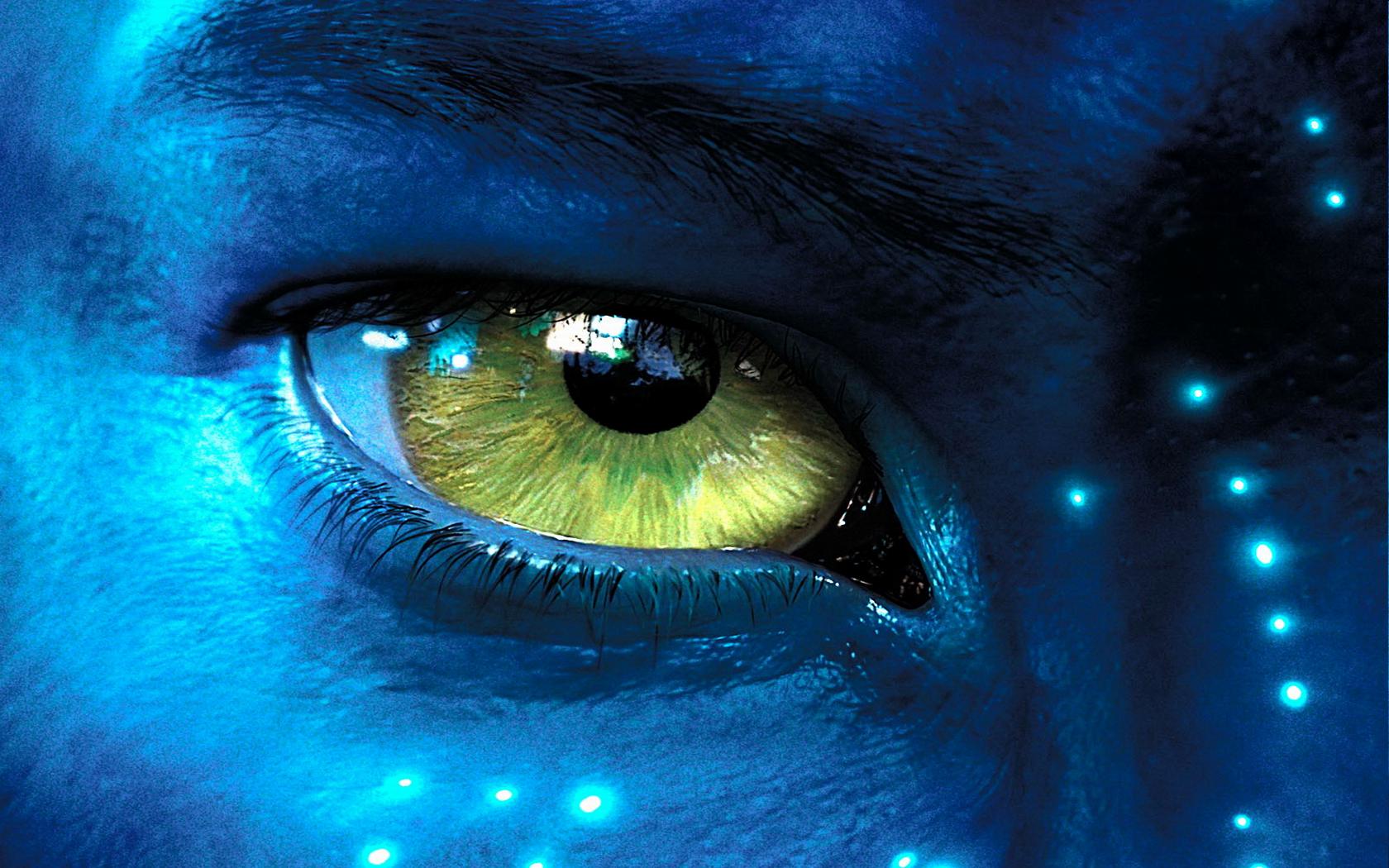
How much better is that? Well, the Epic man believes next-gen games should be able recreate the CG visuals of Avatar!

“I’m sorry, do you think graphics are good enough? No they’re not!” he told OXM.

“The Xbox 360 is great, we’ve pushed it further than we ever have with Gears of War 3, but I want Avatar in real-time and beyond, I want fully realistic CG, and are we there? Absolutely not. I think there’s absolutely room for improvement,”

But while Blesizinski – along with Train2Game students, no doubt! – wants better graphics, he admits that looks aren’t everything but they can make a gameplay experience much more impressive.

“Do graphics make gameplay? No. But when I fire up my projector back at my house, put Avatar on – it still makes your jaw drop, it’s like a giant portal to another planet. I think we still have a long way to go before we get there, and I want us to get there.”

However, the Gears of War Director added that it’s online that’ll be the most important thing for games and their developers in future.

“My money for the future of everything is on those who understand the online space the best. Because this is the world we live in, we’re always connected” he said.

The whole OXM article about what Epic wants for next-gen consoles should make interesting reading for Train2Game students.

Despite Bleszinski’s desire for games to be developed with Avatar like quality, the Train2Game blog has previously reported that he believes there’s still much more to come from current gen consoles.

And not so long ago, he gave some advice on what aspiring game developers, such as Train2Game students, should do to stand out. Read it here on the Train2Game blog.

Cliff Bleszinski is Design Director at Epic Games, and as Train2Game students will know, Epic has partnered with Train2Game for the Train2Game & Epic Game Jam which takes place on 4th, 5th and 6th of November. 

What are your thoughts on Bleszinski’s comments? Do games need Avatar like visuals? Can you see it happening?

Leave your comments here on the Train2Game blog, or on the Train2Game forum.

[Source: OXM via Industry Gamers]

Train2Game interview with Trion Worlds Senior QA Tester Karl Tars – Part 3

End of Nations is an upcoming MMORTS from Petroglyph Games and Trion Worlds. The game was on display at the Eurogamer Expo, and the Train2Game blog caught up with Trion Worlds Senior QA Tester Karl Tars to find out more about the game, QA Testing and how to get into the industry.

In the final part of an in-depth three part interview, Karl Tars tells the Train2Game blog what his role as Senior QA Tester involves, the importance of QA in game development, how he got into the games industry and he offers advice on finding work as a QA Tester.

Read it below here on the Train2Game blog, or on the Train2Game Scribd page.

Part 1 and Part 2 of our interview are both available to read here on the Train2Game blog.

So, tell us a bit about your role as Senior QA Tester.

My role is…Petroglyph gives us the build then we go in to find all the bugs. We’ll report them so they get fixed so that the game itself plays smoothly, no crashes, no textures going weir. But we also go in and look for gameplay fun bugs, like ‘This feels overpowered, this feels underpowered, it’s not really clear when I’d ever use this, special ability,’ things like that.

That’s what we do, we’re officially called Quality Assurance but the actual role is more quality assessment; we don’t assure quality, we don’t fix the bugs, we just assess what the game is and tell them ‘Hey, this is how the game is, is that what you really want?’ and let them make the decision as to whether they want to fix it or whether they want to change it or drop it. A lot of times they’ll say ‘You know what, we can’t make this work, you’re right it’s not going to work right’ so they’ll drop a feature and change it to something new entirely.

How important is the QA process to game development?

I’d say it’s a critical step. In previous times there was a period where it was kind of neglected, they wanted to know does the game crash, does the game function, but they didn’t really care about the actual quality in terms of fun gameplay values. Trion certainly doesn’t do that and other companies have caught on that ‘Hey, we can’t just keep pushing out these terrible games forever,’ and eventually the consumer catches on too and stops buying them.

So the QA process is really critical, and it frees up the developers. Instead of having to spend 3 hours figuring out how to cause this crash, we do that: we figure out exactly how to cause it and it gives them the time to keep working on the game, keep programming, keep adding new units. And then once they know how to break it, they can go in and fix it quickly and get their jobs done much more efficiently.
How did you get into your role in the games industry?

I took a rather long path for it; I actually have a Computer Science degree, I can programme but when I graduated it was a terrible time for programming and so I picked up a QA job at Vivendi Games in L.A. They’ve since been bought out by Activision, but basically it was a temporary position and I was good enough that they kept me on a lot longer than the average temp.

After it was bought out by Activision, I thought ‘I’m not too interested in working for them, they don’t treat their employees as well as I’d like,’ so I moved onto Trion Worlds who have been fantastic.  For the most part, anyone who has a good eye, likes playing games and can clearly, precisely say what they did and how to reproduce what they just caused, they can have a job in QA.

What advice would you give to anyone looking to work in QA?

The main thing to do if you want a job in QA is working on your skills at spotting things. A lot of us are game players, and that’s not necessarily what you’re going to be doing in testing. Testing isn’t just playing the game; a lot of it is very repetitive, where we’ll go through every single unit, make sure that every single ability works, make sure every single texture on a map looks correct.

So as you’re playing through a game and you spot a texture out of alignment? That’s something that QA would do. If you can cause the game to crash consistently in a certain way, that’s something QA have to do.

So spotting a bug is the first half of it, the second half of it, is having good English skills or whatever other languages your company works in.  Being able to clearly say ‘do this, do this, do this’ – the way I was told to practice that was imagine you have an alien, they understand the language in some respects, but they don’t necessarily know a lot of the noun, they wouldn’t know what a fork this, they wouldn’t know what a knife is.

Now try and tell them how to make a peanut butter and jelly sandwich when they don’t know what any of those things are. And you have to describe them being very descriptive and giving a good guide of exact steps and also including things like ‘it doesn’t work if you do this,’ so that when the developer gets it they can just immediately go click, click, click, straight through your steps and ‘Oh there’s the issue, I can see it now, and now that I can see it on my machine I can fix it really easily.”

Thanks for your time Karl.

End of Nations is scheduled for release next year.

Leave your comments here on the Train2Game blog, or on the Train2Game forum.
Train2Game interview with Trion Worlds Senior QA Tester Karl Tars – Part 2

End of Nations is an upcoming MMORTS from Petroglyph Games and Trion Worlds. The game was on display at the Eurogamer Expo, and the Train2Game blog caught up with Trion Worlds Senior QA Tester Karl Tars to find out more about the game, QA Testingand how to get into the industry.

In the second part of an in-depth three part interview, Karl Tars tells the Train2Game blog about the team behind End of Nations, the importance of beta testing during game development and how it can be useful for those with aspirations to work in the games industry. Read the interview below, or on the Train2Game Scribd page.

Part 1 is available to read here on the Train2Game blog.

Tell us about the team behind End of Nations

The way it works is Petroglyph Games are the developer, that’s a studio founded by a bunch of former developers from Westwood Studios, the guys who did Dune and Command & Conquer. So veterans’ of those games are designing and developing the game. Trion Worlds is publishing, we’re giving them the servers and a lot of the back end infrastructure that makes the game work. That’s the studio that’s behind it.

When is End of Nations scheduled for release, will there be a beta?

We have a beta coming up, so if you go to www.endofnations.com you can sign up for the beta right now. If you have an existing Rift account, that account will work for End of Nations as well. We’ll have more information in the next few months as we don’t have a confirmed time for that for the release, but it’s going to be a lot of fun and I’m looking forward to playing it on my own!

How important is the beta for the game development process?

Betas are really critical in terms of making sure the live servers can handle the real loads that players will put on our servers. We can test some of that in our labs but we certainly don’t have the manpower to try having 100,000 people connecting at once and with every single weird configuration of computer that’s out there. We don’t have the resources regularly do that.

Also, as clever as we are in QA, we’re not as good as every single player out there. We’re not going to be able to figure out all the interesting ways of using abilities that just break the game and make it un-fun for the other team. And so it’s also really important to have people go out there and try random things and finding ways of exploiting it so that we can tone those down or make them work within the system so it doesn’t feel unbalanced.

Is getting involved with beta testing a good way of getting a job in QA?

It can be. It used to be that was one of the primary ways of getting in in older days. However, more recently betas have become almost a marketing type of thing where the majority of people playing in a beta, they don’t really want to test, they just want to play the game early and see as they like it more like a demo than a testing environment.

However, if you can find a lot of good bugs and you can report them to the team in a good way, you can develop a fairly good rapport with some of the developers and that can get you in.  And if nothing else it gives you a chance to see these incomplete builds where it’s more likely to have bugs in it and so you can learn how to deal with that type of thing.

It’s definitely a way of getting in, but I wouldn’t say it’s a good way of doing it these days, but it’s definitely a good way to practice, get started and if you apply to the same company that you did a beta for, you can say ‘hey, I found this bug and these are the steps for it.’ That’s going to really impress the QA leads who are reviewing it and saying ‘This guy knows exactly how to write a bug report, he knows our game, he knows how to look for a bug and report it.’ That’s really what’s going to get you in.

Part 3 of our interview with Trion Worlds Senior QA Tester Karl Tars will be available soon. End of Nations is scheduled for release next year.

Leave your comments here on the Train2Game blog, or on the Train2Game forum. Part 3 of the Train2Game interview with End of Nations Senior QA Tester Karl Tars is here.

Train2Game interview with Trion Worlds Senior QA Tester Karl Tars – Part 1

End of Nations is an upcoming MMORTS from Petroglyph Games and Trion Worlds. The game was on display at the Eurogamer Expo, and the Train2Game blog caught up with Trion Worlds Senior QA Tester Karl Tars to find out more about the game, QA Testing and how to get into the industry.

In the first part of an in-depth three part interview, Karl Tars tells the Train2Game blog about End of Nations and the reasons behind key game design features. Read it below, here on the Train2Game blog, or on the Train2Game Scribd page.

So, what is End of Nations?

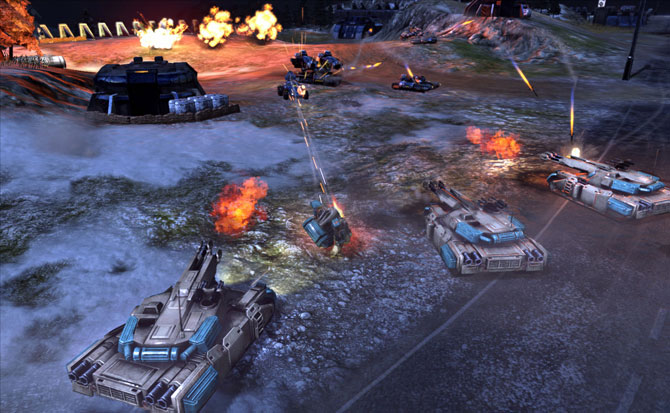
End of Nations is an MMORTS. The basic idea is we looked at Starcraft and said ‘8 players in the game? That’s not enough.’ What we’re showing off here is 16 players and we have a couple of maps that are going up to 50 players and we’re hoping that we can push it further than that and just have massive real time strategy combat.

The back story for the world is that there’s been an economic collapse, and so a group called The Order of Nations has come in and started to establish order.  They’ve gone through and destroyed some of the other nations that were still OK, then the people after they realise ‘Order’s restored, that’s great, but I’d like to be able to go outside and do my own thing’ – and that’s not being allowed, they’re very anti-freedom, very totalitarian – and so a couple splinter groups have shown up.

There’s a Liberation Front which are very pro-freedom, patriotic, and they’re going to be our brute force faction with big armour, big weapons and not a lot of subtly. The Shadow Revolution is the other faction, they are a lot more about stealth, tactics, hit and run strikes…they’re going to have a lot of little tricks where they can leave that’ll weaken the enemy and then they’ll strike. Or they’ll come out of stealth and they’ll have an invisibility cloak that allows them to hide, wait for the right time to strike and then launch their attack when they’re ready.

The basic idea is that these two groups are trying to take down The Order of Nations in their own ways and for their own reasons, and since they don’t see eye to eye you’ll also have a lot of times where they’re going to be fighting each other.

How does the gameplay work?

All the units you’re going to see today are from the Liberation Front because they’re the most balanced and the most ready to go and so the most fun to play with at the moment.  What we have here is am Infiltration loadout, its infantry, a couple of artillery units and flame tanks.

Your basic gameplay is your standard top down Real Time Strategy; you get to move your units forward. What you’re going to want to do, for example, here we have a resource point. You have resources on the corner [of the screen] and they trickle in very slowly at the start, and it’ll allow you to respawn your units if they get destroyed. But if you take a resource point they start coming in faster so the majority of each map is going around capturing strategic points that are needed.

There are also Landing Zones. If you capture a Landing Zone you can bring your units into the front line when they get destroyed. We have a Bombing Run and when this happens when it’s captured, the enemy area will start coming under attack.

So if I’ve captured this resource point and we’re trying to gain resources a little bit faster – every time it ticks we’ll get a little bit more than we did previously. That’s going to allow me for example put down a turret [to defend against enemy forces]

And so rather than doing the normal base building, instead we have these structures you can place temporarily. They’re good for small temporary bases but not a standard build up your infantry, build up your main defences and turtle on your side while you wait for the enemy.

From a game design perspective, what were the main reasons for including these mini-bases?

What they allow you to do is to make a temporary base; it’s a way of getting that little extra push to get in. So, for example, that’s going to take their attention off my units so they can come in and attack more freely. Or if they’ve captured my units in it’s going to help me fire off at them. It’s possible to get a depot that’ll allow your units to have more armour so they can take more damage.

There’s a repair depot so your units can get repaired in a forward location. But there are specific structures, and a lot of easy ways to take out other structures so they’re not going to last forever…you can have up to six of them, but the idea is you have to think about where you want to put them. I remember when I used to play Starcraft, you used to do a Proton turret tree where I’d keep adding turrets in front of my other turrets and I wouldn’t even attack with units, just push turrets more.

You can’t really do that here, you’ve got to think ‘I want this point’ right now so you set up your turrets offensively to take that point, capture it and then move on and then you remove your last set of turrets to assault the next sector.

So the game design makes the gameplay a bit more challenging and more interesting to play?

Yeah, it’s less defensive and less turtling; it’s more about constant movement and you’ll want to be always looking at your next objective or looking at the next point to defend, but you never have a time where you just sit, turtle up and wait for the enemy to attack you. You’re always going to want to keep moving, because there’s also, like I said the Liberation Front has got a nuke, they will launch it at you and they’ll wipe out all your little turrets and you’re not going to have anything left.

Or the Shadow Revolution, they can deploy a system virus which will degrade all of your units over time but if you’re not ready for it, it’ll wipe out your units pretty quickly.

End of Nations is scheduled for release next year. Click here for Part 2 of our huge interview with Trion Worlds.

Leave your comments here on the Train2Game blog, or on the Train2Game forum. Part 2 of the Train2Game interview with End of Nations Senior QA Tester Karl Tars is here.