Train2Game news: “If you care about games you’re going to want a Vita” say Sony

PlayStation VitaTrain2Game students may already be very interested in the PlayStation Vita, thanks to a development kit that brings handheld and smartphone development together, but anyone who cares about games will want to buy one.

That’s according to Sony Worldwide Studios European senior VP Michael Denny, who was speaking to VideoGamer.

“Our mission, our vision, is that we now have a portable gaming system that is going to be massively appealing to gamers – initially core gamers, but then a wider sense of gamers going forward,” he said, adding that so long as Sony provide a good line up of title’s people will want to buy the PlayStation Vita.

“We have to concentrate on our plans and make sure we supply the right games, the right experience, the right software, and the right social connectivity for the platform. I believe if you care about games you’re going to want a Vita.”

Denny admitted that the PlayStation Vita enters into a competitive market against the Nintendo 3DS and smartphones

We have to acknowledge that we’re coming into a very competitive landscape in the portable, mobile gaming market,” said the Sony VP.

“But I think the main thing for us is that we are a true next-gen platform. We are going to truly differentiate ourselves from the competition, so people who do care about the gaming – who want a deeper, richer, more immersive experience with their gaming – are going to absolutely love this device.

He added that the PlayStation Vita has been built to give creative game developers plenty of opportunity to flex their muscles. The Train2Game blog has previously reported that Sony has already lent Vita development kits to indie studios.

“It’s been built from the ground up with creative games developers in mind as well, to give a hardware feature set that we think is unrivalled. With the launch line-up that we have as well, we feel it will be compelling to gamers everywhere.” said Denny.

Sony officially revealed the PlayStation Vita at E3 earlier this year, it’s scheduled for a UK release in February next year.

So Train2Game, do you want to buy a PlayStation Vita? Do you think it’ll be a success? And are you encouraged that Sony want developers to be creative?

Leave your comments here on the Train2Game blog, or on the Train2Game forum.

[Source: VideoGamer]

Train2Game news: Mode 7 Games on Steam, indie development and free-to-play

Frozen Synapse by Mode 7 Games is published through SteamTrain2Game students should find this Gamesbrief guest post by Frozen Synapse developer Mode 7 Games very interesting.

The bulk of the post sees developer Paul Taylor take a look back at how both business and design influenced the design and marketing of their turn based tactical title.

As previously reported by the Train2Game blog, Mode 7 Games have argued that getting onto Steam is essential for an indie PC game developer. Taylor reiterates that this was vital to the success of Frozen Synapse.

“Steam’s position in terms of digital distribution right now is well documented; having seen the results, there is no doubt in my mind that aiming to create a game which would stand up against other titles on there was the right thing for us to do in this instance.” he said in the Gamesbrief post.

Taylor also suggests that release timing was an element in the success of Frozen Synapse, with Mode 7 Games releasing it in a quiet time for PC releases. His advice to indie developers is to avoid releasing titles during busy periods, such as the run up to Christmas.

“The end of May turned out to be a fairly quiet time and a good time to launch for us: I’d just suggest that indie devs focus on avoiding busy periods (e.g. Christmas and late June to early August) when they’re shaping up for launch.” wrote Taylor.

The Frozen Synapse developer also discusses the growth of Free-to-play, but insists that the ‘pay-once’ model was right for their game.

“Pay-once is the most maligned business model out there right now:I would suggest that even the most hardcore entrenched old-school developers have been won round by the raw data that free-to-play games have generated, so pay-once is in decline.” said Taylor.

“I’m yet to hear a sane scheme for an F2P Frozen Synapse – I don’t think that a free-to-play game along similar lines would be impossible; however I have not heard any viable suggestions for how we could have done it with this game, the game we cared so much about making.” he added.

The Gamesbrief post certainly makes interesting reading for Train2Game students and it can be read here.

Gamesbrief examines the business of games, and Train2Game students can watch an insightful interview with website founder Nicholas Lovell here on the Train2Game blog.

Lovell also spoke in-depth to the Train2Game blog last year, providing useful advice about indie and social game development.

So Train2Game, what are your thoughts on Mode 7’s post-mortem of Frozen Synapse? Will you take the advice on board?

Leave your comments here on the Train2Game blog, or on the Train2Game forum.

[Source: Gamesbrief]

Train2Game news: CS:GO beta begins tomorrow

Train2Game students who were lucky enough to pick up keys at The Eurogamer Expo can get involved with the Counter-Strike: Global Offensive beta from tomorrow.

As reported by the Train2Game blog, Valve’s beta test was supposed to start in October before being delayed after feedback from professional players. However, those with keys will be able to begin beta testing from tomorrow, with Dust and Dust 2 the first maps available to play.

Valve plan to expand the CS:GO beta as it goes on, with the idea that it’ll eventually become the full-game. In an interview with the Train2Game blog at the Eurogamer Expo, Valve’s Chet Faliszek said that beta testing is an important part of the game development process for CS:GO, and ultimately it’s player feedback that’ll drive the eventual full release date.

It’s really important to us because we’re going to let that drive the release date,” said Faliszek on beta testing.

“Because we’re really looking to get the feedback from the community over the changes we’ve made. We’ve brought over some stuff that was good from Counter-Strike: Source and we’ve brought over some stuff that was good from 1.6, so it’s going to be interesting to see how the communities react.”

Beta testing is good way for Train2Game students to test their bug finding skills, and according to Trion Worlds Senior QA Tester Karl Tars in an interview with the Train2Game blog, it’s also a potential way to get a foot in the door of the games industry.

There’s a lot more about beta testing and its importance to game development, here on the Train2Game blog.

So Train2Game, are you going to be involved with the CS:GO beta test? What will you be looking for?

Leave your comments here on the Train2Game blog, or on the Train2Game forum.

Train2Game news: Fighting games haven’t changed much – Dead or Alive dev

Train2Game students are slightly spoiled when it comes to fighting games right now. Street Fighter is going strong, Tekken is still very popular and these two franchises are even coming together with Street Fighter X Tekken set for release in 2012.

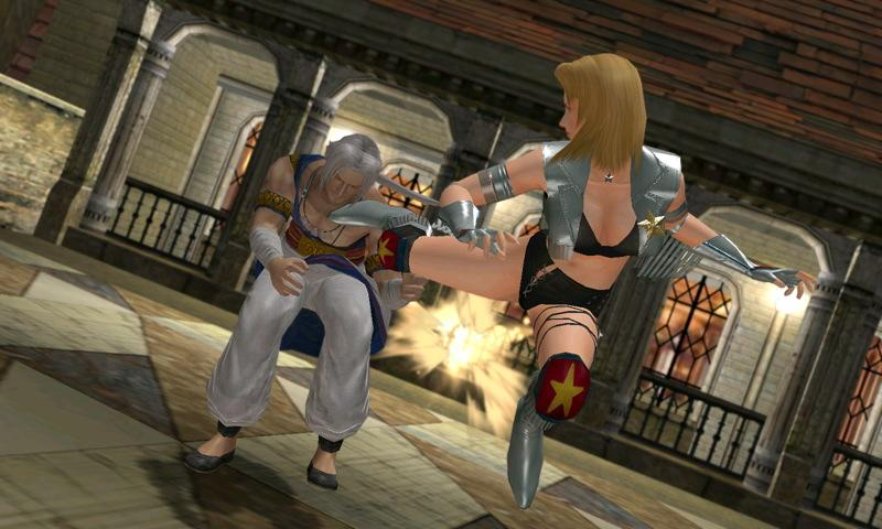
And while fighting games may be booming, Team Ninja’s Yosuke Hayashi, believes that the game design of fighters hasn’t changed much. Hayashi is currently leading development of Dead or Alive 5. Dead or Alive Dimensions for the 3DS was released earlier this year.

“To be completely honest, after Dead or Alive 4 we weren’t sure what the future was going to be.”

We were trying to think of something new, but we weren’t getting any ideas of what to do for 5,” Hayashi told Siliconera.

“Then we saw Street Fighter IV and the fighting genre come back because in a large part of Capcom and what they were doing. For all of the fighting games that came out we looked at them, but there was something wrong”

They looked great with updated graphics and had online gameplay, but the gameplay itself hasn’t changed. It’s still the gameplay we’ve had for years.” he said, adding that Team Ninja want to change the fighting genre.

Hayashi describes Dead or Alive 5 as ‘Fighting Entertainment”

“We’re looking for simple, but deep fighting entertainment. We’re not looking to be a technical hardcore fighter. We want a game that a lot of people can have fun with, but people who want that depth can find it.” he said.

As reported by the Train2Game blog, Tekken director Katsuhiro Harada believes that simple game design helps encourage people to try out the series.

So Train2Game, what are your thoughts on Hayashi’s comments? Do fighting games need to evolve, or can they survive without changing?

Leave your comments on the Train2Game blog, or on the Train2Game forum.

[Source: Siliconera]

Train2Game news: Creative Industries Minister – UK needs to invest in game development

The UK should invest in game development talent and make changes to the teaching of ICT and computer science in schools.

That’s according to Creative Industries Minister Ed Vaizey, as part of the government’s response to the Livingstone-Hope report about encouraging the next generation of game developers.

As reported by the Train2Game blog, the Livingstone-Hope report was launched in February this year.

“The economic and cultural value of the UK’s video games and VFX sectors is clear and the long-term potential of their global markets present a great opportunity for UK-based businesses,” said Mr. Vaizey.

“It is an industry that has real potential to create the high quality jobs of the future that will be so important as we recover from the recession.

“We need to invest in talent that will ensure the UK remains at the forefront of games creativity.”

Today’s government report addresses the concerns of Livingstone-Hope and can be seen in full here. It recognises a number of highly talented UK developers including Media Molecule and Rocksteady.

So Train2Game, what do you make of Vaizey’s comments? Do you believe the government report will eventually aid in the games industry?

Leave your comments here on the Train2Game blog, or on the Train2Game forum.

[Source: Develop]

Train2Game news: Scribblenauts dev on what makes an indie studio indie

Some Train2Game students have already founded their own independent game studios, but what exactly does it mean to be an indie developer? For Jeremiah Slaczk, Creative Director of Scribblenauts developer 5th Cell, it’s to be part of a small team and making the games you want to.

“For me “indies” are usually small teams making quirky stuff born out of the love of making games, so getting bought isn’t part of their plan.” he told Game Informer.

“For us independence means we get to wake up every morning and do what we love and without anyone else dictating to us how to run our studio or how to make our games their way. The reason we can do this is because we were able to start from nothing and work on smaller projects to build our company and retain control.” said Slaczk.

The 5th Cell Creative Director also told Game Informer that for an independent studio to be successful, they not only need to be exciting, but also need good funding to be completed properly.

“My big buzz word lately is “compelling”. You need to create something compelling for people to take interest in it, for people to want it over something else.” Slaczk said.

“That means it should be an idea people are excited by when they see it, so it’s got to be a good idea and it needs the financial backing to be executed well. If you look at the top studios in the world, they are typically very well-funded.” he added.

5th Cell recently released an iPad version of Scribblenauts, and are currently developing Hybrid, a third person shooter scheduled for release through Xbox Live Arcade in 2012. The full Game Informer interview with Creative Director Jeremiah Slaczk is interesting reading for Train2Game students.

So Train2Game, what do you make of Slaczk’s definition of an independent game developer? And what do you think makes an indie studio an indie studio?

Leave your comments here on the Train2Game blog, or on the Train2Game forum.

[Source: Game Informer]

Train2Game interview: Bioware co-founders Dr. Ray Muzyka & Dr. Greg Zeschuk

Train2Game attended the recent Bioware Lecture at BAFTA, presented by the studio founders Dr. Ray Muzyka and Dr. Greg Zeschuk. Their catalogue includes the Dragon Age and Mass Effect franchises, and their Star Wars: The Old Republic MMO is released next month.

While at BAFTA’s central London HQ, the Train2Game blog sat down with Dr. Muzyka and Dr. Zeschuk, both of whom were practicing doctors when they founded Bioware. They discussed the subject of their talk, the history of Bioware, and how they found the transition from working in medicine to working in game development. They also provided advice for those looking to get a job in the games industry.

Read the interview here on the Train2Game blog, or on the Train2Game Scribd page. Leave your comments here, or on the Train2Game forum.

We’re here at BAFTA for the Bioware Lecture, what is your talk about?

Dr. Ray Muzyka: We’re talking about games as art and we’re trying to illustrate that with some examples from Bioware, EA and other games within the industry and we’re also talking about the definition of art and games are maybe a different kind of art.  Innovative and progressive and fresh and maybe more powerful than other sorts of art. We’re going to touch on that and hopefully it’ll be interesting and provocative.

So where do you stand on the games as art debate?

Dr. Greg Zeschuk: Well it’s definitely a yes for us! What we do is we try and make the case using a definition form Tolstoy’s book ‘What is Art?’ and expand that and show how it applies to video games, looking at some examples and talking about how actually it’s a simple definition. If you convey emotion it’s art basically. So that’s really what we’re talking about, and there’s also some talk about what we do with that at Bioware, like what things do we focus on in that regard as well.

Tell us a bit about how Bioware came to be, how was the studio founded?

Dr. Greg Zeschuk: It’s funny, we’ve probably been doing this nearly 20 years. We were officially incorporated 16 years ago in 1995, but we were actually working on things a good few years before that. Ray and I met in medical school, we both loved video games. The third partner was also a doctor then but left very early in Bioware’s history and went back to medicine… of all things!

We actually practiced as doctors for a brief time back in the 90s, then transitioned into focusing just on games. Over time that’s what happened and Bioware grew and grew and grew to what it is today when it’s one of those things where you could never imagine where it would end up, like being here talking at the British Academy of Television and Arts.

Dr. Ray Muzyka: [Laughs] It’s pretty cool.

Dr. Greg Zeschuk: It’s not something you would’ve expected when we started! So it’s been an interesting and pretty remarkable journey. It’s built a lot on our core values, and the focus on humility and integrity and making sure that we always make great stuff our fans like and our people like making it. So it’s a happy eco-system that we like to drive.

How did you find the transition from medicine into game development?

Dr. Ray Muzyka: It was surprisingly easy, we didn’t stop medicine, we transitioned out of it. I did emergency medicine, I did locums basically, which are temporary replacement positions in small towns. It was exciting and exhilarating, then I went back to work at Bioware for the rest of the week. So you did that for a couple of evenings and then you did video games the rest of the time. Gradually the video games became more and more prevalent and I went back to school and got an MBA then stopped medicine at that time because I didn’t have any time. Greg you were similar weren’t you?

Dr. Greg Zeschuk: Yeah I worked one year less than Ray in medicine. I think it was making Bioware successful and making great games was just too exciting.

Dr. Ray Muzyka: There are principles that are relevant between medicine and games. The idea of having a collaborative team, working with nurses and physios and other doctors, ensuring you’re delivering high quality service experience to your consumer, the patient. There’s a lot of analogues there [between medicine and game development], especially now with the online connected experience. There’s also value in humility in medicine that really translates well to running a business or developing a game, like always trying to make sure you’re not taking anything for granted.

So if you see a bug, don’t assume it’s already known. You enter it and you fix it and try to do your best every step of the way. And if you follow those basic principles – lifelong learning is another one from medicine that’s relevant to business or gaming – never assuming you know what you need to know when entering a new market, new business model, new platform. But spending the time to play the content itself on the new platforms, listening to your fans feedback actively, it all links in some indirect hard to describe way that makes sense somehow!

And finally, what advice would you give to those looking to get into the games industry?

Dr. Greg Zeschuk: I think education is now a key part of it. One of the most important things you need to get into the games business is actually figure out what it is you want to do, whether it’s art, or design or programming and take the courses to do that. So get the training, but also do it yourself. Have fun, have a passion for it and practice outside of the formal training, and if you do those two things you’ll be in a tremendous position.

Thanks both of you for your time.

Leave your comments here on the Train2Game blog, or on the Train2Game forum. For more information, go to www.train2game.com

BAFTA’s public events and online resources bring you closer to the creative talent behind your favourite games, films, and TV shows. Find out more at www.bafta.org/newsletter,www.facebook.com/bafta or twitter.com/baftagames

Train2Game news: Ultima creator Richard Garriott on game design

Ultima series creator Richard Garriott  believes game design need to be more creative if the medium is going to continue to advance.

“There are tons of free-to-play, beautiful looking MMOs that are feature-complete and challengers in theory to World of Warcraft, they come across from Asia every day.” said Garriott, also known as ‘Lord British,’ in an in-depth interview with Industry Gamers.

“They’re all beautiful, they’re all full-featured – if you try to go why is this game not as good as World of Warcraft, you’d have a hard time picking individual features as to why, but with all of them you go, “look, it’s free to play, free to download, I’ll try it!”

But the man behind Ultima Online believes that rather than trying to introduce new features, many developers are just trying to recreate game design elements of their competitions titles.

“You go, “OK, kind of looks the same, here’s my town, here’s my shop, here’s my level one monsters I have to fight,” he said. “And you spend an hour or two going through the play cycle and finishing a quest and levelling up, and you go… well “OK, it works, but why do I care?”

“The vast majority of people are making these me-too games, they’re quality, there’s nothing wrong with them, there’s just nothing compelling about them.”

Garriott added that he hopes to be able to look at his own work, including Ultima and Ultima online and be satisfied with what he did to change games.

“And I’m hoping that if I look back on my career down through the years, I’m very proud of the fact that with some periodicity, I have truly advanced the art form in some meaningful way.”

The full interview with Richard Garriott, an interesting read for Train2Game students, can be seen on Industry Gamers.

So Train2Game, what do you make about his comments on game design? Does more need to be done in order to make games innovative?

Leave your comments here on the Train2Game blog, or on the Train2Game forum.

[Source: Industry Gamers]

Train2Game news: Industry Gamers showcase 7 UK game development studios ‘to keep an eye on’

Train2Game blog readers who want to get a sneak peak at which British studios could be the future of the UK games industry should definitely look at this article by Industry Gamers.

Titled United Front, it looks at seven UK game development studios to keep an eye on. Some Train2Game students may have heard of, others may be completely new to them.

Perhaps the biggest name on the list is Splash Damage, the studio behind Brink. The Train2Game blog recently interviewed Splash Damage’s Ed Stern about Brink and writing for video games, read it in full here.

Social, digital and Flash developer Mediatonic are another name on the United Front list that has also been interviewed by the Train2Game blog.  Read our interview with Mediatonic Director of Games Paul Croft here on the Train2Game blog.

North East studio Eutechnyx are praised in the article, lead programmer Dave Hawes featured in one our Train2Game at Eurogamer video interviews.

Meanwhile, Train2Game student Darren Price has recently started a work placement at Double Eleven, which Industry Gamers notes was founded by former Rockstar North developers who have impressed Sony enough to be signed up as an exclusive PlayStation developer. They’re currently working on LittleBigPlanet for PlayStation Vita.

The three other studios featured in an article that paints a positive picture of the UK games industry are Mobile Pie, Fight My Monster and CCP Newcastle, with the latter developing Eve Online spin off DUST 514.

Train2Game students can read the full article ‘United Front: 7 Studios to keep an eye on’ here.

So Train2Game, what do you make of the list? How positive it that a Train2Game student is currently on a work placement at one of them?

Leave your comments here on the Train2Game blog, or on the Train2Game forum.

[Source: Industry Gamers]

Train2Game Student Diaries of Darren Price and Georgij Cernysiov

Train2Game students Darren Price Georgij Cernysiov have both recently begun new Train2Game work placements at Double Eleven and Iguana Entertainment respectively.

Read both of their first industry experience diaries about settling into new environments here on the Train2Game blog, on the Train2Game Scribd site, or on the official Train2Game industry experiences website.