Train2Game news: We Sing Rock gets release date

Train2Game recently spoke We Sing Rock Senior Producer Kevin Leathers about the development process behind the Nintendo Wii Karaoke game.

When the interview was published here on the Train2Game blog, a release date for We Sing Rock had yet to be scheduled. Now, the release late has been revealed as 11th November 2011.

Train2Game students should find our We Sing Rock interview to be a fascinating read, giving an insight into what it’s like to develop something that’s a bit different to your average Triple A title. Leathers told the Train2Game blog that party games are “important to the console market” and revealed Wired Productions are already looking into Nintendo Wii U versions of the We Sing series.

The We Sing Rock senior producer also offered Train2Game students advice on how to get into the industry. Read the full interview here on the Train2Game blog.

Leave your comments here on the Train2Game blog, or on the Train2Game forum.

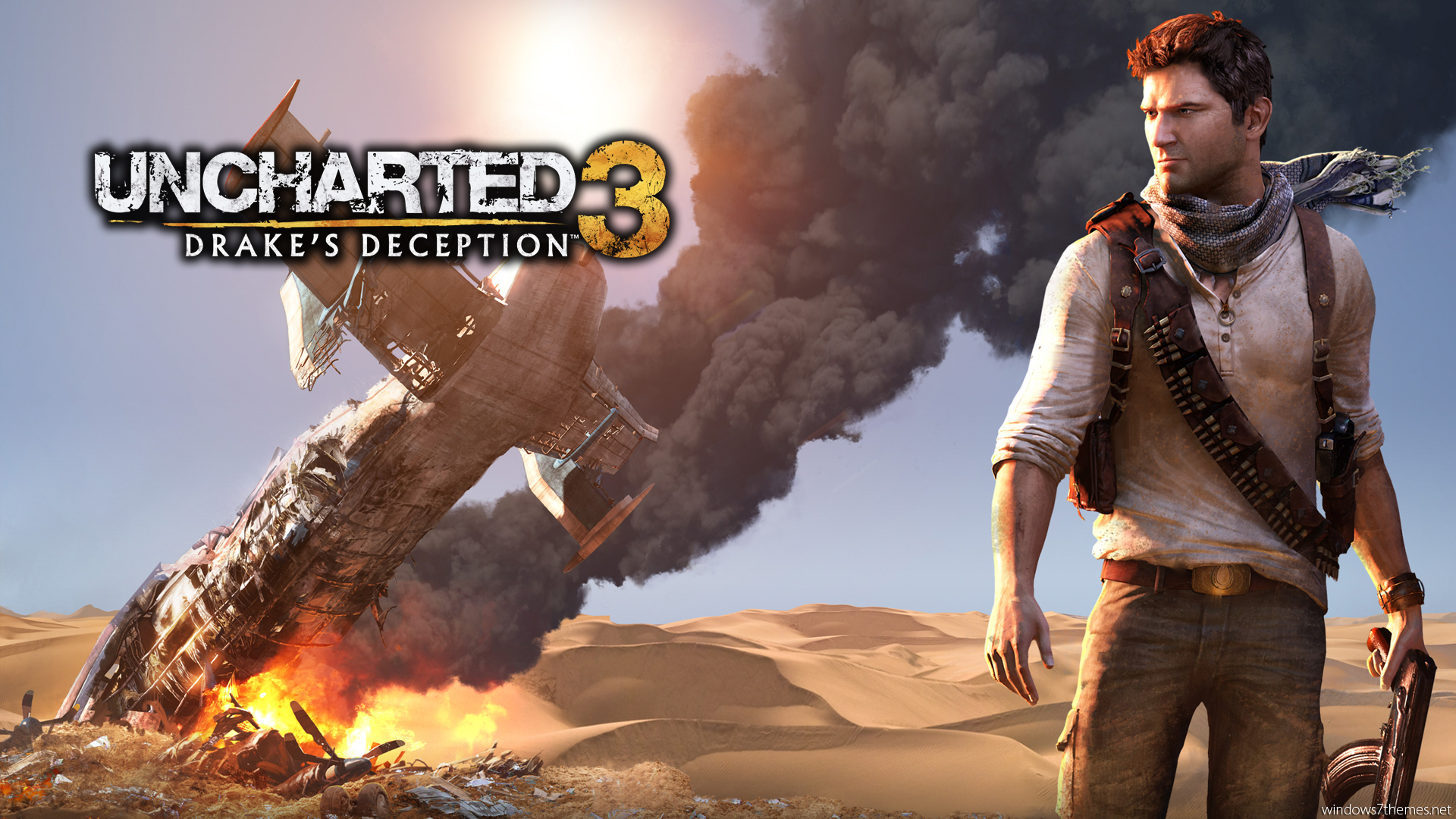
Train2Game news: Uncharted 3 director on story vs. gameplay

Train2Game blog readers may see Uncharted 3 as one of the most impressive, story driven games on the PlayStation 3, but some out there criticise it for its linearity when compared with RPGs and other open titles.

Developer Naughty Dog has responded to those criticisms by stating the Uncharted series storyline is more important to them than gameplay.

“That’s not really our genre,” Uncharted 3 creative director Amy Hennig told Gametrailers. “We like those kind of games, as players and fans of other games, but for the action-adventure – especially the pulp-adventure genre – that doesn’t really make sense.”

“It’s about having a very clear, linear story arc that doesn’t allow for a lot of the dilution that is created by player choice in some cases. We always call it ‘wide linear’ – within the path that we give you you have a lot of choice within it, it’s not just hit this button, and this button, and this button.” she added.

Despite the tight nature of Uncharted 3’s story, the Train2Game blog has previously reported that Naughty Dog say they make up a lot of the game as they go along.

Train2Game students interested in how Uncharted 3’s script is written  and performed should check out this behind the scenes look on the Train2Game blog.

For more on games writing, check out the huge Train2Game blog interview with Deus Ex: Human Revolution writer James Swallow.

Away from game design, Naughty Dog believes the PlayStation 4 is needed for the next big leap in graphical improvements.

So Train2Game, what do you make of Naughty Dog’s comments on storyline being more important than gameplay for Uncharted 3?

Leave your comments here on the Train2Game blog, or on the Train2Game forum.

[Source: Industry Gamers]

Train2Game and Epic Games to Host ‘Make Something Unreal Live’ at Gadget Show Live

Train2Game and Epic Games have announced Make Something Unreal Live, an unprecedented event that’ll take place over six months and conclude at Gadget Show Live 2012.

The winner of Make Something Unreal Live will receive a commercial Unreal Engine 3 license for iOS.

Winners of the Train2Game and Epic Game Jam, happening November 4-6 at the University of Bedfordshire, will compete in the event next April. In both competitions, all games will be developed for iOS devices using Epic’s Unreal Development Kit (UDK), the free edition of Unreal Engine 3 which has been installed on more than 1 million unique machines.

Following this week’s game jam, development teams will benefit from a six-month incubation period in which a range of senior industry veterans will nurture projects by reviewing key milestones, providing guidance and shaping scope. During this time, talent will prepare for the final showdown at the Gadget Show Live, where more than 100,000 attendees will watch them bring to life Unreal Engine 3-powered creations in real time.

“We are looking forward to working with Epic Games and Train2Game to bring a completely new element into the Games Zone at GSL 2012,” said Gadget Show Live Event Director Matt Hodgins.

“A huge number of our visitors are into gaming, and will undoubtedly be excited to see how new games are developed and brought to life at the event.”

“Once they’re out there in the real world, our students will flourish based on their ability to create fantastic experiences under pressure,” said Train2Game Course Director, Tony Bickley,

“This is one of the best opportunities they’ve had so far to prove themselves and create something they can be proud of that will springboard their burgeoning careers in gaming.”

“In a mere five days, these developers will kickstart their careers in an intense competition that will ultimately result in one team walking away a professional studio, with a full source Unreal Engine 3 license for iOS in hand,” said Mike Gamble, European territory manager, Epic Games.

Epic Games is known for its legendary Make Something Unreal Contest game development competitions, which utilize the Unreal Engine 3 toolset and reward grand prize winners with a commercial license granting full access to Epic’s high-end game engine technology. The $1 Million Intel Make Something Unreal Contest concluded in 2010, with multiple teams going on to release commercial games based on projects made for the competition.  Developed by grand prize-winning team KTX Software and published by THQ, “ The Haunted: Hells Reach” was released for PC on October 24.

Tickets for The Gadget Show Live are now on sale at  www.gadgetshowlive.net. For more information about this weekend’s Train2Game and Epic Game Jam, see the official website.

Leave your comments here on the Train2Game blog, or on the Train2Game forum.

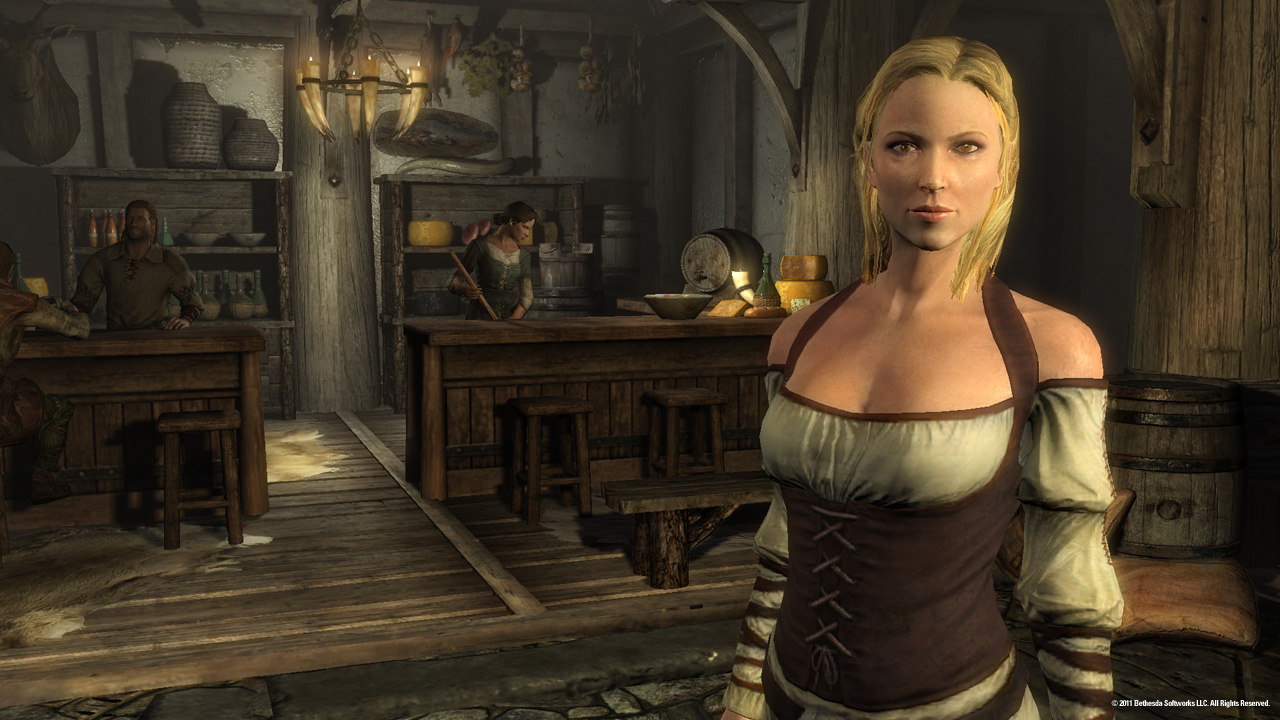
Train2Game news: New Skyrim trailer offers behind the scenes insights

Train2Game students can get an exclusive look behind the scenes of Bethesda’s The Elder Scrolls V: Skyrim in an exclusive documentary that comes with the Collector’s Edition of the game.

However, those Train2Game students who won’t be able to get their hands on a collector’s edition of Skyrim can get a taste of the ‘Behind the Wall: The Making of Skyrim documentary’ in an extended trailer at the bottom of this Train2Game blog post.

The Bethesda team discuss various behind the scenes information about Skyrim, including the challenges of building such a huge open world title. Indeed, The Making of trailer reveals The Elder Scrolls V: Skyrim features no less than 315 places to explore, a number that includes all of the exterior locations and all of the dungeons.

All of these need to be massively detailed because “you don’t know what the player is going to do”

As previously reported by the Train2Game blog, the Skyrim Creation Kit will allow enthusiasts including Train2Game students to create their own content for what’s already a huge game.

The Elder Scrolls V: Skyrim, winner of the ‘One to Watch’ award at the Golden Joysticks, will be released for PC, Xbox 360 and PlayStation 3 on 11th November.

So Train2Game, does the prospect of a Making of documentary tempt you into purchasing The Elder Scrolls V: Skyrim Collector’s Edition? What feature of the game are you most interested in?

Leave your comments here on the Train2Game blog, or on the Train2Game forum.

Train2Game news: Guillermo del Toro – video games ‘One of the peaks of human narrative’

Train2Game students, especially those who read our recent interview with Deus Ex: Human Revolution writer James Swallow, will be aware of how powerful narrative in video games can be.

Now, it isn’t only games industry veterans espousing the potential of games as a storytelling medium, but well respected film director Guillermo del Toro.

“Video games are no doubt the bridge to the future of genre narrative,” he said on the latest Irrational Games interview podcast.

“You’re not going to see the narratives of, let’s say, a [Pedro] Almodovar or an indie film maker wane; they’re going to stay, but big, genre, artistically-challenging, brilliantly-done storytelling.  Holy shit, there’s a lot you can do in games that you’d never even dream of doing in movies, or TV, or comics.”

“Films are fantastic. They are one of the peaks of human narrative. Now, and I’m sorry to break the news to the movie industry, but so is the video game.” del Toro added.

And the Pan’s Labyrinth director believes video games will improve massively within the next decade.

“The video game – not all of them right now – but the video games we’ll be playing in 2020 will be f***ing masterpieces,” said del Toro.  “Many masterpieces.”

He also discussed the differences between directing a film and directing a video game, arguing it’s only possible to produce the latter if you have a true passion for medium, a passion that all Train2Game students no doubt have!

“It’s not a medium where you are going to wander if you’re just an interested observer,” said Del Tero  “You have to be a gamer to completely absorb the possibility of narrative in games with their own f***ing set of rules. The mistake you have many times is you have a filmmaker who says ‘oh there’s money in video games, I’m going to go make a video game’. No.”

“You need to truly have a passion, and even a layman understanding of the medium or you will be completely pummeled by the process,” he added

The Irrational Games podcast featuring Bioshock Creative Director Ken Levine speaking to Guillermo del Toro will be of huge interest to Train2Game students and can be listened to here.

As previously reported by the Train2Game blog, del Tero is currently working with THQ on a three part video game series, Insane, due for release in 2013.

So Train2Game, what do you make of del Tero’s comments? Does it offer any encouragement to you as a Train2Game student?

Leave your comments here on the Train2Game blog, or on the Train2Game forum.

[Source: Industry Gamers]

Train2Game interview: Deus Ex: Human Revolution writer James Swallow – Part 2

Train2Game recently attended the Games Writers Panel at BAFTA’s headquarters in London. There, the Train2Game blog sat down with panellist Deus Ex: Human Revolution writer James Swallow. In an in-depth interview, Swallow discusses writing Deus Ex: Human Revolution, games writing in general, DLC, what makes a good games writer and much more.

Read part 2 below on the Train2Game blog, or onthe Train2Game Scribd page.  Part 1 is available here, Leave your comments here on the Train2Game blog, or on the Train2Game forum.

Going back to Deus Ex, how have you fleshed out the narrative not only for the game, but for the novel, Deus Ex: Icarus Effect,  which you wrote as well?

That was a lot of fun to do because I’ve already got experience as a novelist and when Del Rey Books approached Eidos and said they’d like to do a novel, they said ‘Why don’t you hire Jim, he already has experience?’ Basically I was the right guy at the right time in the right place because I had experience on both mediums so I could bring story that we hadn’t been able to put in the game. Say stuff that ended up on the cutting room floor, or stuff we couldn’t explain or explore in the in the game because we didn’t have enough time, I got a chance to bring it out in the novel and flesh out elements of story you don’t get.

With a novel you have the opportunity to get inside a characters head, you can show stuff from a completely different viewpoint. It was fun for me personally to revisit a world I had great time writing then write a story in a completely different way to writing a game narrative story.

You’re here at the BAFTA Games Writers Panel to talk about ‘Putting the protagonist in the hand of a player kills traditional narrative concepts,’ what’s your opinion on this as a writer?

When you’re a writer and you’re writing for a TV show or a movie or a book, you’re directing where a character goes, when stuff happens to them. You work that narrative and development for the right dramatic impetus.

In a game you can’t always do that because you can’t always know exactly where a player is going to be and you can’t railroad their experience and say ‘I want this dramatic turn to happen exactly here and you have to be standing here and do this thing exactly!’ because players might not want to do that, they might be looking at something else, they might want to be interacting with a completely different character. So you have to approach it in a very, very different way and it can be very difficult because you want to deliver story, players want to have a story delivered to them, but at the same time they don’t want to be railroaded.

So there’s a peculiar dynamic tension you get as a writer. On the one hand you’re being pulled towards the idea of giving players agency, having the ability to discover the narrative themselves. On the other hand you’re being pulled in the opposite direction which is you want to have a structured narrative that makes senses, that delivers the right dramatic impact at the right dramatic time. It isn’t an easy line to walk but it’s fun to do and I really relish the challenge of it because it isn’t often as a writer you get a chance to work in a medium that is so dynamic and so diverse.

What are the key skills a good games writer should have?

Play lots of games, I can’t underline that enough. A lot of the games writers I know are people who have experience from other areas of gaming. The people on panel with me, for example, Andy Walsh has experience working in soap operas and theatre, there’s me with experience of working in radio. Rhianna Pratchett has experience of working as games journalist before she was a writer whereas my buddy Ed Stern has come up through the ranks purely involved in game design and games writing.

So there’s no one course into it you can take. I would say be a good writer first, obviously, you can’t be a writer without being a writer.  But play lots of games, understand games, and try not to come at it just from a writer’s standpoint, but understand a bit about design and the way games are constructed. Listen to what level design guys and art design guys talk about, producers and directors, understand how they do their job because ultimately if you want to be a games writer you are going to have to interface and mesh with these people. So if you have an idea of what it’s like to walk a mile in their shoes, you can do your job a little better.

How did you get started in the games industry?

Purely by accident. I’ve been a games fan all my life and I love playing video games, I stay up way to late playing them all the time. I was actually doing some work for a magazine where I just happened to be covering a preview of a game release and one of the guys working on this game was actually using some material I’d written. He’d no idea that I’d actually written it. He said ‘We’re using this source material’ and I said ‘Really? I wrote that!’ ‘Really? We should probably hire you then!’ and that was it, I kind of stumbled into it.  And once the opportunity came to get involved behind the curtain with games writing I thought this is something I really want to do.

Since then, for about the last 10 or 12 years now I’ve been working on one or two game projects a year as well as doing prose and script writing. It’s great fun, such a fantastic medium to be working with. It’s really rich for a storyteller because it’s so new and dynamic and I’m fond of saying this: there are no maps for these territories.  What we’re doing is breaking new ground and a new way of telling story. I mean, who would not want to be involved in a new way of expressing your medium.

So people who want to get involved in the games industry, with games writing, what advice would you give to them in order to get that critical first step in?

Definitely get yourself a good grounding in writing and don’t be afraid to work in a games project perhaps in a facility that might not involve being a games writer, like working in QA Testing. That’s always the sharp end of anybody, working in QA which is unforgiving grunt work but there’s no way you’re not going to learn about games other than that job. If you’re going to take that job, that’ll be what teaches you the most about the way that games work and the way games don’t work.  I think it’s very important to play a lot of games to understand games and to understand narrative. If you can get those two things, you’re o n the road to becoming somebody who can write good game story.

Anything else you’d like to add about anything you’ve spoken about?

I’m really pleased with the way people have taken to Deus Ex: Human Revolution. Four years of my life went into working on that. I’m fiercely proud of it; it is without doubt the best games project I’ve worked on in my entire career because the story was really respected on that game and I’ve just really enjoyed being part of it. I want to thank everyone who bought a copy of it and I hoped they all enjoyed it!

Thanks for your time James.

Thank you.

Part 1 of the Train2Game interview with games writer James Swallow is available here.

For more information, go to www.train2game.com

BAFTA’s public events and online resources bring you closer to the creative talent behind your favourite games, films, and TV shows. Find out more at www.bafta.org/newsletter, www.facebook.com/bafta or twitter.com/baftagames

Train2Game interview: Deus Ex: Human Revolution writer James Swallow – Part 1

Deus Ex Human Revolution Train2Game blog imageTrain2Game recently attended the Games Writers Panel at BAFTA’s headquarters in London. There, the Train2Game blog sat down with panellist Deus Ex: Human Revolution writer James Swallow. In an in-depth interview, Swallow discusses writing Deus Ex: Human Revolution, games writing in general, DLC, how to get into the games industry and much more.

Read part 1 below on the Train2Game blog, or on the Train2Game Scribd page, while Part 2 of our huge interview is here. Leave your comments here on the Train2Game blog, or on the Train2Game forum.

First of all, can you tell us what your role as a games writer on Deus Ex: Human Revolution involved?

Wow, that’s kind of a ‘how long is a piece of string’ question really! The job of games writer isn’t like saying ‘I’m a journalist’ or ‘I’m a novelist,’ games writer is a very broad church because there are so many different things you can do in it. You can be writing cutscene dialogue, you can be writing dialogue for the third tier characters you bump into in the street, you could be writing text for text boxes that’ll pop up on screen. There are a million little jobs that fall underneath the term of games writer and I think I did a little bit of all of that stuff on Deus Ex.

It’s kind of fun to be able to do that because it gives you a broad understanding of the entire game and a feeling like you’ve really invested narrative in every single element, from basically what’s written on the back of a gum wrapper you find in the street to the main cutscene where you’re confronting the villain of the piece.

How do you even begin to create the narrative for the in-depth world of Deus Ex: Human Revolution?

In a lot of ways it’s similar to the process of working on a television series because the game is made up of episodic sections in the different levels, hubs or mission sections you get. You break the story. We sit down in the beginning and we say ‘OK, what’s the story we want to tell? What is the motivation and the concept of it? Where’s the very highest level of what we want the story to bring to the player?’ And then it’s a question of back engineering it, constructing the skeleton of the storyline, the narrative beats of it, and then trying to find a structure that works with level design, with character design and hopefully the whole thing meshes together nicely and you get an interactive, dynamic , story experience.
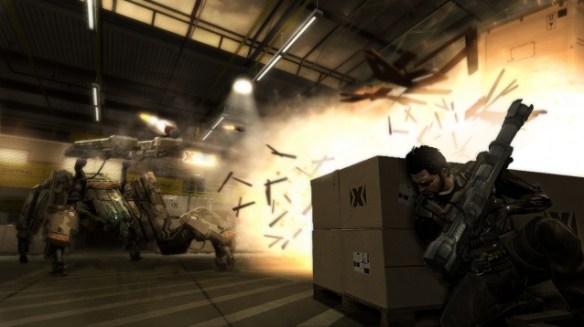
 Deus Ex: Human Revolution Train2Game blog image


How difficult was it to link the Narrative of Human Revolution to the original Deus Ex game, released over 10 years ago

Well the original Deus Ex has such a strong narrative to it and so much back-story that it was an embarrassment of riches, we had tonnes and tonnes of back-story we could use. One of my earliest projects on the job was actually writing a timeline that went from 2027, when Human Revolution is set, to 2052 when the original Deus Ex was set.

As we did that we started back engineering elements of the story and saying here are plot threads we can bring back and we can connect them together and hopefully people who are fans of the original Deus Ex games will appreciate the little kisses of history we put in there. I love doing that kind of stuff, I think it’s great fun to bury these Easter Eggs in there and make the story mesh together.

Such as the one after the end credits that links the two games together?

I can neither confirm nor deny that!

With all the choice available to the player in Deus Ex: Human Revolution, how do you go about writing the narrative so it doesn’t become too overly muddled during the course of the game?

You do a lot of writing, lots and lots of stuff.  It is a difficult thing to do because when you start a game you have no idea how your player is going to play it. The thing with Deus Ex is we had the four main pillars of gameplay; you could play aggressively, you could play it stealthily, you could play it in an adaptive way, you could play it with a social approach. There are a lot of different ways you can go through the sections of the game, you could try and mix and match. When I played it personally I found that I’d bounce backwards and forwards between the pillars of gameplay depending on how my mood took me. You can play it as a nice guy if you want by helping people, getting cats out of trees, or you can be a scumbag kicking the dog and mugging the old lady, and all those options are open to you.

How do you construct a game where all of those possibilities are open to a player where they’ll feel real?  It’s hard to do because you have to write dialogue that reacts to the events and the style of gameplay. Do you write hundreds and hundreds of different versions of dialogue? That’s not possible with the technology that exists right now.  You have to try and write dialogue that’ll be generic enough but at the same time not too generic that it’s bland, to try and make it so it’ll fit multiple levels of encounter and multiple levels of narrative.

It’s not easy to do, it’s a big challenge because you think of where you are in a game, of the information you have to put across, you want to give pitch and moment and drama to a character… But you also want to be able to say ‘The princess is in another castle’ and you want to be able to deliver feeling and emotion and you have to do that in one line of dialogue. It’s not easy, but it’s an interesting challenge though.

What are the different challenges of writing for the Missing Link DLC instead of the full game?

Away from Deus Ex I’ve worked on some other DLC as well; I worked on Pigsy’s Perfect 10 which was an add-on for Enslaved: Odyssey to the West. Working on that what we realised was that generally with a game you have a discreet beginning, middle, end experience and to build on story DLC you have to find a place where you can connect it. With the Enslaved stuff, what we did is we took a character who was playing a supporting role in the original game and we spun out an entire storyline out for him. So it’s kind of a side story, almost a prequel because the DLC ends with the characters introduction into the storyline of the main game, so it connects that way.

With the Missing Link we created a very discreet, compact narrative for our hero Adam Jensen and when we were approached and asked to do DLC we had to work quite hard to find somewhere we could fit it.  And we realised that we had this point in the game where the character is off the grid and this is the perfect opportunity for us to put in almost a missing episode of the story.

It’s interesting with DLC because you want to produce a dynamic, interactive, interesting and ultimately rewarding experience for the player. But you have to do it in such a way that it doesn’t break the story that you’ve already created for the source material. I guess that’s the unique challenge of it, to find a way to make a story that parallels what you’ve got without overwriting it.

Part 2 of the Train2Game interview with games writer James Swallow is here.

For more information, go to www.train2game.com

BAFTA’s public events and online resources bring you closer to the creative talent behind your favourite games, films, and TV shows. Find out more at www.bafta.org/newsletter, www.facebook.com/bafta or twitter.com/baftagames

Train2Game news: Deus Ex writer on what makes a good game designer

Train2Game recently had a chat with Deus Ex: Human Revolution writer James Swallow at the BAFTA Games Writers Panel where he discussed various aspects of game writing and game design.

But does the he think is the key skills a good video game writer should have?

“Play lots of games, I can’t underline that enough.” he told the Train2Game blog in an interview to be published on Monday.

“I would say be a good writer first, obviously, you can’t be a writer without being a writer.  But play lots of games, understand games, and try not to come at it just from a writer’s standpoint, but understand a bit about design and the way games are constructed”

Swallow argued that a good game designer needs also needs to understand the roles of the rest of the game development team in order to do the best work.

“Listen to what level design guys and art design guys talk about, producers and directors, understand how they do their job because ultimately if you want to be a games writer you are going to have to interface and mesh with these people.” said the Deus Ex: Human Revolution writer.

“So if you have an idea of what it’s like to walk a mile in their shoes, you can do your job a little better.” he added

Train2Game’s in-depth interview with Swallow covering Deus Ex: Human Revolution, writing for games and how to get into the industry will appear here on the Train2Game blog next Monday.

So Train2Game, what do you make of the advice from the Deus Ex: Human Revolution writer? Do you think about game design while playing video games?

Leave your comments here on the Train2Game blog, or on the Train2Game forum.

Train2Game news: Unreal Engine 4 to be made public ‘sooner’

Train2Game students are preparing for the Train2Game & Epic Game Jam where they’ll have 48 hours build games using Epic’s Unreal Engine.

But despite Epic first introducing the Unreal Development Kit to studios as far back as 2005, it only became available to Indies and modders in 2009. But as the Train2Game blog has previously reported, since the free-to-use UDK has been downloaded almost a million times.

The success of this seems to have encouraged Epic to make their next engine, Unreal Engine 4, available to the public much sooner than the current UDK was.

“What we’re doing with Unreal Engine now is a lot different to what we were doing about seven years ago when we first started using the tech,” Epic President Mike Capps told Develop.

“There was no Unreal Development Kit even four years ago, and I think it’s been real successful in getting people used to our technology. Should we have done that from day one with UE3? Yeah, maybe,” he added.

Capps said that they don’t have any specific plans for distribution of Unreal Engine 4, which is “probably” going to be released in 2014.

“I’m not sure if we’re going to do it straight away with Unreal Engine 4, but if you look at what we do now with UE3 – y’know, push a button and your game is built for mobiles – we could have done that before and we didn’t spend much time on it. How much that will figure into Unreal Engine 4 is up to us.”

He added that indie studios using UDK has helped Epic learn how their tech works on different platforms.

“In the past few years I think we’ve learned a lot about our technology and how it works for indie studios. How our tech works for iPhone games, for high-end triple-A studios and for a couple of guys who make a cool UDK game over the summer,”

“We’re going to apply all these lessons we’ve learned with Unreal Engine 4, and I think you’re going to see a lot of difference with UE3 within the first six months from launch.”

The Train2Game blog previously reported that Epic believe game visuals will match those of films within a decade. Train2Game blog readers may have seen a taste of this with Epic’s ‘Samaritan’ tech demo earlier this year.

If you’re going to be getting your hands on UDK at the Train2Game & Epic Game Jam next week, why not add your name to the official Facebook event page?

So Train2Game, what are your thoughts on Epic making their next engine available to the public closer to the time it’s released to studios? Have you been practicing with the current UDK ahead of the Train2Game & Epic Game Jam?

Leave your comments here on the Train2Game blog, or on the Train2Game forum.

[Source: Develop]

Train2Game news: Tekken director – Button bashing ‘not a bad thing if it gets people into the series’

Train2Game blog readers may enjoy their games being a challenge to play, but making a title too complex could result in potential players being turned off.

That’s what Tekken director Katsuhiro Harada told Gamasutra about the balancing act of adding complex new features without forcing players to put down the game.

It’s an interesting view on game design that Train2Game students may have to consider when developing their own games.

“What we’ve found is that a lot of players never even touch practice modes,” said Harada, suggesting players tend to avoid tutorials and learn by playing against the computer or friends.

And he points out that when the fighting genre began in the arcades, tutorials were a virtual unknown and that game design was built in a certain way to compensate for this.

“It’s worth noting that when the fighter genre first hit arcades, there weren’t any real tutorials,” said the Tekken director.

“Instead, the designers tweaked the difficulty level such that after a couple of credits, you had already gone from beginner to intermediate player — something you could then improve upon by learning more moves and practicing.”

And Harada suggests that instead of players practicing alone in single player mode, “an online mode where players can just beat on each other without any life gauges, chatting each other while learning the moves,” could be the best way for players to get to grips with fighting games like Tekken.

He also believes that games being simple to pick up is a great way for people to get into a series, using Tekken as an example.

“A lot of other people say that it’s too easy for beginners to enter the game and beat people by mashing buttons! Personally, I don’t see that as such a bad thing if it gets more people into the series, gets them curious about it.”

Harada made the comments in an extensive interview with Gamasutra that Train2Game students, especially those who are fans of the Tekken series, should find interesting.

He also manages to condense the whole Tekken series to just a couple of sentences.

“Basically, there’re these three generations of father and son that don’t get along, and two of them have this Devil Gene, so their dad wants to know what the Devil Gene is, and so they argue with each other about it for a bunch of years. All the other characters just sort of get caught up in it.”

Train2Game students will be aware that needing to condense complicated information can be an important part of any discipline of game development.

So Train2Game, what are your thoughts on Harada’s comments on game design and tutorials? Is it still important to include them in games? Do you still play tutorials?

Leave your comments here on the Train2Game blog, or on the Train2Game forum.

[Source: Gamasutra]