Train2Game students can quiz Batman Arkham City developers Rocksteady at BAFTA this Friday

Train2Game students in London have the chance to attend a very special BAFTA Q&A event about Batman: Arkham City this Friday.

As stated on the BAFTA website, London-based Rocksteady Studios will discuss the making of the hotly anticipated follow-up to Batman: Arkham Asylum, winner of two BAFTAs for Gameplay and Best Game of 2009.

Doors open at 19:30 on Friday 30th September, while the Q&A event itself begins at 20:45.

Full event details are available on the official BAFTA website, while Train2Game students who register in advance can go to what will be a very insightful event for free. Full details on that are here.

The Train2Game blog attended a BAFTA Q&A session   about Duke Nukem Forever with Randy Pitchford of Gearbox Software earlier this year. You can read all about it here on the Train2Game blog.

Train2Game students can also get a peek behind the scenes at Rocksteady in this previous article about Game Design in Batman: Arkham City.

So Train2Game, will you attend the BAFTA Batman: Arkham City event? What questions would you ask about the game?

Leave your comments here on the Train2Game blog, or on the Train2Game forum.

[Source: BAFTA]

Train2Game news: Bioware on the importance of playtesting during game development

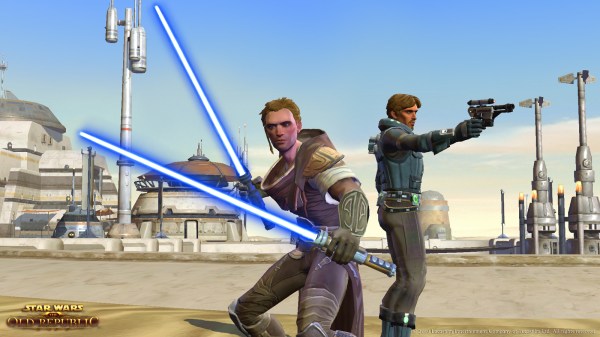
Train2Game students will be aware testing a game is an extremely important part of game development. But according to Bioware, it isn’t something that should be left to the QA Testers or Beta testers alone, rather the game developers should be constantly involved in the process too.

That’s according to Star Wars: The Old Republic project lead James Ohlen who was speaking to Gamasutra.

“The thing about it is, it’s important to get people to test your game, but the beta tests are more for finding out if your technology’s going to stand up, and finding some small tweaks and changes.” he said when asked about playtesting.

“But all the big changes that we’ve been making were planned from way before, because we’ve been playing the game ourselves. If we didn’t figure this stuff out, we’d be terrible game designers. So, internally we figured out a lot of the problems early on.

However, Ohlen pointed out that Beta testers still have a role to play in game development.

“But at the same time, it’s good for fans to feel like they’re having an impact, and sometimes they do”

“Sometimes they do point out information that is a little bit surprising, but nothing hugely surprising. There’s been surprises on the project, but mostly they’ve come from us playtesting this stuff.” the Star Wars: The Old Republic project lead concluded.

For a more in depth look behind the scenes of Star Wars: The Old Republic, check out the Train2Game interview with Associate Lead Designer Emmanuel Lusinchi.

Star Wars: The Old Republic will be released in Europe on 22nd December 2011.

So Train2Game, what are your thoughts on testing games? Do you agree that it’s an important part of a game developers job, no matter what role they have in the industry?

Leave your comments here on the Train2Game blog, or on the Train2Game forum.

[Source: Gamasutra]

Train2Game student thoughts on Homefront 2 being developed by Crytek

Train2Game students have reacted to the news that Crytek are working on a Homefront sequel scheduled for release in 2014, and there are some interesting comments among them.

“Not bad, I liked the story of Homefront and to be honest I never played the multiplayer” said Alex Norton on the Train2Game Facebook page “But it was enjoyable, plus it’s always a good thing to hear that games are being delayed generally they get better (e.g. Mass Effect 3)”

Train2Game student Shaun also believes the lengthy development time will ultimately be a positive thing for Homefront 2.

“GOOD! I think games are rushed to much to cope with demand! 3 to 4 years, I reckon.”

However, Train2Game student Michael Caine thinks a 2014 release could be risky, given that the next generation of consoles is predicted to hit the market around then.

“Isn’t 2014 pushing it for the new instalment if predictions are right for a 2014 next gen?” he said on the Train2Game Facebook page “Kinect should be used along with control if the predictions fail but last gen can still survive years through a new gen so it could be a 50/50 gamble. I guess we’ll have to see.”

There are also those who are less enthusiastic about the news that Crytek will be taking control of the Homefront brand.

“I’d stay away if I were Crytek…..Homefront isnt worth the effort as it hardly set the world on fire. Make a new IP.” said Train2Game student Kev Curtis.

Meanwhile, on the Train2Game forum, Train2Game student Craig Moore doesn’t sound keen on more Homefront.

“I thought Homefront was a gigantic flop ?! Why the hell are they keeping this IP alive?” he asked.

These are just a few of Train2Game students thoughts on the prospect of a new Homefront title by Crytek, but what is your opinion?

Leave your comments here on the Train2Game blog, or on the Train2Game forum.

Train2Game news: Homefront sequel in development at Crytek UK

Train2Game students may be surprised to hear this, but not only is Homefront getting a sequel, it’s being developed by Crytek.

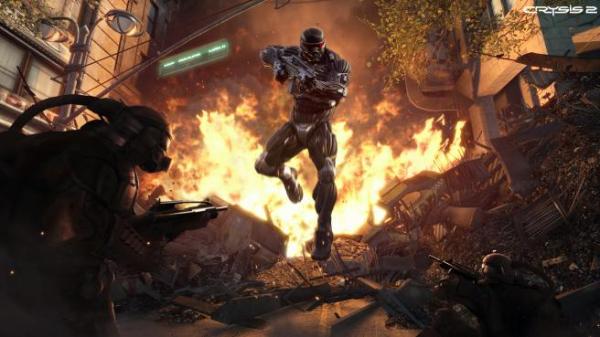
As reported by ther Train2Game blog, the THQ published Homefront topped the charts back in March despite lucklustre reviews from critics. It stayed there for a week before being dislodged by Crysis 2…from Crytek.

The yet to be named sequel will be produced using Crytek’s impressive CryEngine 3, and according to Develop, it’ll be developed by the studios UK based arm in Nottingham.

“Selecting Crytek to take Homefront forward underscores our strategy of working with the industry’s best talent,” said THQ EVP Danny Bilson

“Homefront’s unique setting and storyline captivated gamers the world over. With Crytek’s industry leading technology and legendary experience in the FPS genre, we’re supremely confident that the next Homefront will deliver that AAA-quality experience that players demand.” he concluded.

“We see Homefront as a really strong universe that has a lot of potential and that has been expertly created and marketed by THQ,” added CEO and President of Crytek Cevat Yerli

“We believe that bringing our level of quality, creativity and production values to the next Homefront title, creates an opportunity for both THQ and Crytek to deliver a truly blockbuster game”

“It’s really important to us that THQ has the faith in giving us a lot of creative freedom over one of its most important properties to allow us to bring the Homefront world to life in a new and innovative way.” he said

The newly announced Homefront title is scheduled for release in 2014 on ‘console and PC platforms’ The non-specific naming of any particular consoles could raise eyebrows amongst Train2Game students, could we be looking at a next-gen title already?

Are you excited by the announcment? Can Crytek make Homefront into an outstanding game? And what are your thoughts on the 2014 release schedule?

Leave your comments here on the Train2Game blog, or on the Train2Game forum.

Train2Game student insight behind the scenes of Borderland 2’s art direction

Train2Game forum users, at least a significant number of them loved Borderlands. Train2Game Art & Animation students enjoyed its cell shaded art style in particular.

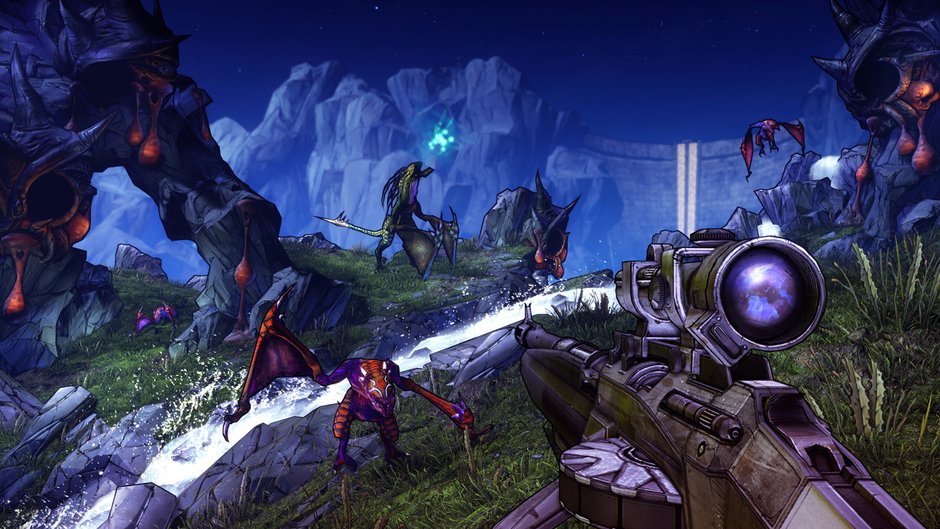
Now, with sequel confirmed last month, Borderlands 2 Art Director Jeramy Cooke has been discussing… art direction with Gamasutra. In particular, he’s keen to point out that Borderlands 2 will not only be a lot more colourful, but how the art style will be an integral part of the game.

“I wanted it to have a richer, larger world” said Cooke. “I felt like we were stuck in the desert a lot, and it got monotonous. It felt like you were seeing the same enemies too often. I mean, that’s my personal experience. And we really wanted to just widen that and give you this sense of a huge space, which is why you can see the other maps from the maps you’re in.

The Borderlands 2 Art Director then described how if the player could see something in the distance, they should be able to travel across the map and see it up close.

“You look over there, and you see this dam off in the distance, and you know “Oh, that’s where I was,” and vice-versa when you’re on top of the dam and you look down into zone 1 and see all of the ice spread out. It’s about that sort of large-scale, large-scope experience” Cooke said.

It’s a view echoed by Far Cry 3 Narrative Director Jason Vandenberghe in last month’s interview with the Train2Game blog.

“Borderlands is not a rail shooter, it’s not a corridor shooter” the Borderlands 2 Art Director continued.

“We want you to explore and have fun and go where you want and do what you want. The world’s job is to be enticing, to convince you to go out there and find cool stuff, to dig around in the corner and find cool loot or a miniboss you didn’t know who was there or whatever.”

So Train2Game, how important do you believe art style can be in making a game fun to play? What are your thoughts on Borderlands 2? Can it improve on the original?

Leave your comments here on the Train2Game blog, or on the Train2Game forum.

[Source: Gamasutra]

Train2Game game designers could write for the ‘dominant story telling medium’

Train2Game students could see their future work become part of the chief method of portraying stories. At least that’s the case according to the writer of Gears of War 3.

Video games are going to be the “dominant story telling medium” Karen Traviss told CVG.

And she believes that even if the game doesn’t have the greatest narrative in the world, it’s still the most compelling way of telling the story due to the players’ involvement.

“You get something out of it because you are acting on the story,” said Traviss.

“Even with games that don’t require you to make story choices you still engage with it in a different way so it’s a great stimulus to your mental processes as well. These are not brainless things,” she added.

It isn’t the first time Traviss has spoken about game design, with the Train2Game blog reporting last month that she believed ‘iconic’ games needed good writers. Her words split opinion of Train2Game students on the Train2Game forum.

And the Gears of War 3 writer isn’t the only one who believes storytelling in video games is going to become even more significant in future.

As previously reported by the Train2Game blog, Darkness II Game Director Sheldon Carter believes that game design and narrative are only going to become stronger as video games try to break their “final frontier”

Far Cry 3 Narrative Director Jason Vandenberghe previously told the Train2Game blog that the use of actor and motion capture is also playing an increasingly significant part in video game story telling.

So Train2Game, do you think video games can become the most dominant story telling medium? What is going to help them achieve it?

Leave your comments here on the Train2Game blog, or on the Train2Game forum

[Source: CVG]

Train2Game news: Sony development kit brings brings Android and PlayStation together


Train2Game students could use the same development kit to produce games for handhelds and smartphones. That is if during their future careers they ever get their hands on the new SDK from Sony

Dubbed the ‘PlayStation Suite’ the development kit allows developers to produce games for PlayStation handhelds and Android devices including smartphones and tablet computers.

In theory, it’ll allow developers to release a single game across a variety of different mobile and handheld platforms including the PlayStation Vita, which you can read more about here on the Train2Game blog.

Other Sony platforms the Android games can be released on include the Xperia Play smartphone, two Sony tablet computers and any future ‘PlayStation certified’ hardware.

“By supporting development for multiple devices and by adopting libraries to create a variety of content not only limited to games, PS Suite SDK will not only help developers save their cost in creating new content but also allow them to efficiently create their content on one SDK and without having to create on several different SDKs” said Sony.

The PlayStation Suite will begin to be used by selected developers from November, but games developed using the SDK won’t be able to be released until next Spring, when the PlayStation Vita is expected to launch in the West.

Last month the Train2Game blog reported that Sony were handing PlayStation Vita kits to indie developers.

So Train2Game, what are your thoughts on a combined SDK for PlayStation and Android? Will it encourage developers to produce games for a wider variety of platforms?

Leave your comments here on the Train2Game blog or on the Train2Game forum.

[Source: Develop]

Train2Game news: Games industry might not be ready for cloud gaming say Crytek

Train2Game students will get the opportunity to try out cloud gaming for themselves at the Eurogamer Expo next week and form their own opinions of the service.

But according to Crysis developers Crytek however, games industry isn’t quite ready for cloud gaming, even if the service does have potential.

“It’s maybe that the concept has come before we were ready for it as an industry,”Crytek Director of Global Business Carl Jones told GamesIndustry.biz

“We’re just trying to throw things at it right now and I’m not sure if that’s going to make people money. And whether or not the consumer needs it.”

Jones suggested that cloud gaming providers  OnLive and Gaikai have great potential, but argues that there’s one major problem holding cloud gaming back: the cost of running the service.

“You talk to anyone whose been in the online gaming business for the last five years and they’ll tell you that server costs have not gone down,” he said.

“Because if you just take Crysis or Crysis 2, run it on the cloud, every extra gamer you add in needs a lot more processing power and that costs a lot of money.”

However, as previously reported by the Train2Game blog, Gaikai founder Dave Perry believes that the service has everything it needs to become successful.

Nonetheless, Jones is excited about the prospect of cloud gaming and suggests that games will be designed specifically for the service in the future. Could it therefore be something Train2Game students develop games for in future?

“I think what’s going to happen now is that we’re going to start seeing people designing games for the cloud, designing technology for the cloud and making the best use of it.” Concluded the Crytek Director.

Train2Game blog readers may remember that last week THQ claimed the future of the industry involves cloud gaming in big way, in that future consoles won’t use discs.

So Train2Game, what are your thoughts on cloud gaming? Is it too early for the service to be successful? Is it indeed the future of the industry? Would you develop games specifically for it?

Leave your comments here on the Train2Game blog, or on the Train2Game forum.

[Source: GI.biz]

Train2Game student insight into Call of Duty: Modern Warfare 3 development

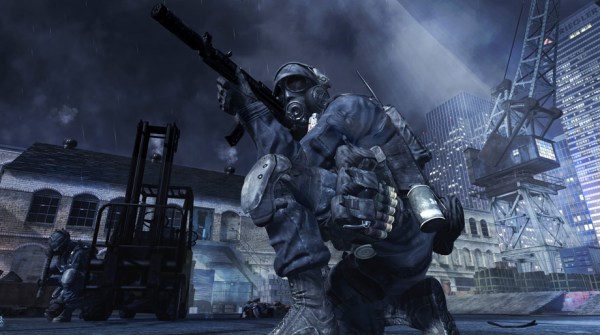
Many Train2Game students are looking forward to the release of Call of Duty: Modern Warfare 3 later this year. The franchise is arguably the biggest in gaming and is predicted to beat the impressive sales records of the previous Call of Duty titles.

In an interview with The Guardian, Infinity Ward’s Mark Rubin discussed a lot about the development behind Modern Warfare 3, including some of the new features which may be of interest to Train2Game students.

From a development point of view, Infinity Ward has added the ability to make changes to the game simpler.

“One of the big things we’ve changed is the ability to alter the game post-launch. That doesn’t sound like a cool feature, it sounds simple – it’s like ‘why can’t you just release patches?” said Producer Mark Rubin.

“Well, games don’t work that way – you can patch some things, but for others, it’s a significant deal, patching is not broad enough to do everything in the game.”

So one behind-the-scenes feature allows us to update files, sometimes without even doing a full patch – we can just tweak things like weapon balance, which we could never do before” he explained

“In the past, we’d put out a game and realise, ‘hmm, that’s weapon’s really over-powered’ but there was nothing we could do about it. I mean, with twenty million people playing the game, you learn more in the ten minutes after release than you do in months of pre-launch playtesting. So that tech feature was a big thing for us.”

The Call of Duty: Modern Warfare 3 producer also explained how the game engine had to be changed in order for Infinity Ward to build big, sprawling cities instead of desert locations.

“And also for single-player, our engine is very performance orientated – it’s all about keeping 60 frames-per-second, it’s all about fluidity, the feel of the game; we want you to forget you’re even holding a controller, that’s the key goal.” said Rubin.

So then design came to us and said, we want to stop doing these little villages in Russia or the Middle East, we want to go big, we want to go to the places that people live in, we want it on the streets that people walk down when they go to work.

“But it’s not as simple as just ‘oh yeah, go build London’. There was a lot of engine re-writing in order to make a big city work in our environment, in our technology, and still work at 60FPS” he added.

The full interview makes an interesting read for Train2Game students and is available on The Guardian Games website.

As previously reported by the Train2Game blog, the most popular community created multiplayer modes could find their way into the full game.

So Train2Game, what are your thoughts on the behind the scenes tweaks to Modern Warfare 3? Will it impact on the gameplay?

Leave your comments here on the Train2Game blog, or on the Train2Game forum.

[Source: The Guardian]
Train2Game news: Sequels bad for developer creativity says LucasArts Clint Hocking

Train2Game students are avid games and many will be looking forward upcoming sequels such as Call of Duty: Modern Warfare 3. However, the rushed yearly release schedule of huge titles such as the Call of Duty series may be negative for the industry.

That’s the view of LucasArt Creative Director Clint Hocking who believes that not only will audiences become bored, but making sequels isn’t good for individual game developers either.

“You may sell lots of copies of two or three sequels,” he wrote on the subject of sequels in Edge.

“But you will bore the audience very quickly and will have likely already spent all your money on the fourth sequel before realizing the audience is tired of the game and won’t buy it at all.”

Hocking also argues that churning out sequel after sequel isn’t good for game developers as limits their ability to be creative. While producing more of the same may lead to a successful game, it can come at the expense of the developers creativity.

“It might generate easy revenue” he said of sequels “But the long-term costs to the creative well-being of our workforce and the risk it places on our pipeline and workflow development, and on the skills we nurture and develop and will then need to leverage in making future games and (hopefully) new brands and franchises, should not be underestimated,”

Hocking previously worked on Far Cry 2. An interview with the Narrative Designer of its upcoming, er, sequel, Jason Vandenberghe, is available to read here on the Train2Game blog.

Creativity still exists in the games industry of course, and as the Train2Game blog recently reported, Ninja Theory believe the rise of digital distribution means that creativity will only increase.

Meanwhile, Call of Duty: Modern Warfare 3 still contains the potential for creativity, as community produced multiplayer modes could make their way into the official game.

So Train2Game, what are your thoughts on Hocking’s comments? Is developing sequels on a yearly basis boring for gamers and bad for developer creativity?

Leave your comments here on the Train2Game blog, or on the Train2Game forum.

[Source: Edge]