Train2Game & Epic Game Jam student interview: Andrew Small

Train2Game & Epic Games gave Train2Game student teams the opportunity to win one of four places at The Gadget Show Live 2012 and compete for the chance to walk away with a fully licence Unreal Development Kit.  

Train2Game student Andrew Small was one of those Train2Game students taking part. We had a quick chat with him during the Train2Game & Epic Game Jam to see how he was finding it.

Read it here, on Scribd,  or listen via Train2Game radio

Find out more the about Train2Game & Epic Game Jam over at Unreal Insider.

We’re here at the Train2Game & Epic Game Jam on the final day, in the final stretch now, hows it all been going for you?

Yeah, pretty good. It’s been a bit of an up and down ride, we’ve hit so many walls and broke our way through, but we’ve not lost the original concept that we’ve got, and it’s great that we’re slowly getting there together and it’s the first time we’ve got to deal with something like this.

The theme of the Train2Game & Epic Game Jam is Guy Fawkes, what were your thoughts on that when it was announced? And how did you deal with coming up with the game?

Everyone just went silent. We thought ‘What do we do?’ It does give you a lot of creativity, but you’ve just got to think outside box and I think that was the hardest thing, getting past the explosives and getting something innovative out of there.

What’s been the biggest challenge so far? Has it been the lack of sleep or something else?

Oh it’s definitely not the lack of sleep! The biggest challenge is making sure everything stays on track, because you’ve got so many components, everything is working on something different, everybody keeps going and it’s all got to come together at the end. One little problem stops the whole process so it’s just being organised I think.

The winners of the Train2Game & Epic Game Jam get to ‘Make Something Unreal Live’ at The Gadget Show next year, if you won that, what would that mean to you.

It’d just be incredible. In this industry just getting yourself out there and noticed is the biggest bonus you can get, so that would be the dream come true.

Do you think being at the Train2Game & Epic Game Jam has helped you improved your chances of getting into the industry anyway?

Yeah, definitely. For most of us working from home, this is the first chance we’ve got to have a real test of our skills. Getting into that sort of environment, none of us have got any experience of it, so it’s been an amazing thing. You just get the hang of everything, you get used to the flow and you kind of get used to it is just a massive learning curve.

How positive has it been to be part of a team with other Train2Game students?

It’s been the best. We might have been lucky, we’ve got an amazing team, no one is negative about constructive criticism. It’s the biggest bonus, having your own idea and running with it, but you’ve got so many people with ideas, you’ve got to compromise, it brings the whole experience together.

So you’d recommend taking part in a Train2Game game jam to anyone?

Definitely. It was something that I wanted to do but wasn’t sure whether it would be right more me…but yeah, definitely. It’s a perfect example of the stuff you can do. You learn your character flaws, your weaknesses, your strengths, it’s such a development process, it’s brilliant.  

Thanks for your time.

For more information, go to www.train2game.com

Train2Game interview: Bioware co-founders Dr. Ray Muzyka & Dr. Greg Zeschuk

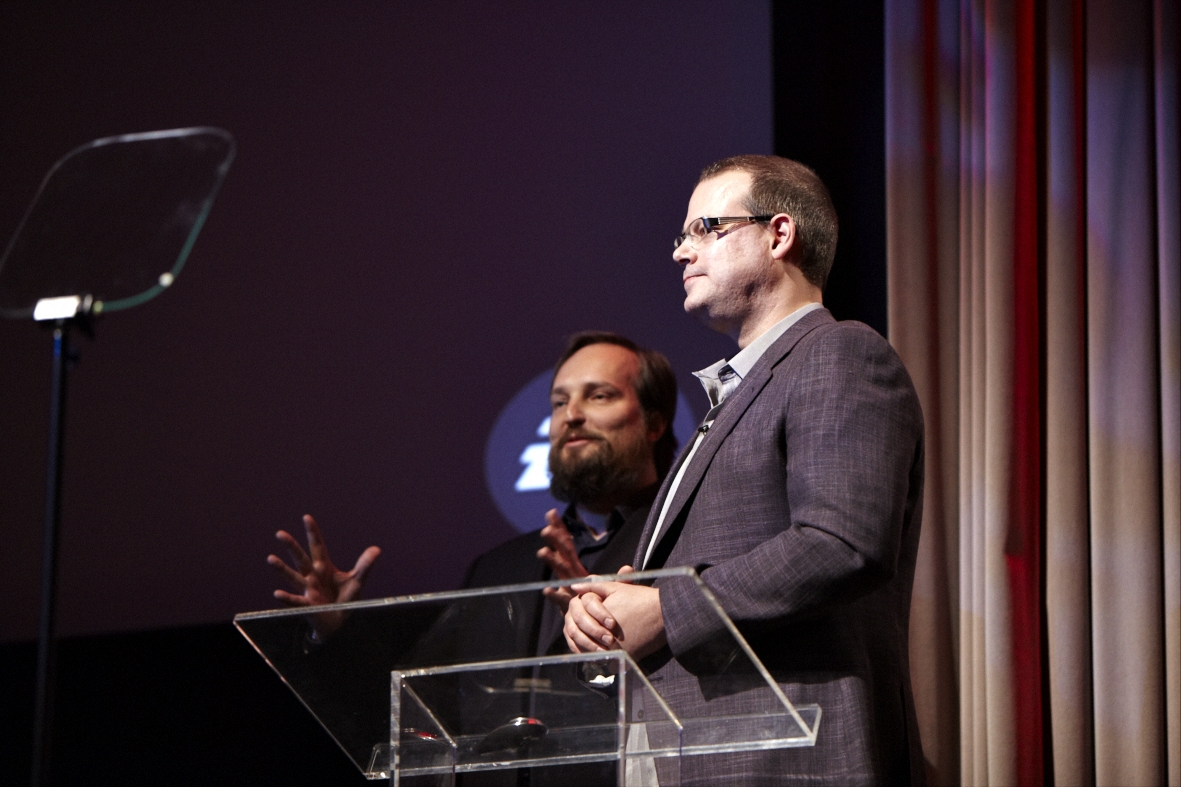
Train2Game attended the recent Bioware Lecture at BAFTA, presented by the studio founders Dr. Ray Muzyka and Dr. Greg Zeschuk. Their catalogue includes the Dragon Age and Mass Effect franchises, and their Star Wars: The Old Republic MMO is released next month.

While at BAFTA’s central London HQ, the Train2Game blog sat down with Dr. Muzyka and Dr. Zeschuk, both of whom were practicing doctors when they founded Bioware. They discussed the subject of their talk, the history of Bioware, and how they found the transition from working in medicine to working in game development. They also provided advice for those looking to get a job in the games industry.

Read the interview here on the Train2Game blog, or on the Train2Game Scribd page. Leave your comments here, or on the Train2Game forum.

We’re here at BAFTA for the Bioware Lecture, what is your talk about?

Dr. Ray Muzyka: We’re talking about games as art and we’re trying to illustrate that with some examples from Bioware, EA and other games within the industry and we’re also talking about the definition of art and games are maybe a different kind of art.  Innovative and progressive and fresh and maybe more powerful than other sorts of art. We’re going to touch on that and hopefully it’ll be interesting and provocative.

So where do you stand on the games as art debate?

Dr. Greg Zeschuk: Well it’s definitely a yes for us! What we do is we try and make the case using a definition form Tolstoy’s book ‘What is Art?’ and expand that and show how it applies to video games, looking at some examples and talking about how actually it’s a simple definition. If you convey emotion it’s art basically. So that’s really what we’re talking about, and there’s also some talk about what we do with that at Bioware, like what things do we focus on in that regard as well.

Tell us a bit about how Bioware came to be, how was the studio founded?

Dr. Greg Zeschuk: It’s funny, we’ve probably been doing this nearly 20 years. We were officially incorporated 16 years ago in 1995, but we were actually working on things a good few years before that. Ray and I met in medical school, we both loved video games. The third partner was also a doctor then but left very early in Bioware’s history and went back to medicine… of all things!

We actually practiced as doctors for a brief time back in the 90s, then transitioned into focusing just on games. Over time that’s what happened and Bioware grew and grew and grew to what it is today when it’s one of those things where you could never imagine where it would end up, like being here talking at the British Academy of Television and Arts.

Dr. Ray Muzyka: [Laughs] It’s pretty cool.

Dr. Greg Zeschuk: It’s not something you would’ve expected when we started! So it’s been an interesting and pretty remarkable journey. It’s built a lot on our core values, and the focus on humility and integrity and making sure that we always make great stuff our fans like and our people like making it. So it’s a happy eco-system that we like to drive.

How did you find the transition from medicine into game development?

Dr. Ray Muzyka: It was surprisingly easy, we didn’t stop medicine, we transitioned out of it. I did emergency medicine, I did locums basically, which are temporary replacement positions in small towns. It was exciting and exhilarating, then I went back to work at Bioware for the rest of the week. So you did that for a couple of evenings and then you did video games the rest of the time. Gradually the video games became more and more prevalent and I went back to school and got an MBA then stopped medicine at that time because I didn’t have any time. Greg you were similar weren’t you?

Dr. Greg Zeschuk: Yeah I worked one year less than Ray in medicine. I think it was making Bioware successful and making great games was just too exciting.

Dr. Ray Muzyka: There are principles that are relevant between medicine and games. The idea of having a collaborative team, working with nurses and physios and other doctors, ensuring you’re delivering high quality service experience to your consumer, the patient. There’s a lot of analogues there [between medicine and game development], especially now with the online connected experience. There’s also value in humility in medicine that really translates well to running a business or developing a game, like always trying to make sure you’re not taking anything for granted.

So if you see a bug, don’t assume it’s already known. You enter it and you fix it and try to do your best every step of the way. And if you follow those basic principles – lifelong learning is another one from medicine that’s relevant to business or gaming – never assuming you know what you need to know when entering a new market, new business model, new platform. But spending the time to play the content itself on the new platforms, listening to your fans feedback actively, it all links in some indirect hard to describe way that makes sense somehow!

And finally, what advice would you give to those looking to get into the games industry?

Dr. Greg Zeschuk: I think education is now a key part of it. One of the most important things you need to get into the games business is actually figure out what it is you want to do, whether it’s art, or design or programming and take the courses to do that. So get the training, but also do it yourself. Have fun, have a passion for it and practice outside of the formal training, and if you do those two things you’ll be in a tremendous position.

Thanks both of you for your time.

Leave your comments here on the Train2Game blog, or on the Train2Game forum. For more information, go to www.train2game.com

BAFTA’s public events and online resources bring you closer to the creative talent behind your favourite games, films, and TV shows. Find out more at www.bafta.org/newsletter,www.facebook.com/bafta or twitter.com/baftagames

Train2Game news: Bioware co-founder on getting into the industry

Train2Game students should be doing extracurricular work away from their courses in order to be in the best position to enter the games industry. That’s according to Bioware’s Dr. Greg Zeschuk, who along with co-founder Dr Ray Muzyka recently spoke to the Train2Game blog at a special BAFTA event.

Bioware, developers of the Dragon Age and Mass Effect fanchises, are currently gearing up for the release of MMO Star Wars: The Old Republic.

“One of the most important things you need to get into the games business is actually figure out what it is you want to do, whether it’s art, or design or programming and take the courses to do that.” said Dr. Zeschuk on how to get into the games industry.

Current Train2Game students are already a step ahead there given the fact their on a Train2Game course. The Bioware co-founder added that if you also practice skills outside of formal training, you’ll be in a great position to get that first job in the games industry.

“So get the training, but also do it yourself Have fun, have a passion for it and practice outside of the formal training, and if you do those two things you’ll be in a tremendous position.” said Dr. Zeschuk.

Bioware co-founders Dr. Greg Zeschuk and Dr. Ray Muzyka were speaking to the Train2Game blog as part of an interview conducted before their lecture at BAFTA. The interview, to be published shortly, sees the two former medical professionals talk about games as art, founding Bioware and similarities between working in medicine and working in the games industry.

So Train2Game, what are your thoughts on Dr. Zeschuk’s advice? Does his focus on the importance of training give you encouragement? Are you also working on a side-project?

Leave your comments here on the Train2Game blog, or on the Train2Game forum.

BAFTA’s public events and online resources bring you closer to the creative talent behind your favourite games, films, and TV shows. Find out more at www.bafta.org/newsletter,www.facebook.com/bafta or twitter.com/baftagames

Train2Game news: Ultima creator Richard Garriott on game design

Ultima series creator Richard Garriott  believes game design need to be more creative if the medium is going to continue to advance.

“There are tons of free-to-play, beautiful looking MMOs that are feature-complete and challengers in theory to World of Warcraft, they come across from Asia every day.” said Garriott, also known as ‘Lord British,’ in an in-depth interview with Industry Gamers.

“They’re all beautiful, they’re all full-featured – if you try to go why is this game not as good as World of Warcraft, you’d have a hard time picking individual features as to why, but with all of them you go, “look, it’s free to play, free to download, I’ll try it!”

But the man behind Ultima Online believes that rather than trying to introduce new features, many developers are just trying to recreate game design elements of their competitions titles.

“You go, “OK, kind of looks the same, here’s my town, here’s my shop, here’s my level one monsters I have to fight,” he said. “And you spend an hour or two going through the play cycle and finishing a quest and levelling up, and you go… well “OK, it works, but why do I care?”

“The vast majority of people are making these me-too games, they’re quality, there’s nothing wrong with them, there’s just nothing compelling about them.”

Garriott added that he hopes to be able to look at his own work, including Ultima and Ultima online and be satisfied with what he did to change games.

“And I’m hoping that if I look back on my career down through the years, I’m very proud of the fact that with some periodicity, I have truly advanced the art form in some meaningful way.”

The full interview with Richard Garriott, an interesting read for Train2Game students, can be seen on Industry Gamers.

So Train2Game, what do you make about his comments on game design? Does more need to be done in order to make games innovative?

Leave your comments here on the Train2Game blog, or on the Train2Game forum.

[Source: Industry Gamers]

Train2Game news: Gabe Zichermann on how games make kids smarter

Can playing video games make you more productive?  Speaking at TEDx in Brussels, Gabe Zichermann shows how games are making kids better problem-solvers, and will make us better at everything from driving to multi-tasking. Find out how by watching the video below.

Gabe Zichermann is an entrepreneur, author, highly rated public speaker and gamification thought leader. He is the chair of the Gamification Summit and Workshops, and is co-author of the book “Game-Based Marketing” (Wiley, 2010) where he makes a compelling case for the use of games and game mechanics in everyday life, the web and business. Gabe is also a board member of StartOut.org and facilitator for the NYC chapter of the Founder Institute.

[Source: TedxKids Brussels]

Train2Game news: Industry Gamers showcase 7 UK game development studios ‘to keep an eye on’

Train2Game blog readers who want to get a sneak peak at which British studios could be the future of the UK games industry should definitely look at this article by Industry Gamers.

Titled United Front, it looks at seven UK game development studios to keep an eye on. Some Train2Game students may have heard of, others may be completely new to them.

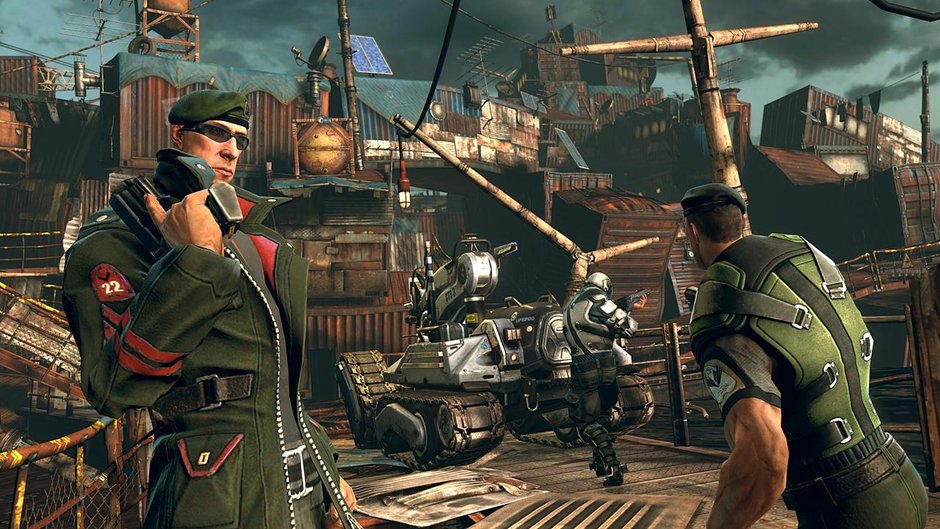
Perhaps the biggest name on the list is Splash Damage, the studio behind Brink. The Train2Game blog recently interviewed Splash Damage’s Ed Stern about Brink and writing for video games, read it in full here.

Social, digital and Flash developer Mediatonic are another name on the United Front list that has also been interviewed by the Train2Game blog.  Read our interview with Mediatonic Director of Games Paul Croft here on the Train2Game blog.

North East studio Eutechnyx are praised in the article, lead programmer Dave Hawes featured in one our Train2Game at Eurogamer video interviews.

Meanwhile, Train2Game student Darren Price has recently started a work placement at Double Eleven, which Industry Gamers notes was founded by former Rockstar North developers who have impressed Sony enough to be signed up as an exclusive PlayStation developer. They’re currently working on LittleBigPlanet for PlayStation Vita.

The three other studios featured in an article that paints a positive picture of the UK games industry are Mobile Pie, Fight My Monster and CCP Newcastle, with the latter developing Eve Online spin off DUST 514.

Train2Game students can read the full article ‘United Front: 7 Studios to keep an eye on’ here.

So Train2Game, what do you make of the list? How positive it that a Train2Game student is currently on a work placement at one of them?

Leave your comments here on the Train2Game blog, or on the Train2Game forum.

[Source: Industry Gamers]

Train2Game Student Diaries of Darren Price and Georgij Cernysiov

Train2Game students Darren Price Georgij Cernysiov have both recently begun new Train2Game work placements at Double Eleven and Iguana Entertainment respectively.

Read both of their first industry experience diaries about settling into new environments here on the Train2Game blog, on the Train2Game Scribd site, or on the official Train2Game industry experiences website.

Train2Game industry experience diaries of Guy Mayne weeks 1&2

Train2Game Game Designer Guy Mayne has begun a a Train2Game work placement at DR Studios.

Read Guy’s  first industry experience diaries about how he’s settling into a game development studio environment here on the Train2Game blog, on the Train2Game Scribd site, or on the official Train2Game industry experiences website.


Train2Game interview: Brink Lead Writer Ed Stern Part 2 – Game Design

Train2Game was at last month’s Games Writers Panel at BAFTA’s headquarters in London. There, the Train2Game blog spoke with panellist Ed Stern, Lead Writer at London studio Splash Damge. In an in-depth interview, Ed discusses development of Brink, game design and game writing and offers advice to Train2Game students on how to get into the industry.

Part 2 focuses on narrative in games, what makes a good game designer and advice on how aspiring writers can get into the industry. It’s on the Train2Game blog, or alternatively you can read it on Train2Game’s Scribd page. Part 1 of our interview with Ed Stern is available here.

We’re here at BAFTA for the Games Writers Panel, the theme is ‘Putting the protagonists in the hands of player kills traditional narrative concepts,’ what are your views on that?

It’s really interesting because we’re so used to, as writers, we think about character a lot and we think about action a lot. But compared to prose or theatre, stage play or screenplay, we just have to empty out our tool kit almost completely. All we’ve t left is a hammer and when you’ve got a hammer everything looks like a nail!

It’s really hard, we’re giving up control to players most of the time. Basically, if it’s a cinematic, players resent it because they’re not in control. If the player is control you’ve given up all control of the pacing and meaning to the player, what happens if they just don’t want to look at the thing you’re claiming is important?

I think part of the answer is what Bernard Herrmann did with movie scores. He realised the symphonic form or the classical form, it needs too long to develop, you need to write in tiny little dramatic units that’ll work no matter how short the scene is. It’s kind of like that and you just get used to writing at postcard length, or Tweet length.

So what do you think makes a good game designer?

I don’t think there’s any one quality but I guess adaptability because your Plan A will never work out. It’s like they treat you at Sandhurst, no battle plan suffice contact with the enemy, battles only ever take place on the edge of maps, never  in towns you can’t pronounce. It’s kind of like that! It’s the art of the possible and there’s and old joke; you finish up the game with the team you should have started with and a month after it shipped you find out what it was about.

So you want people who are flexible enough to not get too up or too down about stuff, but still remain completely passionate and committed to it. I think it’s hard for people when they first join the industry as they can do the passion but they can’t do the pragmatic. Or you get people who are a bit too pragmatic and won’t stand up to fight their corner and be passionate about it and then accept the production decision when it’s made.  So as in all things, balance.
How did you get started in the games industry?

It was just dumb luck. I was working in TV production making TV about computer games, or out of computer games, and one of the guys we had as a consultant was setting up a studio and needed a part-time writer to do press releases and I just fell arse backwards into it…Which I realise isn’t a replicable step but there’s lots of stuff now as then.

There’s a huge mod scene, there’s lots of teams making games out of existing games using existing technology, changing the look and changing the meaning. No one is stopping anyone from making game; it’s just very hard to get paid for it. But when you’re in that initial phase there are certainly projects out that that need writers or need designers, it’s just whether anyone is going to pay you for that time.

But it’s always more important to finish something than to start something, that’s what we look for when we’re hiring, what people finish in their portfolio, not what they start then kind of get a bit bored with and give up on.

Carrying on from that, what advice would you give to a writer or designer looking to break into the industry?

Learn to code, learn Unity, learn Flash, be able to make a game. Because even if you’re not great a graphics or great at sound you’ll understand what the issues are. You know that game Game Dev Story? You want to have at least a couple of stats in the other disciplines. Even if you’re never going to be hired to do sound, have some idea what the issues are with sound. If you’re a writer have some idea what the graphic issues are so you don’t inadvertently end up writing a cheque that no one else can cash.

I think that’s a problem for people coming into the games industry from other industries, they just don’t realise some things are incredibly cheap. I mean in games it’s not that much more expensive to make a building fly through the air then it is to just sit there. By the time you’ve made it you might as well move it around.

But some things are incredibly expensive. Like facial animation; that’s ridiculously expensive and that’s something you get for free in theatres and movies.  Close-ups are incredibly hard for us; they’re way more expensive than any other shot. But then again by the time we’ve built a set we can fly the camera around for free, that’s cheap for us to do, we don’t need to hire a helicopter. So yes, have some awareness of the other disciplines and the relative costs, I think that’s the most useful thing.

Speaking of facial animation, do you believe games will get on a par with films and television? We saw it earlier this year with L.A. Noire but it takes a lot of time and effort right now.

Possibly, it always sounds like it’s just around the corner. Maybe it will be with enough computing power. Photorealism, it’s a blind alley; games are a million times more expensive to make than Tetris now, they’re not twice as much fun as Tetris. Games like Limbo, now that’s not a realistic art style but it’s a fantastically immersive one.

Project Zomboid is a very unpromising sounding game, it’s about a zombie invasion, surely that’s been done to death? They do amazing things with that premise, Will Porter, the writer does incredible work within four lines; I was totally, absolutely obsessed with the fate of those characters. Graphically that’s not enormously complex and it’s just text on screen but it’s enormously effective. Now that’s not expensive, but it’s bloody good writing and it’s really effective on the player. So maybe that’s a more effective way of doing it because it’s not as expensive, but it’s not trying to be movie and as a result you get playing immersion and dramatic involvement much cheaper that way.

Thanks for your time Ed.

No problem, thank you.

Leave your comments here on the Train2Game blog, or on the Train2Game forum. 

For more information, go to www.train2game.com

BAFTA’s public events and online resources bring you closer to the creative talent behind your favourite games, films, and TV shows. Find out more at www.bafta.org/newsletter, www.facebook.com/bafta or twitter.com/baftagames


Train2Game student diaries of Fee Stewart No.1 to 3

Train2Game Artist & Animator Fee Stewart is on a Train2Game work placement at game development studio Radiation Burn in Middlesbrough.

In her first industry diaries, Fee discusses how she’s settling into Radiation Burn, the challenges of working in a studio environment and learning new skills.

Read her experiences here on the Train2Game blog, on the Train2Game Scribd page, or the Train2Game industry experiences website.