Train2Game news: Grand Theft Auto V trailer

Train2Game blog readers, the first Grand Theft Auto V trailer has hit the internet and you can see it here on the Train2Game blog.

The much anticipated trailer reveals that Grand Theft Auto V goes back to San Andreas, and features improved graphics.

When the Train2Game blog reported that Grand Theft Auto V had been officially announced, Train2Game students flooded the Train2Game Facebook page and Train2Game forum with what they want to see in the game.

Last month, the Train2Game blog reported that Rockstar believe they’re only “scraping the surface” of game design when it comes to Grand Theft Auto.

So Train2Game, After watching the Grand Theft Auto V trailer, do you think you’ve got what you wanted? What are your initial impressions of Grand Theft Auto V?

Leave your comments here on the Train2Game blog, or on the Train2Game forum.

Train2Game news: We Sing Rock gets release date

Train2Game recently spoke We Sing Rock Senior Producer Kevin Leathers about the development process behind the Nintendo Wii Karaoke game.

When the interview was published here on the Train2Game blog, a release date for We Sing Rock had yet to be scheduled. Now, the release late has been revealed as 11th November 2011.

Train2Game students should find our We Sing Rock interview to be a fascinating read, giving an insight into what it’s like to develop something that’s a bit different to your average Triple A title. Leathers told the Train2Game blog that party games are “important to the console market” and revealed Wired Productions are already looking into Nintendo Wii U versions of the We Sing series.

The We Sing Rock senior producer also offered Train2Game students advice on how to get into the industry. Read the full interview here on the Train2Game blog.

Leave your comments here on the Train2Game blog, or on the Train2Game forum.

Train2Game and Epic Games to Host ‘Make Something Unreal Live’ at Gadget Show Live

Train2Game and Epic Games have announced Make Something Unreal Live, an unprecedented event that’ll take place over six months and conclude at Gadget Show Live 2012.

The winner of Make Something Unreal Live will receive a commercial Unreal Engine 3 license for iOS.

Winners of the Train2Game and Epic Game Jam, happening November 4-6 at the University of Bedfordshire, will compete in the event next April. In both competitions, all games will be developed for iOS devices using Epic’s Unreal Development Kit (UDK), the free edition of Unreal Engine 3 which has been installed on more than 1 million unique machines.

Following this week’s game jam, development teams will benefit from a six-month incubation period in which a range of senior industry veterans will nurture projects by reviewing key milestones, providing guidance and shaping scope. During this time, talent will prepare for the final showdown at the Gadget Show Live, where more than 100,000 attendees will watch them bring to life Unreal Engine 3-powered creations in real time.

“We are looking forward to working with Epic Games and Train2Game to bring a completely new element into the Games Zone at GSL 2012,” said Gadget Show Live Event Director Matt Hodgins.

“A huge number of our visitors are into gaming, and will undoubtedly be excited to see how new games are developed and brought to life at the event.”

“Once they’re out there in the real world, our students will flourish based on their ability to create fantastic experiences under pressure,” said Train2Game Course Director, Tony Bickley,

“This is one of the best opportunities they’ve had so far to prove themselves and create something they can be proud of that will springboard their burgeoning careers in gaming.”

“In a mere five days, these developers will kickstart their careers in an intense competition that will ultimately result in one team walking away a professional studio, with a full source Unreal Engine 3 license for iOS in hand,” said Mike Gamble, European territory manager, Epic Games.

Epic Games is known for its legendary Make Something Unreal Contest game development competitions, which utilize the Unreal Engine 3 toolset and reward grand prize winners with a commercial license granting full access to Epic’s high-end game engine technology. The $1 Million Intel Make Something Unreal Contest concluded in 2010, with multiple teams going on to release commercial games based on projects made for the competition.  Developed by grand prize-winning team KTX Software and published by THQ, “ The Haunted: Hells Reach” was released for PC on October 24.

Tickets for The Gadget Show Live are now on sale at  www.gadgetshowlive.net. For more information about this weekend’s Train2Game and Epic Game Jam, see the official website.

Leave your comments here on the Train2Game blog, or on the Train2Game forum.

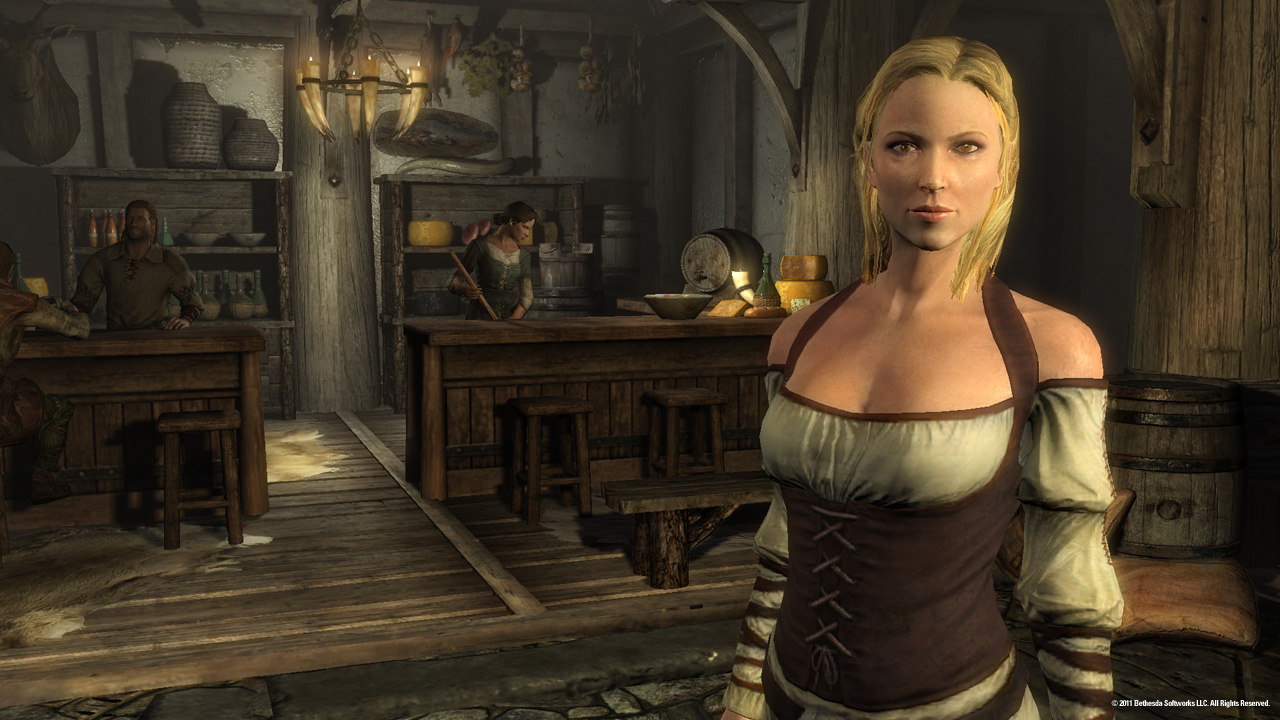
Train2Game news: New Skyrim trailer offers behind the scenes insights

Train2Game students can get an exclusive look behind the scenes of Bethesda’s The Elder Scrolls V: Skyrim in an exclusive documentary that comes with the Collector’s Edition of the game.

However, those Train2Game students who won’t be able to get their hands on a collector’s edition of Skyrim can get a taste of the ‘Behind the Wall: The Making of Skyrim documentary’ in an extended trailer at the bottom of this Train2Game blog post.

The Bethesda team discuss various behind the scenes information about Skyrim, including the challenges of building such a huge open world title. Indeed, The Making of trailer reveals The Elder Scrolls V: Skyrim features no less than 315 places to explore, a number that includes all of the exterior locations and all of the dungeons.

All of these need to be massively detailed because “you don’t know what the player is going to do”

As previously reported by the Train2Game blog, the Skyrim Creation Kit will allow enthusiasts including Train2Game students to create their own content for what’s already a huge game.

The Elder Scrolls V: Skyrim, winner of the ‘One to Watch’ award at the Golden Joysticks, will be released for PC, Xbox 360 and PlayStation 3 on 11th November.

So Train2Game, does the prospect of a Making of documentary tempt you into purchasing The Elder Scrolls V: Skyrim Collector’s Edition? What feature of the game are you most interested in?

Leave your comments here on the Train2Game blog, or on the Train2Game forum.

Train2Game interview: Deus Ex: Human Revolution writer James Swallow – Part 1

Deus Ex Human Revolution Train2Game blog imageTrain2Game recently attended the Games Writers Panel at BAFTA’s headquarters in London. There, the Train2Game blog sat down with panellist Deus Ex: Human Revolution writer James Swallow. In an in-depth interview, Swallow discusses writing Deus Ex: Human Revolution, games writing in general, DLC, how to get into the games industry and much more.

Read part 1 below on the Train2Game blog, or on the Train2Game Scribd page, while Part 2 of our huge interview is here. Leave your comments here on the Train2Game blog, or on the Train2Game forum.

First of all, can you tell us what your role as a games writer on Deus Ex: Human Revolution involved?

Wow, that’s kind of a ‘how long is a piece of string’ question really! The job of games writer isn’t like saying ‘I’m a journalist’ or ‘I’m a novelist,’ games writer is a very broad church because there are so many different things you can do in it. You can be writing cutscene dialogue, you can be writing dialogue for the third tier characters you bump into in the street, you could be writing text for text boxes that’ll pop up on screen. There are a million little jobs that fall underneath the term of games writer and I think I did a little bit of all of that stuff on Deus Ex.

It’s kind of fun to be able to do that because it gives you a broad understanding of the entire game and a feeling like you’ve really invested narrative in every single element, from basically what’s written on the back of a gum wrapper you find in the street to the main cutscene where you’re confronting the villain of the piece.

How do you even begin to create the narrative for the in-depth world of Deus Ex: Human Revolution?

In a lot of ways it’s similar to the process of working on a television series because the game is made up of episodic sections in the different levels, hubs or mission sections you get. You break the story. We sit down in the beginning and we say ‘OK, what’s the story we want to tell? What is the motivation and the concept of it? Where’s the very highest level of what we want the story to bring to the player?’ And then it’s a question of back engineering it, constructing the skeleton of the storyline, the narrative beats of it, and then trying to find a structure that works with level design, with character design and hopefully the whole thing meshes together nicely and you get an interactive, dynamic , story experience.

 Deus Ex: Human Revolution Train2Game blog image


How difficult was it to link the Narrative of Human Revolution to the original Deus Ex game, released over 10 years ago

Well the original Deus Ex has such a strong narrative to it and so much back-story that it was an embarrassment of riches, we had tonnes and tonnes of back-story we could use. One of my earliest projects on the job was actually writing a timeline that went from 2027, when Human Revolution is set, to 2052 when the original Deus Ex was set.

As we did that we started back engineering elements of the story and saying here are plot threads we can bring back and we can connect them together and hopefully people who are fans of the original Deus Ex games will appreciate the little kisses of history we put in there. I love doing that kind of stuff, I think it’s great fun to bury these Easter Eggs in there and make the story mesh together.

Such as the one after the end credits that links the two games together?

I can neither confirm nor deny that!

With all the choice available to the player in Deus Ex: Human Revolution, how do you go about writing the narrative so it doesn’t become too overly muddled during the course of the game?

You do a lot of writing, lots and lots of stuff.  It is a difficult thing to do because when you start a game you have no idea how your player is going to play it. The thing with Deus Ex is we had the four main pillars of gameplay; you could play aggressively, you could play it stealthily, you could play it in an adaptive way, you could play it with a social approach. There are a lot of different ways you can go through the sections of the game, you could try and mix and match. When I played it personally I found that I’d bounce backwards and forwards between the pillars of gameplay depending on how my mood took me. You can play it as a nice guy if you want by helping people, getting cats out of trees, or you can be a scumbag kicking the dog and mugging the old lady, and all those options are open to you.

How do you construct a game where all of those possibilities are open to a player where they’ll feel real?  It’s hard to do because you have to write dialogue that reacts to the events and the style of gameplay. Do you write hundreds and hundreds of different versions of dialogue? That’s not possible with the technology that exists right now.  You have to try and write dialogue that’ll be generic enough but at the same time not too generic that it’s bland, to try and make it so it’ll fit multiple levels of encounter and multiple levels of narrative.

It’s not easy to do, it’s a big challenge because you think of where you are in a game, of the information you have to put across, you want to give pitch and moment and drama to a character… But you also want to be able to say ‘The princess is in another castle’ and you want to be able to deliver feeling and emotion and you have to do that in one line of dialogue. It’s not easy, but it’s an interesting challenge though.

What are the different challenges of writing for the Missing Link DLC instead of the full game?

Away from Deus Ex I’ve worked on some other DLC as well; I worked on Pigsy’s Perfect 10 which was an add-on for Enslaved: Odyssey to the West. Working on that what we realised was that generally with a game you have a discreet beginning, middle, end experience and to build on story DLC you have to find a place where you can connect it. With the Enslaved stuff, what we did is we took a character who was playing a supporting role in the original game and we spun out an entire storyline out for him. So it’s kind of a side story, almost a prequel because the DLC ends with the characters introduction into the storyline of the main game, so it connects that way.

With the Missing Link we created a very discreet, compact narrative for our hero Adam Jensen and when we were approached and asked to do DLC we had to work quite hard to find somewhere we could fit it.  And we realised that we had this point in the game where the character is off the grid and this is the perfect opportunity for us to put in almost a missing episode of the story.

It’s interesting with DLC because you want to produce a dynamic, interactive, interesting and ultimately rewarding experience for the player. But you have to do it in such a way that it doesn’t break the story that you’ve already created for the source material. I guess that’s the unique challenge of it, to find a way to make a story that parallels what you’ve got without overwriting it.

Part 2 of the Train2Game interview with games writer James Swallow is here.

For more information, go to www.train2game.com

BAFTA’s public events and online resources bring you closer to the creative talent behind your favourite games, films, and TV shows. Find out more at www.bafta.org/newsletter, www.facebook.com/bafta or twitter.com/baftagames

Train2Game news: Bioshock: Infinite’s “biggest character” is its world says Levine

Bioshock Infinite will be PS Move compatibleTrain2Game Game Designers in particular that in order for a game story to be strong, it needs strong characters.

However, a strong setting can also be an important piece of narrative in itself and Irrational Games boss Ken Levine believes this to be the case with the Bioshock series.

“In BioShock 1, I think the biggest character in the world … was the world, the world of Rapture,” he said in a newly released Bioshock: Infinite developer diary which Train2Game blog readers can see below.

“In Infinite we’re continuing that tradition as well: that there’s a lot of narrative told in the world, probably on the same scale as with BioShock 1.”

The developer diary also features Troy Baker and Courtnee Draper,  the voices of Bioshock: Infinite Booker and Elizabeth respectively.

“Our challenge is we don’t have a very presentational medium” said Baker.

“When you think about storytelling in a lot of games you think about cutting to a cutscene and being locked into place, and that’s not something we really like to do. So we created these two characters,” he added.

The idea of an environment as a character in games was discussed at the BAFTA Games Writers Panel earlier this week, with games writer Rhianna Pratchett arguing that the “character of Rapture” was a particularly strong way of telling the story of Bioshock.

Train2Game interviews with members of the BAFTA Games Writers Panel will be published on the Train2Game blog in the near future.

Earlier this year, the Train2Game blog reported that Levine says game developers of all disciplines need to “get comfortable with throwing their stuff away” Meanwhile, Bioshock featured as a major part of Sony’s E3 presentation.

So Train2Game,  what are your thoughts on the environment as a character in games? What game environments do you think help tell the story?

Leave your comments here on the Train2Game blog, or on the Train2Game forum.

[Source: VG247]

Train2Game interview: Train2Game game developer Paul Cullum from Merthyr Tydfil

Train2Game student Paul Cullum from Merthyr Tydfil – AKA Superfurry on the Train2Game forum – is on the Train2Game Game Developer course. In an interview with Train2Game Radio, he tells us why he chose to study with Train2Game, how he fits it around his life as a musician and what he hopes to achieve in the games industry.

Read the interview on the Train2Game blog or on the Train2Game Scribd page. Alternatively, you can listen to it via Train2Game Radio. Leave your comments here on the Train2Game blog, or on the Train2Game forum.

OK Paul, what first got you into video games?

Probably my father. I’ve been playing computer games since about 5 on the Spectrum, that’s where I started. Manic Miner, that was the game that got me into it.

What made you decide you wanted to forge a career in the games industry?

Well I’ve always been into games as I said and I used to programme on the Spectrum and on the Amiga. I’ve had pretty much every console that’s come out.

So what got you into programming?

I just had the brain for it I suppose. I used to love programming little things on the Spectrum, little games from magazines, putting in thousands of code and then…it didn’t work! And then finding the problem. But I’ve never really programmed any games because I didn’t know how to really.

And is this why you decided to join the Train2Game Game Developer course?

It is, yeah.

What does your partner think about being on a Train2Game course?

She’s OK with it, she thinks it’s good. I mean she’s seen some of the programmes I’ve written. Her sister works for Nintendo advertising the games, the new Zelda game I think she was advertising that.

Tell us a little about yourself, what do you do?

I’m a musician, I play in pubs and bars, and I’ve played in Europe: Denmark, Sweden, places like that.

How do you find fitting the Train2Game course around the rest of your life then?

I’ve been ill for the last couple of months, in hospital, so I haven’t had much of a chance to get into it lately.

What’s been your favourite part of the Train2Game course so far?

I’ve not been able to get stuck into it that much, but just making little games from the first book, just making the little platform games, which I enjoyed doing because I love platform games. That’s my favourite part so far. And I’ve got a bit of knowledge of C++ and other languages already so I’m sure I’ll get to a point where it’ll fry my brain, but it’s going alright so far.

And what do you want to achieve with Train2Game this year?

I want to put together a portfolio, learn more C++, incorporate that with other languages and learn databases and things like that and how to put them in games.  Just to get a head start to get me into the industry.

How useful have you found the Train2Game forum so far?

I’ve met a couple of people actually. I met up with a few people in Cardiff a few months ago, and they want to work on a game with me when we’ve got further into the course.

How do you see yourself entering the games industry, would you like to get a role at an established developer, or do you want to form your own studio with other Train2Game students?

An indie done would be perfect because I’ve got some ideas once I get my head round stuff, and the two lads I met, they’ve got some good ideas for games so hopefully we’ll get to a point where we can develop it more.  It’s just ideas at the moment.

Can you see your music career and games career joining together at all?

Possibly, yeah. I use a lot of software to record stuff at home so it’s pretty easy to knock up a little background music for a game.

What would your ideal job in the industry be?

Just being a part of a team really, learning new things and getting better.

Thanks for your time Paul.

For more information go to www.train2game.com

Train2Game news: Unreal Engine 4 to be made public ‘sooner’

Train2Game students are preparing for the Train2Game & Epic Game Jam where they’ll have 48 hours build games using Epic’s Unreal Engine.

But despite Epic first introducing the Unreal Development Kit to studios as far back as 2005, it only became available to Indies and modders in 2009. But as the Train2Game blog has previously reported, since the free-to-use UDK has been downloaded almost a million times.

The success of this seems to have encouraged Epic to make their next engine, Unreal Engine 4, available to the public much sooner than the current UDK was.

“What we’re doing with Unreal Engine now is a lot different to what we were doing about seven years ago when we first started using the tech,” Epic President Mike Capps told Develop.

“There was no Unreal Development Kit even four years ago, and I think it’s been real successful in getting people used to our technology. Should we have done that from day one with UE3? Yeah, maybe,” he added.

Capps said that they don’t have any specific plans for distribution of Unreal Engine 4, which is “probably” going to be released in 2014.

“I’m not sure if we’re going to do it straight away with Unreal Engine 4, but if you look at what we do now with UE3 – y’know, push a button and your game is built for mobiles – we could have done that before and we didn’t spend much time on it. How much that will figure into Unreal Engine 4 is up to us.”

He added that indie studios using UDK has helped Epic learn how their tech works on different platforms.

“In the past few years I think we’ve learned a lot about our technology and how it works for indie studios. How our tech works for iPhone games, for high-end triple-A studios and for a couple of guys who make a cool UDK game over the summer,”

“We’re going to apply all these lessons we’ve learned with Unreal Engine 4, and I think you’re going to see a lot of difference with UE3 within the first six months from launch.”

The Train2Game blog previously reported that Epic believe game visuals will match those of films within a decade. Train2Game blog readers may have seen a taste of this with Epic’s ‘Samaritan’ tech demo earlier this year.

If you’re going to be getting your hands on UDK at the Train2Game & Epic Game Jam next week, why not add your name to the official Facebook event page?

So Train2Game, what are your thoughts on Epic making their next engine available to the public closer to the time it’s released to studios? Have you been practicing with the current UDK ahead of the Train2Game & Epic Game Jam?

Leave your comments here on the Train2Game blog, or on the Train2Game forum.

[Source: Develop]

Train2Game interview: We Sing Rock Senior Producer Kevin Leathers

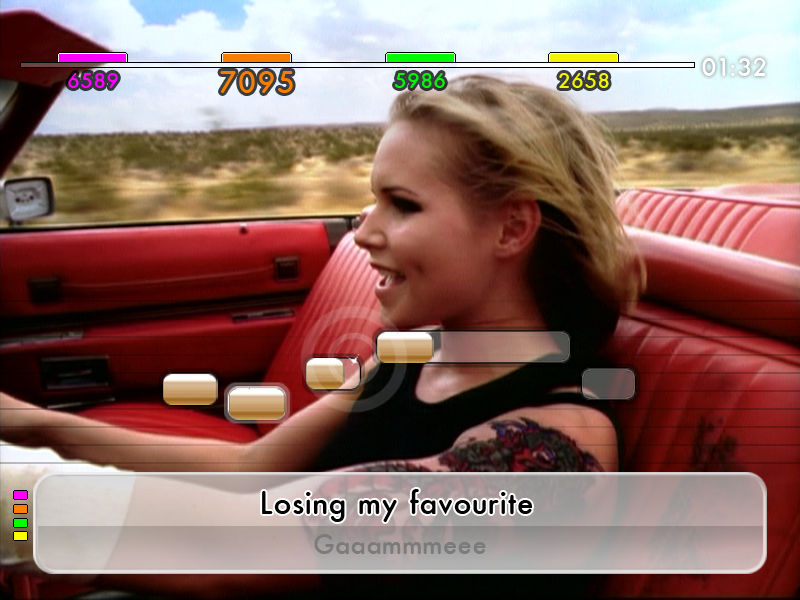
Train2Game recently caught up with We Sing Rock Senior Producer Kevin Leathers at a special event in central London. The We Sing series is one of the most successful on the Nintendo Wii, with We Sing Rock the latest in the in franchise.

In an in-depth interview, Leathers told us about what goes into developing a We Sing title. He discusses his take on the future of party games, hinted at We Sing development for the Nintendo Wii U and told us about life at Wired Productions. He also provides advice to Train2Game students about how to get into the industry.

Read it here on the Train2Game blog, or on the Train2Game Scribd page.

First of all, what does your role as Senior Producer of We Sing Rock involves?

As senior producer of We Sing Rock I manage all the different aspects of the game: gameplay, music licensing and so forth and make sure everything all comes together to make a great game.

How does the development of process of We Sing Rock begin?

The main thing we start off with is the music. With We Sing Rock for example, we had a nice list of what we wanted to look for concerned with rock, which songs we thought best reflected each decades of rock.  We have songs from the 60s onwards and then we take it from there. We go to the music labels themselves, talk to them, negotiate then see what songs we can get for our final playlist and build a game around it.

Tell us a bit about the backend of We Sing Rock. How does the game know when players are singing on or off key?

We have a specific game engine built in which analyses the vocals that go in to the song and tests what pitch is actually being sung at the time, and then it calculates the score based off of that. It’s quite a complex process but they’ve managed to get it down to a nice, simple process so it’s easy.

How successful have the We Sing games been since they came about?

We Sing games are…not to sound big headed… probably one of the most popular games on the Wii at the moment. There were a fair few singing games out when We Sing and We Sing Encore first came to the market, but we’ve now emerged as the dominant force on the Wii. They’re very popular at the moment, very popular in Europe and in the Australian markets as well, so we’re very proud with how far it has come.  We Sing Rock itself is the 7th version of We Sing and we’re very proud of how it’s come along.

What do you see as the the future of singing, entertainment and other “casual” games?

Casual games can be a very unfair label. I think party games are quite important for consoles. While it’s fun to play single player games – your RPGs, shooters, things like that – you do need something else every so often that everyone else can join into and this is what we try and do with our We Sing and We Dance range of games. They’re games that everyone can play – everyone can pick up a Wii remote and start singing – and it’s just nice and easy and fun. That’s the main thing at the end of the day; it’s got to be fun.

For the future of the games it’s making sure you keep that fun aspect otherwise you’re complicating things far too much. It has to be so your gran can go up, pick up a Wii remote then starting singing along to her favourite Elvis Presley tune. That’s the main thing we strive for with the We Sing games and what we’ll do with the future versions of the games as well.

There are a lot of tracks in We Sing Rock, how do you go about selecting them?

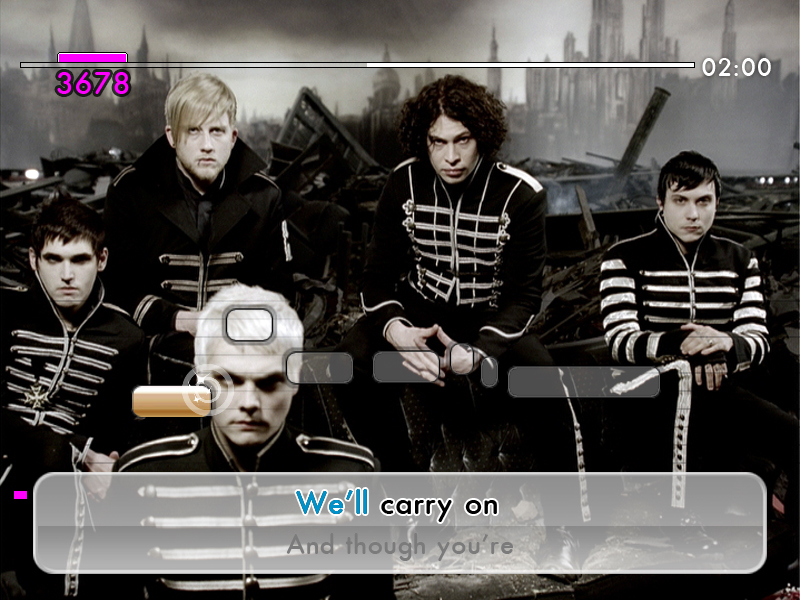
Going about selecting them is usually a case of shouting at each other!  [Laughs] We go through a process where we obviously narrow down exactly what the game is going to be about: in this case it’s rock. Then we see the best examples of that across the difference subgenres of rock – nu-metal or the 80s style hair metal – and we try and get good examples of that. I mean we have things like White Snake which is a good example of 80s rock, and then we have some modern stuff like My Chemical Romance and 30 Seconds to Mars. So we try and go through a process where we list out what songs we believe would fit well into this kind of product, and then we take it from there and start negotiating with the music labels.

Will there be any additional content for We Sing Rock in future?

We’ve experimented with DLC in the past before. Unfortunately due to the technical limitations of the Wii it’s very difficult to do DLC to the high quality we believe it should be. We have experimented with it before and the results have been less that successful to be honest. So rather than diminish the quality of the overall product, we want to keep the high quality as much as possible. At the moment DLC isn’t on the cards.

So what do you think are the technical limitations of the Nintendo Wii and could the Wii U solve them?

I can’t say too much about it at the moment, but obviously the Wii U is a much more powerful machine and we’re hoping there are quite a few changes between the Wii and Wii U that’ll help with many of the functions of it. Fingers crossed! Especially with the tablet controller design as well, that could prove for some very interesting gameplay designs later on.
Tell us a bit about Wired Productions.

Nordic Games – which is the publisher of the We Sing series – they call us to do the production for their games. Generally they’ll want us to have a look at the market and see what would work and we usually just take it from there. We have brainstorming sessions, we’ll see what the market is lacking at the moment. When made We Sing, there wasn’t anything similar to it at the time on consoles so we went straight ahead with it.  Day-to-day stuff is just working through and making sure we can make the best product possible.

A little about you now, how did you get started in the games industry?

Many years ago! I actually started with the people I’m working with at the moment. I used to work for a publisher called Digital Jesters who used to do a lot of PC games, especially the original Trackmania when it first came along. Since then I’ve worked my way through the industry  with the same great team of people and we’ve now got to a point where we’re making products we’re incredibly proud of rather than just publishing them.

What advice would you give to those looking to get into the games industry?

My best advice is don’t try and look for a quick fix, it’s the same as any other industry in that you have to really work at it.  And even if you have to work on stuff you don’t really want to, at the end of the day you’ve really got to work at it otherwise you’ll just find it too hard.  The best advice I can give is get as much information as you can about what you want to do in the industry because there’s loads of different sectors to it. Get as much information and then go and try from there to see what you can do.

And finally, is there anything you’d like to add about We Sing Rock, and when is it due for release?

We Sing Rock, rocks obviously! Unfortunately I can’t announce the release date but it will be soon but everyone should play it, it’s great. Everyone will have a song they want to rock out too.

Thanks for your time Kevin.

We Sing Rock is scheduled for release on Nintendo Wii in the near future.

Leave your comments here on the Train2Game blog, or on the Train2Game forum.
Train2Game news: Next Portal 2 DLC to add map editor

Train2Game blog regular readers will be aware that custom creations and modding can be a great way to not only improve your skills, but can also possibly help to find work in the industry.

In good news for aspiring game developers, the next add-on for Portal 2 will allow players to create levels using “an easy-to-use in-game map editor” which will let users “design, build and share their own single-player and co-op test chambers with the community.”

Last week, Portal 2 won the Ultimate Game of the Year award at the Golden Joysticks.

Portal 2 developer Valve introduced community created levels and items into Team Fortress 2 over a year ago, and as reported by the Train2Game blog, the creators have made $2 million between them thanks to the virtual item store.  Could Train2Game students therefore potentially not only see custom created levels played by others, but also monetised? More details will be revealed when the Portal 2 add-on is released next year.

In a recent interview with the Train2Game blog, Valve’s Chet Faliszek told us that modding is a “really good way” to get noticed in the industry. The same could also be said for creating community levels. The developer has a reputation of supporting  their community, and activity encourage modding using the Source SDK.

So Train2Game, what are your thoughts on the prospect of creating levels for Portal 2? Is it something you’d do? Can you see it as something that’d help improve your skills?

Leave your comments here on the Train2Game blog, or on the Train2Game forum.
[Source: Gamasutra]