Train2Game students, want to stand out in the games industry? Cliffy Bleszinski has some advice…

Train2Game students will need to stand out both in ability, and as a character, in ordered to get noticed in the games industry. This could include wearing a silly hat.

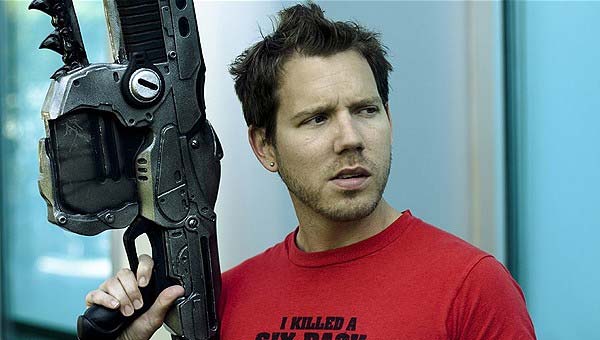
That’s according to comments made by Gears of War 3 creator Cliff Bleszinski about what game developers need to do to make a name for themselves.

“It’s not always easy for the majority of them, but the best thing you can do for your career is to be an actual name as opposed to just, and I hate to say it, a gear in the machine,” he told Develop.

And the Gears of War 3 man recognises that you have to be good at what you do, but it’s also important to make yourself a little distinctive.

“First and foremost, make a great game but also have a personality. Be the guy with the hip glasses, with the one gauge earring and the gamer tattoo all the way to the sleeves with a skateboard. Stand out,” he said.

“Be a person, be a brand. Just do something so that people know who you are. Have an online presence more than ever. Understand social channels.”

Many Train2Game students will already know about Twitter, and how some can use it to aid in their success. Train2Game also has its own Twitter account.

Bleszinski use’s creator of Minecraft – a hugely popular game on the Train2Game forum –  Markus ‘Notch’ Persson as an example of a developer using alternative means to make a name for themselves.

“He’s got over 300,000 followers and he has the hat. Clearly the guy gets a certain amount of the branding right, he’s got the cool nickname, he’s got the hat he wears everywhere. You spot him and know what he looks like. He’s an example like Jon Blow.” said the Epic Design Director.

The Develop interview – which Train2Game students can read here – should make interesting reading for Train2Game students, with Cliff Bleszinski also discussing development behind the Gears of War series.

Last month, the Train2Game blog reported that Bleszinski thinks there’s much more to come from current generation consoles.

So Train2Game, what do you think of Bleszinski’s comments? Is it important for game developers to be distinctive to stand out above the crowd?? Would you consider wearing a funny hat to be recognised?

Leave your comments here on the Train2Game blog, or on the Train2Game forum.

[Source: Develop]

Train2Game game developers: how to be a ‘kick-ass’ coder

Train2Game students on the Game Development course will be especially interested in this, a blog on how to become a ‘kick-ass’ gameplay coder.

It’s the latest in the #altdevblogaday series, and comes from FreeStyleGames’ Andy Bastable. It contains some excellent advice on how to become a great coder and is something that Train2Game game development students would benefit from reading!

One tip is the importance of working with the rest of the game development team, the game designers and artists, even if you don’t necessarily agree with what they want to do…

“Being an awesome gameplay coder means leaving that cynical attitude by the door. Yes, you may not like the feature you are tasked with all that much – and you may not even think it’ll work that well, but keep an open mind and you may be surprised by how it develops.”

“Work with designers and artists, and not against them. That doesn’t mean not speaking up when something is wildly unrealistic, or bound to contradict several TRCs – but it does mean being willing to try out things that don’t get all your creative juices flowing at first glance.” Writes Bastable.

Train2Game students can read the full ‘How to be a kick-ass gameplay coder’ piece at #altdevblogaday.

A previous #altdevblogaday post, mentioned here on the Train2Game blog demonstrated the importance of getting involved with Game Jams. Fortunately, next month’s Train2Game & Epic Game Jam will give some Train2Game students this opportunity.

So Train2Game, what are your thoughts on the tips for becoming a kick-ass coder? And what tips would you give to others?

Leave your comments here on the Train2Game blog, or on the Train2Game forum.

[Source: #altdevblogaday]

Train2Game news: Battlefield 3 beta aiding game development


Train2Game students will be aware of the importance of testing games during development, and the significance of this is already being displayed in the Battlefield 3 Open Beta.

According to the Battlefield blog, the feedback from players is providing useful information to developers DICE when it comes to improving the game.

“The amounts of people flocking to our Open Beta is fantastic! We are happy to see so many players enjoy this Open Beta, and giving us their valuable feedback on the experience on the Battlelog forums,” the blog post says.

Train2Game students can see the Battlefield 3 blog for a full rundown of the changes that have been made as a result of testing during the Open Beta, and DICE say they’ll be updating the blog with further tweaks they make as more people provide them with feedback about Battlefield 3.

The Battlefield 3 beta for Xbox 360, PlayStation 3 and PC runs through to October 10th, and Train2Game students who wish to get involved can find out how to do so here on the Train2Game blog.

It could provide Train2Game students, especially those on the QA Tester course, with experience of properly testing a game in development.

Last week, the Train2Game blog reported that Bioware also feel that playtesting is an essential part of game development.

So Train2Game, are you involved with the Battlefield 3 beta? Have you spotted any bugs? How important do you think this Open Beta is to the development of the game?

Leave your comments here on the Train2Game blog, or on the Train2Game forum.

[Source: Battlefield blog]

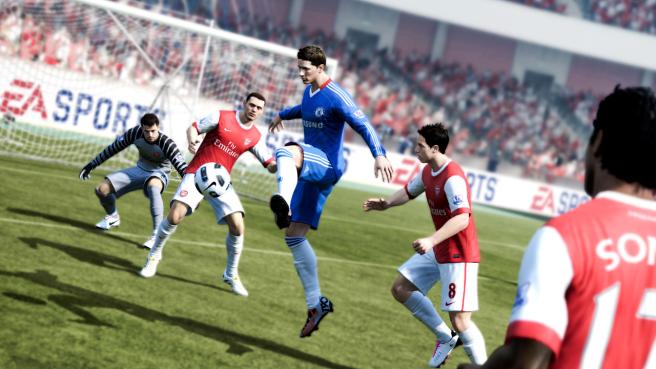
Train2Game news: UK charts – FIFA 12 is third biggest ever launch

Train2Game blog readers probably won’t be too surprised, but FIFA 12 has shot to No.1 in its debut week on sale, becoming the third biggest ever UK game launch ever.

It overtakes the launch of Grand Theft Auto IV and only the previous two Call of Duty titles have enjoyed bigger first week sales. FIFA 12 takes top spot from last weeks’ chart topper Gears of War 3.

Regular Train2Game blog readers will be used to seeing the FIFA name in the charts, with the previous title in the series, FIFA 11, still in the UK charts top ten as recently as last month.

The success of FIFA 12 sees F1 2011 from Codemasters slip one spot to No.3, ahead of non-mover and previous long time chart topper Zumba Fitness at No.4. Meanwhile, another former No.1 in the form of Dead Island drops to No.5 in its fourth week on sale.

Deus Ex: Human Revolution slides one to No.6, sitting one spot ahead of the PlayStation 3 exclusive new entry Ico & Shadow of the Colossus HD remake bundle.

UK developed Driver: San Francisco slips to No.8, LEGO Pirates of the Caribbean remains at No.9, while Call of Duty: Black Ops once again re-enters the top ten.

X-Men: Destiny from Activision enters the charts at No.18 in its first week on sale.

The UKIE Gfk Chart-Track All Formats Top 10 for the week ending 1st October 2011 is therefore as follows:

  1. FIFA 12 (EA)
  2. Gears of War 3 (Microsoft)
  3. F1 2011 (Codemasters)
  4. Zumba Fitness (505 Games)
  5. Dead Island (Deep Silver)
  6. Deus Ex: Human Revolution (Square Enix)
  7. Ico & Shadow of the Colossus Collection (Sony)
  8. Driver: San Francisco (Ubisoft)
  9. LEGO Pirates of the Carribean (Disney)
  10. Call of Duty: Black Ops (Activision)

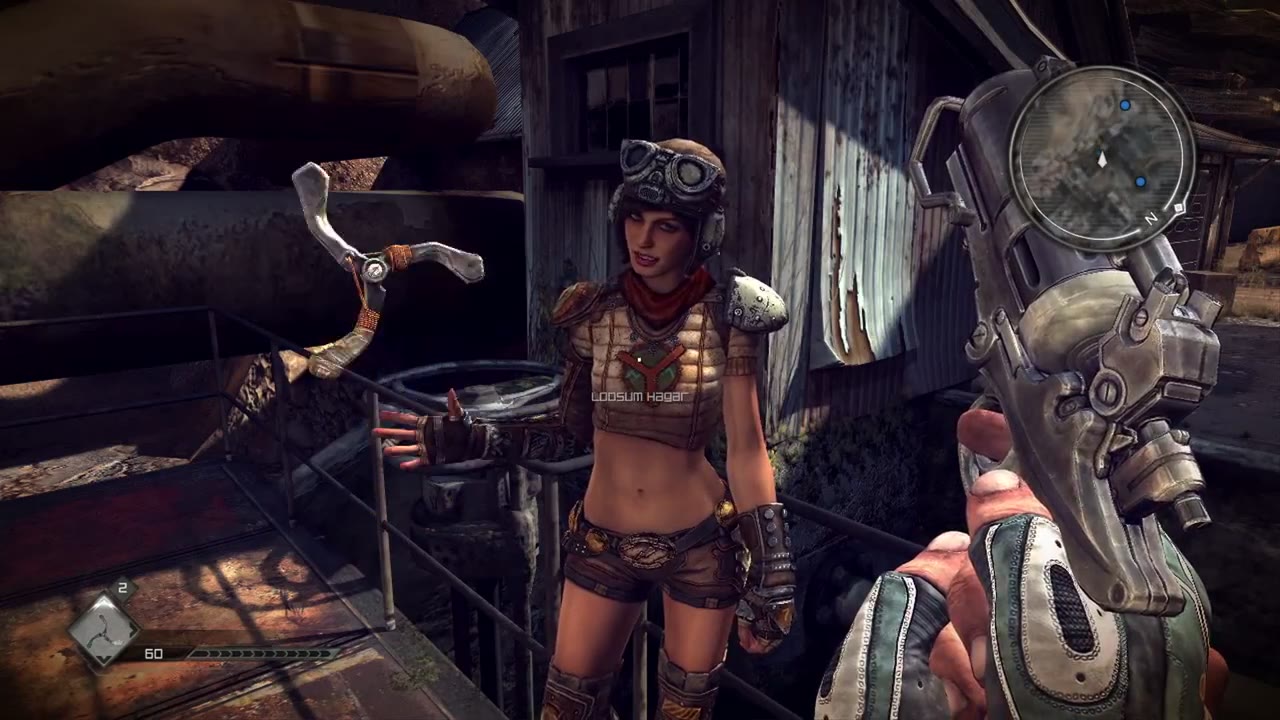
Releases this week include Dark Souls and RAGE. Train2Game students can find out more about RAGE from id Software in the Train2Game interview with Creative Director Tim Willits.

What are your thoughts on the success of FIFA 12? Will it remain a big seller for almost a year, like its predecessor?  Can Dark Souls or RAGE knock it from No.1?

Leave your comments here on the Train2Game blog, or on the Train2Game forum.

[Source: UKIE Games Charts©, compiled by GfK Chart-Track]

Train2Game news: Game developers need to make new IP a franchise from the start say id Software

Train2Game students who go onto work on Triple-A titles will need to be ready to develop whole game franchises. At least that’s the case if id Software Creative Director Tim Willits.

“You need to make a franchise, especially for us. We’re doing everything we can to turn it into a franchise, “please let it sell so we can make another one!” he told GamesIndustry.biz.

And Willits said they needed to make sure the story was deep enough to do this from the start.

“Even from the beginning when we talked about the story and the setting, we said we need to make it rich, we need to have deep environment,”

“We have the comic books that we’ve used to support the game, we have the book we use to support the game, the iPhone – heck, the whole iPhone game was about Bash TV, which is only a ten minute experience in the overall game.” said id Software Creative Director.

He suggests that the RAGE franchise could even expand to include mobile and social games.

“So we definitely, from the get go, planned to make this a much bigger franchise, a much richer world, that allows us to have different games, and we can make more mobile games, heck, we could make a social game with Rage if we wanted to. And hopefully we can make a Rage 2. Hopefully.”

In an his in-depth interview with GI.biz, Willits handed out advice to those looking to get into the games industry: make sure you create things and finish them.

“If you want to make levels, make levels in you spare time, all the time. If you want to be an artist you always have to be drawing. If you want to be a programmer you need to make small apps. You have to have a passion to do it for free if you ever want to really get paid for it.” he said.

It’s very similar to the advice Willits gave Train2Game students about how to get into the games industry in an interview with the Train2Game blog last month.

Interested Train2Game students will be able to use RAGE’s mod tools following its release next month.

So Train2Game, what are your thoughts on Willits comments? Does new IP need to be considered a franchise from its inception? Or can games still be one offs?

Leave your comments here on the Train2Game blog, or on the Train2Game forum.

[Source: GI.biz]

Train2Game interview: Gaming Charity Special Effect – Part 2


Train2Game was at the Eurogamer Expo, and while there we sat down with gaming charity Special Effect. Special Effect is dedicated to helping young people with disabilities enjoy computer games when it may not otherwise be possible.  They use their expertise and adapted technology including eye control in order to make this happen.

In the second part of our two part interview, Special Effect R&D Bill Donegan tells the Train2Game blog how they decide which games to add their tech too, what their biggest challenges are and how you can help them.

Read it below on the Train2Game blog, on the Train2Game Scribd, or listen to it via Train2Game Radio. Part 1 of the interview is available here.


How do you decide which games to build eye tech and other technology into, and do you get any help from the developers themselves?

Yeah we’ve had some really good input. For instance, last week someone we’re working with in Dublin on eye control, who before he had his accident he used to play a lot of golf and so we’ve been trying to find a way for him to play golf using the eye control system. Then this developer basically took a game that he’d already made and we asked him if could put some changes in. He basically put in these functions that allowed eye control or any other pointer input to control the game.

It’s not just a case of being able to control a mouse, if you can play with a mouse it doesn’t necessarily mean you can play with eye control, there’s lots of small subtitles. So basically it involves a lot of testing of games and looking at games seeing what might work and then testing it. Or if there’s something like racing games where in general the genre doesn’t use curser controls as input method, we’re trying to think of ways that we could use that and then play the game.

If any indie developers had a game they wanted to allow this technology to be involved with, would you be happy for them to come to Special Effect?

Yes, we offer a free service of helping developers if they want to put our features in. We don’t say ‘You have to put these features n,’ we’re quite happy to look at someone’s game and make some recommendations, and if they feel it’s viable to do that and put them in then we’ll advise them on how they might want to do that. They do that by meeting us in person, or through email.

And what’s been your biggest challenge adding this tech to your projects?

The one that eludes us slightly and what we’re going to test this bit of software with is first person shooters. Because obviously there’s a large amount of controls just to use a cursor movement for.  So that’s the next big thing on the agenda because obviously lots of people want to be able to play that type of game, like Call of Duty, Battlefield. So using one control input such as a cursor to do about twenty different things, that’s the next thing we’re going to look at long term.

And how can developers help you to do that?

Lots of people we work with have different ways of controlling a computer and different abilities, but there are things that can be put into every sort of game that would help a larger amount of people that we work with, be able to play it.

Quite standard features like, for example, lots of people have heard about putting remapping functions into games. Obviously it opens up games for someone who wouldn’t be able to play ordinarily because they use a specialist controller; they can’t reach a certain button so they need to put it to one they can reach. Being able to do that in the game can be the different between being able to play that game and not.

So some things like eye control is obviously a difficult thing to do, but there are certain things like being able to turn off the cursor control in a first person shooter will obviously allow us to move the cursor and do other functions. It’s quite a hard thing to explain but there are things that if we had discussions with them we’d be able to work on I’m sure.

If people want to get involved with helping Special Effect, how do they go about it?

We’ve just launched a Facebook fan page for Special Effect and by liking it you instantly become a ‘Gamer For Good’ and that basically says ‘I support what Special Effect is doing,’ helping people to play video games. From there they can contact us and find out what they can do to help.

There are special edition Special Effect t-shirts on sale here at Eurogamer can you tell us about those?

Yes. So, Insert Coin who did the logo for our Gamers For Good Facebook page and they’re selling them on their stand.  (The Special Effect t-shirts are also available from Insert Coin Tees website.)

They’re really nice guys basically, they’ve been really supportive of us from the start, and all the profits from the t-shirts are coming straight to us which is lovely. We’ve had no outlay from them so everything we get from the t-shirts is profit for us.  It supports the work that we do basically, we’re privately funded, we don’t get government funding, all of our work is supported via donations so it all goes to helping the work we do.

If you know someone who might benefit from the work we do, get in touch: info@specialeffect.org.uk

Thanks for your time

For more information about Special Effect, www.SpecialEffect.org.uk
Train2Game news: Playtesting ‘necessary’ part of game design process say Thatgamecompany


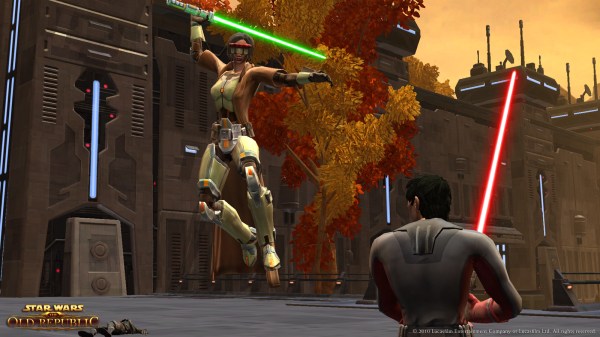
Train2Game blog readers may have read our post earlier this week in which Star Wars: The Old Republic project lead James Ohlen said playtesting is a very important part of game development.

Well it seems that he isn’t the only one. Thatgamecompany, the indie studio behind Flower and the upcoming Journey, recently spoke to Gamasutra, with founder Kellee Santiago revealing playtesting is an integral part of their game development

“We are exploring different emotions in game design. If you were to have this emotion of, “I want it to feel joyous but slightly sad,” and you go to an artist, the artist can probably bang out some art in a couple days, some concept art that has those feelings.”

“You go to a composer and you say that, and they can probably do it in half a day, write out a tune that has joyous but slightly sad.” said Santiago.

And while sound and art & animation style can be tested relatively quickly, the Thatgamecompany founder believes that playtesting is the only way to get a good feel of game design concepts.

“You go to a game designer and say, “I want to feel game mechanics that are joyous and slightly sad,” there’s no real defined process for it, other than making something and having other people play it, and finding out if that’s right or not” she said.

“And it’s just a longer process, and it is because it is still so new, I think. Prototyping and playtesting is just so necessary to the craft right now.” Santiago concluded.

Of course, it isn’t only game developers and QA Testers who playtest games, with open beta becoming increasingly popular. As reported by the Train2Game blog, the Battlefield 3 beta begins today, while Valve’s Chet Faliszek also told us that testing is a hugely important part of game development.

So Train2Game, how important do you believe playtesting is to game design?  Will there every be a defined process of testing game design concepts?

Leave your comments here on the Train2Game blog, or on the Train2Game forum.

[Source: Gamasutra]

Train2Game news: There will always be subscription based MMOs say Star Wars: The Old Republic devs Bioware

Train2Game students may be aware that many MMO titles are switching to a free-to-play model, one wherein revenue is made by microtransactions rather than monthly subscription fees.

However, while many games in the genre are going free-to-play, the upcoming Star Wars: The Old Republic – scheduled for release in December – is going to stick to the traditional pay monthly model.

And while many developers are switching to free-to-play, SWTOR developers Bioware believe that gamers will always be willing to pay a subscription fee for a quality product.

“I think there will always be a place for premium content at a premium price and that’s one of the differences,” Bioware co-founder Greg Zeschuk told Industry Gamers.

“Free to play is very much about trial, about ‘Hey, I don’t know what this is, I don’t have confidence that it’s any good, but I’m willing to take a look at it,’ versus ‘I know this is good, from a trusted source, and it’s the biggest license in the world.’ So it’s a different value proposition,” he said.

Fellow Bioware co-founder Ray Muzyka believes that increased competition from free-to-play titles is good for the games industry.

“There’s more competition for entertainment dollars now than ever before from social and play for free, and all sorts of entertainment, which I think is actually really healthy from an entertainment industry perspective”

However, he agrees with Zeschuk in that the subscription model will remain popular, but the games have to be worth it.

“But I agree with Greg that there’s a space for a certain number of premium products that are subscription based or whatever the premium pricing model is. But they have to merit it, they have to earn that from a consumer trust perspective and delivering and exceeding expectations.” said Muzyka.

Of course, he believes that Star Wars: The Old Republic is one of these games.

“I think The Old Republic is definitely in that triple-A premium category. That’s the feedback reading from the players and data testing.”

Earlier this week, the Train2Game blog reported on the importance of playtesting in the development of Star Wars: The Old Republic.

For an in-depth look at the development of SWTOR, read the Train2Game interview with Associate Lead Game Designer Emmanuel Lusinchi

So Train2Game, do you believe the subscription model for MMO still has a future ahead of it? Or will free-to-play titles become the dominant force?

Leave your comments here on the Train2Game blog, or on the Train2Game forum.

[Source: Industry Gamers]

Train2Game interview: Gaming Charity Special Effect – Part 1


Train2Game was at the Eurogamer Expo, and while there we sat down for a chat with gaming charity Special Effect. Special Effect is dedicated to helping young people with disabilities enjoy computer games when it may not otherwise be possible.  They use their expertise and adapted technology including eye control in order to make this happen.

In first part of a two part interview, R&D at Special Effect Bill Donegan tells the Train2Game blog about what Special Effect do, how eye control technology works and how they adapt games to use it.

Read it below, on the Train2Game Scribd, or listen to it via Train2Game Radio

Can you tell us a bit about the story of Special Effect please?

Special Effect was set up about four years ago. The main aim was to find ways to help people who’ve got some sort of disability, people who can’t use a computer in a normal way or can’t play video games in a normal way using a mouse, controller or keyboard, and find ways for them to play computer games and do other leisure activities if they can’t use the ordinary ways of controlling a computer.

So today we’re showing ‘eye control’ because we’re doing a world record attempt – to get the biggest eye control tournament ever – which I’m guessing is a new record! So hopefully we’ll make a record at least. And we’re also doing a fastest lap competition of the game we’ve got today, which is Trackmania Nations.

The way we’ve got it to work with the eye controller is we created a little bit of software with a volunteer called Tim Brogden, and that turns the mouse movements from the eye control into keyboard presses for the game.

How do you even begin the process of getting eye control into standard games?

It’s often quite tricky because basically what you’re doing with eye control is moving a cursor around the screen by looking around itin the way we’re using it. Obviously there are certain games you can do that with, by doing a left click for instance by blinking or just dwelling on an area.

Obviously point and click games, a lot of those can be played with this; but then if people want to play other types of games such as racing games, there’s only one to my knowledge that you can play using a mouse pointer. So, we came up with the idea of this software to open up lots of games to more people who use things like eye control or head control and can’t use the keyboard to play the game.

So how does Trackmania Nations work with eye control?

The first thing I’d do is…I’ve just sat down in front of the computer which is going to do a quick calibration. Basically this is just telling the computer it’s a different person to the one that’s just had a go on it.

So, I’m going to look at this target on the screen and then the mouse is flickering everywhere because we’ve changed the sensitivity settings to make it work better with this game.  If you’re using it for a normal computer, you need to put some smoothing on to make it a bit more accurate but for this game it works perfectly well.

It looks like it’s working so I’ll just close the calibration down. That’s the alt controller running so what I do is press – we’re doing it in the physical form but you can put on screen buttons up to start the alt controller – so I’m starting that now. Now as I look around the screen the car will follow where I’m looking.

If I want to turn right I’ll look slightly to the right, if I want to turn left at this corner I’ll look to the left. And then if you look at the track you’ll basically accelerate, so if I look down I’ll come to a stop and then roll back down this hill. But it’s set up so you don’t have to look up at the sky to accelerate, you just look at the track ahead of you.

How difficult was it to bring the eye control tech into Trackmania?

It worked quite nicely. The main reason we chose it was because of the short levels, because for people who aren’t used to it it’s quite good just to do a short burst track and do it a few times. But the actual making the profile with the alt controller was one of the easier parts. Obviously it took some tweaking and we made some changes for the Eurogamer event because people aren’t used to using eye control, but it was fairly OK.

Stay tuned for part two of the Train2Game interview with Special Effect and leave your comments here on the Train2Game blog, or on the Train2Game forum.

For more information about Special Effect, www.SpecialEffect.org.uk
For more information about Train2Game, go to www.train2game.com

Train2Game news: Consoles will continue to be the ‘gold standard’


Train2Game students will be aware about the huge increase in digital gaming over the last few years, with smartphones, Steam and as seen at the Eurogamer Expo, OnLive, all giving consumers ways of downloading or streaming games.

And as reported by the Train2Game blog, some have even speculated that there will eventually be no place for traditional consoles.

However, retailer GameStop believes that consoles are very much here to stay and for a long while yet.

“We continue to believe that the console is a strong platform and will continue to be the gold standard” GameStop President Tony Bartel told Industry Gamers

And he believes that digital content will become an increasingly important area for consoles.

“People will begin to digitally download first a lot more downloadable content. Eventually, full games will become more relevant to some consumers who want to do that”

“Then we think that streaming will continue to grow. As you get additional bandwidth, we think that it’s going to become more prevalent over time, which is why we’ve invested in it.” Bartel concluded.

The increasing importance of digital to consoles echoes comments made by THQ CEO Brian Farrell. As reported by the Train2Game blog, he believes future consoles won’t use discs and this will only be a good thing for game developers.

Meanwhile, Crytek believe that the games industry isn’t quite ready for an all digital cloud gaming way of working.

So Train2Game, do you believe consoles will always be a part of gaming? Or does the rise of digital mean that they have limited time left in the spotlight?

Leave your comments here on the Train2Game blog, or on the Train2Game forum.

[Source: Industry Gamers]