Johnny Robinson – Train2Game Industry Experience Diary No.1

Train2Game Game Designer Johnny Robinson is on a  Train2Game student work placement at DR Studios.

This is the first in a series of Train2Game student work placement diaries Johnny will be writing during his placement. Read it below or on the official Train2Game industry experience diaries website.

You can also watch Johnny’s first video diary here on the Train2Game blog.


Laurence Gee – Industry Experience Diary No.4

Train2Game student Laurence Gee writes about his Train2Game industry work experience placement for the fourth time.

Read his Train2Game industry experience diary on the official website, or here on the Train2Game blog. Industry diary 3 is also available on the Train2Game blog.

Mojang’s Scrolls to follow same release strategy as Minecraft

Regular Train2Game blog readers will be highly aware of the success of indie game Minecraft, as well as its huge following among Train2Game forum users.

Some of them have been there since they purchased Minecraft when it was in Alpha, or in its current Beta form, and Mojang have revealed that their next game, Scrolls, will follow the same pattern.

“With our new game, Scrolls, we’ll follow the same formula as Minecraft,” said Mojang’s Daniel Kaplan while speaking at GameLab in Barcelona.  “That means we’ll release the game very early, at the minimal playable state.”

That means people will pay for it, play it, and give feedback from a very early stage, in essence, almost asking like a QA Tester. Kaplan also revealed that Scrolls has a five person development team.

“That sounds like a small team, but it’s very big for us. One thing that means is we’re going to have to outsource art,” he added.

As reported by the Train2Game blog earlier this month, Minecraft for the Xbox 360 IS being developed by Dundee based 4J Studios, and Kaplan says it’ll be quite different to the PC version.

“I don’t think we can have the exact same experience because of the lack of a keyboard, so we’re going to do a complete overhaul of the user interface, and make sure it works on a 360 controller.”

Kaplan also commented on the prospect of Mojang publishing games by other indie studios, something the Train2Game blog revealed the developer was thinking of last month.

“We’re looking for people with a similar structure [to Mojang],” he said. “People who are very passionate about what they’re doing. We’re also looking for games that last longer, and treat games as a service, like Minecraft does.”

“And of course, [they need to have] passion,” he added. “A lot of people join the game industry because of passion, but you should also learn that that’s what it takes to stay there.”

That last statement could describe many Train2Game students who are very passionate about finding work in the games industry.

So Train2Game, what do you think of Scrolls release structure? Will it mirror the success of Minecraft? And will you be jumping in straight away?

Leave your comments here on the Train2Game blog, or on the Train2Game forum.

[Source: Gamasutra]

Pac-Man creator in warning against ‘easy games’

PAC-MAN

The creator of Pac-Man believes Game Design in the industry today is more focused on quick, simple games than more substantial, memorable titles.

“When you look at games coming out today, it’s doubtful that any of us will be talking about them in ten years’ time,” Industry veteran Toru Iwatani said in a recent interview.

“We have to focus on making games that people will remember a decade from now, or else we’ll lose our audience, probably.”

He warned that social media titles in particular are becoming too easy to produce.

“You’ve had this flood of very simple games on the iPhone and social networks. They’re very ‘easy’ games, and by easy I mean easy to design and to pump out by the dozen,” he explained.

“I think more thought needs to go toward how games present themselves to the user, to how they can be made more fun.”

iPhone games are getting easier and easier to make, and as the Train2Game blog reported earlier this month, they can also be developed using an iPad app.

As Train2Game students will know, there’s a huge market for iPhone games, so it’s almost inevitable that some developers want to get simple games out there as quickly as possible.

So Train2Game, what are your thoughts on Iwatani’s comments? Are developers trying to churn out simple games more regularly? Or will there always be room for deep, complex titles?

Leave your comments here on the Train2Game blog, or on the Train2Game forum.

[Source: Game Career Guide via GamesIndustry.biz]

New GameSalad engine means no coding needed

Train2Game Game Designers and Artist & Animators who want to practice their skills but lack coding knowledge (or access to a friendly Game Developer through the Train2Game forum) will be able to do so thanks to the new HTML 5 game engine.

The GameSalad tool allows games to be built using a drag and drop interface, with the resultant titles being exported in HTML 5 code.  It removes the barrier for developing games for both Ios and Android devices, with the results able to be displayed on most browsers.

GameSalad doesn’t offer support for Flash, despite being one of the most popular ways of playing games online today.

HTML 5 is “the next language of the web” said GameSalad CEO Steve Felter.

“We’re giving people the ability to play and share GameSalad games within a web browser – dramatically expanding both the reach of our developers’ games and their ability to create conversations and community around them,”

In other programming news, last month the Train2Game blog reported on the £15 Raspberry Pi mini computer which looks to revive the era of bedroom coding.

So Train2Game, what are your thoughts on the HTML5 game engine? Is it something you’d use?

Leave your comments here on the Train2Game blog, or on the Train2Game forum.

[Source: Develop]

Train2Game Game Designer Justin French from St Albans speaks to Train2Game Radio

In our latest interview, we speak to Audio Engineer and Train2Game Game Design student Justin French.

Train2Game Radio caught up with Justin to find out why he chose to study with Train2Game, how he’s finding the course and what he wants to achieve in a career in the games industry.

Listen at www.audioboo.fm/train2game. Leave your comments here on the Train2Game blog, or on the Train2Game forum.

Train2Game Game Developer Andrew Goodchild speaks to Train2Game Radio

Andrew Goodchild is studying to become a Game Developer with Train2Game.  Train2Game Radio caught up with him to find out why he chose to study with Train2Game, how he’s finding the course and what he wants to achieve in a career in the games industry. Listen to the interview in full at www.audioboo.fm/train2game

Earlier this year, Andrew spoke to BBC Radio Suffolk about the Train2Game Game Jam.

Leave your comments here on the Train2Game blog, or on the Train2Game forum.

Interesting BBC article on Game Jams Train2Game students should read

The Train2Game Game Jam took place at the end of March, with many of the Train2Game students involved finding it an enjoyable and very useful experience.

You can even download the games created at the Train2Game Game Jam from the official Train2Game website.

Why is the Train2Game blog mentioning a Game Jam now? Well, there’s an extremely interesting article on the BBC News website that looks at a Game Jam in New York

It’s an interesting read for Train2Game students, both those who did and didn’t attend the Train2Game Game Jam back in March.

For more about Game Jams, and how they can be useful for game developers, see the Train2Game blog interview with Scottish Game Jam organiser Romana Khan.

A Train2Game blog interview with Mediatonic Director Paul Croft also re-enforces how taking part in a Game Jam can be useful for game developers.

Leave your comments here on the Train2Game blog, or on the Train2Game forum.

[Source: BBC]

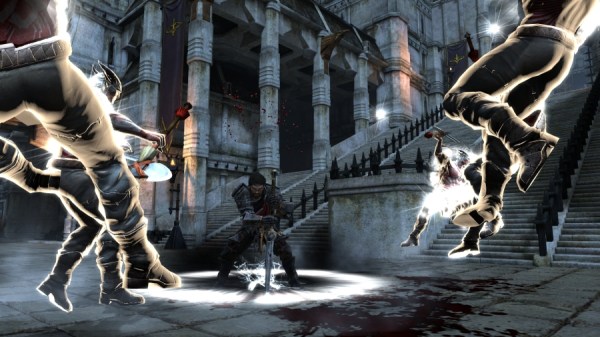
EA admit Game Design of Dragon Age 2 drove Origins fans away

Dragon Age 2 Publishers EA have admitted that “innovations” in the game cost them fans, and therefore providing a lesson to Train2Game students about Game Design.

While innovation is key to the games industry, the admission demonstrates that Train2Game students who produce games that are too far out there may risk unpopularity.

Many fans were disappointed with a particular Game Design element of Dragon Age 2 that reused the same locations multiple times.

“We were clearly disappointed with some of the response from the fanbase, because we want them to be as excited about it as we are,” EA Games Label boss Frank Gibeau told Eurogamer.

“We’re very proud of the game. We tried to innovate and do some different things with the combat system and some of the way we told story. For some fans it worked well. In fact, we brought a lot of new fans into the Dragon Age franchise.

“But to be honest, we lost some fans as well. They were not pleased with some of the innovations and things we’d done. We understand that and we’re listening.”

It’s not the first time the Train2Game blog has reported that fan feedback will be taken into consideration with the Dragon Age franchise. As reported by the Train2Game blog last month, Bioware admitted they’d be listening to fan complaints.

Some Train2Game students will no doubt be pleased that EA say they’ll listen to this criticism when it comes to developing Dragon Age 3.

“As we think about where we take the franchise next, we’re going to take that into consideration and really engage them,” Gibeau continued.

“Ray [Muzyka] and Greg [Zeschuk] have built a long career being close to their fanbase and understanding what they want.”

“If they do something in a direction that is innovative and fresh for some but not for others, they’ll take that into consideration as we think about the next design and where the game goes from here.”

Last year, the Train2Game blog highly praised Dragon Age: Origins, particularly when it came to Game Design.

For more on why Bioware decided to take Dragon Age II in the direction they did, see extracts of an interview with Mike Laidlaw on Game Design hereon the Train2Game blog.

How important do you believe it to be for developers to listen to fans? Where is the fine line between innovation and alienating fans?

Leave your comments here on the Train2Game blog, or on the Train2Game forum.

[Source: Eurogamer