Opportunity for students to meet industry professionals and discuss course details
Developer drinks on Tuesday 19 July gives developers access to hot new industry talent
Train2Game, provider of games industry training courses, today announces details of its participation in the 2011 Develop Conference, including its first ever ‘Guru Bar’ on stand B12 – giving those interested in the games industry a forum to interact with key figures and ask questions about training, career development and the community at large.
For developers eager to wind down after a long day marching the floors of the show, Train2Game will also be teaming up with leading games business network, GameHorizon, to host an evening of drinks at Alfresco, a Brighton seafront bar. Here, developers are invited to meet future industry talent and rising stars of the course, as well as get more information on how to get involved with placement programmes.
Key facts of the placement schemes follow below:
The placement schemes operate across the all Train2Game courses – Artists, Animators, Developers, Designers and QA.
Developer placements programmes are subsidised by Train2Game and can range for periods of 2 – 6 months.
Developers can choose from the top performers to suit their needs
Tony Bickley, Course Director at Train2Game sees events like Develop as the perfect place for the present and future of the games industry to collide: “While it’s easier than ever to connect online, there’s no replacement for meeting your peers face to face, both when on the hunt for new talent or considering a route into the industry. It’s the same logic which fuels our courses – substantial relationships and interaction online supported by face time wherever possible.”
Train2Game is a blended-learning organisation designed to fast track the best, most ambitious and motivated students into the games industry through comprehensive, expert-supervised courses. A big part of this is co-ordinating with the best developers in the country and providing top tier talented graduates for placements in the workplace.
Train2Game Guru Bar Details
Date: Weds 20 – Thurs 21 July Venue: Develop Expo, Stand B12
Hilton Metropole, Brighton Attendance is free, please RSVP at the Develop 2011 front desk
Train2Game/ Game Horizon Developer Drinks
Date: Tuesday 19th July Time: 17:00 – 19:00 Venue: Alfresco,
The Milkmaid Pavilion,
Kings Road Arches,
Brighton,
BN1 2LN
As previously reported by the Train2Game blog, streaming video games directly to televisions or other devices is increasingly being talked about as a means of getting them directly to the consumer.
However, with internet connections, well, notoriously unreliable there are those that doubt whether steaming games can truly take off in the near future.
Indeed, Dave Perry, founder of cloud gaming service Gaikai, acknowledges that latency is “the biggest elephant in the room” but claims the company has gone to great length to combat it.
“A lot of programmers went on record straight away saying ‘this’ll never work’, Perry told Edge “I am an engineer and I get it, I’m there with them, I understand the conceptual problem”
Of course, Train2Game game developers are working towards a career in the area of programming.
“The thing they don’t think about is I have about 60 people coming to the office every day working on this problem. We found many, many ways to do it, and we’re executing all of them.”
“The way the math works is that if I get two states closer to you, I actually get four states closer,” he said
“Two states is four states in latency, we had that epiphany pretty early on. That’s why we have so many data centres.”
Another solution is rather interesting, and also surprising.
“Imagine your game’s running at 30 fps on your console, but we run it at 60 fps [in the data centre], the amount of time that the game took while it was running,” he explains. “The engine itself took less time because we’re running it faster.
“So we take that time and use it for compression and sending, and you can suddenly see how the math starts to work in our favour. The faster we run the game, the more we overclock it, the lower the feel of the latency. This is one of many, many ways we’ve discovered to tighten up the feel of it.”
As previously reported by the Train2Game blog, there are those that truly believe cloud gaming is indeed the future of this industry, could Gaikai’s methods be a step towards this?
So Train2Game, do you think it’s the future of the industry? Does Perry address concerns about latency?
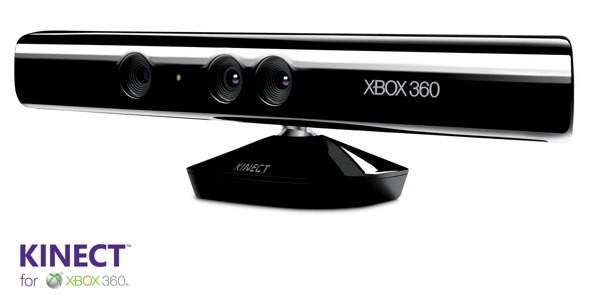
Perhaps it’s the first step towards a current Train2Game student being able to develop motion control based games for the PC in future. In any case, Microsoft will be releasing Software Development Kits that’ll enable Kinect to be modified via PC.
The intent of releasing a “starter kit” for application developers is to make it easier for academic research and enthusiast communities to create different experiences using the Kinect technology.
The starter kit will give academic researchers and enthusiasts access to deep Kinect system capabilities such as audio, system APIs, and direct control of the sensor. The Kinect Development tools will be released in the Spring, but there is no word on a commercial version as of yet.
Kinect offers the games industry another opportunity to push the boundries of Game Design, so Train2Game students may find it useful to take an interest in the development tools for the PC.
So Train2Game, what are your thoughts on Kinect development tools being released for the PC? Do you think it’ll lead to revolutionary new ways to play games? Or do you believe that there’s no need to develop motion control for the PC?
Train2Game students will be able to get a taste of Dragon Age 2 later this month when EA release a demo on February 22nd. Completing the demo will allow players access to a special weapon for the full game.
The official press release from EA says the Dragon Age 2 demo will let players experience two different sections of the game and as any of the three playable classes:
“In the demo, players will venture through the game’s prologue, choosing from three different character classes. They’ll also learn more about Hawke and hone their skills and abilities that will make them the ultimate hero.
After finishing the prologue, players will enter a key new location in the world of Dragon Age, Kirkwall, befriending Isabela, a romantic interest in the game who is also a deadly smuggler. Upon completion of the demo, players will unlock a special weapon, Hayder’s Razor, an ancient dwarven blade which increases health, mana, and combat abilities, in the full release of Dragon Age II.”
The Dragon Age II demo will be available on the PlayStation 3, Xbox 360 and PC from February 22nd, while the full game is released on March 11.
So Train2Game, will you be checking out the Dragon Age 2 demo? What do you think about EA’s promise of a special weapon for completing the demo? And will releasing a demo increase the sales of the game?
Computer Science should be brought into the national curriculum in order to encourage the next generation of Game Developers. That’s according to the Livingstone-Hope skills review which was launched today and the Train2Game blog was in attendance at the event.
The review highlights an educational ‘blind spot’ in traditional institutions but suggests if some changes are made the UK can build a ‘Golden Age’ of video games education.
The report’s authors – Ian Livingstone OBE and Alex Hope – suggest that if the UK’s video games industry overcomes existing barriers to growth and keeps up with its global competitors, it stands to generate £1 billion more sales by 2014.
However, the report shows that there is little awareness of the UK’s excellent achievements in the games industry. Only 3% of young people and 21% of art, ICT, maths and physics & science teachers interviewed know that top-selling video games such as ‘Grand Theft Auto’ and ‘SingStar’ were developed in the UK.
The report also reveals that the education system is not equipping students with the skills needed by the games industry. Despite physics being vital to gaining employment in these industries, less than 5% of UK art, ICT, maths and physics & science teachers surveyed think that physics is one of the most important subjects to study for a career in video game development or visual effects.
The Livingstone-Hope skill review also suggests ICT education doesn’t equip students with the programming skills required to enter the games industry, and recommends it should become a compulsory part of education in schools.
Key recommendations of the 88 page report are:
Computer science must be part of the school national curriculum.
Higher Education Funding Council for England (HEFCE) should include industry-accredited specialist courses in video games and visual effects in their list of ‘Strategically Important and Vulnerable’ subjects that merit targeted funding.
Young people must be given more opportunity to study art and technology together.
Ian Livingstone, Life President of Eidos, and author of the report said:
“Video games production plays to the UK’s twin strengths of creativity and high-technology and ticks all the boxes for the digital economy. But despite young people being passionate about video games, they are unaware that games such as ‘Grand Theft Auto’ and ‘SingStar’ were developed in the UK and unaware of the career opportunities in the UK.
We need to transform young people’s passion to play video games into a desire to make them, whilst equipping them with the right skills for the industry. In the brave new online world, a second ‘golden age’ for the UK games industry beckons. It’s an opportunity which shouldn’t be missed.”
So Train2Game, what are your thoughts on the main points of the Livingstone Hope Skills review? Do you believe it really can lead to a new ‘Golden Age’ Are you surprised about the lack of knowledge about the games industry among the public and education sector?
Train2Game students will be very aware that Grand Theft Auto is one of the biggest franchises in the video games industry with over 17 million units sold across the world.
It may come as a surprise then to hear that the original game was “almost canned” while in production during the late 1990’s! That’s according to an interview with Gary Penn – who worked for DMA Design – gave in Replay: The History of Video Games – It’s a book that may interest many Train2Game students!
“[The original GTA] was a real mess for years, it never moved on, it never went anywhere,” Penn – now with Scottish Independent developer Denki – told author Tristan Donovan.
“It never really felt like it was going anywhere. It was almost canned. The publisher, BMG Interactive, wanted to can it, as it didn’t seem to be going anywhere.”
“There are probably two key things it fell down on. Two critical things. One of them is stability, which is a really boring one but it crashed all the time. So even if you did get something in the game, you couldn’t really test it.”
“The designers couldn’t test stuff out or try things out, it just kept crashing as simple as that,” he added. “That was a boring one, but that was pivotal — so that was the first step to get that knocked out.”
“Now the other thing that was a problem was the handling — the car handling was appalling,” he explained, a game-breaking issue for a game based mainly around driving. “…The core of playing was fundamentally broken”
Penn also reveals how what was originally a bug, ended up essentially saving Grand Theft Auto:
“One day, I think it was a bug, the police suddenly became mental and aggressive. It was because they were trying to drive through you.”
“Their route finding was screwed I think and that was an awesome moment because suddenly the real drama where, ‘Oh my God, the police are psycho — they’re trying to ram me off the road.”
“That was awesome, so that stayed in.”
It’s interesting to hear that it was a big which took Grand Theft Auto from almost being cancelled, to a finished product which has spawned multiple sequels and is one of the most well know video games franchises in the world.
So Train2Game, what are your thoughts on these revelations about Grand Theft Auto? Are you surprised to hear the first in a very successful game franchise was almost never released? Does this encourage to stick with developing games that have problems?
Reviews for LittleBigPlanet 2 – the game that all Train2Game students should be interested in – have started to appear online and the good news for is that it’s apparently fantastic.
With LittleBigPlanet 2 offering even more in the community creation department, the fact that it has seemingly been implemented in an even better and more diverse way than the first game really will get Train2Game students creative juices flowing. In fact, in Eurogamers’ 9/10 review, they say the new features in LittleBigPlanet 2 are invaluable to aspiring Games Designers:
“The key here is flexibility. The boundaries of game creation have been significantly widened in the sequel, so that creating a side-scrolling shoot-’em-up or a top-down twin-stick shooter, or even building a makeshift musical instrument is less a case of working around the toolset than working with it. For budding game designers, the overhaul is invaluable.”
“LBP1 virtuosos will find plenty here to justify a purchase, if they can tear themselves away from the now-established classic they’ve invested such time in.
But for those who harboured a wealth of affection – if not expertise – for Media Molecule’s first game, LittleBigPlanet 2 truly offers a whole new world of opportunity.”
Other big scores in reviews for LittleBigPlanet 2 come from NowGamer and IGN which give the game a perfect 10 and a 9 respectively. The reviews really do suggest that LittleBigPlanet 2 is a must own game for Train2Game students.
The sky really seems to be the limit when it comes to creating not only whole new levels, but whole new games using the LittleBigPlanet 2 creation tools, as can be seen in a number of past posts on the Train2Game blog.
Train2Game students can start making their own creations in LittleBigPlanet 2 when it’s released for the PlayStation 3 on January 21st.
So Train2Game, what do you think about the LittleBigPlanet 2 review scores? Are they higher or lower than expected? Will you be making levels using the creation tools?
Yet more evidence has emerged that shows how LittleBigPlanet 2 has the potential to be one massive game development playground for Train2Game students.
Video footage from the LittleBigPlanet 2 beta has emerged that shows how one user, RAPHAEI, has recreated a level from Wolfenstein 3D. This newly designed level – suitably called Sackenstein 3D – isn’t just a 2D LittleBigPlanet level with some art taken from Wolfenstein 3D, it’s a fully working first person shooter in its own right!
Train2Game students can see Sackenstein 3D in action by watching the video below.
This is just the latest in a long line of videos that show how LittleBigPlanet 2 could provide an excellent tool set for Train2Game students to use and practice their Game Design skills. Train2Game students will be able to use the creation tools in LittleBigPlanet 2 to not only build their own levels, but build there own games with the video above being a prominent example of the latter.
Other examples of user made levels that Train2Game students may take an interest in looking at include a recreation of Portal and classic game Dogfight, both remade using LittleBigPlanet 2. RAPHAEI has also been responsible for creating a version of PSN Indie game Flower with the design tools in Media Molecules beta, which Train2Game students should also look at as an example they could follow.
Creating levels using LittleBigPlanet 2 really is something Train2Game Games Designers should give thought to, because as the Train2Game Blog has previously mentioned, developers Media Molecule have hired budding game designers based on the levels they’ve created for LittleBigPlanet.
LittleBigPlanet 2 is set for release for the PlayStation 3 on January 18th. Media Molecule recently revealed a checklist of things that still need to be done before then, which Train2Game students can see it here.
So Train2Game, what are your thoughts on the latest LittleBigPlanet 2 beta video? Could you see yourself using the skills you’ve developed to build an exciting and interesting custom level? Will you be purchasing LittleBigPlanet on day one?
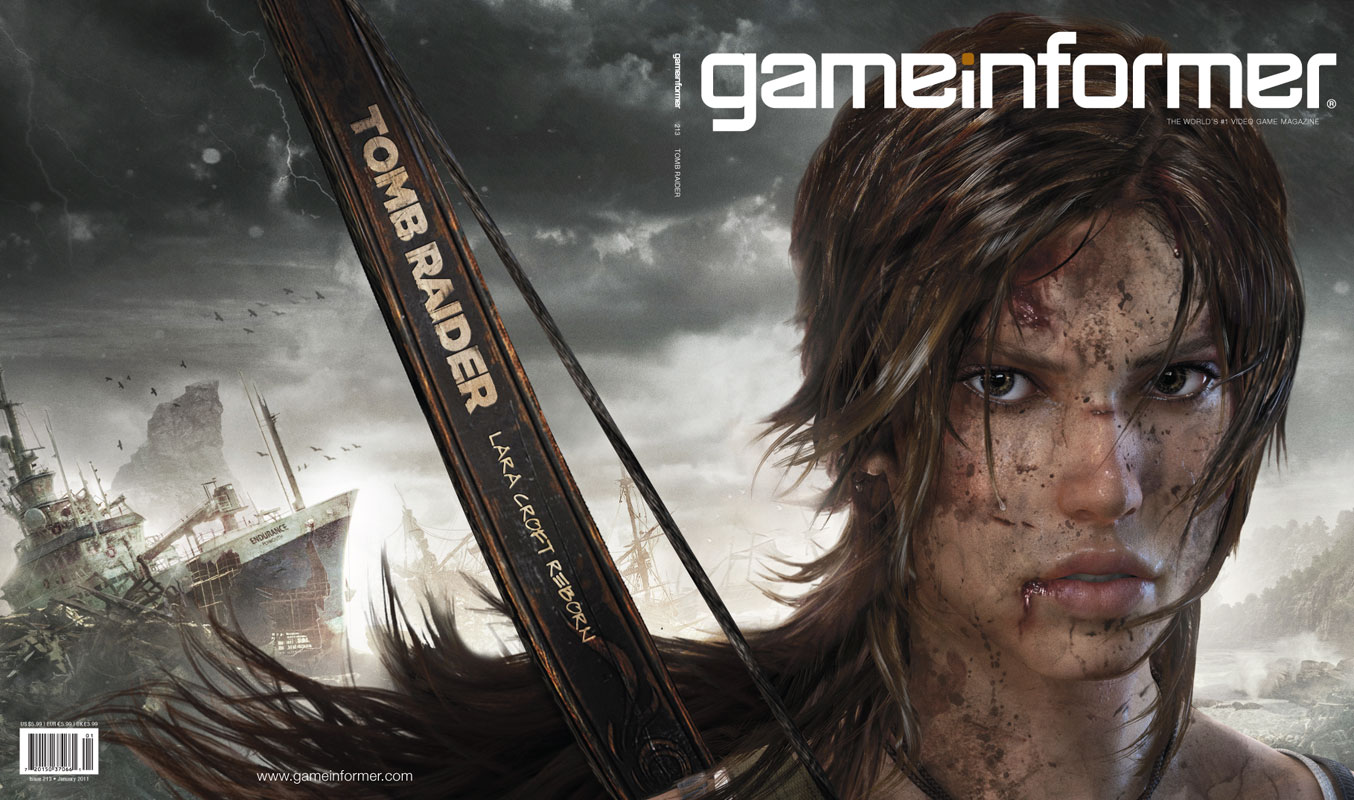
Train2Game students will recognise her as one of the most iconic characters in gaming, but Lara Croft and the Tomb Raider series are getting a reboot.
Square Enix has announced that the new game will simply be known as Tomb Raider – Yes, that’s the same title as the original that some Train2Game students will remember playing in 1996 – and it’ll be produced by game development studio Crystal Dynamics.
Game Informer has exclusively revealed the ‘young and inexperienced’ Lara Croft’s new look on its latest cover. The magazine has also revealed a snippet of what Train2Game students can expect from the Tomb Raider reboot:
“In our world-exclusive cover story, we uncover a brand-new Lara Croft. Rebooting the Tomb Raider franchise through an origin story wasn’t so much a choice as an act of necessity, according to Crystal Dynamics. Drastic measures were needed. To build an entirely fresh Lara – a culturally relevant hero worth of the attention that once came so effortlessly – they must break her first. In this new adventure – simply titled Tomb Raider – a younger and inexperienced Lara Croft must endure both physical and emotional trauma to survive.”
“Forget everything you knew about Tomb Raider,” said Crystal Dynamics studio head, Darrell Gallagher.
“This is an origins story that creates Lara Croft and takes her on a character defining journey like no other.”
As of yet there’s no information about what gaming platforms the Tomb Raider reboot will be on or any news about a potential release date. However, Train2Game students will be able to get more details in the January edition of Game Informer which is out on December 11th.
So Train2Game, what do you think about Lara Croft’s new look and the concept behind the series reboot? Is Tomb Raider still relevant? And if you could use the skills you’re developing with Train2Game to help reboot one game series, which would it be?
The Eurogamer Expo offered us numerous treats in the form of games to play, but there were also plenty of Developer Sessions. These talks involved top industry experts not only showing off footage of games, many of which aren’t released until well into next year, but also gave the audiences a fantastic insight into the world of full-time video games development. If any Train2Game students braved queues and made it into any of the developer sessions, it was worth it!
Judging by the size of the queue to see it, the Shogun 2: Total War developer session with creator Mike Simpson, was one of the most popular of the Eurogamer Expo. Naturally The Creative Assembly man didn’t disappoint, offering fantastic insights into the history of the Total War series, the development of the game, and what new features we can expect from Shogun 2: Total War.
For those who may be unfamiliar with Total War, it’s a series of strategy games that combine turn based and real time features, produced by Sussex based developers The Creative Assembly. Each game in the Total War series has been based on a specific period of history with emphasis on units, weapons and scenarios that are true of the era. The Total War series is exclusive to the PC and each game, beginning with of Shogun: Total War in 1999, has been highly successful.
But how did the critically acclaimed Total War series begin? Mike Simpson was entirely truthful with the conference hall when he said Shogun: Total War began “by accident.”
The Creative Assembly originally wanted to develop an RPG based around ancient Chinese novel, Monkey: Journey to the West. (Yes, the very same text that inspired Enslaved: Odyssey to the West!) However, development of this idea proved difficult, so The Creative Assembly decided to go for a different angle.
Mike Simpson freely admitted that the main idea behind Shogun: Total War, was to produce a Command & Conquer clone and base it in Sengoku period Japan. The production took another turn when the 3D effects card became available, allowing the developers to design Shogun: Total War in an entirely 3D landscape. The strategy game, based around warring clans and with the aim of uniting the whole of Japan, was released in June 2000 and became a massive success. The Total War idea evolved over a decade with the release of Medieval: Total War, Rome: Total War, Medieval 2: Total War, and Empire: Total War. Each game was a historically accurate representation of the era it was based in.
Now, ten years on from the game that started it all, Creative Assembly are developing a true sequel to Shogun: Total War. But why now, why develop Shogun 2: Total War at this stage? Mike Simpson gave a simple answer, because they wanted to! Feudal Japan is the studios favourite historical era and they feel there is fan interest in a Shogun 2: Total War game.
Those attending the Shogun 2: Total War developer session were treated to information about new features in the game. These included a new skills and experience system used for upgrading units, and unique Battlefield Heroes, single powerful characters who are upgraded through an RPG style level up system. Mike Simpson also told the audience about the introduction of siege battles into Shogun 2: Total War, catering for the unique design of feudal Japanese castles. Shogun 2: Total War will also feature “something revolutionary” when it comes to multiplayer, with The Creative Assembly keeping their cards very close to their chest with this one. The new features for Shogun 2 definitely look like they’ll expand on the already excellent gameplay of the Total War series. As Mike Simpson pointed out, every feature in Shogun 2: Total War will be based on a total of 14 years of coding and development.
We got a look at a Shogun 2: Total War gameplay demo on the halls big screen, and visually it looks very impressive. Weather and environment are set to play a big role in Shogun 2: Total War battles, which can change dynamics for the up to 56,000 soldiers that can be involved. Simpson talked us through a battle between two of the nine Shogun 2: Total War factions and demonstrated how different units, abilities and tactics will be essential in the quest to unite 16th century Japan. Naval battles will also be a part of Shogun 2: Total War and the audience got an exclusive look at some of the new units.
Of course, Shogun 2 isn’t all about real time strategy, with turn based decision making also making up a massive part of Total War games. This part of Shogun 2: Total war takes place on a fully 3D and rather beautiful map of the game world. Naturally, the aim is that your faction starts off in one corner of the country, before eventually exploring the rest of the game world and becoming the Shogun of all of Japan.
During the turn based part of Shogun 2: Total War, you can attempt to gain the upper hand over your enemies by sending individual characters including Ninjas and Geishas to take out enemy generals, or sabotage towns. These ‘events’ now have their own movies, two of which Mike Simpson showed the hall. You can watch the Shogun 2: Total War (rather bumbling)Ninja Assassination event video below, and get yourself a look at the new 3D world in the process. Creative Assembly’s community manager Kieron Brigde talks us through it.
Mike Simpson says there’s no specific release date of Shogun 2: Total War as of yet, because the game will only be released when it’s suitably playable. However, we can probably expect Shogun 2: Total War to arrive on the PC sometime during 2011.
So Train2Game, what are your thoughts on Shogun 2: Total War? Are you a fan of the Total War series? If so what do you think about the new features? And what do you think about the early development of the series?





 The Train2Game Blog