Train2Game News: Steam, Amazon, Google, BBC and more added to Develop line-up

Steam, Amazon, Google and the BBC have been added to at next week’s Develop Conference line-up.

Lionhead Studios and SCEE are also among the final speakers confirmed for the packed schedule of events which take place in Brighton from Tuesday 10th to Thursday 12th July.

“We’re very excited to announce speakers from Amazon, Google and BBC Worldwide, which further display both the increasing convergence between games and TV and the rise of digital distribution,” said managing director, Tandem Events managing director Andy Lane.

“The fact that the Develop Conference draws names from global entertainment giants such as these is also testament to the investment we have made over the last seven years to continually evolve this conference to ensure it always meets the knowledge, networking and business requirements of today’s games developers in Europe.” he added.

Other keynote sessions at Develop include talks from games industry veterans David Perry, Ian Livingstone, Philip Oliver and David Braben who’ll all speak as part of the conference’s Visionaries track.

The Train2Game Blog will be at Develop in Brighton bringing you as much news as possible! There’s more about Develop Conference here on The Train2Game Blog.

As usual, leave your comments here on The Train2Game Blog, or on the Train2Game forum.

Train2Game News: How to create and share a weapon for Team Fortress 2

Ever wanted to create weapons for Team Fortress 2, but you’re unsure how to do it? Well, Valve has posted a piece on the TF2 blog titled ‘How a gun gets made’ and it does exactly what’s said on the tin.

The blog is by Team Fortress 2 workshop contributor Jalcober, who takes us through the development of the Scorch Shot, a weapon for the Pyro. It goes all the way from original concept art, through designing it in 3D to painting, texturing and publishing.  Read the blog here, or watch How a Gun Gets Made in the video below.

Jalcober’s community created weapon is going to feature in a future update for Team Fortress 2. As of August last year, Team Fortress 2 players had earned $2 million through their custom weapons being sold in the game’s virtual store.

Valve’s Steam Workshop now features in a variety of games including The Elder Scrolls V: Skyrim, Portal 2 and DOTA 2, allowing players to create and share their own in-game creations .

There’s more about community created items and modding – both excellent ways for Train2Game students to practice and showcases their skills – here on The Train2Game Blog.

Meanwhile, be sure to keep reading for the latest news from Valve and Team Fortress 2.

Does ‘how a gun gets made’ provide you with useful information? Have you submitted items to the Team Fortress 2 Steam Workshop?

Leave your comments here on The Train2Game Blog, or on the Train2Game forum.

Train2Game news: Skyrim mods downloaded over 13.6 million times using Steam


Train2Game News reported that in February, two million The Elder Scrolls V: Skyrim had been downloaded since the release of Skyrim Worksop on Steam.

Now, Bethesda has announced Skyrim Steam mods have topped 13.6 million. Modding is a great way for Train2Game students to show off their skills, with Ubisoft’s Adrian Lacey last week telling us that the Ghost Recon team features a number of former modders.

The Train2Game Blog has previously shown you some of the stranger Skyrim mods, including ones that let you turn Dragons into My Little Pony or “Macho Man” Randy Savage, and a mod that turns Mudcrabs into Futurama’s Doctor Zoidberg.

If you want to get involved with the Skyrim modding scene, but are unsure where to start, can watch this helpful Skyrim Creation Kit tutorial video from Bethesda. You can also look at this thread on the Train2Game forum in which students are sharing their own Skyrim mods.

There’s much more about modding here on The Train2Game Blog,

Are you involved in the Skyrim modding scene?

Leave your comments here on The Train2Game Blog, or on the Train2Game forum.

Train2Game news: Valve announces Steam mobile beta release for iOS and Android

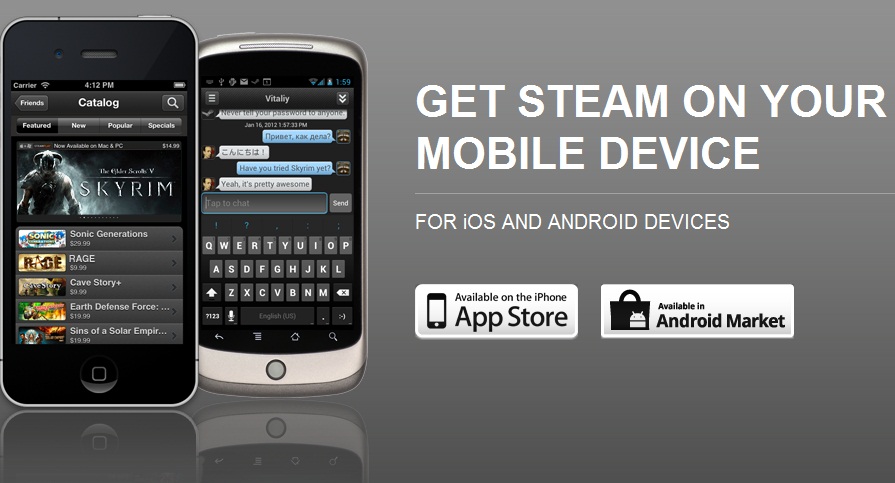
Train2Game students will soon be able to use Steam via mobile phones, Valve has announced.

The Half-Life, Portal, Team Fortress and Left 4 Dead developer also announced that a closed beta will be available for iOS and Android devices.

The Steam mobile app will allow you to chat with Steam friends, browse community groups and user profiles, view screenshots and of course, will let you keep up to date with the latest Steam sales.

“The Steam app comes from many direct requests from our customers,” said Valve co-founder and President Gabe Newell, who as recently reported by The Train2Game Blog, offered some excellent advice to aspiring game developers.

“Seeing which of your friends are online and playing a game, sending quick messages, looking at screenshots for an upcoming game, or catching a sale – these are all features customers have requested.” he continued, before adding that mobile is having a huge impact on the games industry.

“Mobile is changing way people interact, play games and consume media, and the Steam app is part of our commitment to meet customer demands and expand the service functionality of Steam to make it richer and more accessible for everyone.” said Newell.

Train2Game students who wish to take part in the Steam mobile beta, should download the app for free from http://store.steampowered.com/mobile then use it to log into their Steam account.

Keep up to date with the latest news from Valve, here on The Train2Game Blog.

So Train2Game, what are your thoughts on Steam going mobile? Will use the Steam via your smartphone?

Leave your comments here on The Train2Game Blog, or on the Train2Game forum.

Train2Game news: Mode 7 Games on Steam, indie development and free-to-play

Frozen Synapse by Mode 7 Games is published through SteamTrain2Game students should find this Gamesbrief guest post by Frozen Synapse developer Mode 7 Games very interesting.

The bulk of the post sees developer Paul Taylor take a look back at how both business and design influenced the design and marketing of their turn based tactical title.

As previously reported by the Train2Game blog, Mode 7 Games have argued that getting onto Steam is essential for an indie PC game developer. Taylor reiterates that this was vital to the success of Frozen Synapse.

“Steam’s position in terms of digital distribution right now is well documented; having seen the results, there is no doubt in my mind that aiming to create a game which would stand up against other titles on there was the right thing for us to do in this instance.” he said in the Gamesbrief post.

Taylor also suggests that release timing was an element in the success of Frozen Synapse, with Mode 7 Games releasing it in a quiet time for PC releases. His advice to indie developers is to avoid releasing titles during busy periods, such as the run up to Christmas.

“The end of May turned out to be a fairly quiet time and a good time to launch for us: I’d just suggest that indie devs focus on avoiding busy periods (e.g. Christmas and late June to early August) when they’re shaping up for launch.” wrote Taylor.

The Frozen Synapse developer also discusses the growth of Free-to-play, but insists that the ‘pay-once’ model was right for their game.

“Pay-once is the most maligned business model out there right now:I would suggest that even the most hardcore entrenched old-school developers have been won round by the raw data that free-to-play games have generated, so pay-once is in decline.” said Taylor.

“I’m yet to hear a sane scheme for an F2P Frozen Synapse – I don’t think that a free-to-play game along similar lines would be impossible; however I have not heard any viable suggestions for how we could have done it with this game, the game we cared so much about making.” he added.

The Gamesbrief post certainly makes interesting reading for Train2Game students and it can be read here.

Gamesbrief examines the business of games, and Train2Game students can watch an insightful interview with website founder Nicholas Lovell here on the Train2Game blog.

Lovell also spoke in-depth to the Train2Game blog last year, providing useful advice about indie and social game development.

So Train2Game, what are your thoughts on Mode 7’s post-mortem of Frozen Synapse? Will you take the advice on board?

Leave your comments here on the Train2Game blog, or on the Train2Game forum.

[Source: Gamesbrief]

Train2Game & Epic Game Jam interview: Epic’s European Territory Manager Mike Gamble

Train2Game & Epic Games gave Train2Game student teams the opportunity to win one of four places at The Gadget Show Live 2012 and compete for the chance to walk away with a fully licence Unreal Development Kit.  

Epic’s European Territory Manager Mike Gamble was one of the game jam judges, and the Train2Game blog managed to grab him for a chat. In this extensive interview, Gamble talks about Epic’s involvement with the Train2Game Game Jam, UDK, the future of the industry and much more.

Read it here, on Train2Game’s Scribd site,  or listen to it via Train2Game Radio. (Part 1, Part 2)

You can also read Mike’s blog about the Train2Game & Epic Game Jam over at Unreal Insider. Leave your comments here on the Train2Game blog, or on the Train2Game forum.

We’re here at the Train2Game & Epic Game Jam, can you tell us a bit about Epics involvement with the event?

We’ve been talking with Train2Game about using UDK in their curriculum, as a quite separate item talking about a game jam at The Gadget Show Live and so a natural point of choosing the teams was to be involved in the game jam here.

Tell us about the prize that’s up for grabs at Make Something Unreal Live at The Gadget Show.

There’s a commercial Unreal iOS license up for grabs for the winning team, which essentially means it’s a source code license rather than binary which will allow the winning team to create a game for commercial distribution.

So why do Epic want to get involved with Train2Game and get UDK in the course?

In a purely non philanthropic manner, the more people that use UDK, the more people who are familiar with our tools, the better they are to go into the industry where our engine is pretty ubiquitous.

Can you tell us a bit about the UDK engine which is available for free to anyone to use?

You can download it from www.UDK.com. It’s completely free, you only have to pay anything when you actually commercialise your output, at which point you’d pay us $99 and then a 25% royalty after you’ve collected $50,000. So basically, if you’ve built yourself a little app, a little game, or whatever really using the technology, on PC, or iOS or Mac, you can put it out there on Steam or the iTunes App Store and make a little bit of cash off it.

So it’s been quite successful for teams doing that then?

Yeah, it’s been very successful, we’ve had some cracking titles, quite surprisingly professional let’s say, and there’s some decent money to be made. But often what we find is a development team will start using UDK, and then by the time they’ve finished the project, they decide to swap over to a commercial UE3 license and we have a path for them to do that and some of them have been incredibly successful.

UDK Train2Game blog image

So what are the benefits for Train2Game students of taking parts in events like this, the Train2Game & Epic Game Jam?

Well I think it gives them a real crash course in UDK, it gives them a crash course in games development, it also gives them a crash course in teamwork among people they don’t know in teams selected for them, which was definitely useful for preparing them for going into the jobs market.  And ultimately the benefit for the winners is they go onto The Gadget Show Live and I think everyone who competes there, whether they win or not, stands a very good chance of getting into the industry in a professional manner.

At the time of recording we’re pre-judging, what will you be looking for in the winning games?

Obviously we’re not looking for finished, polished, Triple A sellable games, that would be ridiculous. We’re really looking at a number of criteria: adherence to the theme we’ve set, completeness of the game insofar as the limits to what they can do in this time. But something that’s small and polished and works is preferable to something that’s huge rambling and buggy. We’re looking for the professionalism of the teams, we’re looking for the quality of the games. There are about 6 or 7 parameters we’re scoring out of a hundred in total.

And for everyone involved it’s good that they have a finished product they can show potential employers?

Exactly! Perhaps the most important thing any student can do for themselves is build a portfolio of work. It’s all very well being qualified, but at the end of the day you have to differentiate yourself from every other qualified person, and if you’ve got a kick arse portfolio that’s really going to help.

A little bit about you now, tell us about your role at Epic.

I manage Europe, for Epic, on the technology and licensing front. That means I promote and sell Unreal Engine 3 licenses to developers big and small.

Earlier this year we saw Unreal’s ‘Samaritan’ tech demo, what was the thinking behind producing that? Does it show the future of the industry?

It shows a future. For us it was…well, we’ve called it our love letter to the hardware manufacturers. It shows what can be done with a level of hardware. It was built using PC Direct X 11 hardware that’s available off the shelf today, and it was us saying ‘Look, if you built this into the next generation of consoles, this is what we could do. Obviously we can’t say ‘You must do this,’, and the hardware manufacturers haven’t hold us what they’re doing, but it was for us to stimulate some thinking about what might be possible.

The Samaritan Train2Game blog image

And it goes against those that keep claiming that ‘PC gaming is dead’ when that tech is available on PC?

Yeah totally, PC gaming is not dead by an incredibly long chalk. You only have to look at the popularity of Steam, it’s different now, it isn’t not boxed products, but there’s a PC game for every single person, in a sense it’s  gone niche. You can get a PC game for a hardcore train guy, you can get a PC game for a hardcore RTS guy, there’s everything there, it’s just not available off the shelf, it’s available digitally.

So the PC is a good avenue for people, Train2Game students for example, to get a game out there.

Yes. On PC, Steam is a fantastic way of getting games out into the market and testing the waters. The iTunes App store is also fantastic. Anywhere where you don’t have to have a license from the hardware manufacturer and there’s a market base built is a great way to get your product out.

And how has iOS changed the industry in the last few years?

I think it has made everybody think twice about what a game is. From a development point of view, it’s meant that again there’s the opportunity for small developers to create some very interesting content and make some good money outside of the traditional publisher model, which is incredibly important for nurturing the growth of the industry.

How do you see that developing?

Tricky one that. You could argue there’s been a gold rush and now it’s very difficult to set yourself apart.  I think these things will evolve, they’re(smartphones and tablet computers) going to get more and more powerful and there will be a point where it’s possible for you to essentially have, for all sense and purposes, have the power of a console on your tablet, plug that into your TV, play it with a remote. It kind of changes what a gaming device is and I think that’ll only continue to accelerate.

How did you get started in the games industry?

Well, in real life I’m a mechanical and production engineer, I worked in the Ministry of Defence for ten years and then I worked in the toy industry. Then in the mid 90s I decided to swap over to the video games industry which was at that point becoming slightly professional, and so I joined as a Producer, basically.

And what advice would you give to those looking to get into the industry?

You have to get qualified. I think the days of being able to wing it are gone. But like I said before, portfolio: it doesn’t matter if you’re a designer, programmer, musician, whatever it is you want to do in games, you need to build a portfolio of the stuff you have done yourself.

And UDK can help that with modding?

Totally, yes! Creating mods is a really, really great way of getting a great portfolio. It’s really hard to build a product from the ground up, but as an individual you can mod, and that’s a really good way of doing it.

Great, thanks for your time. 

Thank you.

For more information go to www.train2game.com
Train2Game news: Consoles will continue to be the ‘gold standard’


Train2Game students will be aware about the huge increase in digital gaming over the last few years, with smartphones, Steam and as seen at the Eurogamer Expo, OnLive, all giving consumers ways of downloading or streaming games.

And as reported by the Train2Game blog, some have even speculated that there will eventually be no place for traditional consoles.

However, retailer GameStop believes that consoles are very much here to stay and for a long while yet.

“We continue to believe that the console is a strong platform and will continue to be the gold standard” GameStop President Tony Bartel told Industry Gamers

And he believes that digital content will become an increasingly important area for consoles.

“People will begin to digitally download first a lot more downloadable content. Eventually, full games will become more relevant to some consumers who want to do that”

“Then we think that streaming will continue to grow. As you get additional bandwidth, we think that it’s going to become more prevalent over time, which is why we’ve invested in it.” Bartel concluded.

The increasing importance of digital to consoles echoes comments made by THQ CEO Brian Farrell. As reported by the Train2Game blog, he believes future consoles won’t use discs and this will only be a good thing for game developers.

Meanwhile, Crytek believe that the games industry isn’t quite ready for an all digital cloud gaming way of working.

So Train2Game, do you believe consoles will always be a part of gaming? Or does the rise of digital mean that they have limited time left in the spotlight?

Leave your comments here on the Train2Game blog, or on the Train2Game forum.

[Source: Industry Gamers]

Train2Game news: Team Meat on how to get your game on Steam


Super Meat Boy developers Team Meat recently featured on the IndieGames.com podcast where they discussed their projects and various aspects of game development.

Perhaps of most interest to Train2Game students is Team Meat’s advice about how to get an indie game onto Steam.

As Train2Game students will know, the Steam digital distribution service can be very beneficial for indie developers, with Frozen Synapse developers Mode 7 Games labelling it as essential.

So how does an indie studio get their game on Steam?

“If you can get a lot of attention, and get people to care about your game, try to do interviews, show what your game’s about”  Edmund McMillen, one half of Team Meat told IndieGames.com

“And if Steam keep saying no, then just release it, and then if it does really well, then show Steam.”

He added that Steam is giving indie games more publicity because it’s been a successful venture for them.

“I think Steam is getting more accepting of indie games because they’re doing really well with indie games. Indie games are doing really fantastic on Steam”

“So yeah, persistence… make the best game you can, and talk about your game.” He added.

McMillen also argued that being prepared to go the extra level to get your game published on Steam, and not giving up at the first hurdle is also very important for indie game developers looking to get their games on the service. Getting there could be tough.

“But don’t give up too — that’s like a big thing. We used to hear of a lot of people saying “I emailed Steam and they didn’t get back to me”, and then they just fucking give up.” he said.

“If we gave up, we wouldn’t be on anything. We had to fucking fight. You have to fight for these things.

“I would say persistence and drive are the two most crucial things about being a successful indie developer.” Added Tommy Refenes, the other half of the two-person Team Meat team.

Last time Team Meat featured on the Train2Game blog, they labelled Kinect ‘garbage.’ The statement was controversial to say the least and drew both support and opposition from Train2Game students.

What are your thoughts on the advice from Team Meat? How important is persistence to game developers? And do you see Steam as an avenue to publish your games through in future?

Leave your comments here on the Train2Game blog, or on the Train2Game forum.

[Source: Gamasutra

Train2Game news: ‘Digital revolution’ encourages creativity say Ninja Theory


Train2Game students will be aware that when compared to the traditional retail model, digital distribution provides game developers with a better opportunity to get their titles out there.

Not only does the digital business model knock down the wall of needing a publisher, it also arguably allows developers to take more risks when developing the games. Both of these could potentially be advantageous to Train2Game students.

Indeed, as reported by the Train2Game blog, indie developer Mode 7 Games believes the Steam digital distribution service is ‘essential’ for indie developers.

And in a recent interview, Ninja Theory  Creative chief, Tameem Antoniades also praised digital distribution model, stating it’s good for creativity in the games industry.

“There’s always an opportunity between projects to explore things, a lot of team members are hobbyists, they create their own iPhone games and things like that so I can see us kind of taking a punt with that. It can’t come soon enough” Antoniades told GamesIndustry.biz

For more on iPhone development, see the recent Train2Game interview with indie studio Hogrocket. They recently released their first game for the platform, Tiny Wings.

The Ninja Theory Chief Designer suggested that the traditional retail model is on the way out, and that it’s a positive thing for game developers.

“The whole digital revolution is happening now and it can’t come soon enough. The model we’re under, the big retail model, is creaking” he said,  before arguing that need for games to be successful at retail in its current is stifling creativity because consumers don’t want to spend large amounts of money on an unknown entity.

“It’s such an opportunity for fun creative games to reach a target audience, there’s this stranglehold that the AAA retail model has which I think is just crushing innovation and access to creative content.”

“If you’re paying that much for a game, you don’t want to take chances. You want everything to be there, all the feature sets. You want it to be a known experience, guaranteed fun. That’s not healthy.”

As previously reported by the Train2Game blog, Ninja Theory’s original IP Enslaved: Odyssey to the West failed to be particularly successful at retail, with publisher Namco Bandai suggesting poor release timing was to blame.

Even if Enslaved wasn’t very successful, Train2Game students would do well to read about the Enslaved Developer Session with Ninja Theory’s Tameem Antoniades at last years’ Eurogamer Expo. Expect more insight into how game developers operate as Train2Game will be reporting from the 2011 expo later this month

What are your thoughts on the comments from Antonides? Do you agree that digital distribution encourages creativity? Would an all digital model be good for the industry?

Leave your comments here on the Train2Game blog, or on the Train2Game forum.

[Source: GI.biz]

Train2Game news: Steam ‘essential’ for indie devs say Mode 7 Games

Frozen Synapse by Mode 7 Games is published through Steam

Train2Game students with plans to develop PC games will almost certainly be familiar with Steam, the digital distribution service from Half-Life, Portal and Team Fortress 2 developer, Valve.

Now, Mode 7 Games, the team behind indie title Frozen Synapse, have praised Valve and the way they go about promoting indie games, while keeping a hands off approach.

“That’s one of the best things about Valve, they won’t say ‘you are doing this’ – which they could do very easily – they’ll say ‘this is the kind of thing we want to do, this is why, how do you want to go about it?’ It’s great, it lets you try stuff.” Mode 7 Games co-founder Paul Taylor told GI.biz.

“We’re doing some stuff on Steam that people don’t normally do, like the free key for a friend thing, or offering the soundtrack as a separate thing you can upgrade to.”

“They’re quite different, and Valve had to do some actual system-related stuff to allow us to do that. For an indie game that doesn’t have a lot of clout, they’re surprisingly flexible and that’s great.” He continued.

“When you’re a company with that much power and that size, you have to strike a balance between doing things that benefit you and things that create a good eco-system for everyone,”.

“I think they’re pretty good at that, and they think very seriously about it. It is astonishing just how important they are in terms of the PC. Steam is really essential for indie games at the moment.”

The recent Steam Sales will probably have helped many smaller studios sell their games too.

Of course this isn’t the first time the supportive nature of Valve has been mentioned on the Train2Game blog, regular readers will know that community developers receive revenue from in-game items they’ve produced for Team Fortress 2.

So Train2Game, do you agree that Steam is ‘essential’ for indie PC developers? Would you attempt to get a game on Valve’s distribution system?

As usual, leave your comments here on the Train2Game blog, or on the Train2Game forum.

[Source: GI.biz]