The rise and rise of social media gaming

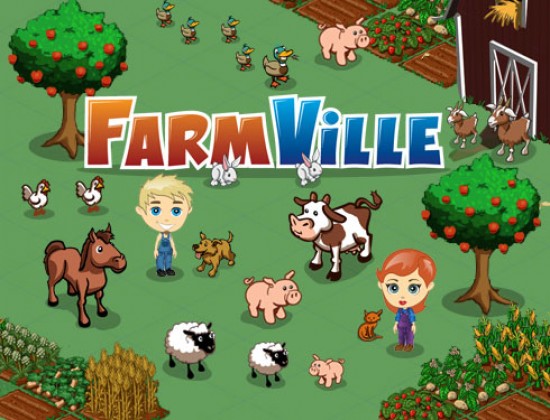
Farmville: Helping to cultivate a predicted 1.5 billion big ones.

2014 may not bring us hover cars or jet packs but it’ll apparently be a good year for the social games market. Why? Well, a new report from media consultants Screen Digest suggests it’ll be worth $1.5 billion in four years time. Yes, $1.5 billion.

It really is a staggering amount of money to get your head around! Especially so when you consider that in 2008 social media games were worth just $76 million. Not that $76 is a small amount of money at all, but in 2009 that increased to $639 million thanks to 500 million active monthly users. The Screen Digest report predicts this growth will continue over the next four years with social media games becoming more and more popular.

I doubt anyone will be surprised as to what has caused such a massive increase in the social games market, with the Screen Digest report stating:

“The market remains dominated by the distribution power and massive userbase of Facebook”

Yes, Facebook. The reason for this massive upsurge in casual social games is titles like Farmville and Mafia Wars. Both of these games are produced by market leader Zynga who last year are thought to have got annual revenue of around $100 million.

It’s not exactly to see surprising with the massive advertising campaign behind the games. According to a Facebook ad I’m looking at right now, ‘Everyone plays Mafia Wars’ Well 25 million players might not be everyone, but that number suggests Zygna must be doing something right. Then of course there’s Farmville which just seems to have become an entity unto itself…the spellchecker I’m using to write this blog even recognises Farmville as a word!

So, with social games set to become even more successful, we used the Train2Game Facebook page (Appropriate, right?) to ask Train2Game students if they’d like to use their skills to help produce a successful social media title. The responses were….somewhat interesting! They included:

“Games like Farmville are easy to make, I would rather a challenge with the more hardcore games, however that being said I would like to give the lower level games a go also.

As far as Farmville go’s I would rather shoot my self head, but everyone has to start some where, and a small game like that could get you the experience it take to work much bigger projects.”

“Yes, you have to start somewhere… But not Farmville…I would feel like a total sell-out if I made a game like Farmville.”

And…

“Farmville is such a badly built game. I couldn’t believe the amount of corners they cut, honestly, I don’t think it cost them more than 2k to build the actual game. Mafia Wars was probably the same.”

So while it seems that the Train2Game students that responded aren’t exactly too keen to produce the next Farmville, it appears the majority feel that working on such a title would provide that all important first step into their chosen career – be it Games Design, Games Development or Games Art & Animator. While many people dislike the concept of social gaming, it’s difficult to ignore how successful it has become. Remember, that big old $1.5 million that’s just over the horizon.

So now it’s over to you, Train2Game blog readers. Do you think the social games market will really be worth $1.5 billion in four years time? What do you think has made it so successful? And how would you feel about developing a social media title?

As usual, leave your comments here, or on the Train2Game forum. Or why not join the discussion on the Train2Game Facebook page?
Want to make games for PlayStation Home?

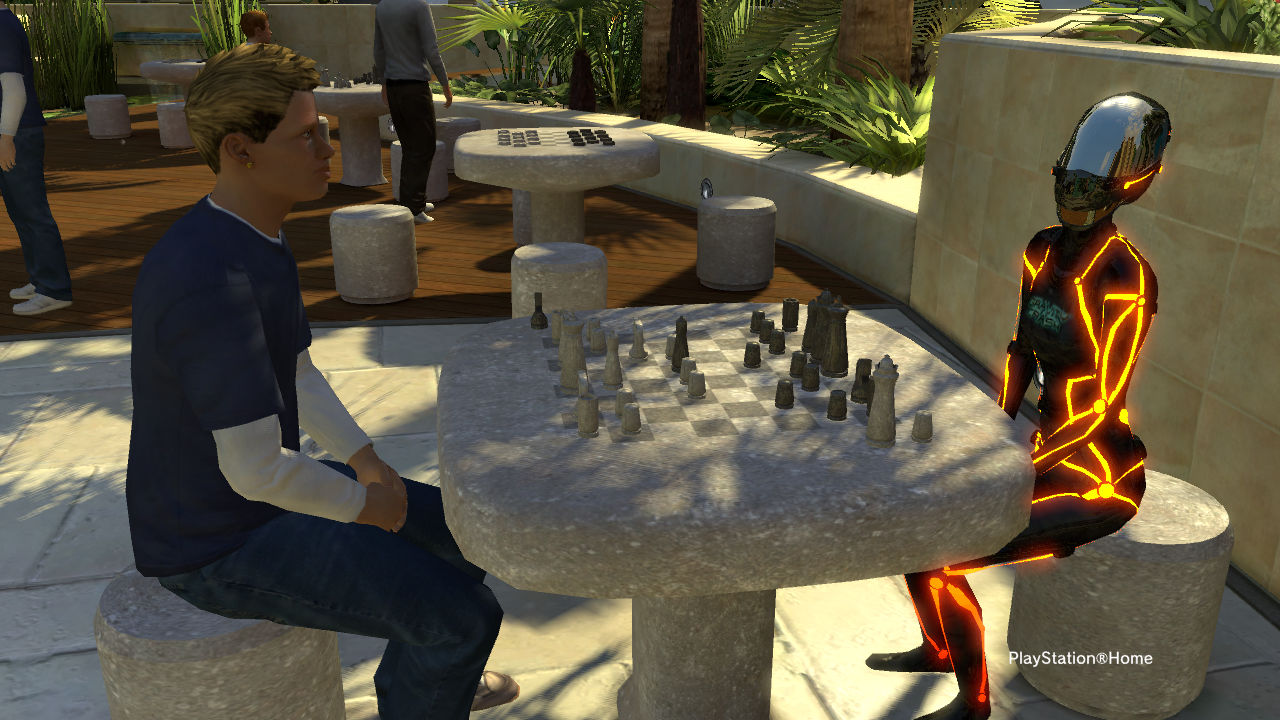
You'll be able to do much more than this soon.

Sony has formed a partnership with independent game label Codename which will see a series of indie titles released exclusively on PlayStation Home. Some of these new games are being produced by ‘undiscovered first-time developers’

Therefore, perhaps it’s possible that a studio formed by Train2Game Games Designers, Games Developers and Games Artist & Animator students could be released through PlayStation Home in future? It could happen you know.

Of course, some of you may be completely unfamiliar as to what PlayStation home actually is. So what is it? Well it’s designed for online social gaming on the PlayStation 3. You design your own avatar  – and their house – wander around the environments, meet people and play social games like bowling and chess for example. Cynics might say it’s just an attempt to mix Second Life and the popularity of Xbox Live avatars. What do you think of PlayStation home?

Personally, I haven’t used Home since it was introduced in 2008, and generally prefer to use a PC over a PlayStation 3 console for online games. However, there are large numbers of people that use PlayStation Home, with Sony stating there are over 14 million active users.

Anyhow, back to the games. They’ll be made by indie developers – which could be you in future – from all over the world, and there are four titles that’ll be released in the coming months:

Dueling Gentlemen, created by Odd Gentleman, players strategize the right moves on a giant stage in Home’s Plaza, to outsmart opponents and win this old-time battle for honor and prestige.

Minor Battle, created by Peanut Gallery, winner of the IndieCade 2010 Audience Award, a team-based game where two teams run around a cube of four screens to beat each other in a capture-the-flag style platformer.

Super Awesome Mountain RPG, created by Codename, a blend of tabletop board games and fantasy RPGs, where players ascend a fantastical mountain in Home’s Central Plaza using a custom animated figurine.

Cogs in 3D multiplayer, a multiplayer version of Lazy8’s diabolically clever Steampunk-style game, this gear-based puzzler will also be a dynamic public spectacle in Home’s Central Plaza.

They sound quite interesting don’t they? And they’re just the first of many that will become available to PlayStation Home users in future. Founding Codename partner Jesse Vigil is excited by the new partnership with Sony.

“We’re thrilled to be partnering with PlayStation Home to create and develop games that step outside the parameters of traditional game development and we’re really looking forward to the creative opportunities that lie ahead.”

“Our model of pulling together teams of developers and allowing them to make their creative dreams a reality has only one main tenet — any game created for PlayStation Home is graphically and visually entertaining to both play and watch, at the same time.”

So Train2Game students, would you jump at an opportunity to develop games for the PlayStation home? Do you think it has the possibility to provide an indie developer with their big break? Or do you think that the whole scheme will be forgotten about in the near future?

As usual, you can leave your comments here or on the Train2Game forum.

Crackdown 2 tops UK chart

Ruffian Games’ Crackdown 2 has topped the GFK UK games chart in its debut week. Microsoft’s sandbox shooter sequal is the 15th Number 1 of the year and beats the number 2 debut position of it’s predecessor.

Warner Brothers Lego Harry Potter: Years 1 -4 drops down to Number 2 while Red Dead Redemption slips to third spot.

The ELSPA GfK Chart-Track All Formats Top Ten in full is:

01. Crackdown 2 (Microsoft)
02. Lego Harry Potter: Years 1-4 (Warner)
03. Red Dead Redemption (Rockstar)
04. Dance On Broadway (Ubisoft)
05. 2010 FIFA World Cup South Africa (EA)
06. Super Mario Galaxy 2 (Nintendo)
07. Tiger Woods PGA Tour 11 (EA)
08. Call Of Duty: Modern Warfare 2 (Activision)
09. Just Dance (Ubisoft)
10. UFC 2010: Undisputed (THQ)

Have any of you Train2Game Games Designers, Games Developers or Games Artist & Animators had a chance to play Crackdown 2. Do you believe it deserves its position at the top? As usual, let us know here or on the Train2Game forum.

All Train2Game students should appreciate Dragon Age: Origins

The first details of Dragon Age 2 have come to light today with US magazine Game Informer featuring some impressive artwork on its front cover. In this writers view Dragon Age: Origins was last years top RPG and it still continues to be a very impressive game. Why? The storyline, the setting, the characters and the dialogue are all extremely impressive, making Dragon Age a game that all Train2Game students – be they Games Designer, Games Developer or Games Artist & Animator – should take notice of. This is especially true of the Games Designers, the people who’ll be writing stories of future games. Though Games Developers and Games Artist & Animators, feel free to read on!

I’m a veteran of Japanese Role Playing Games; there isn’t a Final Fantasy title I haven’t played (Discounting handheld releases.) However, despite my interest in all things fantasy, until earlier this year I hadn’t played a traditional Dungeons & Dragons or Lord of the Rings style RPG. This is despite being rather tempted by World of Warcraft in the past.

I started Dragon Age: Origins for the second time last Friday – that’s six days ago now – and I’ve already managed to spend over 24 hours playing it at the time of writing. Why is this? Well, partially there’s the classic ‘Just one more level/dungeon/search for loot’ factor, but Dragon Age is massively helped along by the fact that the Bioware created Characters just seem so real. This isn’t necessarily graphically, but when it comes to their different personalities, emotions and beliefs, it really feels like you’re engaging in dialogue with a real person

Your companions react realistically when in conversation with your character, no matter what option on the expansive dialogue trees you choose. They can react positively or negatively to not only what you say, but your choices as to how you complete quests in the open world of Ferelden. The sheer amount of effort the Games Designers and writers must have put in to all of the different outcomes is amazing. Of course, we mustn’t forget the Games Artists & Animators who provided Dragon Age: Origins with its look, or the Games Developers that programmed the game.

As I mentioned above, I’ve played plenty of RPG’s but none of them have drawn me in as emotionally as Dragon Age. The clue is in the genre title really – Role Playing – and I’m playing the role of a human female (as opposed to an elf, or a dwarf, or a male) Rogue. I’m starting to think that because of Biowares excellent character development I’m currently being overly consumed by my role.

Don’t worry, I don’t think I’m a red haired noble woman who’s good with a sword and a dagger – If I did I’d probably be locked away in a ‘safe place’ right now, but the combination of the Dragon Age approval system, and  the characters emotions and morals,  mean I’m really having to think about what dialogue options I choose.

This has actually gotten to the point where interactions with one of my party, Alistair, have gotten somewhat awkward. The reason being that he approves so highly of my character he keeps trying to chat her up. And while party members can become engaged in Romance or *ahem* sex, I’d rather my character didn’t get too involved with Alistair. So why is this awkward? Well, to put it bluntly I want my character to let him down gently but at the same time I don’t want to make him feel bad. This is partially because a reduction in approval will make him slightly less use in battle, and partly because he just comes across as a real person with real feelings. Now I know how girls I’ve awkwardly tried to show interest must have felt like…

What was my point? Oh yes, the fact the characters just seem so believable. They really do draw you in.  Dragon Age: Origins really is a brilliant game, and the Games Designers really deserve all the accolades they receive. If you haven’t already, I really recommend playing Dragon Age yourself in order to witness how an epic game should be designed.

So you budding Games Designers (And Developers, and Artists & Animators) How important are characters and storylines to you? Do you think you’d like to attempt anything on the scale of a massive RPG like Dragon Age? Or would you prefer to produce smaller titles?

As usual leave your comments here, or on the Train2Game forum.

Indie Fund – A useful avenue for Train2Game students?

While doing my usual morning rounds of video games industry news websites, I stumbled upon this GamesIndustry.biz article.  Indie fund calls for submissions eh? That’s surely going to be useful for Train2Game students I thought to myself. And do you know what, it may very well be.

So, what is Indie Fund? Well, the Indie Fund website itself says

“Indie Fund is a funding source for independent developers, created by a group of successful indies looking to encourage the next wave of game developers. It was established as a serious alternative to the traditional publisher funding model. Our aim is to support the growth of games as a medium by helping indie developers get (and stay) financially independent.”

Those indie developers could very well be you, the Train2Game Games Designers, Games Developers and Games Artist & Animators. Now you’re sitting there thinking that applying for funding sounds appealing, but you’re wondering how it works, well.

“We make smaller investments and ask for less in return. The hope is that developers see enough revenue from their game to self-fund their next project.  And voilà, one more developer that is free to make whatever crazy game they want.”

There’s more detailed information about how exactly it works on the About page of the Indie Fund website. The section also lists who’s involved with the funding project and it’s a list of developers who’ve made a number of successful independent titles, some of which you’ve probably played:

Indie Fund believe they can support five or six titles over the next two to three years, but will only do so if the proposed title introduces something new to gaming. For more information about what Indie Fund want for a game and what you need to do if you want to submit an application then all you need to do is visit the ‘Applying for funding’ section of the website. It’s also recommended that you have a prototype of a game ready, but evidence on the Train2Game forum shows that some of you have already reached this stage.

So Train2Game students, do you’ll be submitting an application to The Indie Fund? Do you think it’s a good idea? Or perhaps you aren’t too keen on it. Whatever your thoughts are, please leave them here or on the Train2Game forum.

Discs vs. Digital – Round 3

Almost two thirds of us prefer to buy our games boxed up and on a disc over downloading them online.  Research by Ipsos Media CT – which appeared on MCV – revealed that 64% of gamers preferred to buy titles on disc over downloading a digital copy.

This is compared to only 45% of music consumers preferring discs, and perhaps surprisingly, just 51% of film buyers preferring physical copies of their purchases. Who knew that downloadable films were so popular?

So why are we still so keen on buying our games in a box? Well, Ipsos Media CT Director Ian Bramley says it’s down to trade-ins and second hand sales.

“I believe the preference for physical discs amongst next gen gamers reflects the potential value they derive from the pre-owned market, which is holding up the preference for physical – this is unlike the music and film markets,”

“Physical games discs have a long and well-established history, which is a deep mindset to change – particularly when gamers build a physical collection as they fear losing digital versions. And in-store browsing is also important to buyers.”

So, Train2Game students, as the Games Designers, Games Developers and Games Artists & Animators of the future, what form of distribution would you prefer to release your games with? Or is the format not important, with it being more a matter of getting your games out there.

As usual, feel free to leave your comments either here or on the Train2Game forum.

You can also check out blogs about both Round 1 and Round 2 of the Discs vs. Digital debate for more information and other thoughts on the issue.

A useful podcast for Train2Game students

As I was on my way into the Train2Game office this morning, I was partaking in two usual activities – doing my very best not to get run over and  listening to the latest gaming news podcasts in order to write relevant and interesting blogs for you Train2Game Games Designer, Games Developer and Games Art & Animation students.

This morning, I was listening to the GameSpot UK podcast which this week is especially relevant to Train2Game students? Why? Because it features video game script writer and narrative designer Rhianna Pratchett. She’s a veteran of writing scripts for games which include Mirror’s Edge, Heavenly Sword, and the Overlord series.

In the GameSpot UK podcast she talks about writing dialogue and narrative for games, incorporating humour and how she broke into the field of Games Design.

So, Train2Game students, I highly recommend that you listen to this weeks GamesSpot UK podcast if you want a useful incite into the industry. Rhianna starts talking about Games Design about 25 minutes into the programme.

As usual, leave your thoughts here or on the Train2Game forum.

Train2Game’s 2nd Webinar Part Six

In Part 6 of the 2nd Train2Game Webinar the panel discuss if there is a definite, lucrative market for small non-AAA indie titles and if having no formal qualification will affect your employment prospects after finishing a Train2Game course?

Key quotes include:

Tony Bickley on the importance of good English when pitching your ideas –  “If a pitch or a presentation comes in with text speak, it’s not going to get very much air time, if they can’t speak they can’t communicate.”

Pete Hickman on the importance of good communication when pitching your ideas – “I think if the standard of written English isn’t very good in the presentation, quite often presentations go to an acquisition or an A&R person and he, or she, will to demonstrate those to the board or the senior management of the company and they won’t take them seriously. It’s a terrible thing to say, you might be the most creative person in the world but unless you can communicate your ideas effectively and clearly, it’s very difficult to break into a company.”

Train2Game’s 2nd Webinar Part Four

In Part 4 of the 2nd Train2Game Webinar the panel continue to discuss the Art and Animation course, mainly about when it will be benchmarked and also answer live questions on how strong the job market is for Train2Game graduates and if the opportunity to start on your own as an ‘Indie’ is better now than ever before.

Key quotes include…
Carsten Maple on the UK video game job market “I say to all of my students now, you gotta show that you’re worth it…There are jobs for those who can really make a difference”

Carsten Maple on why the UK video games industry needs tax relief – “I think it’s something they [Conservative Government] should do…For a whole number of reasons, not least of all that the significance of the UK games industry that it has been before is slipping backwards in terms of its relative success and I think it’s something that needs to be addressed because more companies are moving abroad because it’s a lower risk. If you’ve got to spend less money developing a game, than that’s a lower risk and unfortunately we’ve seen that move away and unless we act quickly and, I know it’s difficult, but we’ve got to keep petitioning the government to say “look we need this because once you lose it it’s very difficult to get it back”

Tony Bickley on why it’s not all doom and gloom for the UK video games industry lacking tax breaks – “This is probably one of the best times over the last 5-6 years for the smaller studios and the start-ups. You’re not looking for that half-million, three-quarters of a million pound investment to develop for the PlayStation 2 with £20,000 development kit, etc. You’ve got the three, four or five man development teams so there is a lot of opportunity for people entering the industry to join the smaller indie studios”

You can leave your thoughts about the Train2Game webinar on the Train2Game forum.

The PC – The ideal platform for Train2Game students?

Dragon Age: proof of a popular PC game

My spiffing Train2Game colleague Gabe recently published a blog about PC gaming, and as what could be described as a ‘hardcore’ PC gamer myself, it got me thinking.

Gabe’s blog came following remarks from Bioware that the PC “is made for gaming” which seemed rather obvious to me. It should of course be obvious to anyone who’s played a Bioware Role Playing Game, be it Mass Effect or Dragon Age: Origins.

When it comes to these RPG’s, it’s the PC that’s king, and in an interview with CVG, Bioware designer and writing director Daniel Erickson says the numbers speak for themselves.

“Every two or three years we hear the announcement of fantasy being dead, PC gaming being dead and RPGs being dead, and yet, all of the biggest games that ever come out – that set the records – are nearly always PC games, and a lot of them are fantasy games.”

“The biggest game in the world is a fantasy, PC, RPG MMO. We all know the drawbacks of PC. We all scream at our boxes and try to make stuff work. But at the same time, the interface is made for games. The mouse/keyboard interface allows so much less restriction [Than consoles]”

Personally, I’ve not experienced Dragon Age: Origins on a console  – I play it on PC – but it’s certainly obvious to me how much easier it must be to play on a PC as you can easily access spells and talents using hot keys 1-9 and the space bar easily pauses the action. I’d imagine the whole process is a bit fiddler using a control pad, but if you can do so, feel free to prove me wrong!

The PC certainly gives Train2Game students, be they Games Designer, Games Developer or Games Artist & Animator, an opportunity to test their skills thanks to the number of games with large modding communities.  Half Life 2 and Fallout 3 are just two games that a loyal fanbase who are giving others the opportunity to try new weapons, new skins or even whole games.  Counter-Strike, one of the most popular online shooters of all time, started as a fan produced Half Life mod and shows that with the right ideas, modding a current game could provide a small studio with a big break.

Some developers even encourage the addition of community content to their games, with Valve perhaps providing the best example of this with Team Fortress 2. Valve have run numerous community competitions calling on fans to create items in the form of weapons and hats with the winners being able to see their creations in game. There seem to be a lot of talented Games Designers out there, and Valve are going to have a tough time deciding on a winner of the most recent contest!

The PC is the most popular gaming platform, partially due to the rise in the popularity of flash games which in itself provides even more opportunities for Train2Game students to create games.

So what do you think? Would you consider creating PC games? Have you already made mods? As usual, let us know here on the Train2Gameforum.