Train2Game interview: Daniel Rutter of Make Something Unreal Live team IndigoJam

Train2Game students are launching four new development studios in 2012 as part of ‘Make Something Unreal Live,’ a competitive process designed to accelerate their careers by giving them the tools and resources needed to release games for iPhone, iPad and iPod touch this spring.

The studios are Commando Kiwi, Derp Studios, Digital Mage and Indigo Jam.

The first titles released by the studios will be based on the Fighting Fantasy series of books created by Ian Livingston and Steve Jackson.

We caught up with IndigoJam’s Daniel Rutter to find out how the road to Make Something Unreal Live at The Gadget Show has gone so far. Listen via Train2Game Radio or read it here on The Train2Game Blog.

Hi Daniel, what’s the name of your team for Make Something Unreal Live, and why has it got that name?

We’re called IndigoJam Games, and there are a few different reasons. The main one is that Indigo is a colour that scientists can’t decide whether it does or doesn’t exist and it has a bit of mystery around it. And the word jam comes from, well, we all met at the Train2Game & Epic game jam. That’s how we got to know each other, that’s what we’ve got in common and those things came together and sounded quite tasty and so we ran with it.

You’re now moving forward to Make Something Unreal Live where you’re using the Fighting Fantasy IP to make a game, which is of the Fighting Fantasy books is your game going to be based on?

The book we’re doing is one of my personal favourites, and it’s Deathtrap Dungeon.

What genre of game are you making?

We were given the genre of the action adventure game, probably one of the broadest ones out there.

But it goes well with Deathtrap Dungeon.

Definitely. We had the choice of House of Hell or Deathtrap Dungeon. We thought House of Hell was more of a survival horror – still a good IP that we’d love to do at some point – but Deathtrap Dungeon fitted really well with our action adventure brief.

Tell us a bit about your game then, the mechanics, how it works.

We’ve opted for doing a first person action adventure game, keeping with the idea of the book that you are the player, it’s all about you, you don’t have another character there that’s getting in the way of the story, it’s just you and the action. We’ve also stuck to keeping dice for combat, which is very much rooted into that mythos, that’s what all of the books have, that’s what I fondly remember.

We also have a little things like environment kills and being able to sneak around; you can play through the levels in a couple of different ways depending on whether you like doing the combat with dice, or whether you’d rather avoid the enemies of dispatch of them in other ways.

And how have you found developing for the IOS platform?

Developing the game has been fantastic. We’re fairly early adopters for UDK on IOS, there have been a few games and they’re gradually coming out now, so it’s really been a finding our own way of doing things. But once you sort it out, it’s amazing, especially the way we can plug in our iPhone or iPad, plug in the game and actually have it there, play test it, it’s really, really good.

How have you found the transition from being a team at the Train2Game & Epic Game Jam, to being a fully functioning game developer working towards Make Something Unreal Live at The Gadget Show?

It started off absolutely terrifying! Suddenly, you’ve gone from 48 hours where I’d turned up for the experience and to have fun, and we came out really well from it, which is really good. And then suddenly The Gadget Show is up for grabs, a licence is up for grabs, we really had to knuckle down and come up with something. But we’ve had to work around some clever ways of working because we’re not in the same room, you can’t just lean over and look at what another person is working on.

So, our lead programmer set us up with a forum where we originally started coming up with ideas. Then we were given our IP, we have a Teamspeak account so we can all chat online, so we verbally communicate. We use various web based software for sharing screens, so we are kind of working in the same room, but over the internet.

Are you looking forward to making a game at The Gadget Show live, potentially in front of thousands of people?

I’m really looking forward to it actually, I really am. I’ve always been interested in games, and if something like this had been going on I would’ve been there to see what’s going on and I’m sure lots of people will have lots of questions and I now feel like I’m in a position where I can answer some of those questions because we’re doing it. That’s really cool.

What are the contact details for IndigoJam on Facebook and Twitter?

Our Twitter handle is @IndigoJamGames and our Facebook page is also IndigoJamGames. So come along, like us, follow us, we’ll share information with you.

Thanks for your time and good luck for The Gadget Show.

Keep up to date with the latest news from Make Something Unreal Live here on The Train2Game Blog.


Train2Game interview: Neocore Games on the making of King Arthur II: The Role-playing Wargame – Part 2

Train2Game News recently caught up with Neocore Games, developer of King Arthur II: The Role-playing Wargame, an RTS and RPG hybrid that was published through Paradox Interactive earlier this year.

In an extensive interview, Neocore PR and Community Manager Orsolya Tóth discusses the story behind King Arthur series, the development of King Arthur II, the importance of digital distribution and much more.

Read Part 2 of our interview with Neocore Games, which includes advice on getting into the industry, right here on the Train2Game Blog. The first part of our two part interview is here.

As usual, leave your comments here on The Train2Game Blog, or on the Train2Game forum.

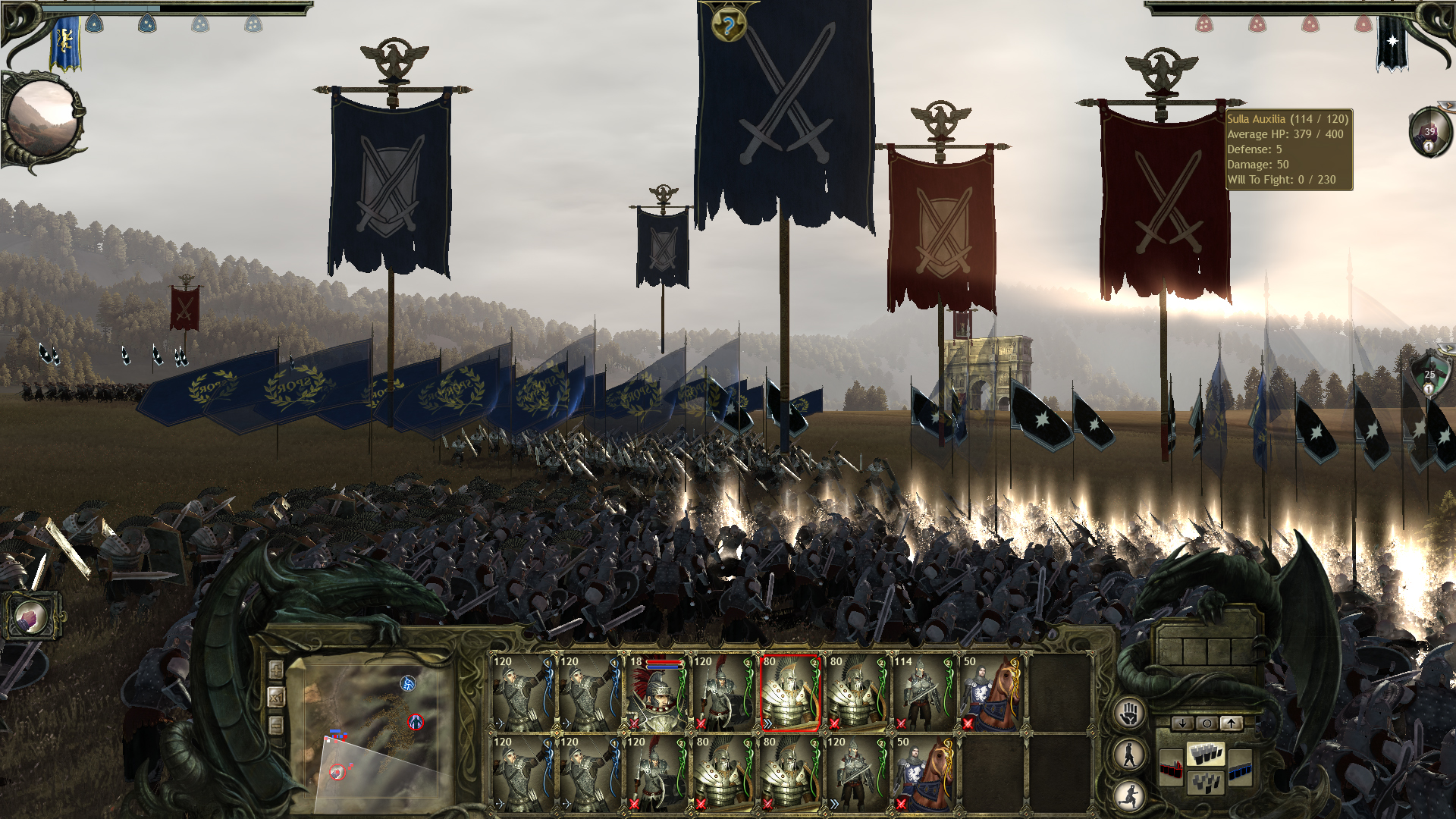
The battles of King Arthur II look epic, how difficult is programming the game when there’s potentially so much happening on the battlefield?

It’s definitely not easy. But I guess our programmers have done a good job! There’s an entire blog post on our DevBlog about just one segment of the battle, the pathfinding system for individual soldiers and how it was developed. And it is only a small part of the entire battle mechanism, so you can guess how complex it is with all the spells, magic shield, unit traits and skills, terrain and weather modifiers, strategic locations, dual-level fighting since we introduced the flying beasts, AI behaviour – actions and reactions and many more factors.

How much research into the lore of King Arthur gone into King Arthur II? What’s the story of the game, and how much does it deviate from the ‘traditional’ tales of King Arthur? The art style certainly looks darker than what people tend to think about…

The core idea of King Arthur II is as Arthurian as it could be, based on the legend of the Grail and the myth of the Fisher King. According to legends if the high king of the land is in pain, the land suffers with him, and in Arthurian mythology we have the tale of the legendary guardian of the Grail, the Fisher King, who lies wounded in his castle and his kingdom has turned into a barren Wasteland.

In this case, we have already had Arthur as the protector of the Grail, so it was logical that he himself could become the Wounded King. In addition to that, the Arthurian mythology has some really bleak stories after Arthur builds Camelot and rules the land, leading up to a cataclysmic ending. In other words, the tone was meant to be darker from the start.

What are the plans for additional content for King Arthur II? Does it provide Neocore with a good opportunity to experiment with new ideas?

To be honest, we don’t have anything specific on our minds yet regarding the DLCs. Of course the story of the game and the fantasy setting provide us countless possibilities that can evolve to become a DLC or expansion for King Arthur II.

How much influence do reviews have on future updates for King Arthur II? What impacts will it have on future DLC?

As the DLCs are only vague ideas at this point yet, I guess we’ll consider the impact of the reviews on them when we cross that bridge! Regarding the updates, we’ll improve the game as far as we can and in that we appreciate the feedback we get both from the media and the gaming community.

How important is digital distribution going to be in the success of King Arthur II?

I think it will be crucial. While retail distribution is still important, digital distribution takes over more and more sales on the PC gaming market.

Some developers have claimed the strategy genre is dying. What’s your response to this, and what are your thoughts on the current state of the strategy genre?

We don’t feel that the strategy genre is dying. There are plenty of devoted strategy fans who always get excited when they see a new strategy title released. So I think the strategy genre is doing great as long as developers can create appealing strategy games that fit well to their needs.

Finally, what advice can you give to those looking to get into the games industry?

In the case of developing your computer game, we can say a couple of things: be persistent in all circumstances, do many tests and keep your ears and eyes open for feedback. Start with a smaller project, where you’ll get fast and effective feedback directly from the gaming market. As the digital distribution becomes more and more popular, it’s much easier to reach the gamers with smaller games as well, so it’s a huge opportunity for new game developer companies.

In case you want to join an already existing company, then show them what you’re capable of – a well-functioning mod, a demo version of an idea, concentrating mainly on one thoroughly developed feature, will help you a lot, if you don’t have the necessary working experience yet.

King Arthur II: The Role-playing Wargame, from Neocore and Paradox Interactive is available now. 

Train2Game news: Question Notch in BAFTA Games live Q&A on Thursday

Train2Game students have the chance to question Minecraft creator Markus ‘Notch’ Persson thanks to a live Twitter Q&A from BAFTA Games.

The Q&A with Notch takes place tomorrow, Thursday 15th March at 12:30. Train2Game students who wish to ask Minecraft creator a question can do so by Tweeting @BAFTAGames using the #NotchQA hashtag.

If you’re not on Twitter, tells us what you’d like to know, and we’ll submit the question on your behalf.

The Twitter Q&A comes ahead of Notch receiving the BAFTA Special Person Award at the GAME British Academy Video Games Awards on Friday night.

The Notch Q&A isn’t the only BAFTA event that happens tomorrow, with Dare to be Digital: Pitching a Prototype taking place in the evening.

Yesterday, The Train2Game Blog reported that Notch worries that his next game won’t be able to achieve the same impact as Minecraft.

For more Notch news, keep reading the Train2Game Blog.

So Train2Game, what would you ask Notch?

Leave your suggestions here on The Train2Game Blog, or on the Train2Game forum.

BAFTA’s public events and online resources bring you closer to the creative talent behind your favourite games, films, and TV shows. Find out more at www.bafta.org/newsletter,www.facebook.com/bafta or twitter.com/baftagames

Train2Game interview: Stuart Moore of Make Something Unreal Live team Derp Studios

Train2Game students are launching four new development studios in 2012 as part of ‘Make Something Unreal Live,’ a competitive process designed to accelerate their careers by giving them the tools and resources needed to release games for iPhone, iPad and iPod touch this spring.

The studios are Commando Kiwi, Derp Studios, Digital Mage and Indigo Jam.

The first titles released by the studios will be based on the Fighting Fantasy series of books created by Ian Livingston and Steve Jackson.

We caught up with Stuart Moore of Derp Studios to find out how the road to Make Something Unreal Live at The Gadget Show has gone so far. Listen via Train2Game Radio or read it here on The Train2Game Blog.

Hi Stuart, how have you found being part of Derp Studios on the road to Make Something Unreal Live?

Very chaotic, but also very enjoyable. I’ve got a great team working with me, there’s a whole range of personalities and they’re really lovely people, I’ve made some good friends and I’m really enjoying working with the Unreal Engine and making massive progress, some great leaps recently in installing the software onto the device and just seeing it in action blows your mind.

So, you’re enjoying using UDK?

Yeah, the software is really good, really intuitive. As a developer, using the tool that they’ve called Kismet, it really lets you visualise all the development that you’re doing.  Instead of seeing lines and lines of code, you get to actually see images on the screen of the actions you want the engine to take.

You’re working with the Fighting Fantasy IP, which book is your game going to be based on?

We’re making a sequel to the book The Citadel of Chaos. That’s basically a story which revolves around a mage who was sent to assassinate the evil Balthus Dire, who is attempting to get another Army of Chaos from another realm.

So there’s a lot of Might & Magic style things in the game.

Yeah, there will be a lot of spells and we want the player to rely more on the spells and strategy and only use their melee as a last resort.

How are you finding developing a first person game for IOS?

As far as I’m aware, there aren’t many first person games for IOS, so I think we’re really hoping to revolutionise the platform and get more hardcore gamers on iPad and on iPhone. But also we want to incorporate a mini-game so you can play on a casual commute if you’ve just got half an hour on the train so you will be able to hack and slash. But if you want to sit at home for a few hours you can play through the story and that mode will be quite immersive, we hope.

So, you’re essentially doing two games in one.

Yeah, we’re hoping to have two completely separate modes, one rough and ready that gets you into the game to kill as many enemies as possible to get the highest score that you can. And also, we’re hoping to have an engaging, in-depth story mode to keeping the player interested, wanting to know what happens next, where is the next twist coming from.

The team formed at the Train2Game and Epic Games Game Jam, how have you found the transition from that to working as a fully operating game development studio.

I’d say one of the major difficulties that we have is the distance between some of our team members. We have to rely mostly on communicating over the internet using Skype and Facebook, and we’ve got a pretty good program called SVN which we can use to share files. But apart from that, you wouldn’t really be able to tell that we’re not having that many face-to-face meetings. We’re gelling really well and the progress is coming along leaps and bounds.

And there’s still plenty of time to go before you take part in Make Something Unreal Live at The Gadget Show, how do you think you’re going to find building the final stages at the big event where potentially thousands of people could be watching?

The pressure is going to be on, to have five days to build the game. Hopefully we’ll know exactly what we’re doing, the whole process has been a massive learning curve.

And finally, tell us the contact details for Derp Studios,  of your Facebook page and Twitter page.

We’re available on Facebook at www.facebook.com/derpstudios and on Twitter it’s www.twitter.com/derpstudios

Great Stuart, thanks for your time.

Thank you.

Keep up to date with the latest news from Make Something Unreal Live here on The Train2Game Blog.
Train2Game news: Former Sony Exec Phil Harrison joins Microsoft

Train2Game Blog readers will have seen that Peter Molyneux left his positions at Microsoft last week, but the Xbox 360 manufacturers have moved quickly to announce a new employee,  former Sony Executive Phil Harrison.

Harrison has over 25 years worth of experience in the games industry, who has spent a large portion of his career with Sony. Among other things, it was Harrison who discovered Media Molecule, this securing LittleBigPlanet as a PlayStation exclusive title. He also championed Killzone, SingStar and EyeToy.

His new role will involve mobile and social elements and growing Xbox developments in Europe, in addition to overseeing UK developers Lionhead, Soho Productions and Rare.

“I am excited to be joining the senior team at Microsoft at a pivotal time for our industry,” said Harrison. “

I am really impressed with the company’s long-term vision for growing the market for interactive entertainment globally and also with the incredible wealth of talent, technology and resources the company has available to succeed.”

President of Microsoft’s Interactive Entertainment Businesses, Don Mattrick, welcomed Harrison on board.

“Phil has played an instrumental role in shaping modern console history through his keen insights into both hardware and software strategy,” he said.

His addition to our leadership team will impact our global business in innumerable ways, as he aligns our studio development and growing portfolio of entertainment experiences in Europe to drive our continued growth worldwide.” Mattrick added.

So Train2Game, what are your thoughts on former Sony executive Phil Harrison joining Microsoft?

Leave your comments here on The Train2Game Blog, or on the Train2Game forum.

[Source: Major Nelson]

Train2Game interview: Neocore Games on the making of King Arthur II: The Role-playing Wargame – Part 1

Train2Game recently caught up with Neocore Games, developer of King Arthur II: The Role-playing Wargame, an RTS and RPG hybrid that was released through Paradox Interactive earlier this year.

In an extensive interview, Neocore PR and Community Manager Orsolya Tóth discusses the story behind King Arthur series, the development of King Arthur II, the importance of digital distribution and much more.

Read Part 1 of our interview with Neocore Games right here on the Train2Game Blog, or on the Train2Game Scribd page. You can see part two of our two part interview here. 

Hi there, first of all, tell us a bit about Neocore Games?

Neocore Games is a computer and video game publishing and production company with a development studio located in Hungary. We are developing strategy games for PC since 2005, our previous titles are “Crusaders: Thy Kingdome Come”, “The Kings’ Crusade” and of course “King Arthur – The Role-playing Wargame” and the recently released “King Arthur II” which is naturally also a Role-playing Wargame.

For those new to the series, let us know about the original King Arthur.

King Arthur – The Role-playing Wargame is a strategy game with many RPG elements. It has a turn-based 3D campaign map with various locations that grant special traits, and huge real-time battles. King Arthur is set in the ancient South Britannia and your task is to unite the divided kingdoms. You are Arthur, the Once and Future King of all Britannia and you gather and lead your knights to achieve your goal. You can recruit various different types of troops, but there are also special unique units called heroes.

The quests, written by professional fantasy writers, play a very important role in the game because they represent the main storyline and the decisions you take on these quests determine your morality. Every decision affects your position on the Morality Chart, you can be a ruthless Tyrant or a Righteous ruler and you can follow the Old Faith or become a devout Christian. As you follow your morality path and get higher morality scores, you unlock special new spells and units.

King Arthur has a fantasy setting, so magic plays a very important role in the game including in the battles. Your heroes learn skills and spells during winter turns when all your enemies and also your own units are resting. In winter you also have to manage your economy and build your stronghold to collect the two resources, food and gold.

Did the extent of King Arthur’s success come as a surprise to Neocore Games?

A little bit, yes! But I have to admit that we did hope that it would amuse the community. We were already quite fascinated by the game’s story and the genre mix we created with all the new features such as the text-adventure quests or the Morality Chart.

King Arthur was well received by critics and gamers alike, so what changes and improvements have been made to King Arthur II?

There are several improvements we’ve made in King Arthur II based on the feedback we received from the players. The Campaign Map is twice as big as it used to be in King Arthur, as you have to unite the provinces of the Northern and Middle regions of Britannia as well. Scotland is also included.

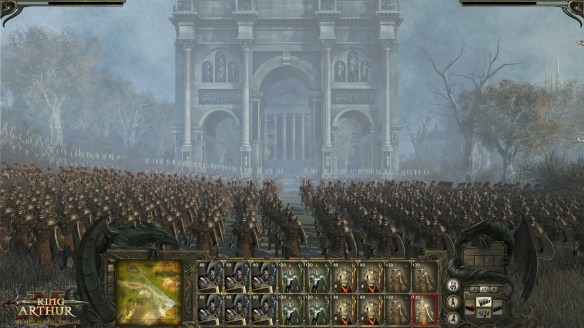
We have a brand new, in-house developed engine called Coretech 3D 2. It can render up to 3000-4000 highly detailed soldiers at the same time on a highly detailed battlefield. Thanks to the new engine the army movement is also improved and the whole game is more stunning.

There are more various fantasy creatures in King Arthur II than in the first game. A great improvement is the dragons and other flying units both on the enemy’s and on your side, it means more tactical possibilities because they are fast and the battle has two levels, the air and the ground level. You can fly across the rivers, buildings and various other objects and you can fight in the air as well as on the ground at the same time.

In King Arthur II we are introducing a new, more balanced magic resistance and spell casting system. Every army has its own magic shield, which is affected by some spells, locations, unit skills and artifacts. First you have to decrease it for using your spells with low spell penetration. The casting time of the grandiose, lethal spells gives you the chance to defend yourself with the interruption of the caster hero.

We have several other improvements in King Arthur II like the new artifact management with the artifact forge, the upgradable locations, the brand new diplomacy or the Victory Locations, which give you global bonuses and spells, so you can use them now on the entire battlefield, not only around the VL. And there are many more improvements you should definitely check out in the game.

What are the main challenges in development in combing King Arthur II’s RTS and RPG elements of game design? How do heroes impact on battles?

The biggest challenge is finding the balance so the gameplay remains fluid and fresh.

King Arthur featured some epic monsters, have more been added to the sequel? If so, how did you go about deciding what to add?

There are a lot more monsters in King Arthur II. You will see some beasts reappearing from the first game, but we have added many new as well. When we decided what we wanted to add, we took into consideration the background and the story of the game, the dark fantasy setting and we stretched our imagination to the edges. And the new monsters were born.

 Leave your comments here on the Train2Game Blog, or on the Train2Game forum.

Train2Game news: Double Fine Kickstarter hits $3 million with just hours until deadline

Train2Game students only have a few hours left if they want to back Tim Schafer’s Kickstarter project to receive exclusive access to the Beta when the Double Fine adventure reaches that stage.

With mere hours to go before investment for the crowd funding project closes, Double Fine Adventure has topped $3 million in backing from fans.

If you wish to pledge your support to Tim Schafers Kickstarter project, you can do so here, so long as it’s before the end of today.

For more about Double Fine Adventure beta access, see this post on The Train2Game Blog. The Kickstarter project’s goal was to reach $400,000, a target that was reached a matter of hours after the funding page went live.

Double Fine will present a special live stream to mark the end of their Kickstarter campaign, which will be able to watched on their UStream channel from 10 p.m. GMT.

This video featuring Double Fine’s Tim Schafer and Ron Gilbert discussing game design is also interesting viewing for Train2Game students.

Get more news about Double Fine here on The Train2Game Blog.

Have you pledged support to Double Fine’s Kickstarter project? If so, what are your main reasons for doing so?

Leave your comments here on The Train2Game Blog, or on the Train2Game forum.

Train2Game news: Notch worries his future projects could be “pointless and hollow”

Train2Game students will be aware of the huge success of Minecraft, the indie game created by Markus ‘Notch’ Persson which has now sold over 5.2 million copies.

Now Notch has stepped back from Minecraft,  the game now in the hands of Jens Bergensten,  in order to focus on other projects, but speaking to Eurogamer he revealed that whatever his next game is, he’s worried that it won’t even come close to topping his first big hit.

“It kind of feels like the level of cultural impact that Minecraft has had will be very difficult to replicate,” he said.

“It kind of feels like whatever I do next is never going to be as big. I’m kind of worried about everything feeling a bit pointless and hollow compared to the success of Minecraft.

“But I haven’t started on a large project since. Hopefully I won’t care. What I really want to do is programme. I want to be a programmer. So hopefully I can just focus on that aspect of it.” he added.

If you want to be a programmer, you can find out more about the Train2Game games developer course here. 

The Eurogamer piece also sees Notch discuss the impact the success of Minecraft has had on is life, and you can read it here.

Recently, The Train2Game Blog reported that Mojang hired developers from the Minecraft community. Meanwhile, earlier this year, Notch claimed that it’s easier to be an indie developer now than ever before.

There’s more Minecraft news here on The Train2Game Blog.

So Train2Game, what are your thoughts on Notch’s comments? Can Mojang’s next game live up to the success of Minecraft? Do you think living up to the success of a previous title is something all game developers struggle with?

Leave your comments here on The Train2Game Blog, or on the Train2Game forum.

Train2Game news: King Arthur II dev Neocore Games offer advice on getting into the industry

Train2Game students looking to get ahead when it comes to finding that first job in the industry should be developing their own games or mods.

That’s according to Neocore Games, developers of the recent King Arthur II: The Role-playing Wargame, published by Paradox Interactive.  The advice was given in a soon to be published interview with The Train2Game Blog.

“In the case of developing your computer game, we can say a couple of things: be persistent in all circumstances, do many tests and keep your ears and eyes open for feedback.” Neocore PR and Community Manager Orsolya Tóth told the Train2Game blog.

She said that digital distribution means that it’s now easier to get games out there than it was in the past.

“Start with a smaller project, where you’ll get fast and effective feedback directly from the gaming market. As the digital distribution becomes more and more popular, it’s much easier to reach the gamers with smaller games as well, so it’s a huge opportunity for new game developer companies.”

And Tóth added that modding is a great way to show a potential employer what you’re capable of.

“In case you want to join an already existing company, then show them what you’re capable of – a well-functioning mod, a demo version of an idea, concentrating mainly on one thoroughly developed feature, will help you a lot, if you don’t have the necessary working experience yet.”  she concluded.

It certainly isn’t the first time an industry figure has told the Train2Game Blog that making your own games or modding is a good way to secure that vital first job in the industry.  Valve’s Chet Faliszek and ID Software’s Tim Willits are among those that have told us that modding is a great way for an aspiring game developer to show off their skills.

The full Train2Game Blog interview with Neocore Games about their recent release, King Arthur II: The Role-playing Wargame, and much more will be published soon.

So Train2Game, what are your thoughts on the advice from Neocore? Are you working on your own games and mods?

Leave your comments here on The Train2Game Blog, or on the Train2Game forum.

Train2Game news: Learn how to pitch a prototype game at BAFTA event

Train2Game students who want to know more about how to pitch a game idea may be interested in attending an event at BAFTA this week which is about just that.

Dare to be Digital: Pitching a Prototype will see this year’s Dare to be Digital finalists pitch their game ideas and receive feedback from a panel of industry experts including:

Riccardo Lenzi – a game producer with many years’ experience in managing internal, external and hybrid development teams across multiple formats.

Matt Sansam – now part of the Technology Strategy Board’s ICtomorrow management team, Matt has worked as Producer and Executive Producer at Rebellion, Core Design, Climax, Criterion, Psygnosis and SCi

Paul Durrant – representing Abertay University’s £25,000 grant for small companies developing their own interactive digital content.

Any Train2Game students who attend the BAFTA event will be able to find out more about what publishers are looking for in a prototype game and discover the lessons learned by the Dare to be Digital teams.

Dare to be Digital: Pitching a Prototype takes place at BAFTA in central London at 19:00 on Thursday 15th March. Tickets cost £5, and can be purchased here. Much more information about the event is on the official BAFTA website.

Previous BAFTA events including Games Question Time and the Games Writers Panel have been very insightful, so Dare to be Digital: Pitching a Prototype will surely be useful to any Train2Game students who attend.

More about previous BAFTA events can be found right on The Train2Game Blog.

So Train2Game, will you attend the BAFTA event on Thursday?

Leave your comments here on The Train2Game Blog, or on the Train2Game forum.

BAFTA’s public events and online resources bring you closer to the creative talent behind your favourite games, films, and TV shows. Find out more at www.bafta.org/newsletter,www.facebook.com/bafta or twitter.com/baftagames