
Train2Game Animators get excited: Assassin’s Creed: Revelations tech could surpass that of L.A. Noire

Train2Game students will be familiar with the impressive facial Art & Animation of L.A. Noire, with many wondering if it could be beaten in future.

Well, the facial animation of Assassin’s Creed: Revelations could surpass that later this year, thanks to the Mocam technique used to capture footage.

“One of the elements that’s really interesting about Mocam is that, while  it creates a lot of high-fidelity character expression and movement, the actor doesn’t need to look like the character he’s playing.” Assassin’s Creed: Revelations Lead Game Designer Alexandre Breault told Now Gamer.

“It’s a system that’s able to interpolate the facial movements of one person and apply them to any model. That gives us a lot of flexibility with our actors.” He added.

That means the in-game character doesn’t have to look like the actor who plays them, useful for Assassin’s Creed: Revelations which features a number of historical characters.

Another way the motion capture used for Assassin’s Creed: Revelations could beat that of L.A. Noire is that it incorporates the entire body. Team Bondi’s method, while very impressive, only captured the face of the actor or actress.

“They’re also able to act with their whole body, as the system isn’t just limited to the head” explained Breault.

“ Mocam doesn’t create a clash between facial expression and body movement – it’s all integrated. It allows realistic facial expression, but not at the cost of actor expression as normal mo-cap does.”

It certainly sounds impressive, much like the fact the Train2Game blog reported earlier this year that the Ubisoft team behind Assassin’s Creed: Revelations is over 200 people strong.

And while it isn’t being used to capture facial animation, Uncharted 3 is also using advanced motion capture techniques.

So Train2Game, could Revelations surpass the tech of L.A. Noire? Would it improve the game? Is motion capture the way forward?

Leave your comments here on the Train2Game blog, or on the Train2Game forum.

[Source: Now Gamer]

Train2Game gives students opportunity to design game for UK Film Council feature film

Train2Game has launched its latest competition for students  in association with BAFTA-nominated writer and director, Trix Worrell to accompany upcoming feature film ‘Avenging Angel’ with games concepts.

Entrants will be required to design one of two games referenced in the fiction of the story – either a full web game created by one of the characters and featuring online avatar creation and UGC or a smaller smartphone game based on Hangman, which also turns out to be the source of a dark force in the community.

Full details are below!

Details on how to enter will shortly be available on Train2Game Student World and the Train2Game forum.

Train2Game Art & Animation student William Alexander speaks to Train2Game Radio

William Alexander is studying to become a Game Artist & Animator with Train2Game. Train2Game Radio caught up with him to find out why he chose to study with Train2Game, how he’s finding the course and how he balances it around the rest of his life.

Listen to the interview at http://audioboo.fm/train2game

Leave your comments here on the Train2Game blog, or on the Train2Game forum.
Train2Game students (and everyone else!) could pay subs for EA Sports games in future

Train2Game students may have to pay subscription fees to play EA Sports titles in future. That’s according to label Vice President Andrew Wilson who believes there will “absolutely” be a time when plays will want to “access” EA Sports games via subscriptions.

It’s a statement that may initially not go down well with Train2Game students, but it could help them make more revenue from games in the future.

“If we look at what consumers have pushed other industries for: if we look at what consumers forced the music industry to provide, if we look at what consumers have driven as a result of television and movie subscription” Wilson told Eurogamer.

“If you look at us – there’s absolutely a time somewhere at some point in the future where the consumers say, ‘Hey, this is how we want to interact with you: we want to give you a monthly or annual subscription and we want access to everything you make,'”

“They get to drive the time and place for it, and a lot of it is technology dependent, but absolutely we can see a future where that might be the way we deliver games.”

Wilson added that it isn’t current gen consoles that are holding this model back, but internet connections.

“It’s less about the generation and more about internet infrastructure,” he said.

“The thing about consoles [is] that’s a lot of content: six, seven gigs of information. Right now there are some places in the world where you can move that size of information around relatively seamlessly; there are a lot of places you can’t.

“Right now the consoles themselves could facilitate it,” he added, “but there are other barriers to entry that make getting it from Game or GameStop a viable proposition, at least today.”

That last part sounds somewhat familiar, with as reported by the Train2Game blog, Sony previously stating that they want to sell PSN content – currently only available digitally – at traditional retail.

Of course, the games industry already has many subscription based services, with World of Warcraft being the most high profile. As previously mentioned by the Train2Game blog, World of Warcraft has over 12 million subscribers, showing that if people like a game, they’re more than happy to pay a subscription fee.

Therefore, in the future, working on a subscription based game could potentially be lucrative for Train2Game students.

So Train2Game, what are your thoughts? Are subscription fees for all games inevitable? Would people pay?

Leave your comments here on the Train2Game blog, or on the Train2Game forum.

[Source: Eurogamer]

Train2Game students read this! Valve on playtesting during game development

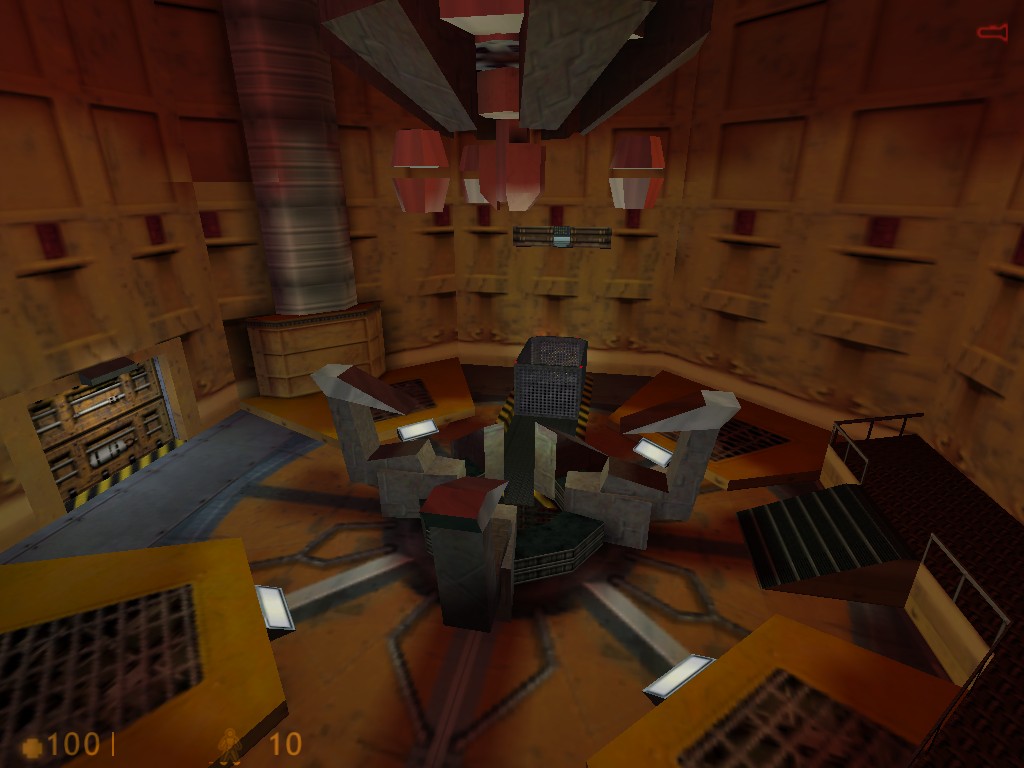
 They're waiting for you Gordon, in the test chamber...

Train2Game students, particularly the QA Testers, will know of the importance of testing during a games development.

Now, in an interview with GameSpot, Valve has revealed that they believe playtesting to be the most important part of game development.

“For us, playtesting is the most important part of the game development process,” experimental psychologist and Valve’s playtesting lead Mike Ambinder told GameSpot.

“It’s not something we save for the end of the development, or use as a quality assessment or balancing tool. It is the dominant factor that shapes our decisions about what to release and when to release it.”

It’s a statement that Train2Game students who haven’t already been testing games throughout their development should really take on board.

Valve uses something called ‘bio-feedback metrics’ as part of the testing process. It features standard observed play sessions and surveys, but also involves tracking eye-movement with monitor-mounted cameras; monitoring heart rates; and even skin conductivity tests.

Valve use all of these to determine the players enjoyment of the game.

“We became interested in the use of biofeedback both as a playtesting methodology and as potential user input to gameplay because the idea of quantifying emotion or player sentiment seems to have utility,” said Ambinder.

“On the playtesting side, recording more objective measurements of player sentiment is always desired. People sometimes have a hard time explaining how they felt about various things, and memories of feelings and events can become conflated.

“Conversely, if you have a more objective measurement of arousal or engagement, you can get a clearer picture for how people are emotionally consuming your game.”

Last week, the Train2Game blog reported that Valve’s Steam service is ‘essential’ for indie developers.

So Train2Game, how important do you believe playtesting is to the game development process? How would you go about it?

Leave your comments here on the Train2Game blog, or on the Train2Game forum.

[Source: GameSpot]

Train2Game / Game Horizon Developer Drinks

  • Opportunity for students to meet industry professionals and discuss course details
  • Developer drinks on Tuesday 19 July gives developers access to hot new industry talent

Train2Game, provider of games industry training courses, today announces details of its participation in the 2011 Develop Conference, including its first ever ‘Guru Bar’ on stand B12 – giving those interested in the games industry a forum to interact with key figures and ask questions about training, career development and the community at large.

For developers eager to wind down after a long day marching the floors of the show, Train2Game will also be teaming up with leading games business network, GameHorizon, to host an evening of drinks at Alfresco, a Brighton seafront bar. Here, developers are invited to meet future industry talent and rising stars of the course, as well as get more information on how to get involved with placement programmes.

Key facts of the placement schemes follow below:

  • The placement schemes operate across the all Train2Game courses – Artists, Animators, Developers, Designers and QA.
  • Developer placements programmes are subsidised by Train2Game and can range for periods of 2 – 6 months.
  • Developers can choose from the top performers to suit their needs

Tony Bickley, Course Director at Train2Game sees events like Develop as the perfect place for the present and future of the games industry to collide: “While it’s easier than ever to connect online, there’s no replacement for meeting your peers face to face, both when on the hunt for new talent or considering a route into the industry. It’s the same logic which fuels our courses – substantial relationships and interaction online supported by face time wherever possible.”

Train2Game is a blended-learning organisation designed to fast track the best, most ambitious and motivated students into the games industry through comprehensive, expert-supervised courses. A big part of this is co-ordinating with the best developers in the country and providing top tier talented graduates for placements in the workplace.

Train2Game Guru Bar Details
Date:
Weds 20 – Thurs 21 July
Venue: Develop Expo, Stand B12
Hilton Metropole, Brighton
Attendance is free, please RSVP at the Develop 2011 front desk

Train2Game/ Game Horizon Developer Drinks
Date:
Tuesday 19th July
Time: 17:00 – 19:00
Venue: Alfresco,
The Milkmaid Pavilion,
Kings Road Arches,
Brighton,
BN1 2LN

Train2Game News, Smurfs’ Village ‘changing the market’ for mobile games

It’s very likely that many Train2Game students are aware that Angry Birds is a hugely popular game. Indeed, it wasn’t so long ago that the Train2Game blog reported that it’s been downloaded over 200 million times.

The CEO of one developer however, believes that it isn’t Angry Birds that’s the most important mobile game, but Smurfs’ Village.

Unsurprisingly, the man singing its praises is Remi Racine, CEO of Smurfs’ Village developer Behaviour Interactive.

“Everybody is talking about Angry Birds, but the game, to me, that is changing the market is Smurfs’ Village,” he told GamesIndustry.biz “Smurfs’ Village is outstanding.”

“I’d be curious to see who is making the most money between Angry Birds and Smurfs’ Village.”

When you look at the charts it’s always among the top three of four grossing games of the last seven or eight months. It’s always there. Angry Birds is in the top ten, but Smurf is in the top three. It’s amazing.”

“About 30 or 40 percent of the top grossing games are freemium based,” Racine added. “It’s the new way.”

Smurfs’ Village is free to download, but allows players to increase progress by downloading the in-game Smurfberry currency, with real money in various sized bundles that cost between £2.99 and £59.99.

For more information about Smurf’s Village, and how free-to-play could be the way to go for Train2Game students, see the Train2Game blog.

And as reported by the Train2Game blog just last week, EA believe free-to-play titles can be as profitable as console games.

So Train2Game, do you agree that Smurfs’ Village is the most important mobile game? Is free-to-play a model a smurfy way of developing games?

Leave your comments here on the Train2Game blog, or on the Train2Game forum.

[Source: GamesIndustry.biz]

Train2Game students will be happy, Over half of UK population plays games


If Train2Game students ever needed something to remind them about what reach the games industry has, this is it; over 50% of people in the UK play games.

That’s according to a report from games market research firm Newzoo, which suggests estimates the 31million people in the UK, or 52% of the population, spend money on video games.

Train2Game students probably aren’t surprised to hear that its consoles that bring in the most money, with an estimated £1.6 billion to be spent on the various consoles and their games this year.

Other estimates suggest that £450 million will be spent on physical copies of PC & Mac games, £400 will go on casual games, with£350 million being spent on MMOS. Digital downloads of PC and Mac games through programmes such as Steam will see £330 million being spent on them, while Brit is will spend £300 million on mobile games.

The average person in the UK plays games on 3.9 of the above platforms, with casual gaming websites proving the most popular. Consoles are the second most popular means of playing video games. People spend an average of 43 minutes playing games everyday.

“Compared to the US, the UK shows a more traditional divide of money spent by consumers, with 56 per cent spent on console and boxed PC/Mac games, whereas in the US, this figure has dropped to 45 per cent,” Newzoo CEO and co-founder  Peter Warman said..

“No other country surveyed shows such a significant difference between time and money spent. For instance, in the UK, online and mobile gaming takes 60 per cent of time but only 35 per cent of money.

“We expect the free-to-play business models on all platforms, including consoles, to not only push the UK market back to growth but also decrease the current gap between time and money spent.”

Warman may be right when it comes to predicting that free-to-play model will expand, indeed, as reported by the Train2Game blog just last week, EA believe freemium can be as profitable as console games.

What’s certain is that with an ever increasing number of people playing games, partially thanks to the rise of casual and mobile games, it’s a good time to attempt to get into the games industry through completing a Train2Game course.

So Train2Game, what are your thoughts on the figures? Does anything surprise you? Does it offer you encouragement about your choice of career path?

Leave your comments here on the Train2Game blog, or on the Train2Game forum.

Train2Game News, Minecraft passes 10 million registered users

The Train2Game blog has kept a close eye on the progress of indie sensation Minecraft, which as reported last month has reached over 2.5 million sales. Minecraft has long has a cult forum among Train2Game forum users.

The game has hit yet another milestone, with over 10 million people now having registered to play the free version of Minecraft. The free version doesn’t receive the regular updates the full-game does, such as the “adventure mode” as reported by the Train2Game blog.

Currently over 2.7 million people have bought the Beta version of Minecraft, with the full release coming later this year.  Imagine if the free-to-play Minecraft users all bought the full version, Notch would become even richer!

As reported by the Train2Game blog, we’ll also see an Xbox 360 version of Minecraft towards the end of this year. Minecraft is also heading to smartphones, there will be no escaping it!

Minecraft can act as a massive inspiration to Train2Game students as to how successful an indie game can now be thanks to digital distribution and word of mouth. Last week the Train2Game reported that Mojang’s next title, Scrolls, will follow the same release pattern.

So Train2Game, what are your thoughts on the continued success of Minecraft? If you’re playing the free version, why are you sticking to it?

Leave your comments here on the Train2Game blog, or on the Train2Game forum.

[Source: PC Gamer]

Train2Game News, Cloud gaming service Gaikai founder on how to combat latency

As previously reported by the Train2Game blog, streaming video games directly to televisions or other devices is increasingly being talked about as a means of getting them directly to the consumer.

However, with internet connections, well, notoriously unreliable there are those that doubt whether steaming games can truly take off in the near future.

Indeed, Dave Perry, founder of cloud gaming service Gaikai, acknowledges that latency is “the biggest elephant in the room” but claims the company has gone to great length to combat it.

“A lot of programmers  went on record straight away saying ‘this’ll never work’, Perry told Edge “I am an engineer and I get it, I’m there with them, I understand the conceptual problem”

Of course, Train2Game game developers are working towards a career in the area of programming.

“The thing they don’t think about is I have about 60 people coming to the office every day working on this problem. We found many, many ways to do it, and we’re executing all of them.”

“The way the math works is that if I get two states closer to you, I actually get four states closer,” he said

“Two states is four states in latency, we had that epiphany pretty early on. That’s why we have so many data centres.”

Another solution is rather interesting, and also surprising.

“Imagine your game’s running at 30 fps on your console, but we run it at 60 fps [in the data centre], the amount of time that the game took while it was running,” he explains. “The engine itself took less time because we’re running it faster.

“So we take that time and use it for compression and sending, and you can suddenly see how the math starts to work in our favour. The faster we run the game, the more we overclock it, the lower the feel of the latency. This is one of many, many ways we’ve discovered to tighten up the feel of it.”

As previously reported by the Train2Game blog, there are those that truly believe cloud gaming is indeed the future of this industry, could Gaikai’s methods be a step towards this?

So Train2Game, do you think it’s the future of the industry? Does Perry address concerns about latency?

Leave your comments here on the Train2Game blog, or on the Train2Game forum.

[Source: Edge]