
Train2Game Gadget Show Live interview: Centre for Computing History Curator Jason Fitzpatrick

Train2Game News visited The Centre for Computing History stand at The Gadget Show Live in the Birmingham NEC. While there we spoke with the museum’s trustee and curator Jason Fitzpatrick. In an in-depth interview, he discussed the aims of the centre, the importance of programming, the museum’s upcoming move to Cambridge and more.

Listen via Train2Game Radio, or read the interview below. As usual, leave your comments here on The Train2Game Blog, or on the Train2Game forum.

What is the Centre for Computing History?

It’s a computing history museum, currently based just outside of Cambridge, but we have some sponsorship from companies like ARM and Microsoft Research who have helped support us, and we’re now going to open up in Cambridge in the next couple of months.

What are the main aims of the centre?

It’s the history of computing in general, and we’ve got a bit of a different slant on it because obviously computers are important for that they are, but it’s looking at computers and how they’ve changed us. The term ‘personal computer’ is very much more personal than anyone thought it would be, so having something like computers and the way they interact with our lives and changed the way we are is something that we’ve taken for granted.

So we go on the internet now, shop, and that’s just what you do. But going back to the early 1980s, it wasn’t something you could even dream of doing, so it’s a really short space of time, but things have changed completely, so it’s looking at machines and how they’ve changed things.

And all of the computers are on display here at The Gadget Show Live for people to look at or even use.

Yeah, absolutely! The museum wants to be interactive, so we want to have these things out and people can use these things, play the games as they were, feel how the machines and the keyboards were like. Otherwise, they’re just beige boxes of nothing, but to have one on and see it in use, that means everything.
Now when people play games, they just need to take it out the box or download it first, but back in the 1980s you had to code it yourself. Are those types of machine to see? And is programming something that’s lost on the younger generations?

Yes, certainly. Go back to the 80s and you were typing in magazine games – and most of the time they were wrong anyway – so you’d then spend time trying to work out why they were wrong, and in doing that you were learning programming.  Certainly it’s important, and it’s something we’re very much keen on doing; we take a fleet of BBC Micros out to schools and let kids program them.

For some of those kids it’s quite an eye opener, they don’t even know you can program a computer, which is really strange for me, but that’s the way it is, they’ve just grown up with computers and they’re just ways of accessing the internet or using Word. So, I think programming is a bit of a lost art form, and it’s important that we get it back into schools and into the curriculum, and we’re trying to play our part in doing that.

How do you go about selecting what’s on show in the Centre for Computing History?

It’s really difficult, like choosing your favourite child! Really, it’s about trying to change it from last year, so for this event [Gadget Show Live] we had some other machines on display, so we’ve put those aside this year and do a different selection. For the museum, again, we’re going to keep it fresh, we’re going to make sure that it changes fairly regularly. Because in the 80s there were hundreds of machines, computers and games consoles that came out. You couldn’t have them all on display at the same time, but we can change them around, so that’s what we’re going to do, we’re going to have different displays on at different times.

How difficult is it to maintain the computers? Parts, especially for the older ones, can’t be easy to find.

Yes, it can be difficult sometimes. But we’ve got a lot of support from the general public, it’s really nice, so we get a lot of donations in. And people email us saying “I’ve got an old Commodore 64, but it doesn’t work, do you want it?” But we’ll take it, because it could be used for parts as we have a mountain of old machines that are in various states of working and we basically live off those. So we either try to get those working by fixing them specifically or using the parts to fix others.

How is the museum going to be funded?

There’s a lot of love in it, I must admit. There are a lot of volunteers that do things for the museum like coming out to events and supporting it, fixing the machines, do various things. But it does have a certain amount of funding, from ARM, Redgate Software and Microsoft Research in Cambridge, and they’ve put money into physically moving us into Cambridge.

After that, once we’re there, we’ve got to build the museum ourselves, so we’ll be looking for sponsorship or donations of equipment to physically build the museum. Once we’re there, and we’re opened, then people will pay on the door to come and see us and we’ll just work like any museum, with a shop, cafe, things like that.

But we’re also a little bit different, in that we take a lot of this old technology, and make it available to TV and film companies.  So we then supply this old stuff, or make it do something different, doing documentaries, so that’s another revenue generating things for the museum that keeps it ticking over.  There are a few bits of business we can do to keep things going.

When will the new museum open, and where can people get more information?

Museum version 1 is currently in Haverhill, Suffolk which is going to close its doors for awhile as we move over. Museum version 2 will be in Cambridge and you can go to the website www.computinghistory.org.uk where there’s all the information about the move and when we open. We hope to open in a couple of months. So go on there, follow us on Twitter and Facebook and keep abreast of what we do.

Finally, if there’s one piece of equipment here you could say is the most significant, what would that be?

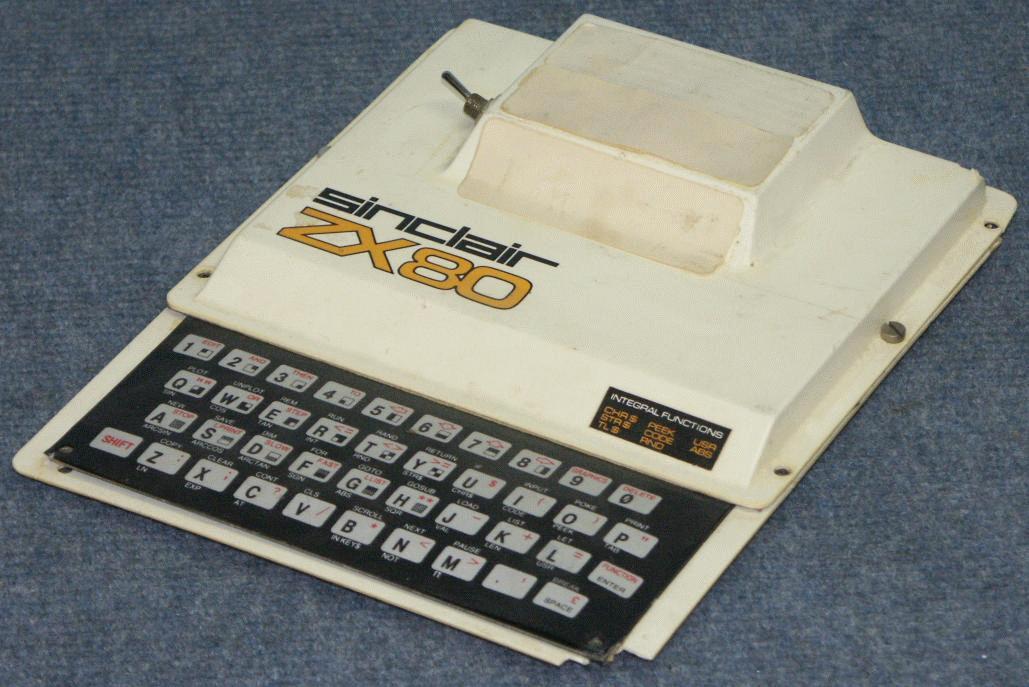
That’s so hard, because there are lots of significant items in different areas.  For me, in gaming, the Atari 2600; it’s a bit of a personal one because I had one, I was quite lucky. So, that for me is really important because it started the whole cartridge based console system. There were things before it, but it really made cartridges popular. Equally, I think we’ve got things like the ZX80 computer which brought computing down to a price that was affordable, so that’s important. I think I could go round every decade, but those two are my favourites.

Great thanks, for your time.

For more information, go to www.computinghistory.org.uk
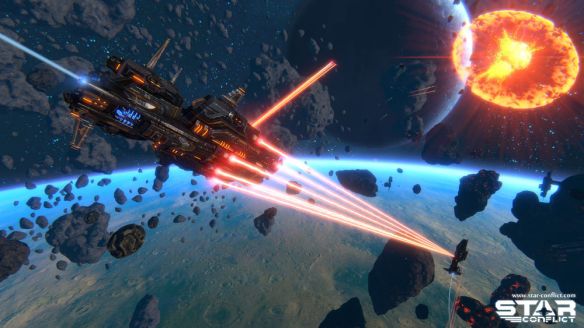
Train2Game news: Your chance to join Star Conflict closed beta

Train2Game students have the opportunity to join the closed beta for space themed action MMO Star Conflict, which begins today.

Star Conflict from Star Gem Inc is described as “a game in which anyone can feel like the pilot of a combat spaceship, take part in fierce wars between intergalactic factions that are struggling to obtain the mysterious artefacts of an ancient race and write your name in chronicles of the Universe.”

Train2Game students interested in participating in the Star Conflict closed beta can register at http://star-conflict.com/en/signup You can see Star Conflict in action in the teaser trailer below.

Beta testing is an excellent way for Train2Game students, especially those on the Games QA Tester course to practice their bug hunting skills. In a recent interview with The Train2Game Blog, Brawl Busters developers Rock Hippo told us that beta testing is “crucial” to the game development process.

For more on beta testing, how it’s useful for Train2Game students, and opportunities to get involved with it, keep reading the Train2Game blog.

What are your thoughts on Star Conflict? Will you apply to be part of the closed beta?

Leave your comments here on The Train2Game Blog or on the Train2Game forum

Train2Game student industry experience diaries: James Bouckley at Unity – week 4

Train2Game student James Bouckley  is on a Train2Game work placement at Unity. In this industry experience diary, James discusses what he’s been working on at the studio.

Read what he has to say about his Train2Game work placement  here on The Train2Game Blog, or on the Train2Game Scribd page.

More Train2Game industry experience diaries are right here on The Train2Game Blog. 

Train2Game news: PlanetSide 2 video shows design process for creating rifle scope

Train2Game Art & Animation students can get a great insight into the modelling process for weapons in PlanetSide 2, thanks to a video released by Sony Online Entertainment.

PlanetSide 2 senior artist Patrick Ho talks us through the construction of the NC Scope 4X in a time lapsed video.  You can watch below, right here on The Train2Game Blog.

Train2Game students can apply for a place in the upcoming PlanetSide 2 beta by visiting http://www.planetside2.com/. As previously reported by The Train2Game Blog, Sony Online Entertainment’s Creative Director Matt Higby says beta testing is crucial to the development of PlanetSide 2.

““For MMO games beta is critical. There is a lot we can do to test gameplay and mechanics in studio, but getting the massive scale needed to ensure the game really works requires getting real players in.” he said.

“It’s also critical to determine if our player progression curves are too punishing or too lenient, find exploits, balance issues and so on. Beta for us as a company is an incredibly critical phase of development.” the PlanetSide 2 creative director added.

Keep reading The Train2Game Blog, for the latest beta testing opportunities.

So Train2Game, what are your thoughts on the time lapsed modelling video?

Leave your comments here on The Train2Game Blog, or on the Train2Game forum.

Train2Game news: RTI 2 launching to cover Train2Game and Epic Games’ Make Something Unreal Live at The Gadget Show

Train2Game students will be taking part in Train2Game and Epic Games’ Make Something Unreal Live at The Gadget Show Live next week, as they compete to win a fully licensed Unreal Development Kit for IOS.

If you’re not one of the thousands of people who’ll be able the games based on Fighting Fantasy being built live on the Train2Game stand at the Birmingham NEC, you can still keep up to date with the latest developments through RTI 2, a new online channel launching next week, specifically to cover Make Something Unreal Live.

RTI 2 will being you reports, previews and interviews – including some with the legendary games industry figures advising Train2Game students – as Commando Kiwi, Derp Studios, IndigoJam and Digital Mage strive to complete their Fighting Fantasy games for IOS live in front of the crowds at The Gadget Show.

Reporters Danny Palmer, Harry Cole and Debby Penton will be there to bring you the latest news as it breaks.

You’ll be able to tune into RTI 2 live from next Wednesday, with perhaps a little sneak peak coming on Tuesday too. Tune in to  the channel right here, or via the link below.

Interviews with Train2Game students taking part in Make Something Unreal Live are right here on The Train2Game Blog.

Train2Game news: Mass Effect 3 senior writer on getting into the games industry

Train2Game students looking to get a job in the industry should be playing games, and anaylsing their strengths and weaknesses as they do so. That’s according to Mass Effect 3 senior writer John Dombrow.

“Find what you’re good at and then keep getting better at it. Whether it’s writing, designing levels, creating sound FX, doing concept art – you’re only as good as your product.” he told the BioWare Blog.

“You should play games all the time, see what works, what doesn’t, and learn from the successes and failures of others.” he said, before adding that getting ahead in the industry, to for example, become senior writer for Mass Effect 3, takes a lot of work.

“But also be realistic – you’re not going to land your first job in the industry as Lead Designer. Be prepared and willing to work hard starting from the ground floor, improve your craft, and eventually you can get where you want go.” Dombrow said.

The full interview is over on the BioWare Blog, and should provide interesting reading for Train2Game students, as the Mass Effect 3 writer discusses the best part of his job, his average day and more.

The Train2Game Blog has previously spoken to BioWare co-founders Dr. Ray Muzyka and Dr. Greg Zeschuk, who offered Train2Game students their own advice on how to break into the games industry.

There’s more news from BioWare  here on The Train2Game Blog, where you can also find plenty more advice from industry professionals on getting into the industry.

What are your thoughts on the advice from the Mass Effect 3 senior writer? Do you already analyse the games you’re playing?

Leave your comments here on The Train2Game Blog, or on the Train2Game forum.

Train2Game news: Sniper Elite V2 developer Rebellion hosting Twitter Q&A session today

Train2Game students have the opportunity to question the team behind Sniper Elite V2, as developer Rebellion take part in a Twitter Q&A later today.

Rebellion CEO and Creative Director has previously offered advice to Train2Game students on getting into the games industry in a video interview, which you can watch right here on The Train2Game Blog

The Sniper Elite V2 Q&A begins at 15:00,  and if you’ve got a question for Rebellion, tweet it to the development team using the hashtag #SEV2. Sniper Elite V2 from the Oxford based studio is scheduled for release next month on Xbox 360, PlayStation 3 and PC.

Watch Sniper Elite V2 developer diary below for an insight into the upcoming shooter.

So Train2Game, what would you ask the Sniper Elite V2 development team?

Leave your comments here on The Train2Game Blog, or on the Train2Game forum.

Train2Game student industry experience diary: Fee Stewart at Radiation Burn – Week 11

Train2Game Art & Animation student Fee Stewart has been on a Train2Game work placement at Middlesbrough based game developer Radiation Burn. In her latest diary, Fee discusses working on a game for Nintendo 3DS and more.

Read it here on The Train2Game Blog, or on the Train2Game Scribd page. You can read her previous diaries here, while there are also plenty of industry experience diaries from other students on the Train2Game Blog.

Train2Game student industry experience diary: Stuart Davison – week 4

Train2Game student Stuart Davison  is on a Train2Game work placementIn this industry experience diary, he details what he’s been up to and what he’s learned by working in the industry.

Read what he has to say about his Train2Game work placement  here on The Train2Game Blog, or on the Train2Game Scribd page.

More Train2Game industry experience diaries are right here on The Train2Game Blog. 

Train2Game news: Next-gen consoles won’t solve ‘creative problems’ of games says Warren Spector

Train2Game students might be eagerly anticipating news of next-gen consoles, but the arrival of PlayStation 4 or Xbox 720 won’t help solve the most common problems of game design in video games.

At least that’s according to Deus Ex creator Warren Spector, who is currently working on the recently announced Epic Mickey 2: The Power Of Two for Nintendo Wii, PlayStation 3 and Xbox 360.

“If it comes, it comes; when it comes, it comes,” he told Edge on the on subject of next-gen consoles.

“I’m not a tech guy, particularly. I’m a design, story, character guy. I think most of the problems we have to solve are creative ones, not technical ones.” said Spector, not revealing what he believes the creative problems of game design are.

“Obviously we make software, so there’s always a technical element to what we do, but I will make games that do whatever I want them to do at the end of the day, and I will use whatever technology available.” the Deus Ex creator added.

Other developers, such as Epic Game’s Cliff Bleszinski, have previously stated they’d like next-gen consoles to come with extremely high-end technology.

For the latest news and reports about next-gen consoles, keep reading The Train2Game Blog.

So, what are your thoughts on Spector’s comments? Should developers be focusing on creative problems rather than technical ones?

Leave your comments here on The Train2Game Blog, or on the Train2Game forum.