Polycount contest winners work to become part of Team Fortress 2

Get with it indeed.

The Engineer Update is still very much a new thing, but even more new items for Team Fortress 2 are already in the works. This time however, it isn’t Valve who’ve been the creative force behind new weapons and hats, but members of Polycount – a video game art and resource community.  (Perhaps our Train2Game Artist & Animator students should join the site if they’re not already members)

Valve and Polycount teamed up to members of the art community the chance to create items that will actually be used in Team Fortress 2. The brief went:

“Pick a single Team Fortress 2 class and create a minimum of three custom items for them. These items can be made up of any combination of weapons (melee, primary, secondary), Engineer buildings and/or hats. These items must be cohesively themed and fit within the Team Fortress 2 universe and time period. Make sure your replacement item set maintains the existing functionality of the original items they’re replacing, specifically any Primary, Secondary or Melee weapons you replace in your set.”

The content received an overwhelming response with over 70 sets – that’s at least 210 items – submitted by artists and designers. Now, Valve have managed to judge the entries and have selected five item sets that will eventually be released into Team Fortress 2. That’s after Valve work out how they’ll “attach gameplay attributes (probably of a game destroying nature) to these items.”  – Yeah, that quotes taken directly from the Team Fortress 2 blog!

which Polycount item sets will soon be available to all Team Fortress 2 players then?  Well, they are a heavy duty Tank Buster pack for The Soldier, a Milk Man themed item set for The Scout, 1950’s Gas station attendant gear for The Pyro, a nifty Saharan get up for The Spy, and finally ‘The Croco-Style Kit’ for The Sniper.  All of the items look very impressive and you can feast your eyes on them by visiting the Team Fortress 2 Polycount Pack Winners page.

Of course this isn’t the first time Valve have encouraged other Game Designers, Game Developers and Game Artist and Animators to contribute to their projects. After all, Counter Strike started as a community run fan project, while Portal was originally developed by students. Aspiring designers have already seen their maps and items become official in previous Team Fortress 2 updates thanks the Contribute! initiative.

Regular readers will know that this isn’t the first time I’ve praised Valve’s scheme and encouraged Train2Game students to get involved. It really does seem like it would be a good idea for Train2Game Designers to produce something. After all, you could strike it lucky and end up seeing your hard work on display in a game played by millions of people worldwide. Even if your items don’t get into the game, time practicing designing items can only be useful to your future career in the games industry.

So, what do you think of Valve’s enthusiasm for community developed items? Do you think you’ll be getting involved? How many of you play Team Fortress 2?

As usual, leave your comments here or on the Train2Game forum.
The rise and rise of social media gaming

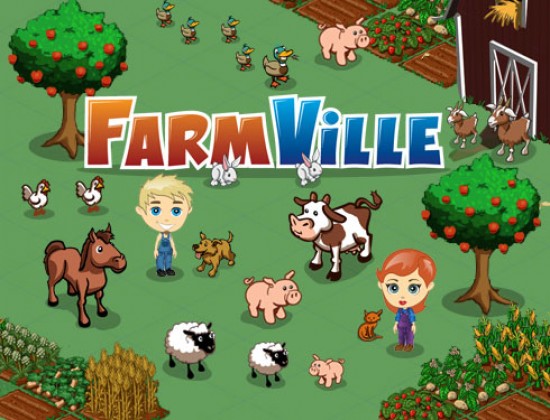
Farmville: Helping to cultivate a predicted 1.5 billion big ones.

2014 may not bring us hover cars or jet packs but it’ll apparently be a good year for the social games market. Why? Well, a new report from media consultants Screen Digest suggests it’ll be worth $1.5 billion in four years time. Yes, $1.5 billion.

It really is a staggering amount of money to get your head around! Especially so when you consider that in 2008 social media games were worth just $76 million. Not that $76 is a small amount of money at all, but in 2009 that increased to $639 million thanks to 500 million active monthly users. The Screen Digest report predicts this growth will continue over the next four years with social media games becoming more and more popular.

I doubt anyone will be surprised as to what has caused such a massive increase in the social games market, with the Screen Digest report stating:

“The market remains dominated by the distribution power and massive userbase of Facebook”

Yes, Facebook. The reason for this massive upsurge in casual social games is titles like Farmville and Mafia Wars. Both of these games are produced by market leader Zynga who last year are thought to have got annual revenue of around $100 million.

It’s not exactly to see surprising with the massive advertising campaign behind the games. According to a Facebook ad I’m looking at right now, ‘Everyone plays Mafia Wars’ Well 25 million players might not be everyone, but that number suggests Zygna must be doing something right. Then of course there’s Farmville which just seems to have become an entity unto itself…the spellchecker I’m using to write this blog even recognises Farmville as a word!

So, with social games set to become even more successful, we used the Train2Game Facebook page (Appropriate, right?) to ask Train2Game students if they’d like to use their skills to help produce a successful social media title. The responses were….somewhat interesting! They included:

“Games like Farmville are easy to make, I would rather a challenge with the more hardcore games, however that being said I would like to give the lower level games a go also.

As far as Farmville go’s I would rather shoot my self head, but everyone has to start some where, and a small game like that could get you the experience it take to work much bigger projects.”

“Yes, you have to start somewhere… But not Farmville…I would feel like a total sell-out if I made a game like Farmville.”

And…

“Farmville is such a badly built game. I couldn’t believe the amount of corners they cut, honestly, I don’t think it cost them more than 2k to build the actual game. Mafia Wars was probably the same.”

So while it seems that the Train2Game students that responded aren’t exactly too keen to produce the next Farmville, it appears the majority feel that working on such a title would provide that all important first step into their chosen career – be it Games Design, Games Development or Games Art & Animator. While many people dislike the concept of social gaming, it’s difficult to ignore how successful it has become. Remember, that big old $1.5 million that’s just over the horizon.

So now it’s over to you, Train2Game blog readers. Do you think the social games market will really be worth $1.5 billion in four years time? What do you think has made it so successful? And how would you feel about developing a social media title?

As usual, leave your comments here, or on the Train2Game forum. Or why not join the discussion on the Train2Game Facebook page?

Want to make games for PlayStation Home?

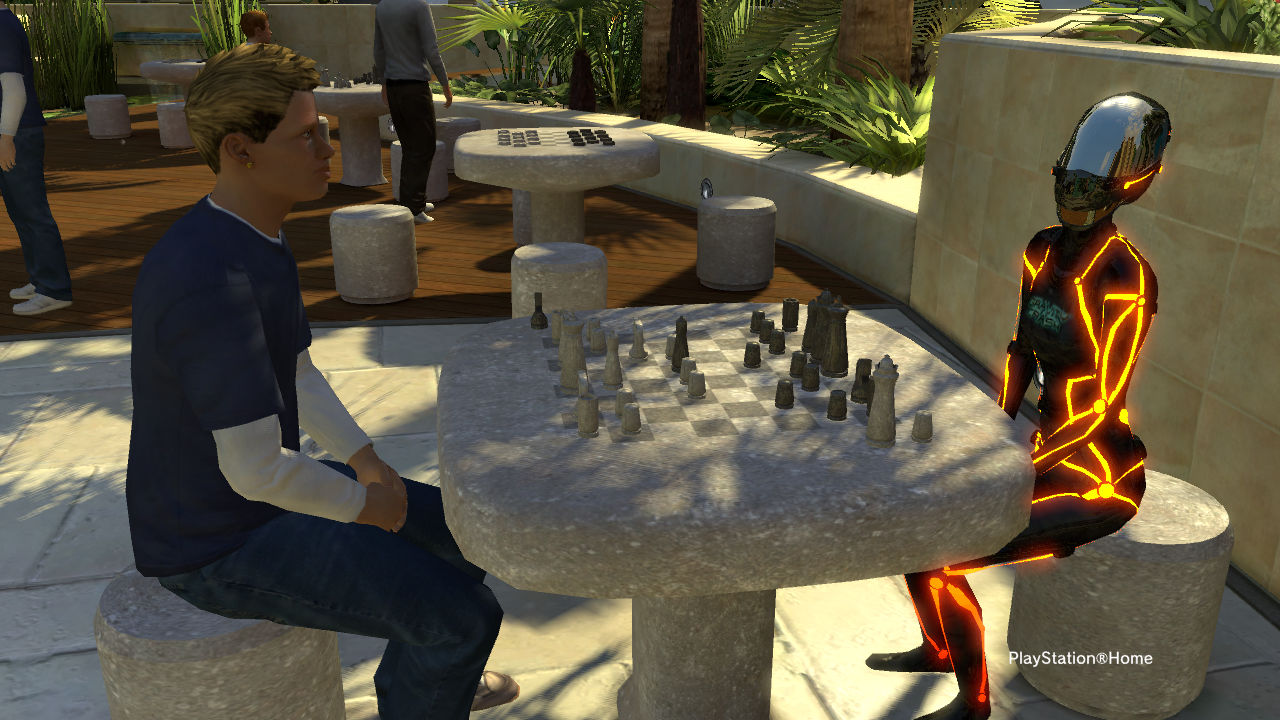
You'll be able to do much more than this soon.

Sony has formed a partnership with independent game label Codename which will see a series of indie titles released exclusively on PlayStation Home. Some of these new games are being produced by ‘undiscovered first-time developers’

Therefore, perhaps it’s possible that a studio formed by Train2Game Games Designers, Games Developers and Games Artist & Animator students could be released through PlayStation Home in future? It could happen you know.

Of course, some of you may be completely unfamiliar as to what PlayStation home actually is. So what is it? Well it’s designed for online social gaming on the PlayStation 3. You design your own avatar  – and their house – wander around the environments, meet people and play social games like bowling and chess for example. Cynics might say it’s just an attempt to mix Second Life and the popularity of Xbox Live avatars. What do you think of PlayStation home?

Personally, I haven’t used Home since it was introduced in 2008, and generally prefer to use a PC over a PlayStation 3 console for online games. However, there are large numbers of people that use PlayStation Home, with Sony stating there are over 14 million active users.

Anyhow, back to the games. They’ll be made by indie developers – which could be you in future – from all over the world, and there are four titles that’ll be released in the coming months:

Dueling Gentlemen, created by Odd Gentleman, players strategize the right moves on a giant stage in Home’s Plaza, to outsmart opponents and win this old-time battle for honor and prestige.

Minor Battle, created by Peanut Gallery, winner of the IndieCade 2010 Audience Award, a team-based game where two teams run around a cube of four screens to beat each other in a capture-the-flag style platformer.

Super Awesome Mountain RPG, created by Codename, a blend of tabletop board games and fantasy RPGs, where players ascend a fantastical mountain in Home’s Central Plaza using a custom animated figurine.

Cogs in 3D multiplayer, a multiplayer version of Lazy8’s diabolically clever Steampunk-style game, this gear-based puzzler will also be a dynamic public spectacle in Home’s Central Plaza.

They sound quite interesting don’t they? And they’re just the first of many that will become available to PlayStation Home users in future. Founding Codename partner Jesse Vigil is excited by the new partnership with Sony.

“We’re thrilled to be partnering with PlayStation Home to create and develop games that step outside the parameters of traditional game development and we’re really looking forward to the creative opportunities that lie ahead.”

“Our model of pulling together teams of developers and allowing them to make their creative dreams a reality has only one main tenet — any game created for PlayStation Home is graphically and visually entertaining to both play and watch, at the same time.”

So Train2Game students, would you jump at an opportunity to develop games for the PlayStation home? Do you think it has the possibility to provide an indie developer with their big break? Or do you think that the whole scheme will be forgotten about in the near future?

As usual, you can leave your comments here or on the Train2Game forum.
Crackdown 2 retains chart lead

Crackdown 2: Still top gun.

Microsoft’s title Crackdown 2 has claimed top place in the UK sales charts for the second week running.  The sandbox action title fended off competition including Disney’s Toy Story 3 which debuted at Number 5 – and is the only new entry to break into the Top 40 this week.

The biggest mover in the Top 10 this week is Ubisofts’ Dance on Broadway which jived up from forth to second place.

Hit titles including Super Mario Galaxy, Red Dead Redemption and FIFA World Cup South Africa all dropped one place, while UFC 2010: Undisputed has been knocked out of the Top 10. The full top ten reads:

01. Crackdown 2 (Microsoft)
02. Dance On Broadway (Ubisoft)
03. Lego Harry Potter: Years 1-4 (Warner)
04. Red Dead Redemption (Rockstar)
05. Toy Story 3 (Disney)
06. 2010 FIFA World Cup South Africa (EA)
07. Super Mario Galaxy 2 (Nintendo)
08. Tiger Woods PGA Tour 11 (EA)
09. Call Of Duty: Modern Warfare 2 (Activision)
10. Just Dance (Ubisoft)

Have you bought any of these titles this week? What do you think? As usual, leave your comments here or on the Train2Game forum.

Always look on the bright side of life

One publisher thought he'd be better as a monkey...

You’re no doubt studying the Train2Game Games Designer, Games Developer or Games & Animator course because you have a creative vision. You have an idea for an awesome game that you want to develop, publish and show the world.

It might be difficult to ‘sell’ your idea to a publisher, but that hasn’t stopped developers in the past, including those of Bejeweled – one of the most popular games of all time. The casual title has sold over 50 million copies since it was launched by PopCap ten years ago. The game has won countless awards and is available on PCs, iPhones and Facebook with 200 million games being played everyday.

However, things weren’t always so rosy as PopCap’s Dave Bishop told an audience at The Develop Conference yesterday.  The industry veteran revealed that when the first build of the game was completed in 2000, a variety of publishers turned down the opportunity to buy Bejeweled for just $60,000. Given the success of the title in the decade since then, a few of them probably that regret that decision!

Bejeweled isn’t the only game that had trouble finding a publisher: Hello Games programmer Sean Murray also spoke at Develop yesterday and revealed that they struggled to find a publisher for Joe Danger. The game was eventually released through the PlayStation network selling 50,000 copies in its first week and was well received by critics. It therefore seems reasonable that Murray extracted some revenge on these unnamed publishers, and some of the reasons they had for declining Joe Danger had the Develop attendees laughing:

“Name me one popular game with motorbikes?”

”Collecting giant coins feels unrealistic to me”

”I can see this working as a Facebook app”

”We want games that are less about fun right now”

”We love the theme, but with a different game”

”We believe the iPhone will be largely unsupported”

”Can Joe be a monkey? We like Monkeys”

They verge on the ridiculous don’t they? A popular game with motorbikes, how about Road Rash or Grand Theft Auto IV: The Lost & Damned!? Collecting giant coins seems to have worked for Mario over the years and whoever thought games weren’t supposed to be fun eh?

So, what message can Train2Game students take from the ballads of Bejeweled and Joe Danger?  Well first of all it’s that you should never give up, as Bejeweled shows that even one of the most successful games of all time struggled to begin with. Secondly, these games show that you can’t always rely on a publisher to give you the support you think your game deserves. However, thanks to the wonders of the internet it’s now easier than ever to get your independent production out there with Steam, the PlayStation Network and Xbox Live all providing outlets for indie developers.

So, what do you think about the comments made at Develop yesterday? Do you think you’ll try to rely on a publisher, or will you take the self publishing route? As usual, leave your comments here or on the Train2Game forum.

Crackdown 2 tops UK chart

Ruffian Games’ Crackdown 2 has topped the GFK UK games chart in its debut week. Microsoft’s sandbox shooter sequal is the 15th Number 1 of the year and beats the number 2 debut position of it’s predecessor.

Warner Brothers Lego Harry Potter: Years 1 -4 drops down to Number 2 while Red Dead Redemption slips to third spot.

The ELSPA GfK Chart-Track All Formats Top Ten in full is:

01. Crackdown 2 (Microsoft)
02. Lego Harry Potter: Years 1-4 (Warner)
03. Red Dead Redemption (Rockstar)
04. Dance On Broadway (Ubisoft)
05. 2010 FIFA World Cup South Africa (EA)
06. Super Mario Galaxy 2 (Nintendo)
07. Tiger Woods PGA Tour 11 (EA)
08. Call Of Duty: Modern Warfare 2 (Activision)
09. Just Dance (Ubisoft)
10. UFC 2010: Undisputed (THQ)

Have any of you Train2Game Games Designers, Games Developers or Games Artist & Animators had a chance to play Crackdown 2. Do you believe it deserves its position at the top? As usual, let us know here or on the Train2Game forum.
All Train2Game students should appreciate Dragon Age: Origins

The first details of Dragon Age 2 have come to light today with US magazine Game Informer featuring some impressive artwork on its front cover. In this writers view Dragon Age: Origins was last years top RPG and it still continues to be a very impressive game. Why? The storyline, the setting, the characters and the dialogue are all extremely impressive, making Dragon Age a game that all Train2Game students – be they Games Designer, Games Developer or Games Artist & Animator – should take notice of. This is especially true of the Games Designers, the people who’ll be writing stories of future games. Though Games Developers and Games Artist & Animators, feel free to read on!

I’m a veteran of Japanese Role Playing Games; there isn’t a Final Fantasy title I haven’t played (Discounting handheld releases.) However, despite my interest in all things fantasy, until earlier this year I hadn’t played a traditional Dungeons & Dragons or Lord of the Rings style RPG. This is despite being rather tempted by World of Warcraft in the past.

I started Dragon Age: Origins for the second time last Friday – that’s six days ago now – and I’ve already managed to spend over 24 hours playing it at the time of writing. Why is this? Well, partially there’s the classic ‘Just one more level/dungeon/search for loot’ factor, but Dragon Age is massively helped along by the fact that the Bioware created Characters just seem so real. This isn’t necessarily graphically, but when it comes to their different personalities, emotions and beliefs, it really feels like you’re engaging in dialogue with a real person

Your companions react realistically when in conversation with your character, no matter what option on the expansive dialogue trees you choose. They can react positively or negatively to not only what you say, but your choices as to how you complete quests in the open world of Ferelden. The sheer amount of effort the Games Designers and writers must have put in to all of the different outcomes is amazing. Of course, we mustn’t forget the Games Artists & Animators who provided Dragon Age: Origins with its look, or the Games Developers that programmed the game.

As I mentioned above, I’ve played plenty of RPG’s but none of them have drawn me in as emotionally as Dragon Age. The clue is in the genre title really – Role Playing – and I’m playing the role of a human female (as opposed to an elf, or a dwarf, or a male) Rogue. I’m starting to think that because of Biowares excellent character development I’m currently being overly consumed by my role.

Don’t worry, I don’t think I’m a red haired noble woman who’s good with a sword and a dagger – If I did I’d probably be locked away in a ‘safe place’ right now, but the combination of the Dragon Age approval system, and  the characters emotions and morals,  mean I’m really having to think about what dialogue options I choose.

This has actually gotten to the point where interactions with one of my party, Alistair, have gotten somewhat awkward. The reason being that he approves so highly of my character he keeps trying to chat her up. And while party members can become engaged in Romance or *ahem* sex, I’d rather my character didn’t get too involved with Alistair. So why is this awkward? Well, to put it bluntly I want my character to let him down gently but at the same time I don’t want to make him feel bad. This is partially because a reduction in approval will make him slightly less use in battle, and partly because he just comes across as a real person with real feelings. Now I know how girls I’ve awkwardly tried to show interest must have felt like…

What was my point? Oh yes, the fact the characters just seem so believable. They really do draw you in.  Dragon Age: Origins really is a brilliant game, and the Games Designers really deserve all the accolades they receive. If you haven’t already, I really recommend playing Dragon Age yourself in order to witness how an epic game should be designed.

So you budding Games Designers (And Developers, and Artists & Animators) How important are characters and storylines to you? Do you think you’d like to attempt anything on the scale of a massive RPG like Dragon Age? Or would you prefer to produce smaller titles?

As usual leave your comments here, or on the Train2Game forum.

Indie Fund – A useful avenue for Train2Game students?

While doing my usual morning rounds of video games industry news websites, I stumbled upon this GamesIndustry.biz article.  Indie fund calls for submissions eh? That’s surely going to be useful for Train2Game students I thought to myself. And do you know what, it may very well be.

So, what is Indie Fund? Well, the Indie Fund website itself says

“Indie Fund is a funding source for independent developers, created by a group of successful indies looking to encourage the next wave of game developers. It was established as a serious alternative to the traditional publisher funding model. Our aim is to support the growth of games as a medium by helping indie developers get (and stay) financially independent.”

Those indie developers could very well be you, the Train2Game Games Designers, Games Developers and Games Artist & Animators. Now you’re sitting there thinking that applying for funding sounds appealing, but you’re wondering how it works, well.

We make smaller investments and ask for less in return. The hope is that developers see enough revenue from their game to self-fund their next project.  And voilà, one more developer that is free to make whatever crazy game they want.”

There’s more detailed information about how exactly it works on the About page of the Indie Fund website. The section also lists who’s involved with the funding project and it’s a list of developers who’ve made a number of successful independent titles, some of which you’ve probably played:

Indie Fund believe they can support five or six titles over the next two to three years, but will only do so if the proposed title introduces something new to gaming. For more information about what Indie Fund want for a game and what you need to do if you want to submit an application then all you need to do is visit the ‘Applying for funding’ section of the website. It’s also recommended that you have a prototype of a game ready, but evidence on the Train2Game forum shows that some of you have already reached this stage.

So Train2Game students, do you’ll be submitting an application to The Indie Fund? Do you think it’s a good idea? Or perhaps you aren’t too keen on it. Whatever your thoughts are, please leave them here or on the Train2Game forum.

Discs vs. Digital – Round 3

Almost two thirds of us prefer to buy our games boxed up and on a disc over downloading them online.  Research by Ipsos Media CT – which appeared on MCV – revealed that 64% of gamers preferred to buy titles on disc over downloading a digital copy.

This is compared to only 45% of music consumers preferring discs, and perhaps surprisingly, just 51% of film buyers preferring physical copies of their purchases. Who knew that downloadable films were so popular?

So why are we still so keen on buying our games in a box? Well, Ipsos Media CT Director Ian Bramley says it’s down to trade-ins and second hand sales.

“I believe the preference for physical discs amongst next gen gamers reflects the potential value they derive from the pre-owned market, which is holding up the preference for physical – this is unlike the music and film markets,”

“Physical games discs have a long and well-established history, which is a deep mindset to change – particularly when gamers build a physical collection as they fear losing digital versions. And in-store browsing is also important to buyers.”

So, Train2Game students, as the Games Designers, Games Developers and Games Artists & Animators of the future, what form of distribution would you prefer to release your games with? Or is the format not important, with it being more a matter of getting your games out there.

As usual, feel free to leave your comments either here or on the Train2Game forum.

You can also check out blogs about both Round 1 and Round 2 of the Discs vs. Digital debate for more information and other thoughts on the issue.

Developing for the disabled gamer

Last Thursday, I had an unfortunate incident on my bicycle which resulted in a strapped up broken finger and the misfortune of needing to wear a sling for a few days. Naturally, this caused me some problems – I could only type using one hand making updating this Train2Game blog and the Train2Game Twitter account a slow affair, cooking became a pain, and worst of all I was extremely limited to what video games were available to keep me entertained over the weekend.

With only one functioning hand, it was impossible to hold a console controller which meant continuing my ride through the American west with Red Dead Redemption was out of the question. It also meant that I couldn’t get my usual fix of Team Fortress 2 on the PC, after all a person needs to move by pushing keys with the left hand and look around by using the mouse in the right. (Or indeed, doing this the other way around if you’re left handed) Thankfully, I managed to keep myself from going crazy in a temporarily game free world thanks to the point and click interface of Dragon Age: Origins which kept me happy for hours on end.

Thankfully I’m out of the sling now and though I still can’t hold a PlayStation controller due to my fingers remaining strapped together, I’m back to happily fragging my clan mates on Team Fortress 2 online servers.

Luckily for me, not being able to play any video game I want is a temporary issue. Unfortunately for the significant minority of people who have disabilities, not being able to play a wide variety of different games is a permanent problem.

However, slowly but surely this tide seems to be turning, with small groups of Games Designers, Games Developers and Games Artist & Animators working with scientists to provide research into – and create – video games for those with disabilities.

Last year, Duke University in North Carolina conducted research into modifying Guitar Hero that allowed it to be played by man with an amputated arm. BBC News reporter Flora Graham explains how it works better than I ever could.

“To play the game, users wear electrodes on their residual muscles, such as those found on their chest and shoulder. The system translates the signals from the electrodes as if they were coming from the game controller, allowing players to strum along, despite not having any hands.”

The researchers also realised that the movements in the game were similar to those required when learning how to use a prosthetic limb, essentially meaning Guitar Hero could in theory be used to teach people how to use their new arms.

In May this year, a video game project called VI Fit was revealed that allows blind gamers to keep in shape. Researchers at the University of Nevada modified a Nintendo Wii for the project which according to Gamesradar;

“Features two games – VI Bowling and VI Tennis – and both can be downloaded for free at vifit.org. The game utilizes Wii remote controllers and a Windows PC with Bluetooth support. Players are instructed throughout the game with the use of both audio and vibrotactile cues”

EA have even got involved with developing games for the disabled, by helping VTree LLC, create a Madden powered title called My Football Game for players such as injured war veterans with physical difficulties.  These are just a handful of a variety of projects that aim to develop games for those with disabilities, there are plenty more of them out there too!

There is a significant audience of disabled people– and according to Popcap, they make up 20% of ‘casual’ gamers – who just want to enjoy their hobby in the same way that the rest of us do. It raises an important issue for Train2Game students, be they Games Designer, Games Developer or even Games Artist & Animator – Do you consider the needs of disabled gamers when you create your games? Or would you like to work on a game designed to be played especially by those with disabilities?

I’m very interested to hear your thoughts on this once, so as usual, leave your comments here or on the Train2Game forum.