Train2Game news: Next Portal 2 DLC to add map editor

Train2Game blog regular readers will be aware that custom creations and modding can be a great way to not only improve your skills, but can also possibly help to find work in the industry.

In good news for aspiring game developers, the next add-on for Portal 2 will allow players to create levels using “an easy-to-use in-game map editor” which will let users “design, build and share their own single-player and co-op test chambers with the community.”

Last week, Portal 2 won the Ultimate Game of the Year award at the Golden Joysticks.

Portal 2 developer Valve introduced community created levels and items into Team Fortress 2 over a year ago, and as reported by the Train2Game blog, the creators have made $2 million between them thanks to the virtual item store.  Could Train2Game students therefore potentially not only see custom created levels played by others, but also monetised? More details will be revealed when the Portal 2 add-on is released next year.

In a recent interview with the Train2Game blog, Valve’s Chet Faliszek told us that modding is a “really good way” to get noticed in the industry. The same could also be said for creating community levels. The developer has a reputation of supporting  their community, and activity encourage modding using the Source SDK.

So Train2Game, what are your thoughts on the prospect of creating levels for Portal 2? Is it something you’d do? Can you see it as something that’d help improve your skills?

Leave your comments here on the Train2Game blog, or on the Train2Game forum.

[Source: Gamasutra]

Train2Game news: Team Fortress 2 community makes $2m from created items

Train2Game blog readers will have previously read that since the introduction item store to Team Fortress 2, community item creators have been earning money for their work.

Now a year on since the Mann. Co store was introduced, Valve has revealed that community item creators have collectively earned over $2 million from selling the items in the virtual store.

They’ve also introduced an update called ‘Steam Workshop’ that’ll make it easier for community item creators to test, share and get feedback on their weapons, hats and items.

“The ‘Mann Co. Store’ represents an important new direction for games and game makers,” said Valve co-founder and president Gabe Newell.

“By leveraging and extending the platform features of Steam, Team Fortress 2 has enabled a viable marketplace for independent content creators and significantly extended the gameplay experience in an incredibly short amount of time.”

Of course, this being Team Fortress 2, the Manniversary Update also sees the introduction of plenty of new hats. Train2Game students can find out about the modelling process behind Team Fortress 2 hats here on the Train2Game blog.

Team Fortress 2’s community tools could potentially allow Train2Game students to submit items to the game, make money and earn a reputation from their creation.

Valve have a reputation of being supportive of their community, and activity encourage modding using the Source SDK.

And in an interview with the Train2Game blog last month, Valve’s Chet Faliszek told us that modding is a really good way to get into the games industry.

“It’s a really good way for someone to get noticed because it shows that you’re able” he said.

“Normally modders have to work as a team and that’s important, and they also have to be able to finish something and that’s really important. So those two things together are a really good way to demonstrate that you’re ready to work in the industry.”

So Train2Game, what are your thoughts on the Mann Co. Store? Is it a good way for game developers to get noticed?

Leave your comments here on the Train2Game blog, or on the Train2Game forum.

[Source: Gamasutra]

Train2Game news: Gabe Newell – Apple will make consoles ‘disappear’

Train2Game students will be well aware of the impact Apple has had on the games industry, but they won’t stop with mobiles, they’ll make a move for the home console market too.

That’s according to Valve co-founder Gabe Newell, who made the comments to The Seattle Times.

“I suspect Apple will launch a living-room product that redefines people’s expectations really strongly and the notion of a separate console platform will disappear,” he said.

Newell’s comments echo those of owner of cloud gaming service Gaikai Dave Perry, who as previously reported by the Train2Game blog, believes the main threat to traditional consoles is actually Apple.

Newell however was critical of Apple, and other gaming platforms, accusing them of being too closed and stifling innovation.

I’m worried that the things that traditionally have been the source of a lot of innovation are going,” he said.

“There’s going to be an attempt to close those off so somebody will say, ‘I’m tired of competing with Google, I’m tired of competing with Facebook, I’ll apply a console model and exclude the competitors I don’t like from my world.’

“I consider Apple to be very closed,” Newell added

“Let’s say you have a book business and you are charging 5 to 7 percent gross margins. You can’t exist in an Apple world because they want 30 percent and they don’t care that you only have 7 percent to play with.” he said.

Valve are currently working on CS:GO, and you can find out more about its development in an interview with writer Chet Faliszek here on the Train2Game blog.

So Train2Game, is Apple a threat to consoles? And what do you make of Newell’s comments about closed systems?

Leave your comments here on the Train2Game blog, or on the Train2Game forum.

[Source: Seattle Times via Industry Gamers]

Train2Game news: Valve on playtesting

Train2Game students, especially the QA Testers, will be aware of the importance of testing games in development.

In an interview with the Train2Game blog last month, Valve’s Chet Faliszek revealed that testingto be an important part Counter-Strike: Global Offensive development. Now other leading Valve developers have given further insight into how testing works at the studio.

Gamasutra report that speaking at GDC Online in Texas, Valve writer Erik Wolpaw said they take it very seriously. They start testing internally during game’s early development before bringing in testers from outside the studio.

“We definitely do playtest. We’ll ask people after they play to recount the story to us and gauge their comprehension of their experience…” he said.

Of course, Valve fans among the Train2Game community will know the developer like to put humour in their games. However, Wolpaw added that testing this aspect of game design can be difficult.

“Comedy stuff is tougher [to evaluate] because it’s more subjective and it’s really hard to gauge peoples’ reaction,” he said.

“Pretty much no one that played Portal 2 cracked a smile, but testers still said the game was funny. It’s hard to tell if a joke is failing or not.” Walpaw added.

Nonetheless, the testing process is useful to Valve and they’re happy to make changes if something isn’t working.

“We fail all the time, we just don’t advertise it too much,” said studio writer Marc Laidlaw.

Excerpts of the GDC Online Valve Q&A session can be found on Gamasutra and it should make interesting reading for Train2Game students, especially those on the Game Design course.

Of course, Valve aren’t the only game developers who value playtesting, with the Train2Game blog recently reporting that Bioware see it as a key part of developing Star Wars: The Old Republic.

Flower and Journey developers Thatgamecompany have also stated that testing is a crucial part of the game design process.

Find out more about the Train2Game QA Tester course here!

So Train2Game, what are your thoughts on the testing process at Valve? How important is it to get both an internal and external opinion on games in development?

Leave your comments here on the Train2Game blog, or on the Train2Game forum.

[Source: Gamasutra]

Train2Game news: The making of a Team Fortress 2 hat

Train2Game Art & Animation students should find this interesting; a post on the Team Fortress 2 blog reveals the step by step process of building a hat.

For those unfamiliar with Team Fortress 2, players can customise their characters with hats and other accessories. And as previously reported by the Train2Game blog, many community created hats have made it into Team Fortress 2, with the creators earning money from the sales!

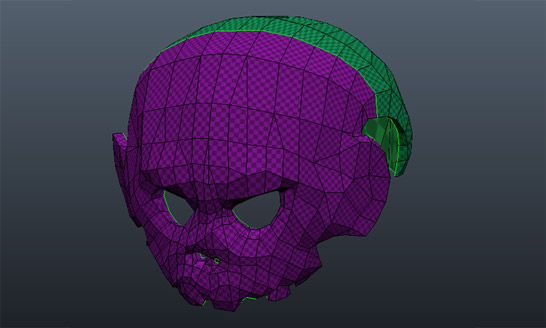
But anyway, The Making of a Skull Hat details the creation process from just a concept, to modelling, to adding a polygon mesh and texturing. It makes an interesting read for Train2Game Art & Animation students.

Valve are extremely open to community contributions in Team Fortress 2, and have keenly supported modders over the years, with many joining the development studio.

Indeed, speaking to the Train2Game blog last month, Valve’s Chet Faliszek told us that modding is a really good way to get into the games industry.

“It’s a really good way for someone to get noticed because it shows that you’re able” he said.

“Normally modders have to work as a team and that’s important, and they also have to be able to finish something and that’s really important. So those two things together are a really good way to demonstrate that you’re ready to work in the industry.”

So Train2Game, what do you think about the process behind making a Team Fortress 2 hat? Would you consider making a submission?

Leave your comment here on the Train2Game blog, or on the Train2Game forum.

[Source: Team Fortress 2 blog]

Train2Game interview: Valve’s Chet Faliszek on CS:GO


Train2Game attended the Eurogamer Expo, and during our time there we had a chat with Valve Software writer Chet Faliszek about Counter-Strike: Global Offensive. In an in depth interview, Faliszek discusses the reasons for making CS: GO, bringing the PC title to consoles,  the importance of beta testing and much more.

The Valve Software writer also tells the Train2Game blog how important modding can be as part of finding work in the games industry.

Read the interview below, on Train2Game’s Scribd page, or listen to it via Train2Game Radio.

We’re over ten years on from the original Counter-Strike, why is the time right for CS: GO now?

Counter-Strike: Global Offensive started because we were actually originally just going to do a port of Counter-Strike: Source for XBLA. Internally we started playing it a lot and released that ‘Oh, this is a lot of fun’ We forgot how much fun this translates over to the 360 now we’ve got really good at this, so we should make a bigger investment, a full game and expand out what it is.

What are the main Game Design changes that have been made to CS: GO?

One of the cool things with Counter-Strike is it’s been around for so long, that there’s a lot of feedback we can get about what works and what doesn’t work. So we’ve taken a look at 1.6, we’ve taken a look at Counter-Strike: Source, we’ve kind of taken the best of both worlds and we think we’ve created the best version of Counter-Strike.

Which modes will be available in the upcoming game?

We’re going to have the classic bomb planting and hostage and rescue, and were also going to have – again looking back to the community, they had worked on gun game – and so we’re incorporating gun game directly into what we call ‘Arsenal modes.’  We have two of those modes; one is Demolition and that’s about bomb planting and team based Gun Game. And then we also have Arms Race which is the classic Gun Game where every kill you get, you get a new gun and then eventually you get to the knife round.

How difficult has  it been to bring what’s fundamentally a PC game onto consoles?

We don’t really ever look at games that way. As a company, as gamers ourselves, we play on too many different platforms just to think of a game being that anymore. I mean, I play Left4Dead on console as much as I play it on PC, so you know, I think we’ve become accustomed to that.

It’s been fun watching people jump down here and say ‘Oh man, I can’t believe you don’t have keyboard and mouse here,’ and then they play on the PS3 and go ‘Oh yeah, that works pretty well.’

It’s had a good reaction from the hardcore Counter-Strike fans then?

Yeah, actually what’s really funny is at PAX back in Seattle, we were showing it on the 360 and we had a pro-gaming website come in really dissing that we had it on the 360. And they sat down and ran over everybody and they loved it.
Is there a mode for players who might be new to Counter-Strike, but don’t want to get run over by veteran players?

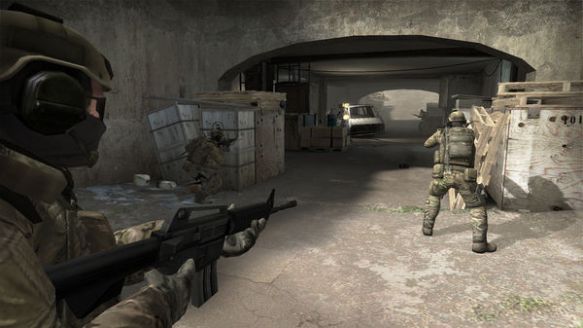
Well actually in all of our modes we’re going to make sure that doesn’t happen, but we have the Social Mode which you’re seeing here. You get all the weapons, there’s no friendly fire, all talk is on and it’s a place to have fun with your friends and you’re talking about your girlfriend’s or what you’re talking about on TV while you’re playing the game.

But also there’s also a skill based mode which is all about the skill based matchmaking, so that’ll always make sure you’re having a competitive game without getting owned by someone who’s been playing for  ten years and is tonnes better than you – they’re going to be playing against different people than you will.

You’re giving out beta keys here, how important is that phase in the development of a game?

It’s really important to us because we’re going to let that drive the release date, because we’re really looking to get the feedback from the community over the changes we’ve made. We’ve brought over some stuff that was good from Counter-Strike: Source and we’ve brought over some stuff that was good from 1.6, so it’s going to be interesting to see how the communities react.

Already we’ve got some positive feedback from some of the pros, but we’re telling the communities it’s not going to be either, it’s going to be something new so let’s play it, let’s give feedback and let’s go from there.

Valve Software has a reputation for hiring modders, is modding therefore a good way for a budding game developer to get noticed?

It’s a really good way for someone to get noticed because it shows that you’re able. Normally modders have to work as a team and that’s important, and they also have to be able to finish something and that’s really important. So those two things together are a really good way to demonstrate that you’re ready to work in the industry.

What other advice would you give to someone looking to work in the games industry?

Make sure you’re doing something.  Do whatever you’re doing, like we (at Valve) weren’t necessarily writing for games when Gabe (Newell) tapped us, but do whatever you do as well as you can and with a view as to what your eventual goal will be.

Anything else you’d like to add about CS: GO?

We’re going to have the beta starting in October, check it out. We think it’s the best version of Counter-Strike there is, and you can help us make it the best version.

Thanks for your time.

The CS:GO beta begins in October, with a Xbox 360, PlayStation 3 and PC released scheduled for early 2012.

Leave your comments here on the Train2Game blog, or on the Train2Game forum.

For more information about Train2Game, go to www.train2game.com
Train2Game students read this! Valve on playtesting during game development

 They're waiting for you Gordon, in the test chamber...

Train2Game students, particularly the QA Testers, will know of the importance of testing during a games development.

Now, in an interview with GameSpot, Valve has revealed that they believe playtesting to be the most important part of game development.

“For us, playtesting is the most important part of the game development process,” experimental psychologist and Valve’s playtesting lead Mike Ambinder told GameSpot.

“It’s not something we save for the end of the development, or use as a quality assessment or balancing tool. It is the dominant factor that shapes our decisions about what to release and when to release it.”

It’s a statement that Train2Game students who haven’t already been testing games throughout their development should really take on board.

Valve uses something called ‘bio-feedback metrics’ as part of the testing process. It features standard observed play sessions and surveys, but also involves tracking eye-movement with monitor-mounted cameras; monitoring heart rates; and even skin conductivity tests.

Valve use all of these to determine the players enjoyment of the game.

“We became interested in the use of biofeedback both as a playtesting methodology and as potential user input to gameplay because the idea of quantifying emotion or player sentiment seems to have utility,” said Ambinder.

“On the playtesting side, recording more objective measurements of player sentiment is always desired. People sometimes have a hard time explaining how they felt about various things, and memories of feelings and events can become conflated.

“Conversely, if you have a more objective measurement of arousal or engagement, you can get a clearer picture for how people are emotionally consuming your game.”

Last week, the Train2Game blog reported that Valve’s Steam service is ‘essential’ for indie developers.

So Train2Game, how important do you believe playtesting is to the game development process? How would you go about it?

Leave your comments here on the Train2Game blog, or on the Train2Game forum.

[Source: GameSpot]

Train2Game news: Steam ‘essential’ for indie devs say Mode 7 Games

Frozen Synapse by Mode 7 Games is published through Steam

Train2Game students with plans to develop PC games will almost certainly be familiar with Steam, the digital distribution service from Half-Life, Portal and Team Fortress 2 developer, Valve.

Now, Mode 7 Games, the team behind indie title Frozen Synapse, have praised Valve and the way they go about promoting indie games, while keeping a hands off approach.

“That’s one of the best things about Valve, they won’t say ‘you are doing this’ – which they could do very easily – they’ll say ‘this is the kind of thing we want to do, this is why, how do you want to go about it?’ It’s great, it lets you try stuff.” Mode 7 Games co-founder Paul Taylor told GI.biz.

“We’re doing some stuff on Steam that people don’t normally do, like the free key for a friend thing, or offering the soundtrack as a separate thing you can upgrade to.”

“They’re quite different, and Valve had to do some actual system-related stuff to allow us to do that. For an indie game that doesn’t have a lot of clout, they’re surprisingly flexible and that’s great.” He continued.

“When you’re a company with that much power and that size, you have to strike a balance between doing things that benefit you and things that create a good eco-system for everyone,”.

“I think they’re pretty good at that, and they think very seriously about it. It is astonishing just how important they are in terms of the PC. Steam is really essential for indie games at the moment.”

The recent Steam Sales will probably have helped many smaller studios sell their games too.

Of course this isn’t the first time the supportive nature of Valve has been mentioned on the Train2Game blog, regular readers will know that community developers receive revenue from in-game items they’ve produced for Team Fortress 2.

So Train2Game, do you agree that Steam is ‘essential’ for indie PC developers? Would you attempt to get a game on Valve’s distribution system?

As usual, leave your comments here on the Train2Game blog, or on the Train2Game forum.

[Source: GI.biz]

Train2Game good news for modders! Source SDK will soon be free

Exciting news for Train2Game modding enthusiasts! Valve has revealed that their Source Software Development Kit will be available to anyone for free.

The announcement comes following Valve stating that they were working on making the Source SDK ‘less painful to use, as reported by the Train2Game blog earlier this year.

Currently, you need to buy a Source based game such as Half-Life 2 in order to gain access to the mod tools, but it appears Team Fortress 2 going free-to-play last week has fundamentally changed this.

The news of the Source SDK becoming free first appeared on Reddit, after a mod tester known as Riley contacted Team Fortress 2 developer Robin Walker to ask if buying an in-game item would allow access to the tools. Walker replied with:

“Yep. That said, your email has triggered a process here that made us re-examine that, and we’re going to just go ahead and make the Source SDK freely available. Thanks for making us better!”

PC Gaming blog Rock, Paper Shotgun also contacted Walker to confirm the news, to which he replied:

“We are in the process of getting it all done. It’s a bit messy because we have multiple versions of the SDK, and there’s some dependencies we need to shake out. But yes, the gist of it is that we’re just going to go ahead and make the Source SDK freely available.”

So there’s good news for budding Train2Game game developers, you’ll now be able to access the Source modding tools for free!

Valve have a long history of supporting modders, and as many Train2Game students will know, the popular shooter Counter-Strike begun as a mod for the original Half-Life.

More recently, Valve have allowed Team Fortress 2 community developers a cut of the revenue made from the in-game items sold through digital transactions.

In an interview published on the Train2Game blog last month, Red Faction: Armageddon Lead Level Designer Jameson Durall said that modding is an excellent way for those with desires to get into the games industry to practice their skills.

So Train2Game, will you be using the Source SDK? Have you used it before? And does the  support Valve give mods inspire you?

Leave your comments here on the Train2Game blog, or on the Train2Game forum.

[Source: Rock, Paper Shotgun]

Valve ‘keeping an eye on’ L.A. Noire Art & Animation tech

L.A. Noire

By now, it’s likely that most Train2Game blog readers have seen the impressive facial Art & Animation techniques used in L.A. Noire.  (If not you can see it here on the Train2Game blog)

While Valve are impressed by the motion captured used in L.A. Noire,  they’re unsure if it’d work with the particular style of “reactive” Game Design they’ve used to create the likes of Half-Life 2 and Portal 2.

As reported by the Train2Game blog, the Art & Animation techniques of L.A. Noire are so advanced, the Xbox 360 version of the title comes on three discs.

“It’s impressive technically, for sure,” said 3D graphics man Jason Mitchell told Develop in an extensive feature on Valve

“And I think it’s an important inflection point in the continuum of ever-increasing fidelity in game characters… There are pros and cons to that LA Noire approach, and we’re keeping our eyes on that piece of tech, but it’s not clear how we would integrate it.”

“I guess I’m not really familiar with the performance characteristics of that technology, on the playback side. One of my first impressions was the incredible high-fidelity of it… But the system is based on a playback of a performance, which can go against how we like to think about characters interacting with our players.”

“We like our performances to be far more reactive to what the player does, and not to something pre-acted on a sound stage. It’s not completely obvious how this tech would integrate into our work.

“But since I haven’t played that game, I’m not incredibly familiar with that technology. It’s super interesting, regardless. I’m sure it’s something people will be referring to for years to come on the history of interactive facial tech.”

Train2Game students can read a hugely in-depth feature that goes behind the scenes at Valve at Develop Online.

Last week, the Train2Game blog reported that Rockstar believe the structure of L.A. Noire as a whole will be revolutionary for the games industry.

On the other hand, Quantic Dreams David Cage believes that L.A. Noire’s Art & Animation provides an ‘interesting dead end’ as reported by the Train2Game blog last month.

L.A. Noire is released here in the UK on Friday.

Where do you stand on L.A. Noire? Could it used to produce the “reactive” games Valve do? Is it the future of the industry? Or do you agree with David Cage in that it’s a dead end?

Leave your comments here on the Train2Game blog, or on the Train2Game forum.

[Source: CVG via Develop Online]