Train2Game news: Lionhead provide advice to artists on getting ahead in the industry

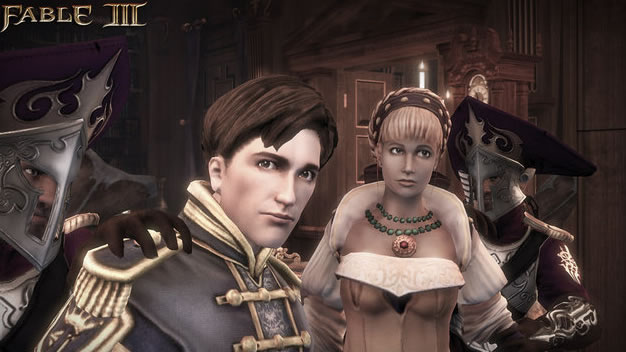
Fable IIITrain2Game Art & Animation students should definitely read the latest article in Develop Online’s ‘New Year, New Job’ feature, as Lionhead Head of Art Paul McLaughlin gives tips on how to be a great artist in a game development studio.

His advice for artists is as follows, and it could be especially useful to Train2Game students who are currently on Train2Game industry experience placements.

• Turn up for work and be nice to people.
• Make your boss’s life easier, not harder.
• Take a deep interest in whatever you’re working on. Do your damnedest to understand the art/game direction.
• Find out what you’re good at that is useful to the team and try to excel in that area.
• Keep your skills honed. No matter how senior you are, you still need to show ‘potential’.
• Work with the production team. Don’t promise what you can’t deliver, and if you’re struggling then flag it early.
• Don’t let your ego get in the way of doing what’s required.

It’s excellent advice for Train2Game Artists, who along with all other Train2Game students should keep an eye on Develop Online’s jobs feature for more excellent advice from industry professionals.

For more great advice from Lionhead, Train2Game students should check out this Train2Game Blog post in which Peter Molyneux offers guidance about getting into the games industry. He also reveals that many Lionhead staff started their careers as QA Testers.

What are your thoughts on the advice from Lionhead?

Leave your comments here on The Train2Game Blog, or on the Train2Game forum.

[Source: Develop Online]

Train2Game student Fee Stewart presents her 2nd Video Diary

Train2Game student video diary from  Train2Game Artist & Animator Fee Stewart. In her second Train2Game video diary, Fee tells us about her time at The EuroGamer Expo and Women In Games Conference, and reveals her latest TMA score. Watch Fee’s video diary below, right here on The Train2Game blog.

You can also see Fee’s first Train2Game video diary here.

What are your thoughts on Fee’s second Train2Game video diary?

Leave your comments here on The Train2Game Blog, or on the Train2Game forum.

Train2Game news: L.A. Noire development took 7 years because it was “too big” says creator Brendan McNamara

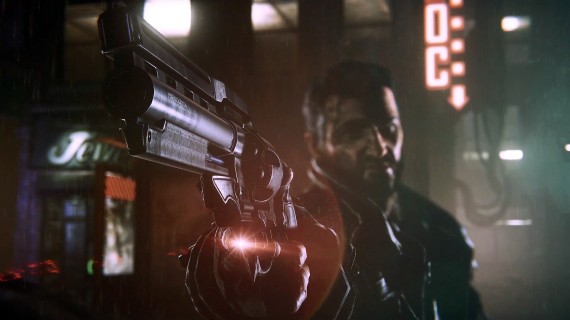
L.A. Noire Cole Phelps Train2Game blog imageTrain2Game students will know that game development can take a significant amount of time, but even in this industry, L.A. Noire’s seven year development cycle was extensive. (Though only half as long as that of Duke Nukem Forever…)

Why was this? Well, partly because of the impressive Motionscan facial animation, and also because L.A. Noire creator Brendan McNamara believes his film noire title, published by Rockstar, was “too big”

“One [thing] is the size, it’s a huge game – probably too big. The map’s massive, and so that’s probably my fault. We had to build a new process to do that” he told OPM

“We were a brand-new studio – we had brand-new tools, new technology. We have tools that allow you to build cities now, but we had to build that kind of stuff and make it work. Everything from the road network, where all the trolley cars go, all the cables connecting automatically to all of the buildings…”

McNamara revealed that at least 18 months of L.A. Noire’s development was dedicated to research.

“The tech was pretty extensive, including MotionScan. I’d say the first year and a half – [maybe] even longer – was just research.” he said

“Newspaper research, guys going over to LA and doing research on the buildings, taking photos, getting all the resources together… We were quite a small studio – 16 people or something – and we had to have all this material so we could start building stuff.” McNamara concluded

Facial animation was a huge part of L.A. Noire, however, in an interview with the Train2Game blog last November, Brink Lead Writer Ed Stern told us it isn’t something that’s needed in order to enjoy video games.

As previously reported by the Train2Game blog, L.A. Noire broke records to take No.1 in the UK charts when it was released last year.

For more on L.A. Noire, see previous posts on The Train2Game Blog.

So Train2Game, what do you make of McNamara’s comments? Is it possible for a game to be too big? What lessons do you thinkcan be learned from the development of L.A. Noire?

Leave your comments here on The Train2Game Blog, or on the Train2Game forum.

[Source: OPM]

Train2Game student diaries of Fee Stewart No.1 to 3

Train2Game Artist & Animator Fee Stewart is on a Train2Game work placement at game development studio Radiation Burn in Middlesbrough.

In her first industry diaries, Fee discusses how she’s settling into Radiation Burn, the challenges of working in a studio environment and learning new skills.

Read her experiences here on the Train2Game blog, on the Train2Game Scribd page, or the Train2Game industry experiences website.


Train2Game news: “Dude in a suit” not involved with game development at Ubisoft Montreal

Train2Game blog readers, aside from those who’ve been on Train2Game industry experience placements, may not know much about what happens behind closed doors at a game development studio.

Thankfully for them, Ubisoft Montreal creative director Jason Vandenberghe – who the Train2Game blog interviewed  at Gamescom earlier this year – has offered an insight into how the Canadian outfit works, revealing that the studio is a suit free zone in the process!

“The dude in a suit saying ‘Our studies show that we’re missing a marketing opportunity here’?” said Vandenberghe in a video Q&A for CVG that makes interesting viewing for Train2Game students, “It doesn’t work like that! None of us would work like that.”

“I’ve seen those kinds of presentations, and when they’re made the creative folks in the room are like ‘Wha? What are you doing? Why are you doing this?”

Vandenberghe goes onto speak about how those building Ubisoft’s games work together.

“Creating a video-game is incredibly complex, and it comes from teams – it comes from groups of people who are collaborating together. Who trust each other, who’ve learned to work together, who’ve learned to fight together and who’ve learned to challenge each other’s ideas.” he explained.

“What happens to Ubisoft is that you have these creative people with lots of opinions and lots of experience about what makes great games.”

“They come together in a room and they fight. You walk out and what’s left on the whiteboard is a bunch of great stuff. That’s how we do it here, and I don’t know a better way to do it.” Vandenberghe concluded.

Train2Game students can get a bigger insight into what it’s like to work in the games industry, and some advice on how to get themselves in, in the Train2Game interview with Jason Vandenberghe from Gamescom earlier this year.

So Train2Game, what do you make of the comments about life at Ubisoft Montreal? Does it sound like an environment you’d relish working in?

Leave your comments here on the Train2Game blog, or on the Train2Game forum.

[Source: CVG]

Train2Game interview: Brink Lead Writer Ed Stern – Part 1

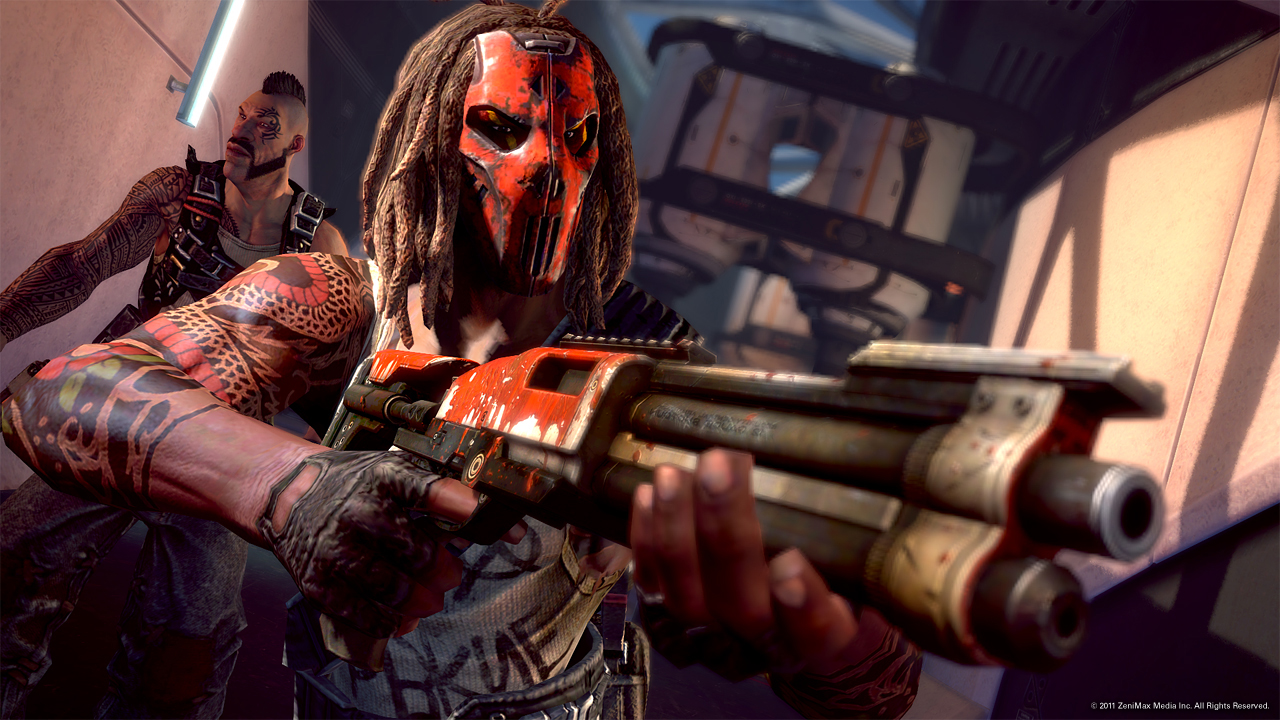
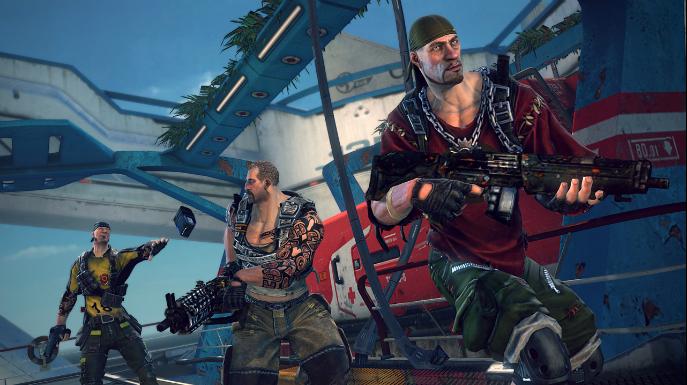
Brink Train2Game blog imageTrain2Game attended last month’s Games Writers Panel at BAFTA’s headquarters in London. There, the Train2Game blog spoke with panellist Ed Stern, Lead Writer at London studio Splash Damge. In an in-depth interview, Ed discusses development of Brink, game design and game writing and offers advice to Train2Game students on how to get into the industry.

Part 1 focuses on Ed’s role as Lead Writer, the design and art of Brink. Read it below here on the Train2Game blog, or alternatively you can read it on Train2Game’s Scribd page. Part 2 of the interview is here on the Train2Game blog.

First of all, can you tell us a bit about your role as Lead Writer at Splash Damage involves?

It’s an odd one. It’s sort of a narrative designer director role which means lots of things. It can end up being virtual location scout and production designer and wardrobe guy. I think a lot of it is giving design documents and reference images to artists, environment artists and level designers and so on. And it’s tough for writers because we’re used to working with words but lots of people who make games aren’t textually inclined, you’ve got to give them images. So, photo research is bizarrely a lot of the writing I do.

Because it doesn’t matter if I write a document that I think describe what’s going on, that’s not the target audience, the target audience is the team making the game and quite often they’re more visually inclined. So yes, writing back-story, creating the world, writing cinematics, storyboarding cinematics, writing dialogue, directing performance capture, directing voiceover and trying to do localisation as far as possible. Well it’s not so much trying to do that as building in localisation, so something like ‘here’s a text box, I can’t fill it with text in English because in German it’ll be a third longer so whatever I write has to be a bit shorter than that” That’s the glamorous world of games writing!

Splash Damage released Brink earlier this year, how did you go about writing it?

Well that was really fun because that was the first time we at Splash Damage produced our own original IP. Previously we got to work on Quake and Doom and Wolfenstein which is fantastic, because if you’re working on other people’s IPs that isn’t a bad place to start! So we needed to demonstrate we come up with a world. Arguably we overwrote that, that’s kind of an RPGs worth of back-story and world for pretty much just a multiplayer shooter. But it was great! It was great fun to do and the goals were it couldn’t look like anything anyone had seen before, and we wanted to be sticky, it’s a great test of a character. You turn the page and do they still linger in your mind?

Dickens is a great example of that. He’s got characters who only have a detail of their costume, he only talks about the guys’ waistcoat, but he’s really memorable, even after you put the book down you think what was it about that guy? So the goal was that the world itself would be the games main character and it would be memorable and even when you’ve finished playing you’re thinking ‘What was the deal with…Oh that, that’s the half of that that was in that other level there!’ It was trying to create a world complex and sticky enough so players will think about it even when they weren’t playing.Train2Game blog Brink image

Is that the reason behind the very distinctive art style Brink has?

Partly. I mean partly that’s just to get away from photorealism because there are enough dark brown or green shooters and so it was a unique thing. Also for immersion, I mean realism doesn’t actually engender believability. In fact it turns out that you can exaggerate facially quite a bit, it’s whether there’s an immersive character or situation. But yes, partially it was also to be visually distinct. It made it interesting trying to direct for that with performance capture, because the actor makes a subtle gesture, but by the time it’s been replayed on this enormous hand model with these huge great meaty fingers, quite a subtle gesture turns into this huge operatic gesture. We didn’t see that coming, we should have anticipated that.

What were the challenges of writing a mainly multiplayer focused game in Brink?

The problem is that you’ve got is all the writers tools are generally about a protagonist and you stick with this hero who works their way through. We didn’t have one – we had these three characters depending on what faction you chose and you saw cutscenes with them – but you weren’t one of them, you were just a member of their team.  The challenge is to make the player interactions meaningful so that when they press a button, they don’t just feel like ‘I’m running around and pressing a button on a controller or clicking a mouse.’ You’re feeling like ‘I’m one member of this team and I’ve picked this faction rather than the other and I’m in this location and I give a hoot about what the objective is.’

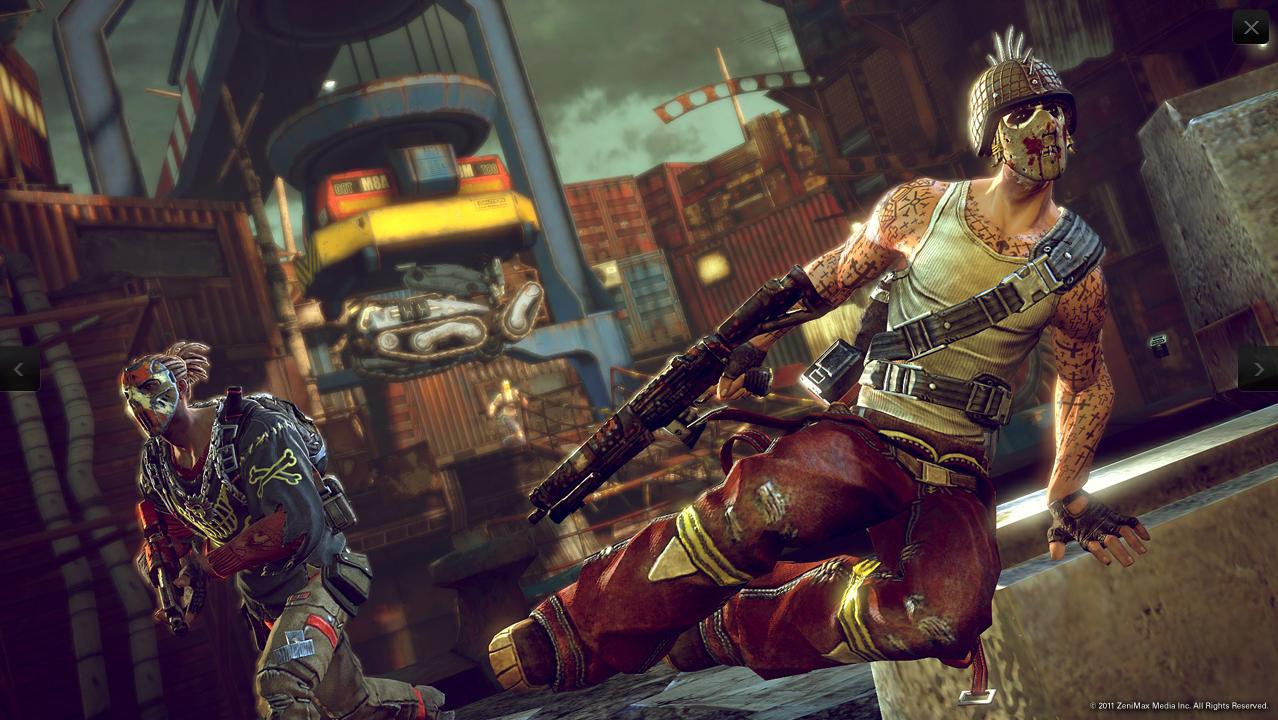
One of the things we did – for instance there’s a level called Container City and it’s a kind of slum – and if you go there as Security you’re told ‘They’re building a bio weapon, you’ve got to get this thing,’ and that’s a pretty important reason to go and get that thing, fair enough. But if you’re as Resistance you get told ‘They’re stealing our vaccine.’ So hopefully they care about that. Or my personal goal if they’re paying attention to the story – and lots of people don’t, that’s another thing – is they go which is it? And we’re never going to tell you definitively and it’s entirely plausible that it’s both because what do you make vaccines out of other than viral particles which could be used as a bioweapon?

The goal was that it wasn’t just ‘Take objective to place B,’ that we were going to dress it up in a fiction, so that even though it’s all just chaotic being shot in the head action, the narrative carries on even though the cinematic was over. That was the challenge.Brink

And what was the thinking behind adding the alternative game endings as missions?

Well we didn’t want to privilege one story over the other: if you win fantastic, if not that other thing happened. We didn’t want there to be a canonical ‘this is correct and all the other ones are wrong.’ Actually it turns out there is kind of a storyline but we didn’t want to collapse all the possibilities down unless we absolutely had to.

I think it’s a problem with lots of games that in their urge to explain everything they kind of explain everything away and it’s like an equation where it all factors out and there’s nothing left, it just goes, and it’s an exhaustive explanation of what’s going on and there’s nothing left to think about. So we quite like that there were these loose ends and the loose ends themselves would join up, and so players should have questions should have questions about ‘Why are they doing that?’ If they’re of a disposition to listen to audio diaries, ‘Oh that’s what that was about!’ Even if players aren’t into that I think they can sniff it in the time and trouble that’s been taken.

So that was the goal, even if people didn’t watch all of the cinematics or read all of the diaries, somebody has done the work and it does all add up to something.

Looking back at a Brink, if you could change anything, what would it be?

We weren’t able to do it, unfortunately, but it was very much the plan that you would be one of the characters in the cinematics, it would be you doing those things. But because we really wanted to let people choose their voice packs; that would’ve meant recording every line of dialogue in every single one of the voice packs and we just didn’t have the budget to do it. That I think would’ve changed the sense of story, because it would’ve been you going through it, not just three guys you might or might not care about. That would’ve been one thing that would’ve changed the meaning of the game and it’s a shame we weren’t able to do that.

Read part 2 of our huge interview with Ed Stern here.

Leave your comments here on the Train2Game blog, or on the Train2Game forum.

For more information, go to www.train2game.com

BAFTA’s public events and online resources bring you closer to the creative talent behind your favourite games, films, and TV shows. Find out more at www.bafta.org/newsletter, www.facebook.com/bafta or twitter.com/baftagames

Train2Game & Epic Game Jam interview: Train2Game Artist & Animator Amanda Blatch

Train2Game & Epic Games gave Train2Game student teams the opportunity to win one of four places at The Gadget Show Live 2012 and compete for the chance to walk away with a fully licence Unreal Development Kit.  

Train2Game Art & Animation student Amanda Blatch (derelict-technica on the Train2Game forum) was one of those Train2Game students taking part. We had a quick chat with her during the Train2Game & Epic Game Jam to see how she was finding it.

Read it here, on the Train2Game Scribd, or listen via Train2Game radio

Find out more the about Train2Game & Epic Game Jam over at Unreal Insider.

We’re at about the half-way stage of the Train2Game & Epic Game Jam, how is it going?

It’s going quite well except for a few system crashes, but we’ve luckily regularly been saving so we haven’t lost too much, so yes, it’s going quite well. We will hopefully get it done in time.

So you’ve learned the importance of constantly backing things up with the system crashes, and was there a bit of a panic when that happened for the first time?

No, because I was going around at the beginning always saying save this, save that and I was getting on everyone’s nerves! So now everyone does it so I don’t bother them anymore.

The big question is have you actually slept yet, and if not, how are you finding it?

I haven’t slept yet, how many hours are we into this actually? I’ve lost track of time.

There’s about 28 hours to go.

I’ve done 36 hours in the past, I reckon I can still keep going because I’ve still got caffeine in my system!

What did you think about the Guy Fawkes theme when it was announced here at the Train2Game & Epic Game Jam?

Should have seen it coming, really should have seen it coming. But luckily our team name fits the theme very well, which is Pryomation.

How did the first team meeting go after the theme was announced? What did you focus on, and was it a challenge to come up with something?

I think we’re all into similar sorts of games so it wasn’t much of an issue. We came up with a concept then about two hours in suddenly ideas changed, then we went back to our original concept seeing as how much we’d already developed it. We learned that keep to the idea we know best rather than doing something new and ruining everything.

There’s a big prize for the winners of the Train2Game & Epic Game Jam as Mike Gamble announced in the opening ceremony, what would it mean to you if your team got to The Gadget Show Live next year?

A few people in my team weren’t aware of this prize and when they heard about it they were shocked for a long time afterwards, it drove them more into wanting to win this game jam. That’s why most of us have stayed up and haven’t slept yet and only two people crashed because they had to sleep.

How have you found the experience of game jamming, do you think it’s actually going to help you develop as an artist?

Yes it is. I’m learning quite a lot of new things from other people here because back at home you don’t have anyone else to talk to. Here you have help all the time and it’s really good and helpful.

It’s been a positive thing then, being able to meet up with 150 other Train2Game students?

I haven’t actually spoken to most of them yet because we’ve been so busy, only my team and a few others I knew from Eurogamer. I think we’re all set into winning this competition with such a huge prize that everyone wants their fame and fortune!

Judging by your experience so far, if you could do another Train2Game Game Jam in future, would you take the opportunity?

Hell yes! It’s really good fun.

Great, thanks for your time.

Thank you.

For more information go to www.train2game.com

Train2Game at Eurogamer with Professor at Brunel & Games Workshop co-founder Steve Jackson

Train2Game at Eurogamer with Professor at Brunel & Games Workshop co-founder Steve Jackson

In early 1975, Steve Jackson co-founded the company Games Workshop with John Peake and Ian Livingstone. In 1980, he created the line of the Fighting Fantasy game books published by Puffin Books (a subsidiary label of Penguin Books) with Livingstone. Jackson is now a director at Lionhead Studios, which he founded with Peter Molyneux. He is also an honorary lecturer at Brunel University in London, teaching Digital Games Theory and Design MA.

More information from http://www.train2game.com

Train2Game at Eurogamer with Gamesbrief founder Nicholas Lovell

Train2Game at Eurogamer with Gamesbrief founder Nicholas Lovell

The Train2Game blog interviewed Nicholas Lovell almost exactly a year ago, read the huge feature here.

Nicholas Lovell is a former investment banker and web entrepreneur who helps games developers become publishers. He also provides strategic and online marketing advice and is a non-executive director at developer nDreams. Clients have included Atari, Channel4, Channelflip, Dynamo Games, Firefly Studios (who recently self-published MMO Stronghold Kingdoms), IPC Media, Rebellion and Square Enix. He is the author of How to Publish a Game and blogs about the business of games at http://www.gamesbrief.com.

More information from http://www.train2game.com

Train2Game & Epic Game Jam interview: Epic’s European Territory Manager Mike Gamble

Train2Game & Epic Games gave Train2Game student teams the opportunity to win one of four places at The Gadget Show Live 2012 and compete for the chance to walk away with a fully licence Unreal Development Kit.  

Epic’s European Territory Manager Mike Gamble was one of the game jam judges, and the Train2Game blog managed to grab him for a chat. In this extensive interview, Gamble talks about Epic’s involvement with the Train2Game Game Jam, UDK, the future of the industry and much more.

Read it here, on Train2Game’s Scribd site,  or listen to it via Train2Game Radio. (Part 1, Part 2)

You can also read Mike’s blog about the Train2Game & Epic Game Jam over at Unreal Insider. Leave your comments here on the Train2Game blog, or on the Train2Game forum.

We’re here at the Train2Game & Epic Game Jam, can you tell us a bit about Epics involvement with the event?

We’ve been talking with Train2Game about using UDK in their curriculum, as a quite separate item talking about a game jam at The Gadget Show Live and so a natural point of choosing the teams was to be involved in the game jam here.

Tell us about the prize that’s up for grabs at Make Something Unreal Live at The Gadget Show.

There’s a commercial Unreal iOS license up for grabs for the winning team, which essentially means it’s a source code license rather than binary which will allow the winning team to create a game for commercial distribution.

So why do Epic want to get involved with Train2Game and get UDK in the course?

In a purely non philanthropic manner, the more people that use UDK, the more people who are familiar with our tools, the better they are to go into the industry where our engine is pretty ubiquitous.

Can you tell us a bit about the UDK engine which is available for free to anyone to use?

You can download it from www.UDK.com. It’s completely free, you only have to pay anything when you actually commercialise your output, at which point you’d pay us $99 and then a 25% royalty after you’ve collected $50,000. So basically, if you’ve built yourself a little app, a little game, or whatever really using the technology, on PC, or iOS or Mac, you can put it out there on Steam or the iTunes App Store and make a little bit of cash off it.

So it’s been quite successful for teams doing that then?

Yeah, it’s been very successful, we’ve had some cracking titles, quite surprisingly professional let’s say, and there’s some decent money to be made. But often what we find is a development team will start using UDK, and then by the time they’ve finished the project, they decide to swap over to a commercial UE3 license and we have a path for them to do that and some of them have been incredibly successful.

UDK Train2Game blog image

So what are the benefits for Train2Game students of taking parts in events like this, the Train2Game & Epic Game Jam?

Well I think it gives them a real crash course in UDK, it gives them a crash course in games development, it also gives them a crash course in teamwork among people they don’t know in teams selected for them, which was definitely useful for preparing them for going into the jobs market.  And ultimately the benefit for the winners is they go onto The Gadget Show Live and I think everyone who competes there, whether they win or not, stands a very good chance of getting into the industry in a professional manner.

At the time of recording we’re pre-judging, what will you be looking for in the winning games?

Obviously we’re not looking for finished, polished, Triple A sellable games, that would be ridiculous. We’re really looking at a number of criteria: adherence to the theme we’ve set, completeness of the game insofar as the limits to what they can do in this time. But something that’s small and polished and works is preferable to something that’s huge rambling and buggy. We’re looking for the professionalism of the teams, we’re looking for the quality of the games. There are about 6 or 7 parameters we’re scoring out of a hundred in total.

And for everyone involved it’s good that they have a finished product they can show potential employers?

Exactly! Perhaps the most important thing any student can do for themselves is build a portfolio of work. It’s all very well being qualified, but at the end of the day you have to differentiate yourself from every other qualified person, and if you’ve got a kick arse portfolio that’s really going to help.

A little bit about you now, tell us about your role at Epic.

I manage Europe, for Epic, on the technology and licensing front. That means I promote and sell Unreal Engine 3 licenses to developers big and small.

Earlier this year we saw Unreal’s ‘Samaritan’ tech demo, what was the thinking behind producing that? Does it show the future of the industry?

It shows a future. For us it was…well, we’ve called it our love letter to the hardware manufacturers. It shows what can be done with a level of hardware. It was built using PC Direct X 11 hardware that’s available off the shelf today, and it was us saying ‘Look, if you built this into the next generation of consoles, this is what we could do. Obviously we can’t say ‘You must do this,’, and the hardware manufacturers haven’t hold us what they’re doing, but it was for us to stimulate some thinking about what might be possible.

The Samaritan Train2Game blog image

And it goes against those that keep claiming that ‘PC gaming is dead’ when that tech is available on PC?

Yeah totally, PC gaming is not dead by an incredibly long chalk. You only have to look at the popularity of Steam, it’s different now, it isn’t not boxed products, but there’s a PC game for every single person, in a sense it’s  gone niche. You can get a PC game for a hardcore train guy, you can get a PC game for a hardcore RTS guy, there’s everything there, it’s just not available off the shelf, it’s available digitally.

So the PC is a good avenue for people, Train2Game students for example, to get a game out there.

Yes. On PC, Steam is a fantastic way of getting games out into the market and testing the waters. The iTunes App store is also fantastic. Anywhere where you don’t have to have a license from the hardware manufacturer and there’s a market base built is a great way to get your product out.

And how has iOS changed the industry in the last few years?

I think it has made everybody think twice about what a game is. From a development point of view, it’s meant that again there’s the opportunity for small developers to create some very interesting content and make some good money outside of the traditional publisher model, which is incredibly important for nurturing the growth of the industry.

How do you see that developing?

Tricky one that. You could argue there’s been a gold rush and now it’s very difficult to set yourself apart.  I think these things will evolve, they’re(smartphones and tablet computers) going to get more and more powerful and there will be a point where it’s possible for you to essentially have, for all sense and purposes, have the power of a console on your tablet, plug that into your TV, play it with a remote. It kind of changes what a gaming device is and I think that’ll only continue to accelerate.

How did you get started in the games industry?

Well, in real life I’m a mechanical and production engineer, I worked in the Ministry of Defence for ten years and then I worked in the toy industry. Then in the mid 90s I decided to swap over to the video games industry which was at that point becoming slightly professional, and so I joined as a Producer, basically.

And what advice would you give to those looking to get into the industry?

You have to get qualified. I think the days of being able to wing it are gone. But like I said before, portfolio: it doesn’t matter if you’re a designer, programmer, musician, whatever it is you want to do in games, you need to build a portfolio of the stuff you have done yourself.

And UDK can help that with modding?

Totally, yes! Creating mods is a really, really great way of getting a great portfolio. It’s really hard to build a product from the ground up, but as an individual you can mod, and that’s a really good way of doing it.

Great, thanks for your time. 

Thank you.

For more information go to www.train2game.com