Train2Game news: Mass Effect 3 senior writer on getting into the games industry

Train2Game students looking to get a job in the industry should be playing games, and anaylsing their strengths and weaknesses as they do so. That’s according to Mass Effect 3 senior writer John Dombrow.

“Find what you’re good at and then keep getting better at it. Whether it’s writing, designing levels, creating sound FX, doing concept art – you’re only as good as your product.” he told the BioWare Blog.

“You should play games all the time, see what works, what doesn’t, and learn from the successes and failures of others.” he said, before adding that getting ahead in the industry, to for example, become senior writer for Mass Effect 3, takes a lot of work.

“But also be realistic – you’re not going to land your first job in the industry as Lead Designer. Be prepared and willing to work hard starting from the ground floor, improve your craft, and eventually you can get where you want go.” Dombrow said.

The full interview is over on the BioWare Blog, and should provide interesting reading for Train2Game students, as the Mass Effect 3 writer discusses the best part of his job, his average day and more.

The Train2Game Blog has previously spoken to BioWare co-founders Dr. Ray Muzyka and Dr. Greg Zeschuk, who offered Train2Game students their own advice on how to break into the games industry.

There’s more news from BioWare  here on The Train2Game Blog, where you can also find plenty more advice from industry professionals on getting into the industry.

What are your thoughts on the advice from the Mass Effect 3 senior writer? Do you already analyse the games you’re playing?

Leave your comments here on The Train2Game Blog, or on the Train2Game forum.

Train2Game news: Next-gen consoles won’t solve ‘creative problems’ of games says Warren Spector

Train2Game students might be eagerly anticipating news of next-gen consoles, but the arrival of PlayStation 4 or Xbox 720 won’t help solve the most common problems of game design in video games.

At least that’s according to Deus Ex creator Warren Spector, who is currently working on the recently announced Epic Mickey 2: The Power Of Two for Nintendo Wii, PlayStation 3 and Xbox 360.

“If it comes, it comes; when it comes, it comes,” he told Edge on the on subject of next-gen consoles.

“I’m not a tech guy, particularly. I’m a design, story, character guy. I think most of the problems we have to solve are creative ones, not technical ones.” said Spector, not revealing what he believes the creative problems of game design are.

“Obviously we make software, so there’s always a technical element to what we do, but I will make games that do whatever I want them to do at the end of the day, and I will use whatever technology available.” the Deus Ex creator added.

Other developers, such as Epic Game’s Cliff Bleszinski, have previously stated they’d like next-gen consoles to come with extremely high-end technology.

For the latest news and reports about next-gen consoles, keep reading The Train2Game Blog.

So, what are your thoughts on Spector’s comments? Should developers be focusing on creative problems rather than technical ones?

Leave your comments here on The Train2Game Blog, or on the Train2Game forum.

Train2Game student industry experience diary: Chris Robinson at AppCrowd – Week 4

Train2Game Game Designer Chris Robinson is on a Train2Game work placement at AppCrowd. In his latest industry experience diary, Chris discusses designing levels and carrying out all important research.

Read what he has to say about his Train2Game work placement  here on The Train2Game Blog, or on the Train2Game Scribd page.

You can read previous entries from Chris here, while there are also plenty more industry experience diaries from other students on the Train2Game Blog.

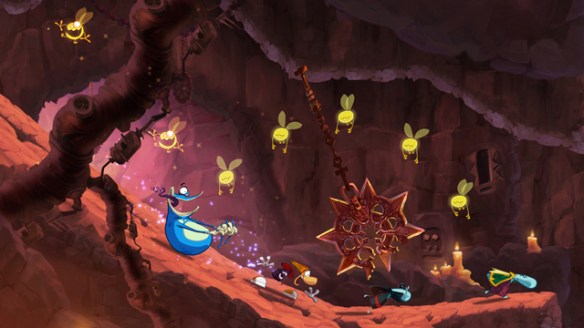
Train2Game news: Rayman Origins developer on benefits of ‘less is more’ game design

Train2Game game designers should find Rayman Origins designer Chris McEntee’s discussion of Ubisofts ‘rational design’ interesting, as he explains how he believes its key to success in game design.

“Rational design is all about eliminating unnecessary information, making things inherently readable, understandable and apparent, introducing mechanics in an orderly and easily digestible fashion, and preserving the learning and difficulty curves of a game, known as macro flow.” McEntee told Gamasutra in a huge feature on game design.

“In principle, it is best to provide a player with significantly interesting and deep mechanics that are well explored and exploited through clever rationalized level design, rather than injecting the game full of one-shot gameplay mechanics to feign depth.”

The Rayman Origins designer added that when it comes to game design, keeping it simple with a less is more approach is a good philosophy to follow.

“We try, as designers, to overstuff our games with content, ideas and objectives because we think that makes it more clever or fun,” said McEntee.

“When we rationalize our game systems and keep things simple but deep, we can truly create a good and meaningful gameplay experience that is also efficient for the team and easy to troubleshoot through iterative play-testing.

“I feel that rationalization is one of the keys to success in the game design field.” he added

Train2Game students can read the full 8 page feature on game design over at Gamasutra.

What are your thoughts on the idea of less being more as a philosophy for game design?

Leave your comments here on The Train2Game Blog, or on the Train2Game forum.

Train2Game student industry experience diary: Craig Moore at DR Studios – week 17

Train2Game Game Designer Craig Moore is on a Train2Game work placement at DR Studios. In his latest industry experience diary, he discusses being busy and the advantages and disadvantages of taking risks.

Read what Craig has to say about his Train2Game work placement  here on The Train2Game Blog, or on the Train2Game Scribd page.

Train2Game news: The Witcher 2 makes you “face the consequences of your actions”

Train2Game Blog readers who play The Witcher 2 will need to “face the consequences of your actions” whatever decisions you make when the RPG gets its Xbox 360 release.

That’s what lead level artist Marek Ziemak told CVG about the game that CD Projeckt have previously described as “The most complex and non-linear story ever told on Xbox 360″

“The spine of our whole game is the storyline and it’s a dark fantasy world where you have to make choices, then later on you have to face the consequences of your actions.” said Ziemak.

“We were looking for a way to make those consequences meaningful and really important for the players. To show that, we sometimes have to kill some characters, sometimes burn places and sometimes make huge changes in the game’s world.”

When asked if that meant CD Projeckt were making parts of the story that might only be seen by a handful of players, Ziemak responded that no matter what, players need to see what consequences their decisions have.

“It’s not always enough to tell you that someone died because of your choice, we want to show you those consequences, because you’re the man deciding, then we have to be prepared that you choose one option or the other.” he said.

“We may have to create twice as much content, but then, there’s twice as much fun!” The Witcher 2 developer added.

Find out more about the development of The Witcher 2: Assassin’s of Kings in The Train2Game Blog’s own interview with lead level artist Marek Ziemak from Gamescom last year.

Train2Game students have the opportunity to question The Witcher 2 developers CD Projekt during a special Q&A event at BAFTA next month. There’s more information about it here on The Train2Game Blog.

What are your thoughts on Ziemaks comments about consequences in The Witcher 2? Is it something that game developers need to put more focus on?

Leave your comments here on The Train2Game Blog, or on the Train2Game forum.

Train2Game interview: SoulCalibur V game director Daishi Odashima

Train2Game recently sat down for a chat with SoulCalibur V game director Daishi Odashima. In this interview with The Train2Game Blog, Odashima discusses development of SoulCalibur V, ongoing plans for DLC, the importance of community feedback and more. He also reveals what he thinks makes a good game designer!

Read the interview right here on The Train2Game Blog.

Tell us about your role as game director.

I’m game director for SoulCalibur V and I’ve been in the team since SoulCalibur III. On SoulCalibur IV I was a game designer, in charge of character designing in game design. In SoulCalibur V I’m the director.

How do you go about designing SoulCalibur V so that all the characters are balanced?

Basically, we see how the players play, and if the players feel that some characters are too strong then we would tone them down. Of course, if they’re too weak vice versa. For SoulCalibur V, we have chances for players to play before the game is out, where there isn’t a full roster of characters, but we have them play and get their feedback. We use that to balance our characters.

So, testing is a huge part of development before the game is released?

It is an important thing but it isn’t the only thing. Like if we receive feedback over a certain character being too strong, we test it in our own development, we play against each other and sometimes we agree, sometimes we disagree but the final decisions I make. So if I feel [a character] is too strong, then it’ll be balanced.

In the latest update, some characters have been tweaked following user feedback. How important is community feedback, and will that continue to be important for SoulCalibur V?

It’s really important because in our development we only have less than ten people balancing the character. On the other hand you have more than a million, maybe two or three million, playing and they upload their tournament videos, they write opinions on forums and of course we check all that sort of stuff and it’s really important. But it’s not just taking their opinions, we have to gather them up and we have to come up with the final decision, so it’s really important.

Tell us about the plans for SoulCalibur V DLC.

There’s lots of DLC to come for SoulCalibur V to use in the creation mode, which should be coming every four weeks and there are tonnes of parts to come.

Speaking of creation mode, SoulCalibur V players have uploaded many costumes and characters, can you see yourself taking a community created costume and adding it as official DLC?

We look at them and we think that they’re interesting, but we don’t simply take them, we look after it. Also, we have lots of costume designs that weren’t used for SoulCalibur V that can maybe be used for SoulCalibur VI, and basically these designs are determined by the designers who have the final say.

What was the the reason for focusing SoulCalibur V’s story on two characters, rather than the whole roster?

Our first plan on the storyboard was that we had every characters story, and actually we do have it in the studio, but time-wise, man power-wise we weren’t able to do it and only one fourth of what we planned to do is in the game.  Actually, some of the voice-overs are already taken but haven’t been used, so we want to make use of it somehow, but we don’t know how that’s going to be.

What are you most proud of about SoulCalibur V?

I feel that SoulCalibur V is the best fighting tool in this world. For online mode, the lobby system is really made well, also we truly believe that after the character balancing patch it’s going to be a lot better, and I’m pretty sure that any people who are really competitive, or if you’re just starting a fighting game,  can enjoy SoulCalibur V as a fighting tool.

A bit about you now, how did you get started in the games industry?

I was invited by a friend to a QA section at another game developer. From there another friend at Namco, who was originally a SoulCalibur competitive player, invited me to the SoulCalibur team for character balancing, and well, here I am now.

What advice would you give to anyone looking to get into the industry?

Well, my case was really special because I was invited as a specialist of SoulCalibur and this is a rare case. But what I think is important in becoming a game designer being able to describe what is happening within the game: what is fun, the logic behind it and also the communication skills to be able to explain this to other people.  Those skills are really needed to become a game designer.

Thanks for your time. 

As usual, leave your comments here on The Train2Game Blog, or on the Train2Game forum. Many more Train2Game interviews can be seen here. 

SoulCalibur V from Namco Bandai is out now for Xbox 360 and PlayStation 3.
Train2Game student industry experience diary: Craig Moore at DR Studios – week 15

Train2Game Game Designer Craig Moore is on a Train2Game work placement at DR Studios. In his latest industry experience diaries, he details what he’s been up at the Milton Keynes based game developer and how excited he is to be there.

Read what Craig has to say about his Train2Game work placement  here on The Train2Game Blog, or on the Train2Game Scribd page.

As usual, leave your comments here on The Train2Game Blog, or on the Train2Game forum.

More Train2Game industry experience diaries are right here on The Train2Game Blog. 

Train2Game news: “It’s a really interesting time” to be a game designer says Molyneux

peter-molyneux-train2game-blog-imageTrain2Game students are looking to enter the industry at what’s an especially interesting time. At least that’s the case if you believe Peter Molyneux’s comments in an interview with Game Informer.

“I think it’s a really interesting time. We as game designers now have to really put our thinking caps on, because there’s a lot of stuff that we need to get our teeth into.” said Molyneux, who recently left his positions with Lionhead and Microsoft to concentrate on new projects.

He singled out cloud gaming and free-to-play as some of the most interesting issues for game designers.

“We have to get into all the cloud stuff, we’ve gotta get our teeth into monetizing and the digital relationship with customers.” he said.

“The difference between retail and free-to-play and how that’s gonna evolve, we’ve got multi-device play, we’ve got totally new ways of interacting with the experience.” said the respected game designer, adding that it’ll take some time for game designers to work through all the different developments.

“All of that has to be solved, designed, and delightful experiences have to be made. It’s going to take us quite a long time to get through that lot.” he added.

“On the horizon, I predict that we’ve just started looking at different devices. I’m sure there’s going to be a lot more input devices coming along, and I just think it’s a really interesting, fascinating time in the industry.” Molyneux concluded.

Train2Game students can read the full, fascinating, interview with Peter Molyneux over at Game Informer.

There’s more Peter Molyneux news right here on The Train2Game Blog, including his advice on how to get into the games industry.

Of course, Train2Game offers a course in game design, which you can find out more about here. 

What are your thoughts on Molyneux’s views? Do you agree that it’s an especially interesting time to be a game designer?

Leave your comments here on The Train2Game Blog, or on the Train2Game forum

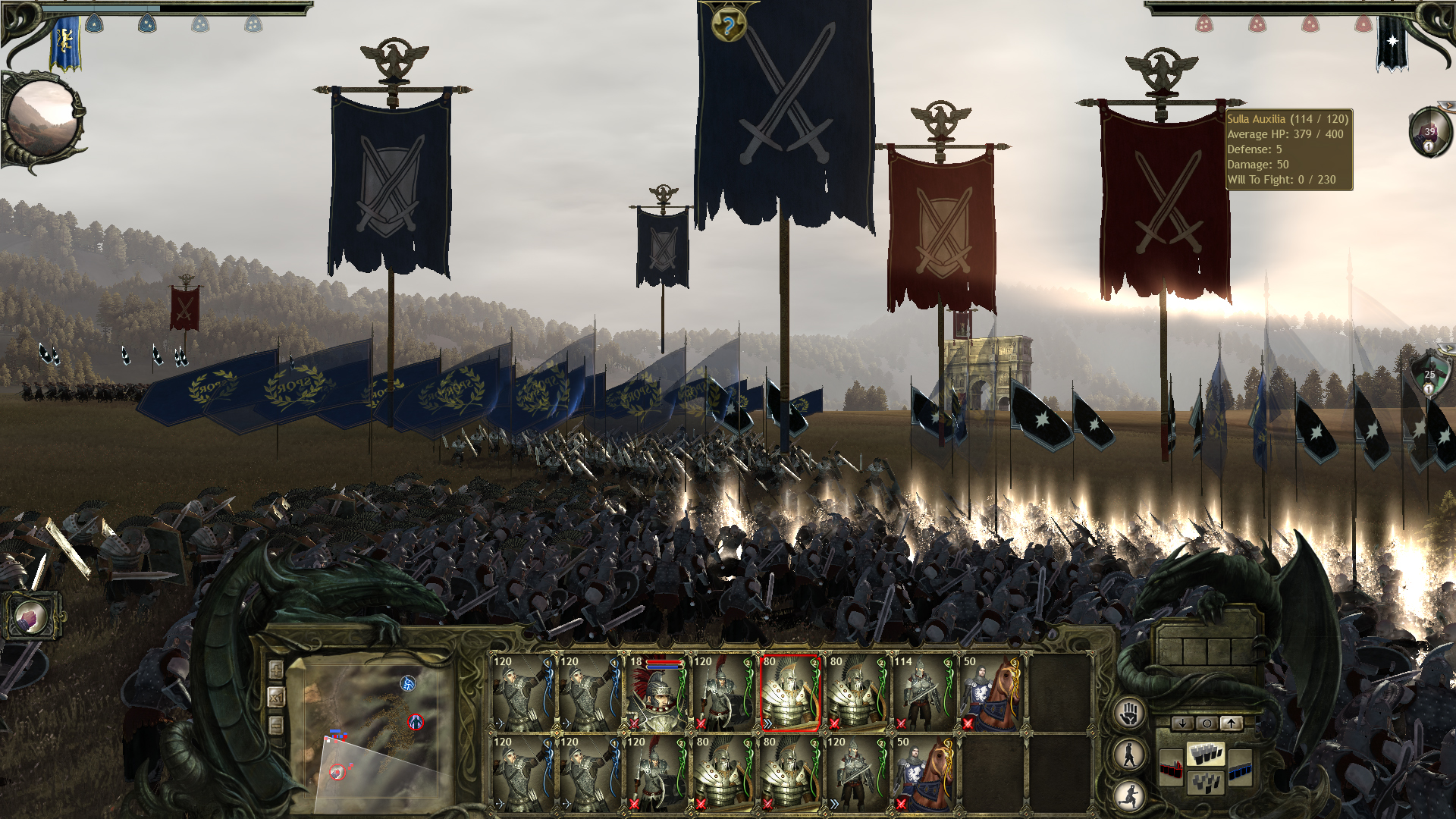
Train2Game interview: Neocore Games on the making of King Arthur II: The Role-playing Wargame – Part 1

Train2Game recently caught up with Neocore Games, developer of King Arthur II: The Role-playing Wargame, an RTS and RPG hybrid that was released through Paradox Interactive earlier this year.

In an extensive interview, Neocore PR and Community Manager Orsolya Tóth discusses the story behind King Arthur series, the development of King Arthur II, the importance of digital distribution and much more.

Read Part 1 of our interview with Neocore Games right here on the Train2Game Blog, or on the Train2Game Scribd page. You can see part two of our two part interview here. 

Hi there, first of all, tell us a bit about Neocore Games?

Neocore Games is a computer and video game publishing and production company with a development studio located in Hungary. We are developing strategy games for PC since 2005, our previous titles are “Crusaders: Thy Kingdome Come”, “The Kings’ Crusade” and of course “King Arthur – The Role-playing Wargame” and the recently released “King Arthur II” which is naturally also a Role-playing Wargame.

For those new to the series, let us know about the original King Arthur.

King Arthur – The Role-playing Wargame is a strategy game with many RPG elements. It has a turn-based 3D campaign map with various locations that grant special traits, and huge real-time battles. King Arthur is set in the ancient South Britannia and your task is to unite the divided kingdoms. You are Arthur, the Once and Future King of all Britannia and you gather and lead your knights to achieve your goal. You can recruit various different types of troops, but there are also special unique units called heroes.

The quests, written by professional fantasy writers, play a very important role in the game because they represent the main storyline and the decisions you take on these quests determine your morality. Every decision affects your position on the Morality Chart, you can be a ruthless Tyrant or a Righteous ruler and you can follow the Old Faith or become a devout Christian. As you follow your morality path and get higher morality scores, you unlock special new spells and units.

King Arthur has a fantasy setting, so magic plays a very important role in the game including in the battles. Your heroes learn skills and spells during winter turns when all your enemies and also your own units are resting. In winter you also have to manage your economy and build your stronghold to collect the two resources, food and gold.

Did the extent of King Arthur’s success come as a surprise to Neocore Games?

A little bit, yes! But I have to admit that we did hope that it would amuse the community. We were already quite fascinated by the game’s story and the genre mix we created with all the new features such as the text-adventure quests or the Morality Chart.

King Arthur was well received by critics and gamers alike, so what changes and improvements have been made to King Arthur II?

There are several improvements we’ve made in King Arthur II based on the feedback we received from the players. The Campaign Map is twice as big as it used to be in King Arthur, as you have to unite the provinces of the Northern and Middle regions of Britannia as well. Scotland is also included.

We have a brand new, in-house developed engine called Coretech 3D 2. It can render up to 3000-4000 highly detailed soldiers at the same time on a highly detailed battlefield. Thanks to the new engine the army movement is also improved and the whole game is more stunning.

There are more various fantasy creatures in King Arthur II than in the first game. A great improvement is the dragons and other flying units both on the enemy’s and on your side, it means more tactical possibilities because they are fast and the battle has two levels, the air and the ground level. You can fly across the rivers, buildings and various other objects and you can fight in the air as well as on the ground at the same time.

In King Arthur II we are introducing a new, more balanced magic resistance and spell casting system. Every army has its own magic shield, which is affected by some spells, locations, unit skills and artifacts. First you have to decrease it for using your spells with low spell penetration. The casting time of the grandiose, lethal spells gives you the chance to defend yourself with the interruption of the caster hero.

We have several other improvements in King Arthur II like the new artifact management with the artifact forge, the upgradable locations, the brand new diplomacy or the Victory Locations, which give you global bonuses and spells, so you can use them now on the entire battlefield, not only around the VL. And there are many more improvements you should definitely check out in the game.

What are the main challenges in development in combing King Arthur II’s RTS and RPG elements of game design? How do heroes impact on battles?

The biggest challenge is finding the balance so the gameplay remains fluid and fresh.

King Arthur featured some epic monsters, have more been added to the sequel? If so, how did you go about deciding what to add?

There are a lot more monsters in King Arthur II. You will see some beasts reappearing from the first game, but we have added many new as well. When we decided what we wanted to add, we took into consideration the background and the story of the game, the dark fantasy setting and we stretched our imagination to the edges. And the new monsters were born.

 Leave your comments here on the Train2Game Blog, or on the Train2Game forum.