Train2Game news: Ghost Recon: Future Soldier creative director on the complexity of AI coding

Coding AI is the most difficult part of developing Ghost Recon: Future Soldier. That’s according to the game’s creative director Jean-Marc Geoffroy, who recently offered Train2Game students advice on getting into the industry.

“When we started to work on co-op the first main issue was AI.” he told Beefjack about the team focused Ghost Recon: Future Soldier.

“And it was very simple, as you have a lot of shooters where the AI is player-centric, so the AI knows where the player is, but we were not able to do so because with four human players you don’t know what they are doing, especially as the levels are pretty open, so you don’t know.”

The details about coding will no doubt be of interest to those on the Train2Game game developer course.

Geoffroy said Ubisoft had to code the AI in a way that meant that it wouldn’t know if when looking at a four man squad, it was seeing a human or fellow AI player.

“What we have decided to do – and  really, what the most difficult challenge was – is that the AI will not know where the player is unless it sees the player, and will never know if the player is an AI teammate or human being.” said the Ubisoft Creative Director.

“It sounds stupid to say that but it’s a very, very important point. When your AI doesn’t know who is behind the ghost, it changes everything in terms of how you code, how you programme the AI.”

“So, the AI is basically reacting according to its own life, the situation, and the coordination between all the AI.” he added.

There’s much more about Ghost Recon: Future Soldier here on The Train2Game Blog, including this interview from Gamescom last year.

What are your thoughts on the complexity of the code for Ghost Recon: Future Soldier?

Leave your comments here on The Train2Game Blog, or on the Train2Game forum.

Train2Game news: Job interview advice from Crytek UK

Train2Game students often apply for jobs in the industry. So, for those fortunate enough to get interviewed for a full-time position in game development, here’s some excellent advice on echnique from Nottingham based Crytek UK, developers of Crysis 2 and the upcoming Homefront 2.

“Research the company you are applying for, know what business they are in, what games they make and what makes them good at doing this.” Crytek Lead Programmer Richard Semmons told Develop in their April recruitment spotlight, adding that potential employers are impressed if you know the company.

“We’re always impressed by people that have taken the time to understand why they want to get a job with us rather than just because it was a mail shot to every company out there.”

If getting interviewed for a job, Semmons suggests having questions to ask the staff conducting the interview is also helpful.

“Prepare questions. You will most likely be sat in front of leads or directors within the industry, these guys will have a wealth of experience and if nothing else comes of your interview, ask questions to further your development or understanding of the jobs you are going for.”

He added that if the developer has a free engine that’s out there to use, then you should definitely use it, in another example of how modding is great for aspiring game developers.

“The CryEngine Free SDK is out there for people to experiment with. You have a chance to demonstrate your interest in the engine, an insight into how we work and how we utilise our technology; take it!”

Develop’s recruiter hot seat is sure to make interesting reading for Train2Game students looking for a job in the industry; you can read it in full here.

There’s more helpful advice from industry professionals on how to give yourself the best chance of getting that all important first job here on The Train2Game Blog.

What are your thoughts on the advice from Crytek? What interview advice would you give?

Leave your comments here on The Train2Game Blog, or on the Train2Game forum.

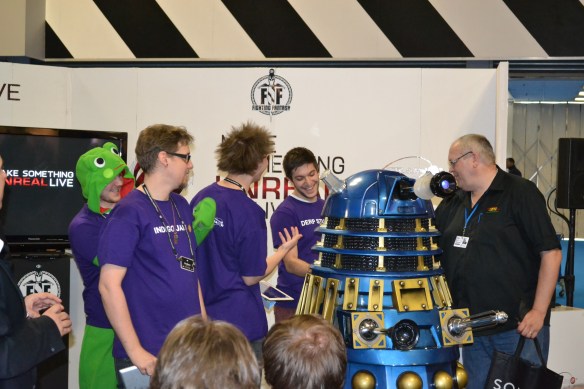
Look Who doctored a visit from a Dalek at the Train2Game stand at GSL?

Train2Game at Gadget Show Live gets a surprise visit from a Dr Who Dalek

Train2Game news: London studio Mediatonic to double in size, advertise 12 jobs

Mediatonic's Monster's Probably Stole My PrincessTrain2Game students will be interested to hear that London studio Mediatonic plans to double its size, with the game developer beginning by advertising ten new positions on their job page.

These include an internship that Train2Game students might be interested in applying for.

Mediatonic, a studio who specialise in developing games for digital platforms,  has moved to larger offices in Soho ahead of their planned expansion.

“Moving into offices in the heart of Soho has given us the room to grow, with a view to doubling our headcount by Christmas to just over 50 employees.” said Mediatonic Director of Games Paul Croft.

“With the success of some of our recent projects we’re experiencing an overwhelming demand for original game designs and to provide support for live games once they hit the market.” he added.

Paul Croft discussed Mediatonic, the benefits of game jams and more in an interview with The Train2Game Blog last year.

And as previously reported by The Train2Game Blog, the studio was named as one to watch by Industry Gamers.

There’s more on Mediatonic here.

What are your thoughts on the London studio’s planned expansion?

Leave your comments here on The Train2Game Blog, or on the Train2Game forum.

Train2Game interview: SoulCalibur V game director Daishi Odashima

Train2Game recently sat down for a chat with SoulCalibur V game director Daishi Odashima. In this interview with The Train2Game Blog, Odashima discusses development of SoulCalibur V, ongoing plans for DLC, the importance of community feedback and more. He also reveals what he thinks makes a good game designer!

Read the interview right here on The Train2Game Blog.

Tell us about your role as game director.

I’m game director for SoulCalibur V and I’ve been in the team since SoulCalibur III. On SoulCalibur IV I was a game designer, in charge of character designing in game design. In SoulCalibur V I’m the director.

How do you go about designing SoulCalibur V so that all the characters are balanced?

Basically, we see how the players play, and if the players feel that some characters are too strong then we would tone them down. Of course, if they’re too weak vice versa. For SoulCalibur V, we have chances for players to play before the game is out, where there isn’t a full roster of characters, but we have them play and get their feedback. We use that to balance our characters.

So, testing is a huge part of development before the game is released?

It is an important thing but it isn’t the only thing. Like if we receive feedback over a certain character being too strong, we test it in our own development, we play against each other and sometimes we agree, sometimes we disagree but the final decisions I make. So if I feel [a character] is too strong, then it’ll be balanced.

In the latest update, some characters have been tweaked following user feedback. How important is community feedback, and will that continue to be important for SoulCalibur V?

It’s really important because in our development we only have less than ten people balancing the character. On the other hand you have more than a million, maybe two or three million, playing and they upload their tournament videos, they write opinions on forums and of course we check all that sort of stuff and it’s really important. But it’s not just taking their opinions, we have to gather them up and we have to come up with the final decision, so it’s really important.

Tell us about the plans for SoulCalibur V DLC.

There’s lots of DLC to come for SoulCalibur V to use in the creation mode, which should be coming every four weeks and there are tonnes of parts to come.

Speaking of creation mode, SoulCalibur V players have uploaded many costumes and characters, can you see yourself taking a community created costume and adding it as official DLC?

We look at them and we think that they’re interesting, but we don’t simply take them, we look after it. Also, we have lots of costume designs that weren’t used for SoulCalibur V that can maybe be used for SoulCalibur VI, and basically these designs are determined by the designers who have the final say.

What was the the reason for focusing SoulCalibur V’s story on two characters, rather than the whole roster?

Our first plan on the storyboard was that we had every characters story, and actually we do have it in the studio, but time-wise, man power-wise we weren’t able to do it and only one fourth of what we planned to do is in the game.  Actually, some of the voice-overs are already taken but haven’t been used, so we want to make use of it somehow, but we don’t know how that’s going to be.

What are you most proud of about SoulCalibur V?

I feel that SoulCalibur V is the best fighting tool in this world. For online mode, the lobby system is really made well, also we truly believe that after the character balancing patch it’s going to be a lot better, and I’m pretty sure that any people who are really competitive, or if you’re just starting a fighting game,  can enjoy SoulCalibur V as a fighting tool.

A bit about you now, how did you get started in the games industry?

I was invited by a friend to a QA section at another game developer. From there another friend at Namco, who was originally a SoulCalibur competitive player, invited me to the SoulCalibur team for character balancing, and well, here I am now.

What advice would you give to anyone looking to get into the industry?

Well, my case was really special because I was invited as a specialist of SoulCalibur and this is a rare case. But what I think is important in becoming a game designer being able to describe what is happening within the game: what is fun, the logic behind it and also the communication skills to be able to explain this to other people.  Those skills are really needed to become a game designer.

Thanks for your time. 

As usual, leave your comments here on The Train2Game Blog, or on the Train2Game forum. Many more Train2Game interviews can be seen here. 

SoulCalibur V from Namco Bandai is out now for Xbox 360 and PlayStation 3.
Train2Game interview: Neocore Games on the making of King Arthur II: The Role-playing Wargame – Part 1

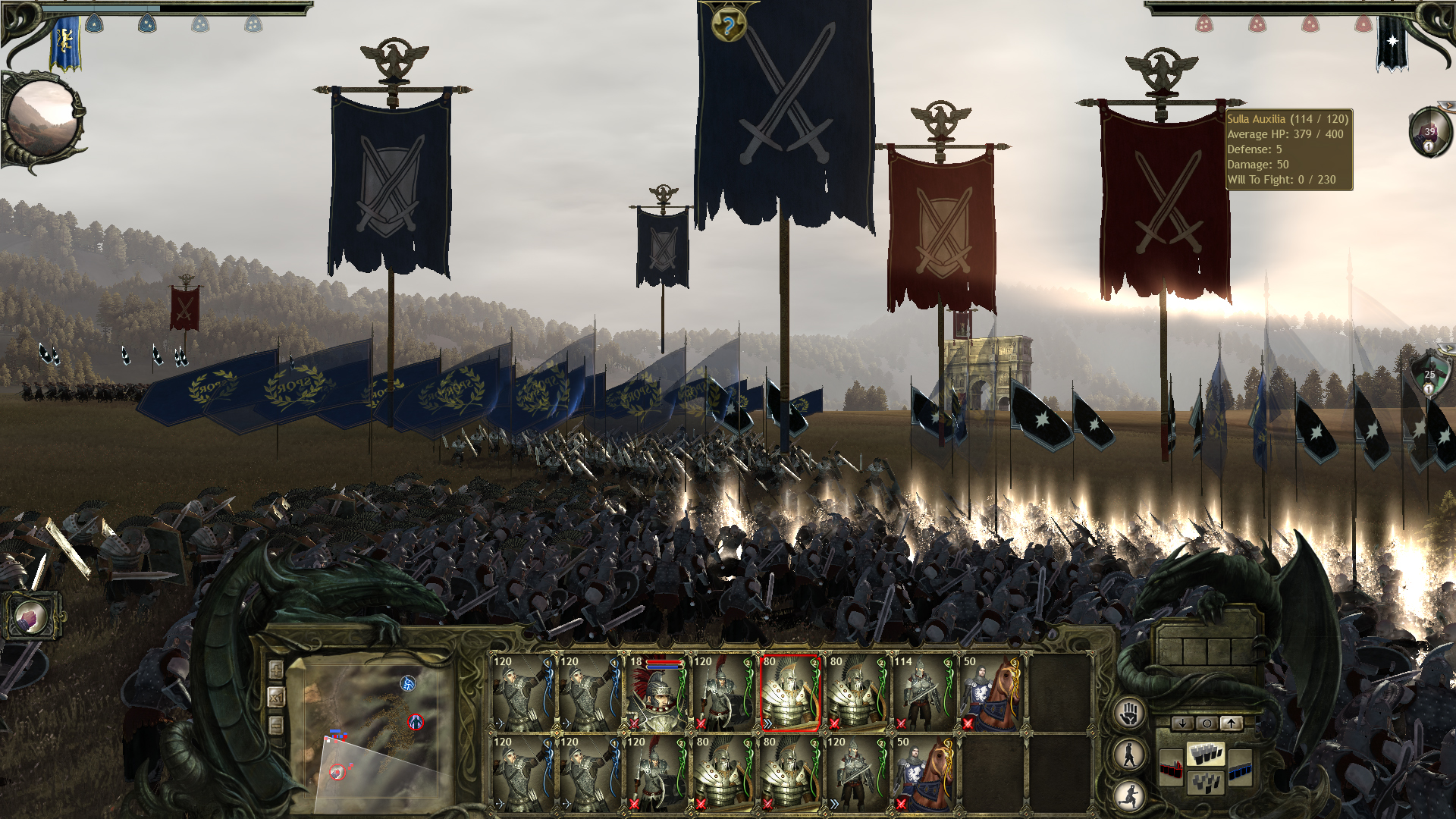
Train2Game recently caught up with Neocore Games, developer of King Arthur II: The Role-playing Wargame, an RTS and RPG hybrid that was released through Paradox Interactive earlier this year.

In an extensive interview, Neocore PR and Community Manager Orsolya Tóth discusses the story behind King Arthur series, the development of King Arthur II, the importance of digital distribution and much more.

Read Part 1 of our interview with Neocore Games right here on the Train2Game Blog, or on the Train2Game Scribd page. You can see part two of our two part interview here. 

Hi there, first of all, tell us a bit about Neocore Games?

Neocore Games is a computer and video game publishing and production company with a development studio located in Hungary. We are developing strategy games for PC since 2005, our previous titles are “Crusaders: Thy Kingdome Come”, “The Kings’ Crusade” and of course “King Arthur – The Role-playing Wargame” and the recently released “King Arthur II” which is naturally also a Role-playing Wargame.

For those new to the series, let us know about the original King Arthur.

King Arthur – The Role-playing Wargame is a strategy game with many RPG elements. It has a turn-based 3D campaign map with various locations that grant special traits, and huge real-time battles. King Arthur is set in the ancient South Britannia and your task is to unite the divided kingdoms. You are Arthur, the Once and Future King of all Britannia and you gather and lead your knights to achieve your goal. You can recruit various different types of troops, but there are also special unique units called heroes.

The quests, written by professional fantasy writers, play a very important role in the game because they represent the main storyline and the decisions you take on these quests determine your morality. Every decision affects your position on the Morality Chart, you can be a ruthless Tyrant or a Righteous ruler and you can follow the Old Faith or become a devout Christian. As you follow your morality path and get higher morality scores, you unlock special new spells and units.

King Arthur has a fantasy setting, so magic plays a very important role in the game including in the battles. Your heroes learn skills and spells during winter turns when all your enemies and also your own units are resting. In winter you also have to manage your economy and build your stronghold to collect the two resources, food and gold.

Did the extent of King Arthur’s success come as a surprise to Neocore Games?

A little bit, yes! But I have to admit that we did hope that it would amuse the community. We were already quite fascinated by the game’s story and the genre mix we created with all the new features such as the text-adventure quests or the Morality Chart.

King Arthur was well received by critics and gamers alike, so what changes and improvements have been made to King Arthur II?

There are several improvements we’ve made in King Arthur II based on the feedback we received from the players. The Campaign Map is twice as big as it used to be in King Arthur, as you have to unite the provinces of the Northern and Middle regions of Britannia as well. Scotland is also included.

We have a brand new, in-house developed engine called Coretech 3D 2. It can render up to 3000-4000 highly detailed soldiers at the same time on a highly detailed battlefield. Thanks to the new engine the army movement is also improved and the whole game is more stunning.

There are more various fantasy creatures in King Arthur II than in the first game. A great improvement is the dragons and other flying units both on the enemy’s and on your side, it means more tactical possibilities because they are fast and the battle has two levels, the air and the ground level. You can fly across the rivers, buildings and various other objects and you can fight in the air as well as on the ground at the same time.

In King Arthur II we are introducing a new, more balanced magic resistance and spell casting system. Every army has its own magic shield, which is affected by some spells, locations, unit skills and artifacts. First you have to decrease it for using your spells with low spell penetration. The casting time of the grandiose, lethal spells gives you the chance to defend yourself with the interruption of the caster hero.

We have several other improvements in King Arthur II like the new artifact management with the artifact forge, the upgradable locations, the brand new diplomacy or the Victory Locations, which give you global bonuses and spells, so you can use them now on the entire battlefield, not only around the VL. And there are many more improvements you should definitely check out in the game.

What are the main challenges in development in combing King Arthur II’s RTS and RPG elements of game design? How do heroes impact on battles?

The biggest challenge is finding the balance so the gameplay remains fluid and fresh.

King Arthur featured some epic monsters, have more been added to the sequel? If so, how did you go about deciding what to add?

There are a lot more monsters in King Arthur II. You will see some beasts reappearing from the first game, but we have added many new as well. When we decided what we wanted to add, we took into consideration the background and the story of the game, the dark fantasy setting and we stretched our imagination to the edges. And the new monsters were born.

 Leave your comments here on the Train2Game Blog, or on the Train2Game forum.

Train2Game news: Double Fine Kickstarter hits $3 million with just hours until deadline

Train2Game students only have a few hours left if they want to back Tim Schafer’s Kickstarter project to receive exclusive access to the Beta when the Double Fine adventure reaches that stage.

With mere hours to go before investment for the crowd funding project closes, Double Fine Adventure has topped $3 million in backing from fans.

If you wish to pledge your support to Tim Schafers Kickstarter project, you can do so here, so long as it’s before the end of today.

For more about Double Fine Adventure beta access, see this post on The Train2Game Blog. The Kickstarter project’s goal was to reach $400,000, a target that was reached a matter of hours after the funding page went live.

Double Fine will present a special live stream to mark the end of their Kickstarter campaign, which will be able to watched on their UStream channel from 10 p.m. GMT.

This video featuring Double Fine’s Tim Schafer and Ron Gilbert discussing game design is also interesting viewing for Train2Game students.

Get more news about Double Fine here on The Train2Game Blog.

Have you pledged support to Double Fine’s Kickstarter project? If so, what are your main reasons for doing so?

Leave your comments here on The Train2Game Blog, or on the Train2Game forum.

Train2Game news: Notch worries his future projects could be “pointless and hollow”

Train2Game students will be aware of the huge success of Minecraft, the indie game created by Markus ‘Notch’ Persson which has now sold over 5.2 million copies.

Now Notch has stepped back from Minecraft,  the game now in the hands of Jens Bergensten,  in order to focus on other projects, but speaking to Eurogamer he revealed that whatever his next game is, he’s worried that it won’t even come close to topping his first big hit.

“It kind of feels like the level of cultural impact that Minecraft has had will be very difficult to replicate,” he said.

“It kind of feels like whatever I do next is never going to be as big. I’m kind of worried about everything feeling a bit pointless and hollow compared to the success of Minecraft.

“But I haven’t started on a large project since. Hopefully I won’t care. What I really want to do is programme. I want to be a programmer. So hopefully I can just focus on that aspect of it.” he added.

If you want to be a programmer, you can find out more about the Train2Game games developer course here. 

The Eurogamer piece also sees Notch discuss the impact the success of Minecraft has had on is life, and you can read it here.

Recently, The Train2Game Blog reported that Mojang hired developers from the Minecraft community. Meanwhile, earlier this year, Notch claimed that it’s easier to be an indie developer now than ever before.

There’s more Minecraft news here on The Train2Game Blog.

So Train2Game, what are your thoughts on Notch’s comments? Can Mojang’s next game live up to the success of Minecraft? Do you think living up to the success of a previous title is something all game developers struggle with?

Leave your comments here on The Train2Game Blog, or on the Train2Game forum.

Train2Game news: Go behind the scenes of Journey in thatgamecompany developer diary

Train2Game students can go behind the scenes of Journey in a developer diary from thatgamecompany.

Journey is a PlayStation 3 downloadable title, that sees plays go on a mystical adventure. In the world of Journey, it’s entirely possible to encounter others playing the game, but there’s no way of voice or text communication, and you’ll never know who they actually are.

The developer diary details the story behind Journey, how it came to have its distinct artistic style, why there is no communication and more.

Watch the video from thatgamecompany below, right here on The Train2Game Blog.

Journey is available now to PlayStation Plus subscribers and from 14th March if you’re not.

Thatgamecompany previously produced much praised indie title Flower, and as previously reported by The Train2Game Blog, studio co-founder Kellee Santiago says testing is an integral part of their game development.

So Train2Game, have you played Journey, if so what are your thoughts? And what insights have you gained from the developer diary?

Leave your comments here on The Train2Game Blog, or on the Train2Game forum.

Train2Game news: Win the chance to become an Uncharted 3 character and visit Naughty Dog in Sony competition

Train2Game students have the chance to become a part of Uncharted 3 and experience Naughty Dog’s impressive in-game motion capture techniques first-hand thanks to a competition from Sony.

The Uncharted Audition gives you the chance to become a new multiplayer character for Uncharted 3, meet the Naughty Dog team and experience the motion capture techniques used to build the Sony game series.

To enter, you’ll need to submit a video audition that shows of your heroic abilities, with ten finalists competing at an event in L.A, the winner of which will become an Uncharted 3 character.

The competition launches on the Sony Facebook Page on Friday 9th March with entries open through to Sunday 18th March.

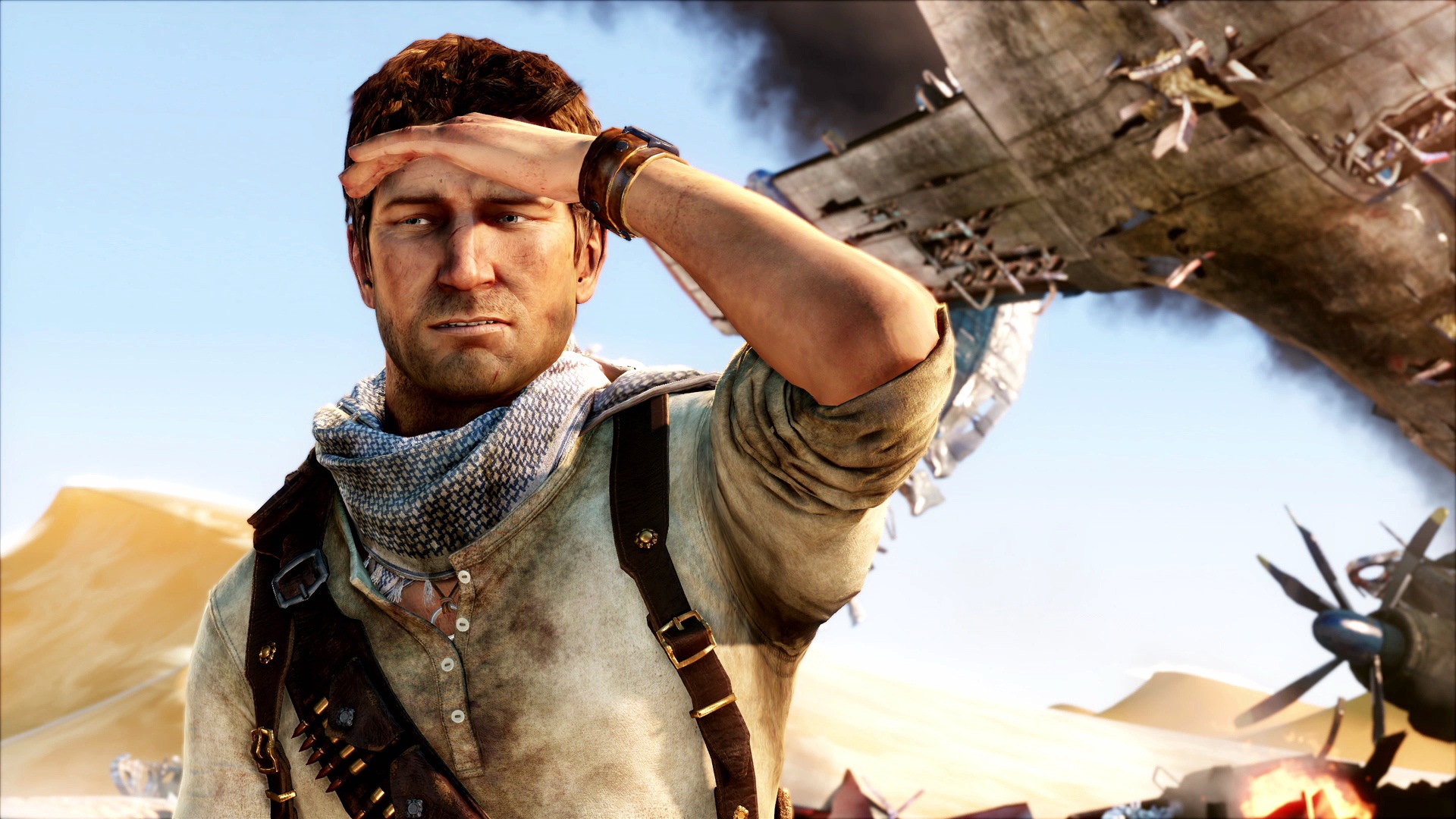
More for information check out the video presented by Nathan Drake himself below.

You can find out more about the motion-capture techniques used to create Uncharted 3: Drake’s Deception here on The Train2Game Blog.

So Train2Game, are you as good as Nathan Drake? Will you enter this unique competition?

Leave your comments here on The Train2Game Blog, or on The Train2Game forum.