Train2Game news: Life experience great for game design ideas – Blizzard

Train2Game Game Designers will appreciate this, it’s advice from Blizzard on how to keep your stories and ideas fresh, and it’s to base concepts on your own life experience, even if it’s only loosely.

Train2Game students will know that Blizzard know a bit about successful game design, with 12 million still playing World of Warcraft.

“I’ve been in this racket about 17 years, and you tire out. How do you keep your ideas fresh? Well, the one thing that never stops is living.”  Blizzard Vice President of Creative Development Chris Metzen told PC Gamer.

“We have experiences. We grow as people. And really letting those experiences come forward – kind of being naked with them – that’s the kind of thing people can’t compete against. Everyone can come up with a new Trilithium Crystal Warp Drive, but what you can’t argue with is a person’s experience and the truth of it.”

And Metzen says Blizzard encourages their Game Designers to use their own experiences to create in-game content.

“So the trick from a leadership standpoint at Blizzard is to make it OK for these writers to really bring themselves out to affect these quests and characters. Ultimately, that’s what sings forward.”

“The clever shit will get trounced in no time. It’s like gameplay mechanics. You can put out an RTS with the best mission ever. Well, another company will put out something even better, because we’re all learning from each other.” he added.

So Train2Game, what are your thoughts on Metzen’s comments? Could you use your own experiences to create characters and scenarios?

Leave your comments here on the Train2Game blog, or on the Train2Game forum.

[Source: PC Gamer]

Train2Game news: GTA only “scratching the surface” of open world game design

Train2Game students will naturally be very aware of iconic Grand Theft Auto series and how it has arguably revolutionised gaming. Various other titles have used game design elements, such as open world environments, pioneered by the games in the series and Grand Theft Auto III in particular.

But despite Grand Theft Auto III breaking new ground with open worlds when it was released a decade ago, Rockstar’s Dan Houser believes there’s still plenty to come from that particular type of game design.

“I think there’s something really interesting in the open world experience. Obviously we’ve made like ten of them now and they still don’t feel boring to me. It still feels that we’re only scratching the surface of that potential. But who knows what we’ll be doing?” he told IGN.

When asked what Rockstar will be working on in future, Houser says he doesn’t mind so long as the games are of high quality and the developer is still running well in another ten years.

“We’ll hopefully have done a bunch of interesting games in the next ten years. That’s always the goal. I’ve never been that good at the futureology side of game-making. We never really care what the name is on the box, either. The name Grand Theft Auto, the name Max Payne, the name’s Red Dead, the name’s Table Tennis, it doesn’t really matter as long as the game’s cool,” he said.

“I would never have believed you would have been talking about this in ten years time. We were still talking about Space Invaders [ten years ago], and that was already 20, 30 years old then. Hopefully we’ll continue to do interesting stuff, that’s you know, that’s kind of all you can hope for.” he added.

To celebrate the ten year anniversary of Grand Theft Auto III, the game is being released for iPad and Android tablet devices. And while there’s been no official word on Grand Theft Auto V, the Train2Game blog has previously reported that analysts believe it’ll arrive in 2012.

Train2Game students may be interested to hear that the original Grand Theft Auto project was almost scrapped, before a bug made the game more exciting to play. It’s a lesson to Train2Game QA Testers that bugs aren’t always a bad thing!

So Train2Game, what are your thoughts on the legacy of Grand Theft Auto? How do you believe game design of open world titles can be improved? And do you believe Rockstar will still be doing what they do in ten years?

Leave your comments here on the Train2Game blog, or on the Train2Game forum.

[Source: IGN]

Train2Game news: Gears of War director Cliff Bleszinski wants Avatar visuals for next-gen

Train2Game students will agree that there are some games with amazing graphics out there, but Gears of War 3 Design Director Cliff Bleszinski believes that they can get much better.

How much better is that? Well, the Epic man believes next-gen games should be able recreate the CG visuals of Avatar!

“I’m sorry, do you think graphics are good enough? No they’re not!” he told OXM.

“The Xbox 360 is great, we’ve pushed it further than we ever have with Gears of War 3, but I want Avatar in real-time and beyond, I want fully realistic CG, and are we there? Absolutely not. I think there’s absolutely room for improvement,”

But while Blesizinski – along with Train2Game students, no doubt! – wants better graphics, he admits that looks aren’t everything but they can make a gameplay experience much more impressive.

“Do graphics make gameplay? No. But when I fire up my projector back at my house, put Avatar on – it still makes your jaw drop, it’s like a giant portal to another planet. I think we still have a long way to go before we get there, and I want us to get there.”

However, the Gears of War Director added that it’s online that’ll be the most important thing for games and their developers in future.

“My money for the future of everything is on those who understand the online space the best. Because this is the world we live in, we’re always connected” he said.

The whole OXM article about what Epic wants for next-gen consoles should make interesting reading for Train2Game students.

Despite Bleszinski’s desire for games to be developed with Avatar like quality, the Train2Game blog has previously reported that he believes there’s still much more to come from current gen consoles.

And not so long ago, he gave some advice on what aspiring game developers, such as Train2Game students, should do to stand out. Read it here on the Train2Game blog.

Cliff Bleszinski is Design Director at Epic Games, and as Train2Game students will know, Epic has partnered with Train2Game for the Train2Game & Epic Game Jam which takes place on 4th, 5th and 6th of November. 

What are your thoughts on Bleszinski’s comments? Do games need Avatar like visuals? Can you see it happening?

Leave your comments here on the Train2Game blog, or on the Train2Game forum.

[Source: OXM via Industry Gamers]

Train2Game interview with Trion Worlds Senior QA Tester Karl Tars – Part 3

End of Nations is an upcoming MMORTS from Petroglyph Games and Trion Worlds. The game was on display at the Eurogamer Expo, and the Train2Game blog caught up with Trion Worlds Senior QA Tester Karl Tars to find out more about the game, QA Testing and how to get into the industry.

In the final part of an in-depth three part interview, Karl Tars tells the Train2Game blog what his role as Senior QA Tester involves, the importance of QA in game development, how he got into the games industry and he offers advice on finding work as a QA Tester.

Read it below here on the Train2Game blog, or on the Train2Game Scribd page.

Part 1 and Part 2 of our interview are both available to read here on the Train2Game blog.

So, tell us a bit about your role as Senior QA Tester.

My role is…Petroglyph gives us the build then we go in to find all the bugs. We’ll report them so they get fixed so that the game itself plays smoothly, no crashes, no textures going weir. But we also go in and look for gameplay fun bugs, like ‘This feels overpowered, this feels underpowered, it’s not really clear when I’d ever use this, special ability,’ things like that.

That’s what we do, we’re officially called Quality Assurance but the actual role is more quality assessment; we don’t assure quality, we don’t fix the bugs, we just assess what the game is and tell them ‘Hey, this is how the game is, is that what you really want?’ and let them make the decision as to whether they want to fix it or whether they want to change it or drop it. A lot of times they’ll say ‘You know what, we can’t make this work, you’re right it’s not going to work right’ so they’ll drop a feature and change it to something new entirely.

How important is the QA process to game development?

I’d say it’s a critical step. In previous times there was a period where it was kind of neglected, they wanted to know does the game crash, does the game function, but they didn’t really care about the actual quality in terms of fun gameplay values. Trion certainly doesn’t do that and other companies have caught on that ‘Hey, we can’t just keep pushing out these terrible games forever,’ and eventually the consumer catches on too and stops buying them.

So the QA process is really critical, and it frees up the developers. Instead of having to spend 3 hours figuring out how to cause this crash, we do that: we figure out exactly how to cause it and it gives them the time to keep working on the game, keep programming, keep adding new units. And then once they know how to break it, they can go in and fix it quickly and get their jobs done much more efficiently.
How did you get into your role in the games industry?

I took a rather long path for it; I actually have a Computer Science degree, I can programme but when I graduated it was a terrible time for programming and so I picked up a QA job at Vivendi Games in L.A. They’ve since been bought out by Activision, but basically it was a temporary position and I was good enough that they kept me on a lot longer than the average temp.

After it was bought out by Activision, I thought ‘I’m not too interested in working for them, they don’t treat their employees as well as I’d like,’ so I moved onto Trion Worlds who have been fantastic.  For the most part, anyone who has a good eye, likes playing games and can clearly, precisely say what they did and how to reproduce what they just caused, they can have a job in QA.

What advice would you give to anyone looking to work in QA?

The main thing to do if you want a job in QA is working on your skills at spotting things. A lot of us are game players, and that’s not necessarily what you’re going to be doing in testing. Testing isn’t just playing the game; a lot of it is very repetitive, where we’ll go through every single unit, make sure that every single ability works, make sure every single texture on a map looks correct.

So as you’re playing through a game and you spot a texture out of alignment? That’s something that QA would do. If you can cause the game to crash consistently in a certain way, that’s something QA have to do.

So spotting a bug is the first half of it, the second half of it, is having good English skills or whatever other languages your company works in.  Being able to clearly say ‘do this, do this, do this’ – the way I was told to practice that was imagine you have an alien, they understand the language in some respects, but they don’t necessarily know a lot of the noun, they wouldn’t know what a fork this, they wouldn’t know what a knife is.

Now try and tell them how to make a peanut butter and jelly sandwich when they don’t know what any of those things are. And you have to describe them being very descriptive and giving a good guide of exact steps and also including things like ‘it doesn’t work if you do this,’ so that when the developer gets it they can just immediately go click, click, click, straight through your steps and ‘Oh there’s the issue, I can see it now, and now that I can see it on my machine I can fix it really easily.”

Thanks for your time Karl.

End of Nations is scheduled for release next year.

Leave your comments here on the Train2Game blog, or on the Train2Game forum.
Train2Game interview with Trion Worlds Senior QA Tester Karl Tars – Part 1

End of Nations is an upcoming MMORTS from Petroglyph Games and Trion Worlds. The game was on display at the Eurogamer Expo, and the Train2Game blog caught up with Trion Worlds Senior QA Tester Karl Tars to find out more about the game, QA Testing and how to get into the industry.

In the first part of an in-depth three part interview, Karl Tars tells the Train2Game blog about End of Nations and the reasons behind key game design features. Read it below, here on the Train2Game blog, or on the Train2Game Scribd page.

So, what is End of Nations?

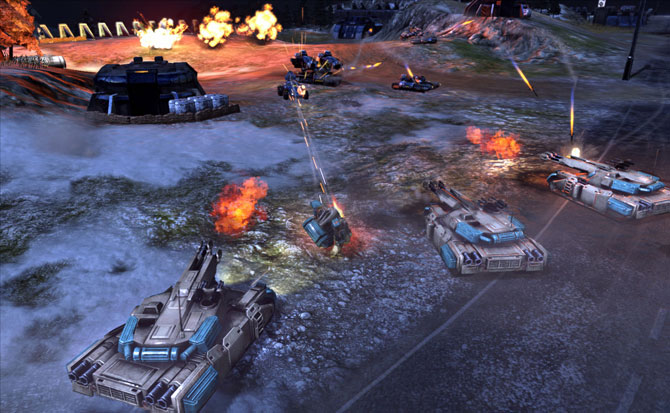
End of Nations is an MMORTS. The basic idea is we looked at Starcraft and said ‘8 players in the game? That’s not enough.’ What we’re showing off here is 16 players and we have a couple of maps that are going up to 50 players and we’re hoping that we can push it further than that and just have massive real time strategy combat.

The back story for the world is that there’s been an economic collapse, and so a group called The Order of Nations has come in and started to establish order.  They’ve gone through and destroyed some of the other nations that were still OK, then the people after they realise ‘Order’s restored, that’s great, but I’d like to be able to go outside and do my own thing’ – and that’s not being allowed, they’re very anti-freedom, very totalitarian – and so a couple splinter groups have shown up.

There’s a Liberation Front which are very pro-freedom, patriotic, and they’re going to be our brute force faction with big armour, big weapons and not a lot of subtly. The Shadow Revolution is the other faction, they are a lot more about stealth, tactics, hit and run strikes…they’re going to have a lot of little tricks where they can leave that’ll weaken the enemy and then they’ll strike. Or they’ll come out of stealth and they’ll have an invisibility cloak that allows them to hide, wait for the right time to strike and then launch their attack when they’re ready.

The basic idea is that these two groups are trying to take down The Order of Nations in their own ways and for their own reasons, and since they don’t see eye to eye you’ll also have a lot of times where they’re going to be fighting each other.

How does the gameplay work?

All the units you’re going to see today are from the Liberation Front because they’re the most balanced and the most ready to go and so the most fun to play with at the moment.  What we have here is am Infiltration loadout, its infantry, a couple of artillery units and flame tanks.

Your basic gameplay is your standard top down Real Time Strategy; you get to move your units forward. What you’re going to want to do, for example, here we have a resource point. You have resources on the corner [of the screen] and they trickle in very slowly at the start, and it’ll allow you to respawn your units if they get destroyed. But if you take a resource point they start coming in faster so the majority of each map is going around capturing strategic points that are needed.

There are also Landing Zones. If you capture a Landing Zone you can bring your units into the front line when they get destroyed. We have a Bombing Run and when this happens when it’s captured, the enemy area will start coming under attack.

So if I’ve captured this resource point and we’re trying to gain resources a little bit faster – every time it ticks we’ll get a little bit more than we did previously. That’s going to allow me for example put down a turret [to defend against enemy forces]

And so rather than doing the normal base building, instead we have these structures you can place temporarily. They’re good for small temporary bases but not a standard build up your infantry, build up your main defences and turtle on your side while you wait for the enemy.

From a game design perspective, what were the main reasons for including these mini-bases?

What they allow you to do is to make a temporary base; it’s a way of getting that little extra push to get in. So, for example, that’s going to take their attention off my units so they can come in and attack more freely. Or if they’ve captured my units in it’s going to help me fire off at them. It’s possible to get a depot that’ll allow your units to have more armour so they can take more damage.

There’s a repair depot so your units can get repaired in a forward location. But there are specific structures, and a lot of easy ways to take out other structures so they’re not going to last forever…you can have up to six of them, but the idea is you have to think about where you want to put them. I remember when I used to play Starcraft, you used to do a Proton turret tree where I’d keep adding turrets in front of my other turrets and I wouldn’t even attack with units, just push turrets more.

You can’t really do that here, you’ve got to think ‘I want this point’ right now so you set up your turrets offensively to take that point, capture it and then move on and then you remove your last set of turrets to assault the next sector.

So the game design makes the gameplay a bit more challenging and more interesting to play?

Yeah, it’s less defensive and less turtling; it’s more about constant movement and you’ll want to be always looking at your next objective or looking at the next point to defend, but you never have a time where you just sit, turtle up and wait for the enemy to attack you. You’re always going to want to keep moving, because there’s also, like I said the Liberation Front has got a nuke, they will launch it at you and they’ll wipe out all your little turrets and you’re not going to have anything left.

Or the Shadow Revolution, they can deploy a system virus which will degrade all of your units over time but if you’re not ready for it, it’ll wipe out your units pretty quickly.

End of Nations is scheduled for release next year. Click here for Part 2 of our huge interview with Trion Worlds.

Leave your comments here on the Train2Game blog, or on the Train2Game forum. Part 2 of the Train2Game interview with End of Nations Senior QA Tester Karl Tars is here.
Train2Game news: Battlefield 3 game design “grounded in authenticity”

Train2Game students who recently took part in the Battlefield 3 beta, or indeed any Train2Game student will be interested in this; DICE’s Battlefield 3 producer Patrick Bach has been speaking to Industry Gamers about the goals of Battlefield 3, and it isn’t to be realistic, rather authentic.

“We are not trying to create a simulator. But the feeling that what happens in the game is plausible and looks real and authentic is important to us.” Bach told Industry Gamers.

He said that the game design of Battlefield 3 has been heavily researched in order to make the story as authentic as possible.

“We have a story tell and want to carry that story across in a unique style and tone grounded in authenticity. Researching authenticity is extremely important for us and it’s impossible to make this stuff up without risking our desired style and tone,” he said.

“I don’t see it as a race to be the most realistic shooter – realism, as opposed to grounded in authenticity, is not our end goal with Battlefield 3 and probably never will be. Having said that, with greater graphics capabilities comes a greater need to focus on visual details.” Said the DICE man.

However, Bach admitted that developed needed to build a brand new engine in order to achieve what they wanted to do, because nothing strong enough was available. He believes that it’ll give the entire FPS genre to evolve.

“When we set out to do Battlefield 3, we realized that no existing game engines would be able to handle what we wanted them to do. That’s why we built Frostbite 2, and that’s why I think the genre will take a leap forward.”

As seen earlier today on the Train2Game blog, that’s different to rival shooter Call of Duty: Modern Warfare 3 which has just seen its predecessors engine tweaked.

Bach thinks that it’s an exciting time for FPS developers, with the potential for the genre to grow even further.

“On the arena as a whole, I think we are at a very exciting point in time. I think this year will see a huge growth in the total FPS market.”

He added that social devices will also change how people play games. Battlefield 3 has a ‘Battlelog’ service which Bach believes “will make a huge difference in how people perceive where the game starts and ends.”

Games, especially FPS titles with their deep persistence and team play are no longer just hard-coded discs. They are transforming into a service.” he added.

As reported by the Train2Game blog, Battlefield 3’s rival, Call of Duty: Modern Warfare 3, so features a social system, Call of Duty Elite, and publisher Activision also believe social will become a huge part of gaming in future.

Earlier this year, the Train2Game blog reported that EA believe Battlefield 3 will be superior to Call of Duty: Modern Warfare 3.

So Train2Game, what are your thoughts on Battlefield 3 being ‘authentic’ rather than ‘realistic’? Are you impressed by the Frostbite 2 engine? And could it ultimately topple Call of Duty?

Leave your comments here on the Train2Game blog, or on the Train2Game forum.

[Source: Industry Gamers]

Train2Game Announces bluegfx as Key Game Jam partner

 Train2Game has partnered with bluegfx, a leading European Autodesk Gold Partner and supplier of Autodesk products, IT services, support and training, to provide resources for the upcoming Train2Game and Epic Game Jam on Friday 4th November. The company will be responsible for supporting all Autodesk products and associated plugins involved on the day, ensuring these vital content-creation tools run smoothly for competing teams.

Train2Game’s 48-hour video game creation marathon will bring together an estimated 150 games enthusiasts at the University of Bedfordshire, where they will go head-to-head to create innovative video games using Epic Games’ Unreal Development Kit (UDK), the free edition of the award winning Unreal Engine 3.

The Train2Game and Epic Game Jam is open to aspiring games developers, includingTrain2Game students and hobbyist games developers. On Friday 4th November, registered competitors will convene at the University of Bedfordshire’s new development lab to form teams and build games around a secret theme, which will be announced on the first evening of the event. The jam concludes on Sunday 6th November, when three teams will be selected as winners by industry A listers from some of the UK’s hottest development houses, as well as Epic Games.

Neil Parmer, Co-Founder and Company Director of bluegfx, sees this as a natural extension of the work his company does all year round: “When asked if we could help with the Game Jam, we leapt at the opportunity. Keeping customers running and helping them understand what’s possible with Autodesk tools is what we do on a daily basis, we’re delighted to be able to offer our services to the next generation with this competition.”

Myra Smallman, Head of Teaching at Train2Game said: “Just as we stand by Train2Game students throughout their studies, we’re glad to be working with bluegfx to make sure nothing will interrupt competitors hard work during the Game Jam. Experience with tools like Epic’s UDK is an essential part of students becoming the calibre of candidate that the games industry needs today.”

For further informatio about the Train2Game and Epic Game Jam please visit http://train2game-jam2.com/, existing students can login into www.train2game-online.com.

Train2Game news: Modern Warfare 3’s engine “is a Porsche”

Train2Game students will obviously be aware that Call of Duty: Modern Warfare 3 is likely to be the biggest selling game of the year.

The title, being worked on by three different studios, is likely to receive a heavy marketing push and be snapped up by millions of gamers.

However, some have commented that the Call of Duty engine hasn’t aged well. Speaking in an interview with CVG, Sledgehammer Games Glen Schofield responded to this criticism.

“Well I’ll tell you one thing, I’ve worked on a lot of engines over my lifetime and spent a lot of time putting graphics in to them and this thing is a Porsche,”

“And what I mean by that is that it is stream-lined, everything in it is perfectly freaking clean. You can tell it’s been worked on for years. It’s easy to upgrade.” said the Managaing Director of one of the three studios working on Call of Duty: Modern Warfare 3.

And Schofield argues that Modern Warfare 3 is a lot more detailed and a lot better looking that its predecessors.

“Modern Warfare 3’s levels now are so much bigger than the old ones because they go more vertically, they have a bigger footprint and on top of that, higher fidelity, more textures and a lot more detail” he said

“If you put Modern Warfare 2 next to Modern Warfare 3 you would see a huge difference. Look at all the character models, look at all the gun models, look at the reflections, look at the water.”

“There is so much that we’ve added, so when someone says ‘cut and paste’, I don’t even want to talk to them because they don’t know. They just don’t know. They have no idea.” added the Sledgehammer man.

Last week, the Train2Game reported that Schofield said tweaks to Modern Warfare 3’s game design mean it’s the “most accessible” Call of Duty yet.

Train2Game students can get a behind the scenes insight into development of Call of Duty: Modern Warfare 3 here on the Train2Game blog.

What are your thoughts on the Call of Duty engine? Do you believe Modern Warfare 3 looks dated? And should the developer be responding to its critics?

Leave your comments here on the Train2Game blog, or on the Train2Game forum.

[Source: CVG]

Train2Game news: Uncharted needs PS4 for next big improvements

Train2Game students are living in time when video games look better than ever, with the Uncharted series being some of the best looking titles of the lot.

And while the upcoming Uncharted 3 is graphically improved over its predecessor, developers Naughty Dog say the jump isn’t as big as it was between Uncharted 2 and the original. They believe a next generation console is needed in order to recreate this level of improvement.

Speaking to Spong, Game Director Justin Richmond revealed that changes to the Uncharted’s engine have been tweaks rather than massive upgrades.

“Uncharted 3 isn’t just an incremental update – we did change lots and lots of things – but graphically speaking, it’s not going to have the same gap, it was never going to happen.” he said.

And the Uncharted 3 Game Director believes we won’t see another huge jump on the PlayStation 3, hinting that we’ll only see a similar boost when Sony release a next-generation console.

“The way we made it, how much of the PS3’s power we were using… that huge gap that you saw between Uncharted 1 and 2 is the kind of thing that really only happens once per generation. We pushed it really hard.” said Richmond.

Train2Game students may be interested to find out that Naughty Dog only managed to make improvements to Uncharted 3 by re-writing the engine, and it’s something they’d prefer to do only once per console cycle.

“Uncharted 2 to 3 is still a jump, but it’s a narrower jump. And going forward, it depends on what we do. There are always ways to improve stuff, always ways we can pull out more stops… like changing optimisations, changing streaming animations, getting more polygons on screen, progressive mesh,” Richmond said.

“But I don’t think you’ll ever see that same jump again, at least on a PlayStation 3. There was just so much power left over in the PS3 when we made Uncharted 1, that we figured out how to use and really took it to town when developing Uncharted 2.” the Uncharted 3 Game Director concluded.

As previously reported by the Train2Game blog, the Uncharted 3 have a something of a “make it up as we go along” thing when it comes to game design.

Meanwhile, Train2Game students interested in how Uncharted 3’s script is written and performed should check out this behind the scenes look on the Train2Game blog.

So Train2Game, what are your thoughts on Richmond’s comments? Do you believe a new console is needed in order to make another leap forward? Does that leap need to be made?

Leave your comments here on the Train2Game blog, or on the Train2Game forum.

[Source: Spong]

Train2Game news: Indie devs have “far more opportunities these days” say Team 17

Train2Game students looking to form their own indie studios will certainly be buoyed by this; there are more opportunities than ever to break into the industry thanks to digital distribution.

That’s according to Yorkshire based Worms developer Team 17, who’ve been in the game development business for over 20 years.

“I actually think there are far more opportunities these days overall. If we were only talking about PSN, XBLA and Steam I’d tend to agree, but with the whole mobile and browser side thrown in, it’s bigger and better than the late ’80s.” Team 17 Managing Director Debbie Bestwick told The Guardian when asked if there are comparisons between today’s digital market and the bedroom coding days of the late 1980’s.

And Bestwick believes the rise of mobile gaming, on the iPhone in particular, means it’s actually easier for prospective game developers – such as Train2Game students – to enter the market.

“Digital distribution has removed manufacturing and physical distribution costs; hence the entry point is so much lower these days than back then” she said.

“If anything, the App Store reminds me more of the whole shareware scene in the ’80s, just shaken up and organised, and it is a great place to be.”

And in more good news for Train2Game students, the Team 17 Managing Director is optimistic about the future of the British game industry, “because right now we’ve got more platforms, bigger audiences, more direct to consumer sales channels and lower entry costs than ever before for all indie developers.”

“Our traditional market has changed forever with the introduction of smartphones, social gaming and digital store fronts” added Bestwick.

So Train2Game, what are your thoughts on Bestwick’s comments? Do you believe it’s the best time there’s been to be an indie developer? Is self-publishing a model you can see yourself following?

Leave your comments here on the Train2Game blog, or on the Train2Game forum.

[Source: The Guardian]