Train2Game interview with games industry consultant Nicholas Lovell – Part 2

Train2Game recently caught up with founder of Gamesbrief and industry consultant Nicholas Lovell. In a wide ranging interview he discussed subjects including the different types of game development studios, advice for small independent developers, social gaming and the business side of the industry.

The Gamesbrief founder also told Train2Game about a special offer on his book, How to Publish a Game. The 200 page book is available for half price until December 7th.

In part two of this three part interview, Nicholas Lovell tells Train2Game about how an independent developer can go about successfully distributing and marketing their games.

Part one of the Train2Game interview with Nicholas Novell is available here, while you can see part three here.

Train2Game: How would an independent developer actually go about distributing their game be it online, through social media, or mobile phones?

Nicholas Lovell: In my definition – what I use in the book – distribution involves getting code into people’s hands. But marketing and distribution start blurring because there’s a large sense that distribution is about the channels by which you encourage people to know about your product and want to buy it.

On the distribution side – the literal process of getting code from your hands into your customers’ hands – if you’re publishing on Apple, Xbox Live, PSN, Android… they handle it. You upload your game to Apple, Apple takes the money and delivers the code so you don’t have to worry about that.  You still have to worry about discoverability so we’ll move onto marketing in a second.

If you’re doing something on Facebook or the broader web you have to handle it. So I strongly recommend you would use a scalable cloud backend like Amazon Web Services – something like that – which will cost you money and if you don’t have a business model, it will cost you more money which will be more expensive. You need to make sure that the more successful you get it isn’t the case you lose more money. I’ve had one client who the more successful they got the more money they lost. We fixed that now but that was the case.

If you’re looking at Flash development – I think it’s much harder to make money from Flash development – but if you’re looking at Flash development then there are sites like Kongregate, like Newgrounds.

In fact there’s a blog post on Gamesbrief, it’s a Preloaded blog post which talks about how they consider distribution, which you might want to look at.  [How we publish an online game]

Let’s move onto the marketing side, because distribution and marketing are often very tightly linked.  In my mind, distribution is simply ‘can they get it?’ Marketing is ‘do they want to get it? And there are a bunch of ways in which you can market your content, and they don’t have to be that expensive.

My view is that the primary objective of most of the marketing you do is to be able to talk to people again.  It’s not to sell them a product, because it takes longer to sell a product than just the first time seeing your banner ad.  [The customer going] ‘Oh I’m going to see that ad, click on it and buy immediately’ …that’s pretty unusual.

What your marketing activity should be about is to try and get people to allow you to talk to them again.  So that’s about Twitter feeds, that’s about blogs. Your social media strategy should be about being open, honest and clear, and about building a persona. There’s a lot of talk about building a story;  if you’re three struggling students, ask for help from the community, ask for people who read your blogs to tell you how to do stuff, start engaging in that kind of dialogue and build that over time. So that’s one aspect.

The second aspect of it is virality. Virality is much, much harder than it used to be, march harder and particularly on Facebook. There are two different types of virality. There’s mechanical virality, that’s the kind of stuff where you get spammed on your Facebook feed.  And there’s the ‘this is really cool’ kind of virality where word of mouth is key.

Certainly I’ve discovered games like Words With Friends, like Angry Birds, like Flight Control, because everyone was talking about them.  Personally I think that’s tough to rely on because it’s really, really hard to build a game that gets that level of success. Better is to have some way of encouraging people to want to play with their friends. However, I think virality is falling in terms of its level of importance.

Where I tend to focus – and why I’m not really a big fan of a business model which involves you just selling the product for a one off fee – is less on the how do you acquire customers, but more on how do you keep them, and how do you make money from them.

So let me give you a reason why:  On the iPhone, only 1.3% of apps have in-app purchases. Most people’s business model is free plus premium at 99 cents or so. But 33% of the top 100 grossing titles have in-app purchases.  So in other words, we’re getting to the stage where it is really, really hard – you can do it, Angry Birds has made over $10 million from a 99 cent purchase – but that’s very hard.

The guys who are making more money are allowing people – if they like the game – to keep upgrading. And instead of the maximum amount of that money you can make from customer being 99c you can make $5, in some cases $30.

There’s a game called Pocket Frogs which has in app purchases of values of 99 cent, $4.99 & £29.99. Only 8% of people by the $29.99, but in revenue terms, more than half their revenue comes from those bigger packs.  And most businesses stop at the 99c level, they would make a tenth of the revenue of Pocket Frogs. [For a full run down on the success of Pocket Frogs, check out this article on Gamesbrief]

Part one of the Train2Game interview with Nicholas Lovell can be seen here. The third and final part is available here.  His book, How to Publish a Game, is available for half price until December 7th.

You can leave your thoughts here on the Train2Game blog, or on the Train2Game forum.
Train2Game interview with games industry consultant Nicholas Lovell – Part 1

Train2Game recently caught up with founder of Gamesbrief and industry consultant Nicholas Lovell. In a wide ranging interview he discussed subjects including the different types of game development studios, advice for small independent developers, social gaming and the business side of the industry.

The Gamesbrief founder also told Train2Game about a special offer on his book, How to Publish a Game. The 200 page book is available for half price until December 7th.

In part one of this three part interview, Nicholas Lovell tells Train2Game about the games industry in general and gives tips to independent developers.

You can read part two of the interview hereand see part three here.

Train2Game: Can you start by giving a general overview of how the games industry works please?

Nicholas Lovell: There are three types of companies. There are massive triple-A companies, those guys need to invest a lot of money. Modern Warfare 2 cost $50 million to develop; it cost $200 million on top of that in marketing, distribution and manufacturing. That’s a total budget of $250 million. If Wal-Mart doesn’t pay within four months – which it doesn’t – and you want to have three games of that size out at Christmas, that’s a $750 million capital requirement. If you then want to have other games in development at the same time, you’re nearer a billion dollars.

The number of people who’ve got a billion dollars a year to put at risk making triple-A titles is declining. In my opinion there’ll only be six to eight of those in the entire world of which Activision, EA and Warner are likely to be three. The other slots are up for grabs for people like Ubisoft, THQ, Take Two, those kinds of people.

But the number of them is declining and what we are unequivocally seeing is people who aren’t making blockbuster games – who are making nearly blockbuster games – they’re suffering, they’re definitely suffering.

The second group of companies make persistent social online games, games which you can release relatively cheaply and then grow over time. The interesting thing is that World of Warcraft is essentially a triple-A game, but it has that persistent element.

So, at one extreme you have games like Farmville and We Rule and the other games on Facebook. In between you’ve got games from companies like Bigpoint and Gameforge, which are either client based or browser based relatively hardcore MMOs or RPGs free to play with microtransactions.

And then the extreme, you have your traditional subscription based MMOs like World of Warcraft. I think we’ll see much fewer subscription based stuff, as the market is moving strongly in the direction of the free to play browser based games.

The third category is what I call independent developers. Those are teams of  less than fifty people – usually less than ten people – who can because of the existence of PlayStation Network, Xbox Live, iPhone, Android, the browser itself – are able to make and distribute games themselves with no publisher and make a living, a decent living. Not enough of a living to be really threatening to triple-A and the persistent social world, but drawing time and money from particularly the triple-A market, which is one of the reasons why its harder and harder for the also-ran triple-A guys to make money.

So if you’re trying to work out where to work in the games industry in the future, there will be many fewer jobs at the triple-A companies than there were this year. There will be many more jobs in the persistent social world stuff – The Bigpoint’s, the Gameforge’s, the Zynga’s, The Playfishes – and there is a new opportunity to create, launch and make games, just two or three of you making games for fun, distributed via PSN, Steam, the web itself, Kongregate, any of those kind of things. And of course iPhone and Android.

Train2Game: What advice would you give to a small two or three person team who want to make and publish an independent game?

Nicholas Lovell: The first thing is as you go through your game design document – do the first part with a lot of excitement in the pub, that’s fine – but after that take lots and lots of stuff out. Ernest Hemingway famously said about writing, ‘write drunk, edit sober’ and I think that idea could probably apply to game development. I wouldn’t necessarily be certain about that, but the principle goes that what you need to do above all things is release a product, that’s the most important bit.

Until you’ve done that you can’t make any money. So what I see often is people going ‘This is going to be the best game ever’ – That’s the end of your career, not the start of your career.  At the start of your career, you’ve just got to have a game. To be honest, what we’re seeing from employers is that they want to see people who have on their own initiative launched something, anything.  They want to see that people can see something through from the beginning to the end.

So, have your napkin with a gazillion different races and structures and plans and everything else. But then start boiling it down to go ‘What is the core of this game, what is the heart of it, and how can I get that out’

I’m a big fan of agile development methodologies and of agile business processes, and a great description of agile I’ve heard is it’s ‘half a product, not a half arsed product’ So, everything you leave in has to be good. The secret is to take stuff out that doesn’t matter.

So, the first thing I would say is as you’re trying to work out what’s in your game, try and reduce it to something which is fun – which works – and save a lot of the extra stuff for the sequel. Because you don’t know until you’ve got your first game out if anybody likes it, so why waste time building a whole load of stuff?

For example, I see a lot of people building anti-cheating mechanisms into relatively simple multiplayer games which they’re trialling. You haven’t got any cheaters until you’ve got any customers,  you don’t have any customers and the way you’re going you’re going to run out of money building the anti cheat system before you launch, at which point, what was the point of having an anti-cheat system?

Anti-cheat systems are the kind of thing you should build after you’ve launched in this indie world; the world is different if you’re Blizzard trying to launch a new mega title. But in the indie world, minimum viable product is the absolute heart of it.  That product needs to be fun.

There are a couple of other wrinkles with that; it does depend on the platform. So, with iPhone and Android, it’s pretty easy to update content, Facebook it’s easy to update content. If you’re building for PSN it’s harder, if you’re building for Xbox Live Indie Games it’s harder. Those businesses expect you to create content which feels more like a finished product.

I’m much more excited about platforms where you start off with something if people like it, you keep building it.

Part two of the Train2Game interview with Nicholas Lovell can be seen here. His book, How to Publish a Game, is available for half price until December 7th.

You can leave your thoughts here on the Train2Game blog, or on the Train2Game forum.


Gamesbrief founder Nicholas Lovell speaks to Train2Game about ‘How to Publish a Game’

The games industry is a competitive place, with many independent developers each trying to produce, and make money from, games.

It’s possible that a relatively inexperienced developer could think of and produce what could be great online or iPhone game. But without knowledge about how to market and distribute it correctly, the game this would be classic could disappear without a trace.

Fortunately, there are professionals who are experts in this area, and one of them is games industry consultant, Gamesbrief founder, and author of ‘How to Publish a Game’ Nicholas Lovell. The former investment banker spent a decade helping media companies – including those in the business of games – adapt their strategies right through the dot com boom of the late 1990’s.

Train2Game recently met with Nicholas Lovell, and discussed many aspects of the games industry. He begun by telling us how since leaving the world of investment banking, he’s struck out on his own and helped various developers with the distribution of games:

“In 2003 I set up a small corporate finance boutique, who helped games companies raise money and with strategy”, he told Train2Game. “We worked with companies like Blitz and Kuju, EIDOS, we worked with Codemasters, so we worked with a number of different games design companies.”

“I then decided I actually wanted to get my hands dirtier, and joined a gaming portal called Game Shadow to run that business, to turn it from a subscription based business to a free to play business growing revenues by a factor of ten,”

“Did that for two years and for the last three years I’ve been helping companies make money from games.”

“So at one level I’ve worked with investors trying to understand the industry from the very small up to the people where a $500 million investment is too small. I’ve worked with publishers like Square Enix and Atari and Channel 4 to help think about their game strategy, and I’ve worked with developers to launch new projects.

“Pretty much all of those developers have been who’ve been trying to move from console or mobile to this new world of Facebook or free to play social, online titles.”

Away from consulting, Lovell writes about the business of the games on his blog, Gamesbrief. However, it isn’t only a blog that the consultant writes. Nicholas Lovell has also written a book called How to Publish a Game.”

He told Train2Game about what’s in the book; how it can help developers publish games and about the promotional offer running until Tuesday 7th December:

“It’s about what are the different business models, what are the four key skills you need to get a game to market – sales, distribution, finance and marketing. It’s about different ways of using free as a marketing technique, and it’s all structured around giving you a framework about how to publish a game rather than a playbook.”

“Until December 7th – at midnight- the book is half price. It’s not the worlds cheapest book… it’s aimed at prosumers, the people who expect to make money from that game, so the standard price is £100 and it’s currently going for £49.50.”

“You can get the first the first two chapters for free, and there’s also valuable stuff on GamesBrief, so check out Gamesbrief, if there’s stuff you like, then you’re more likely to want to buy the book.”

Nicholas Lovell discussed many subjects about the games industry in a wide ranging interview which will appear on the Train2Game blog in the near future. Be sure to stay tuned for that, but in the meantime, you can get an overview of some of the subjects discussed – including how freemium games make up 34 of the top 100 grossing iPhone apps – on Gamesbrief.

If you do want to buy ‘How to Publish a Game’ while the half price offer is on, you can do so here.

As usual, you can leave your thoughts here on the Train2Game blog, or on the Train2Game forum.

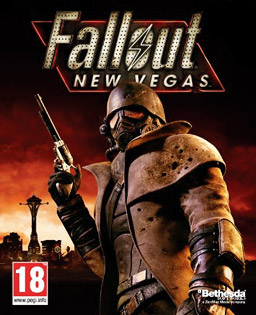
Fallout: New Vegas senior designer gives advice on breaking into the games industry

Fallout: New Vegas

Fallout: New Vegas is released October 22

Fallout: New Vegas is probably one of the most anticipated games of the year, and naturally many of us are excited about the game from Obsidian. Chris Avellone is a Senior Designer working on Fallout: New Vegas, and he recently spoke to Planet Fallout about the latest instalment of the post-apocalyptic RPG which is released next month.

Naturally, we’re all very interested in Fallout: New Vegas, but Chris Avellone starts the interview talking about how he got into the games industry. Train2Game students feast your eyes on what he says below, because it could be very useful to your future career!

“I got into the industry through pen-and-paper gaming, notably Champions, where Bruce Harlick gave me my first shot at doing a published product. Writing for pen and paper games doesn’t really pay the bills, though, and the pay scale ended up being about 50 dollars every two months, which you can’t live on.

Then I heard a company called Interplay Productions were starting up their own Dungeons and Dragons division, and they asked if I wanted to come on board as a junior designer. My first reaction was, “you mean there’s a steady pay check for what I do?”, so I said sure, I’ll drive to California.

I met with the division director of Dragonplay (Mark O’ Green), he asked if I had any ideas for a Planescape RPG, I told him I’d start in the mortuary after the player died and the game would go from there. He hired me. Ever since, I’ve been working in design all the way up, out of Interplay and into my current job at Obsidian.

Advice for getting into the industry? That’s a long one, but here goes: One, always be persistent in applying – even if you get rejected from one game company once. Keep applying; get to know the people there. Generally what happens at game companies is they find themselves in crunch or badly needing employees at a certain time and then they will go back to the resumes and look for someone urgently. Those battlefield promotions can get you into the industry pretty fast. Also when applying at a game company, always choose the game company that you actually want to work for.

I know some people think “I need to start in a crap designer job” or making My Little Pony or whatever before I can get into the job I really want to do. My recommendation is apply to the places you want to work at first don’t worry about the consequences or requirements. A good cover letter and a good resume can sell an applicant who thinks they may not meet all the requirements.

When hiring at Obsidian, we look for people that did a lot of game building on their off duty time, if they’re members of mod communities, or have actually gone through the process of making a game – they’re able to answer questions and understand how the whole process works, more so than applicants that are more geared towards theory. It’s one of the reasons we hired Jorge Salgado (Oscuro’s Oblivion mod fame), and we’re glad we did.”

Of course, Avellone goes into plenty of detail about Fallout: New Vegas, and if you’re interested you can read about it over at Planet Fallout. Alternatively, you can watch the first part of the Fallout: New  Vegas developer diaries. Fallout: New Vegas is released in Europe on October 22nd for the PlayStation 3, Xbox 360 and PC.

Can’t wait that long to get your hands on Fallout: New Vegas? A playable version will be available at the Eurogamer expo from October 1st and 3rd.

Train2Game will also be at Eurogamer, and will be giving away the new PlayStation Move controller with a PlayStation 3 320GB slim. To enter the prize draw pick up a entry form at Stand 12 in the Career fair. We look forward to seeing you there.

What are your thoughts about the advice from the Fallout: New Vegas senior designer? Do you find it helpful? And what feature about Fallout: New Vegas are you looking forward to the most?

Leave your thoughts here on the Train2Game blog, or on the Train2Game forum.
UK Charts: Toy Story 3 stays Number One

Toy Story 3

The toys are still in town

Toy Story 3 is once again top of the UK All Formats chart. It’s the third week at number one for the movie tie in, which is more than any other previous Disney game. Toy Story 3 is one of only four titles that have been number one this year with Red Dead Redemption, 2010 FIFA World Cup South Africa and Just Dance being the others.

In fact, Rockstars hugely successful western Red Dead Redemption got close to claiming the number one spot once more after rising from fifth to second, while Dance on Broadway is still going strong in third.

Lego Harry Potter: Years 1-4 shows it still has some magic left with its rise from fourth to eighth. The biggest riser of the week is Nintendo DS game Art Academy which jumps twenty three places from twenty eighth to fifth place in its second week in the charts.

Just Dance still remains in the top 10 and holds onto sixth place this week while Dragon Quest IX: Sentinels Starry Skies is also a non-mover in seventh.  Call of Duty: Modern Warfare 2 hasn’t quite become the UK’s best ever selling game just yet after a drop in sales sees it move down to eighth from last weeks second.

Super Mario Galaxy 2 remains in ninth place while there’s just one new entry into the top ten this week with Madden NFL 11 sneaking into tenth in its first week.

Meanwhile, Starcraft II: Wings of Liberty has crashed out of the top ten from fourth place last week to twelfth this time around. Battlefield: Bad Company 2 has also slipped out of the top ten, dropping one place to eleventh. By far the biggest loser in the top forty is Crackdown 2 which drops fifteen places from twenty fifth to fortieth. Crackdown 2 held the top spot for two weeks as recently as one month ago!

The full ELSPA GfK Chart-Track All Formats top then is as follows:

1. Toy Story 3 (Disney Interactive)
2. Red Dead Redemption (Rockstar)
3. Dance on Broadway (Ubisoft)
4. LEGO Harry Potter Years 1-4 (Warner Interactive)
5. Art Academy (Nintendo)
6. Just Dance (Ubisoft)
7. Dragon Quest IX: Sentinels of the Starry Skies
8. Call of Duty: Modern Warfare 2 (Activision)
9. Super Mario Galaxy 2 (Nintendo)
10. Madden NFL 11 (EA)

So Train2Game, how long will Toy Story 3 remain top of the pile? What game to you think will knock it off top spot?

Has Starcraft II: Wings of Liberty dropped out of the top ten for good, or will it return? Will Modern Warfare 2 finally become the UK’s best selling game of all-time next week? And why has Crackdown 2 suffered such a fall from grace?

As usual, leave your thoughts here or on the Train2Game forum.

A useful developer diary for Train2Game students: The technology of Mafia II

2K Games have released a developer diary that provides an insight into their upcoming title Mafia II. It should hopefully be of interest to all Train2Game students be they a Games Designer, Games Developer or Games Artist & Animator.

The Technology of Mafia II gives us a glimpse behind the scenes at 2K Czech and demonstrates the effort that’s been put into giving the sandbox action game an authentic 1940’s and 1950’s feel.

The developers tell us how they want the player to become fully immersed in the Goodfellas inspired rags to riches story. 2K Czech decided the best way to do this was to build their game engine – the Illusion Engine – from the ground up. It appears to have worked with Mafia II looking very impressive, with 2K Czech promising plenty of attention to detail.

We’re also told how the Game Developers and Game Designers want Mafia II players to feel like they’re playing a part in a classic gangster film, with the cut scenes designed to reinforce this impression.

The video gives an interesting insight into Game Development and could be very useful indeed to Train2Game students. Mafia II itself looks impressive and is released on August 27th. You can see gameplay footage and hear the developers’ insights by watching the video below.


So Train2Game, how would you feel about attempting to build a game engine from the ground up? What would you do to fully immerse players into your game world? And are you looking forward to Mafia II?

As usual, leave your thoughts here or on the Train2Game forum.

PC gaming hardware sells double that of consoles

Reports of PC gaming’s demise have been greatly exaggerated, and it is in fact stronger than every current console combined. That’s according to a report by the PC Gaming Alliance

Among the key findings of the Horizons Hardware research report, was that volumes for the PC Gaming hardware market in 2009 were over two times larger than the combined Wii, PlayStation 2, PlayStation 3 and Xbox 360 console units shipped in the same period.  Revenue from ‘PC’s capable of gaming’ totalled $54.6 billion during last year, and the alliance expected this to grow to $61.3 billion by 2014.

The report also estimates the worldwide number of consumers gaming  on their PCs – which includes both Desktop and Notebooks – to be 212.6 million for 2009 and expects this to grow to about 322 million by 2014.

Perhaps unsurprisingly, it’s the Asia Pacific region which has the highest percentage of PC gamers with 33% using desktops or laptops.

PCGA Research Committee Chairman Matt Ployhar says gamers are moving away from bulky desktops and towards more mobile laptop systems.

“One of the biggest trends I’m seeing in the 2009 Horizon’s hardware report indicates a strong demand for more capable mobile based systems by PC Gamers.”

“PC Gamers are playing a central role in fuelling healthier margins, and driving innovation in this space worldwide”.

Meanwhile, research manager at IDC covering PCs Richard Shims says PC gamers are more willing to spend large amounts on their systems than console owners.

“PC gaming is the highest profile and most mature example of a new era of computing systems based on usage”

“These new usage-based systems are hardware configurations optimized for an improved user experience. Consumers are often willing to pay more for such an experience. In the case of gaming PCs, up to 25% more as compared to a mainstream system.”

Of course, saying PC gamers are more mature than other gamers won’t start a flame war at all. There’s also no mention in the report of gaming on Macs, with Valve in particular pushing more games onto the Apple system. Of course, if you’re unfamiliar with PC gaming, you can read how it could be the ideal platform for Train2Game students in this blog from the archives.

So Train2Game, are any of you PC gamers? Do you think the PC is a stronger system than consoles? Or do you think the PC Gaming Alliance might just be trying to push their vested interested in the system?

As usual, you can leave your thoughts here or on the Train2Game forum.

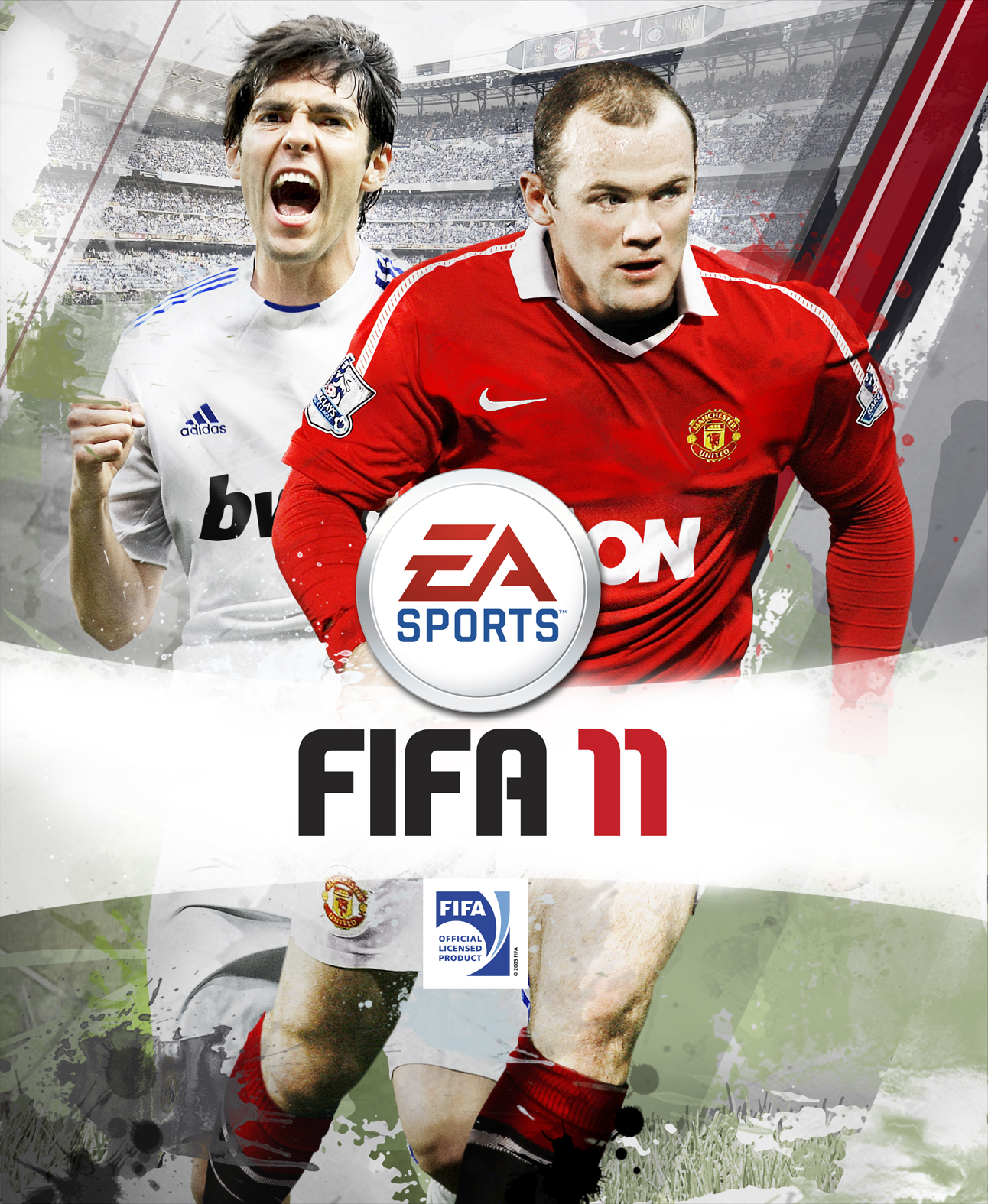
Kaka the face of FIFA 11 – How important is cover art Train2Game?

Brazilian superstar Kaka will be the worldwide cover star of FIFA 11, while Manchester United’s Wayne Rooney also appears on the UK packaging. It’s the sixth year in a row the England forward has been FIFA’s man on the box.

However, it’s Real Madrid’s Kaka who’ll be EA’s centre-piece of global advertising, with the midfielder joining 16 other footballers in regional specific packaging. Kaka says he’s pleased to be joining other illustrious footballing superstars who’ve featured on previous FIFA front covers.

“I’ve always been a fan of EA SPORTS and especially the FIFA series.”

“Being on the FIFA 11 cover is a great honour for me since very few players have this opportunity, and there have been some great footballers featured on the cover of this truly amazing football game.”

“Reinvention of player authenticity”  is boasted as FIFA 11’s main new feature. The idea being that players will react more realistically like their real life counterparts with, for example, skilful midfielders touching the ball more often than centre backs when dribbling the ball.

It’ll also introduces new Pro Passing where pass accuracy is determined by a gamers’ ability on the control pad, and player skill, situation and urgency on the pitch.

FIFA 11 is released in the UK on October 1st.

So, Train2Game what do you think of the FIFA 11 box art? Do you think someone else should have been on it? How important do you believe a cover illustration is when trying to promote games?

Have you thought about packaging for your games yet, and if so, how many times have you decided to change it?

As usual, leave your comments here, or discuss it on the Train2Game forum.

Indie Fund – A useful avenue for Train2Game students?

While doing my usual morning rounds of video games industry news websites, I stumbled upon this GamesIndustry.biz article.  Indie fund calls for submissions eh? That’s surely going to be useful for Train2Game students I thought to myself. And do you know what, it may very well be.

So, what is Indie Fund? Well, the Indie Fund website itself says

“Indie Fund is a funding source for independent developers, created by a group of successful indies looking to encourage the next wave of game developers. It was established as a serious alternative to the traditional publisher funding model. Our aim is to support the growth of games as a medium by helping indie developers get (and stay) financially independent.”

Those indie developers could very well be you, the Train2Game Games Designers, Games Developers and Games Artist & Animators. Now you’re sitting there thinking that applying for funding sounds appealing, but you’re wondering how it works, well.

“We make smaller investments and ask for less in return. The hope is that developers see enough revenue from their game to self-fund their next project.  And voilà, one more developer that is free to make whatever crazy game they want.”

There’s more detailed information about how exactly it works on the About page of the Indie Fund website. The section also lists who’s involved with the funding project and it’s a list of developers who’ve made a number of successful independent titles, some of which you’ve probably played:

Indie Fund believe they can support five or six titles over the next two to three years, but will only do so if the proposed title introduces something new to gaming. For more information about what Indie Fund want for a game and what you need to do if you want to submit an application then all you need to do is visit the ‘Applying for funding’ section of the website. It’s also recommended that you have a prototype of a game ready, but evidence on the Train2Game forum shows that some of you have already reached this stage.

So Train2Game students, do you’ll be submitting an application to The Indie Fund? Do you think it’s a good idea? Or perhaps you aren’t too keen on it. Whatever your thoughts are, please leave them here or on the Train2Game forum.

Train2Game’s 2nd Webinar – Part 1

The second official Train2Game Webinar took place on 18th June 2010 featuring CEO of DR Studios Clive Robert,  COO of DR Studios Tony Bickley, Executive Producer and Industry guru Pete Hickman and Professor Carsten Maple from the University of Bedfordshire.

In part one, we kickoff the discussion about the video games industry, with the panel answering questions about the complexity of games, children playing certified 18 games and making your characters look unique.