Train2Game News CRYENGINE supports VR

image

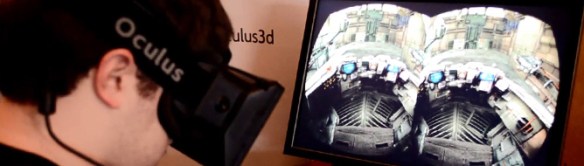
Developers can now tap into the game-changing power of CRYENGINE to create virtual reality experiences following the latest update to Crytek’s all-in-one software solution.

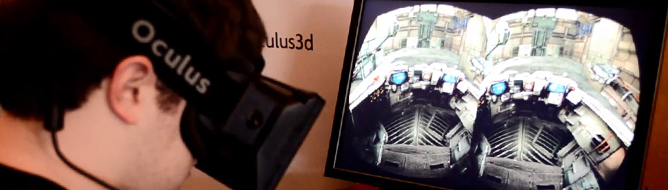
The release of CRYENGINE 3.8.1 adds Oculus Rift support to the engine, granting both full licensees and Engine-as-a-Service subscribers equal access to the new VR toolset. The addition of VR development capabilities to CRYENGINE is complimented by initial support for AMD’s LiquidVR™ technology, which is dedicated to making VR as comfortable and realistic as possible. Future updates will bring support for additional VR platforms into the engine.

Crytek’s Frank Vitz, Creative Director CRYENGINE, said: “Since showcasing our own work with VR, we’ve seen an overwhelming response from developers who want to use CRYENGINE for their virtual reality projects as well. Our experience in stereoscopic 3D, combined with the engine’s rendering power and ability to deliver high resolution images at a high frame rate, means CRYENGINE offers a degree of visual fidelity that many people feel is foundational to a compelling VR experience. We can’t wait to see what other CRYENGINE users create now that they have VR capabilities at their fingertips.”  

Today’s update also adds OpenGL support to CRYENGINE, allowing developers to more seamlessly port their PC projects to Linux.

Finally, today’s update also empowers full engine licensees to put CRYENGINE to work when developing games for Android TV systems. With Android devices designed for the living room set to become increasingly popular, CRYENGINE ensures users are equipped to bring their vision to life for a whole new audience.

CRYENGINE is available royalty free for as little as 9.90 USD/EUR per month. For more information visit www.cryengine.com.

Train2Game News Rift available next year

image

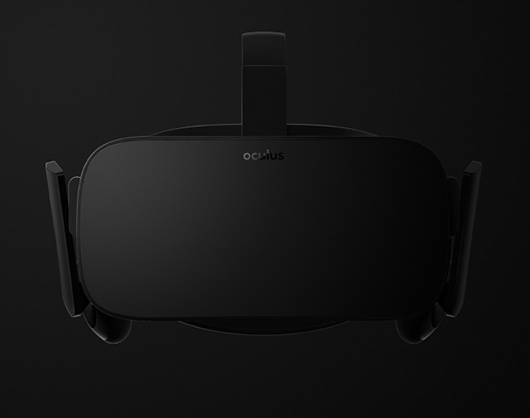
Since the earliest days of the Oculus Kickstarter, the Rift has been shaped by gamers, backers, developers, and enthusiasts around the world. Today, Oculus are incredibly excited to announce that the Rift will be shipping to consumers in Q1 2016, with pre-orders later this year.

The Rift delivers on the dream of consumer VR with compelling content, a full ecosystem, and a fully-integrated hardware/software tech stack designed specifically for virtual reality. It’s a system designed by a team of extremely passionate gamers, developers, and engineers to reimagine what gaming can be.

The Oculus Rift builds on the presence, immersion, and comfort of the Crescent Bay prototype with an improved tracking system that supports both seated and standing experiences, as well as a highly refined industrial design, and updated ergonomics for a more natural fit.

In the weeks ahead, further details around hardware, software, input, and many of the other unannounced made-for-VR games and experiences coming to the Rift. Next week, more of the technical specifications will be released on the Oculus blog.

Virtual reality is going to transform gaming, film, entertainment, communication, and much more. If you’re interested in building a next-generation VR game or application, everything you need to start developing for the Rift is available at the Oculus Developer Center.

E3 is just around the corner — this is only the beginning.

Train2Game News Unity working closely with Oculus

unity-logoDuring Oculus Connect, Oculus and Unity Technologies announced that they have expanded their strategic partnership that will strengthen Unity’s engine support for Oculus, providing the 3.3 million strong Unity development community with cutting-edge tools to create incredible virtual reality experiences for the Oculus Rift and Oculus VR Store.

The new partnership will introduce a new dedicated Oculus add-on for both the free and Pro versions of the Unity platform that the Unity community will enjoy at no additional costs. The Oculus add-on will include stereo imaging optimizations, 3D audio support, deeper Unity editor integration, inclusion of the Oculus Rift in the Unity development and debugging workflow, integration of Oculus-specific APIs within Unity, and direct publishing to the Oculus platform.

“There are so many incredible VR projects on Unity, and this partnership will make it even easier to build more great experiences for the Oculus platform,” said Brendan Iribe, Oculus CEO. “We’re thrilled to be working with Unity to put world-class tools in the hands of developers.”

“Oculus and Unity have been working together for a long while now and share a giddy kind of excitement for the future of virtual reality,” said David Helgason, CEO, Unity Technologies.

“Oculus is an innovative technological leader that is ushering in a new era for creating fully immersive interactive experiences, not just of games, but of all kinds. We’re incredibly happy to play a role in this and see that our entire developer community, who are already producing some really incredible stuff, can bring their crazy ideas to life inside the Oculus Rift.”

Oculus and Unity’s work to make Unity a powerful development tool for virtual reality development has resulted in hundreds of Oculus projects created using Unity technology, including Lucky’s Tale, DarkNet, The Gallery: Six Elements, and Titans of Space.

Train2Game News Oculus Rift researched with Children

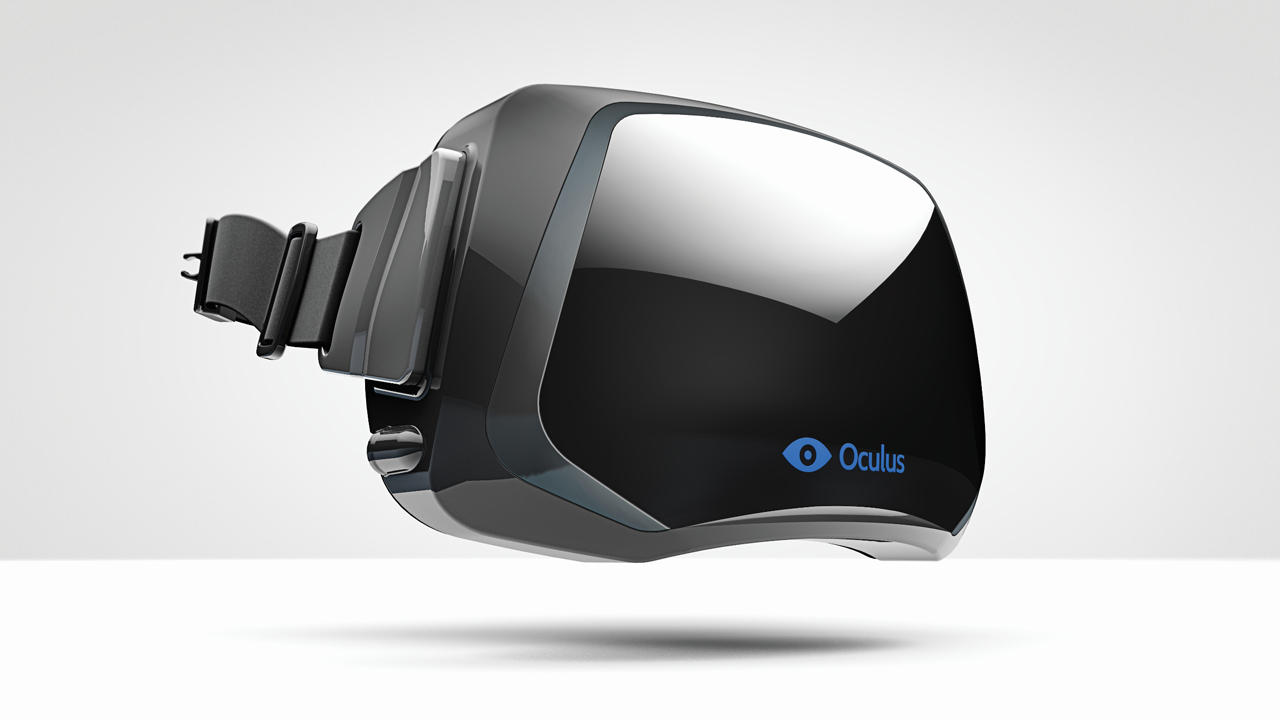
Oculus RiftGood news for Oculus VR and Facebook as new research from Dubit shows kids not only love to use Oculus Rift but they want to see it used in schools and other areas outside of gaming.

They are some of the findings from research recently carried out by youth research and digital entertainment agency, Dubit, and virtual reality consultancy KZero into children’s experiences of, and expectations for Oculus Rift – the virtual reality headset created by Oculus VR, which was acquired by Facebook for $2bn in March this year.

Dubit’s work was carried out with 12 children aged between seven and 12 years-of-age. All 12 played a variety of games using the headset (first development kit version) before working together in pairs to explain their feelings and reactions towards the technology.

Dubit’s head of research, Peter Robinson led the groups. Commenting on the children’s experiences he said: “The overarching message from our sessions is that children love using Oculus Rift and felt immersed in the games in ways they’ve never felt before! Comments along the lines of it being the best way to play games were common. Oculus VR may not see children as their core market but there’s no doubting the device’s potential popularity with kids.”

Robinson continued: “We were glad to see that none of the children in our groups felt dizzy or ill after using the headset; the only usability issues occurred when the children had to move their heads to look down and found the headset heavy. A couple of the younger children also reported fitting issues with the head-straps. With lighter headsets on the way we don’t see Oculus Rift causing many usability issues for young wearers.”

Since Facebook’s acquisition of Oculus VR there has been much discussion around the technology’s application outside of gaming. This was also covered in the research with Robinson saying: “Without prompting all children said they thought virtual reality would be great in their schools. They thought it would make lessons more interesting and allow them to take ‘virtual field tips’. But they wanted to do more than just visit new places; they wanted to go back in time and interact with people, like the Captain of the Titanic or people living in Tudor England and get their views on history. They were more interested about exploring history than changing it through gaming.

“We also found that children placed great emphasis on exploration – a trait they wanted to see in all games, not just educational experiences.”

Bearing in mind the age of the children Robinson didn’t find it surprising to hear them suggest that Minecraft would be great on Oculus Rift: ”It’s striking how much of an impact Minecraft has had on children’s gaming expectations. While most of the children wanted to see Oculus Rift used in first-person-shooter games like Call of Duty – yes, even the young ones – it was games that allowed them to explore, like Skyrim, or create their own content, Minecraft, that came up time and time again as being great fits for virtual reality. We didn’t have the heart to tell them that Notch had refused to bring his game to the system due to the Facebook acquisition – maybe now he’ll reconsider.”

During Dubit’s tests the children controlled the games using either head movements, an Xbox control pad or keyboard and mouse. Robinson said: “Xbox pads were the most familiar to the children and the preferred control method, unless the games were meant to be passive, like the rollercoaster simulator, in these cases they were happy to have no control. In most cases the children wanted even greater immersion and suggested peripherals such as steering wheels would make the experience feel even more realistic. Kinect was suggested so the game could track the player’s movements. The consensus was that an innovative device like the Oculus Rift needed an innovative method of control.

“While we understand that it won’t be children buying this technology with their pocket money it’s still interesting to see how much they think it will cost. It can also help us understand whether they see it as better or worse than current technology.
“While there was quite a swing between estimates the average price suggested by the children was £430, quite a lot higher than we expected. To gauge their ability to estimate such costs we asked them to guess the price of existing technology like games consoles, mobile devices and TVs. In all cases, except for the TV, their average estimates were within £50 of the correct price, showing they have a good idea of tech costs.”

These focus groups are the first in a number of internal research projects being carried out by Dubit on the new technology. The company also comprises of a games development studio, creating virtual worlds for the likes of BBC Worldwide, Cartoon Network and PBS KIDS. Their work in virtual reality began with their first virtual world for Oculus Rift, Fairy Forest. Over the next six months the agency is will publish further work, this time with the University of Sheffield, that looks to provide understanding of how children engage with entertainment across devices and platforms.
Train2Game News Mobile VR Headset

Oculus RiftSamsung and Oculus, the firm behind the Rift virtual reality headset, are working together on a new headset, rumours have claimed.

Engadget, citing “sources close to both companies”, reports that the deal will benefit both companies – Oculus will provide Samsung with early access to its mobile software development kit and will help develop the user interface for the headset, while Samsung will provide Oculus with early access to its upcoming high-resolution OLED screens, which the latter firm plans to integrate into its future headset models.

The screens, which provide a resolution higher than that of Full HD 1080p, will also be used in Samsung’s future smartphone models, the sources added.

The sources also teased some details of Samsung’s rumoured VR headset.

The headset is said to require a connection to a smartphone, which doubles as the display for the device.

The device also includes multiple sensors, including an accelerometer, with the processing power for motion tracking provided by the connected smartphone. The headset is said to support use with a game controller, or can be controlled instead using motion tacking and voice recognition. Physical control buttons are included on the outside of the device.

The sources added that the headset’s rear-facing camera supports for video pass-through, meaning that the user can choose to “see through the phone using the rear camera, which shows a video feed of the outside world to your eyes”.

Unlike the Oculus Rift, Samsung’s VR headset is said to be focused on media experiences rather than gaming, but some games are reportedly in development for the platform.

Train2Game News Facebook buy Oculus Rift

Oculus RiftThe news broke last night that Facebook has bought the Oculus Rift firm for $2 billion. The company is working on a virtual reality headset.

Oculus Rift got off the ground thanks to Kickstarter funding which allowed them to work on their virtual reality headset which would allow for extremely immersive gaming. Oculus’ crowdfunding campaign raised $2.4m, 10 times the amount originally sought, it then received a further $75m from investors. The Oculus Rift has yet to be released, but more than 75,000 orders for development kits have already been placed.

In a statement released by the Social Media Company, Facebook said it plans to expand the use of Oculus technologies to include “communications, media and entertainment, education and other areas”.

Commenting on the deal, Mr Zuckerberg said: “Mobile is the platform of today, and now we’re also getting ready for the platforms of tomorrow.”

The deal includes $400m in cash and just over 23 million Facebook shares, valued at $1.6bn. Oculus employees will also receive an additional $300m if the company achieves certain targets.

How this will affect the future of Oculus Rift is yet to be seen but the future is definitely on its way.

Source: BBC News

Train2Game News Sony VR Headset announced

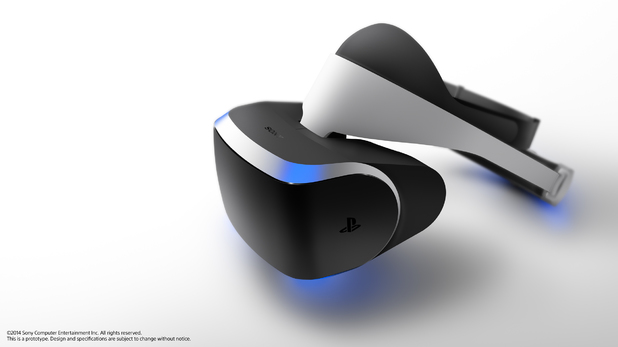
project_morpheusSony Worldwide Studios president Shuhei Yoshida revealed the PS4 virtual reality headset, codenamed ‘Project Morpheus’, during an industry presentation late on Tuesday at GDC.

Sony aired short video clips of a prototype version of the headset – which appeared to consist of Sony’s current HMZ head mounted display with a Move controller attached to the side – being used to play a first-person version of God of War 3. The corporation also showed a video of downloadable title Datura being tested with the device. Sony has been working on the VR headset for three years

“Virtual reality is the next innovation from from PlayStation that may well shape the future of games.” Yoshida announced.

Morpheus will seamlessly integrate with the PS4 Move controllers and the unit also can mirror its display on a TV, allowing others to spectacle gameplay. The headset also adopts 3D audio technology uniquely developed by SCE. In addition to sounds coming from front, behind, left and right, Morpheus recreates stereoscopic sounds heard from below and above the players, such as footsteps climbing up stairs below them, or engine noises of helicopters flying overhead.

Only a single VR headset will be connectible to a PS4 console at a time.

Release date and pricing were left undisclosed, with Sony only willing to say that it would be released “as soon as possible and for as low as possible”.

The tech specs released for Project Morpheus are below:

  • LCD panel size: 5 inches
  • Panel Resolution: 1920×RGB×1080 (960×RGB×1080 per eye)
  • 1000Hz head tracking
  • Field of View: 90 degrees
  • Sensors: Accelerometer, Gyroscope
  • Connection interface: HDMI + USB
  • 3D audio support
  • ‘Social Screen feature’ mirrors experience onto TV (Allows for unique asymmetric gameplay)
  • 3 meter working volume
  • Supports ‘forward prediction’
  • DualShock 4 and PS Move compatible
  • Highly adjustable unit
  • Direct on-board audio jack for headphones
  • No weight placed on nose or cheeks