Train2Game News GDC 2015

image

UBM Tech Game Network’s 2015 Game Developers Conference (GDC), the world’s largest and longest-running event serving professionals dedicated to the art and science of making games, has set a record for event attendance, with more than 26,000 game industry professionals at last week’s conference in San Francisco’s Moscone Center.

In 2016, the Game Developers Conference will be celebrating a major milestone with the 30th anniversary of the event. The organizers of the event have announced that GDC 2016 will return to the Moscone Convention Center in San Francisco from Monday, March 14 to Friday, March 18, 2016, with a call for submissions to open this summer.

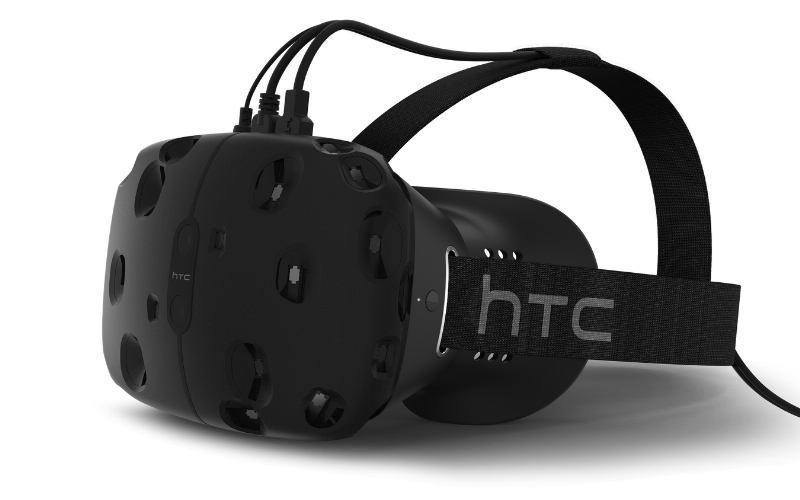
GDC 2015 saw a huge surge of interest and developer engagement with Virtual Reality (VR) devices and platforms, with huge tech and game industry players including Sony, Oculus, Valve and HTC showcasing new technology months, even years before the products hit retail shelves. Following its debut at GDC 2014, Sony again showcased its Project Morpheus VR headset, while Valve and HTC partnered to show off their new co-developed Vive Virtual reality system, which uses new tracking hardware to offer 3D positioning, allowing users to be fully immersed in a 3D virtual world.

GDC 2015 once again reflected the changing shape of the videogame industry, with a dedicated summit track for the rapidly expanding field of eSports with talks from Riot Games, Blizzard Entertainment, MIT Game Lab and many others. Tied to the theme of videogame spectatorship, GDC has also expanded its focus on Community Management, with a dedicated summit that included talks on building, supporting and maintaining an engaged and respectful online community for gamers.

The Classic Games Postmortems shined a light on the development and inspiration for some of gaming’s most groundbreaking classics, including the seminal Star Control, Yars’ Revenge, Adventure and Loom. The dedicated Advocacy Track of GDC once again shined a light on the need for civil dialogue and engagement, and how developers can deal with issues of harassment in their field. A talk titled “Game Developer Harassment: How to Get Through,” presented by Elizabeth Sampat, Zoe Quinn, Neha Nair and Donna Prior, offered first-hand accounts of online and real-world harassment, invasions of privacy, and described personal experiences coping with hostile threats. The provocative and emotionally cathartic #1Reasontobe session returned to present a powerful panel on what it means to be a woman working in the video game medium and industry, interrupted throughout by thunderous applause.

The Expo Floor in the Moscone South Hall exhibited some of the biggest names in the tech and games industry, including Sony, Google, Qualcomm, Oculus, Valve, Microsoft and nearly 350 other top companies offering product demonstrations, networking and recruitment opportunities. The Moscone North Hall, across from the Expo Floor, housed the GDC Play floor, with additional exhibitors and sponsors showcasing playable games and apps from emerging developers in a low-cost venue. These exhibitors will show off their games to key distributors, potential business partners and investors. GDC Play was inspired by the success of the Independent Games Festival Pavilion, and similarly offers a dedicated space where developers can conduct meaningful business at GDC.

Beyond the business of games, GDC once again offered entertaining spaces for attendees looking to loosen up and have fun. These spaces included the Videogame History Museum, which presented “The History of Atari,” alt.ctrl.GDC explored cool and unusual control methods in games (i.e. foot pedals, briefcases and telephone receivers). The Indie MEGABOOTH Showcase featured a curated selection of the best and brightest indie games of the past year. iam8bit Productions hosted the “Wheel of Whimsy,” a collection of four unique games played by one lucky attendee each hour –PIXLatr, Cheat Code, Videogame Bingo or Name That Chiptune, and GDC hosted “Shut Up & Sit Down: A Lovely Tabletop Lounge,” a dedicated space for participants to try out some of the most fun tabletop games of the year together.

On Wednesday evening, GDC 2015 hosted the 17th annual Independent Games Festival (IGF) Awards and the 15th annual Game Developers Choice Awards (GDCAs) on Wednesday night, March 4. Outer Wilds from Team Outer Wilds won the Seumas McNally Grand Prize award of $30,000, as well as the award for Excellence in Design.  The Game Developers Choice Awards immediately followed the IGF Awards, and Warner Bros. Interactive Entertainment’s epic open-world action title, Middle-earth: Shadow of Mordor, took home the prize for Game of the Year, alongside the night’s other big winners, Monument Valley (winner for Innovation Award, Best Visual Art and Best Handheld/Mobile Game Awards), Destiny (winner of Best Technology) and HearthStone (winner of Best Design).

“As with every year, GDC offered a glimpse into the future of gaming, but still honored the history of the industry. This year’s success is a testament to the hard work of the staff, volunteers, speakers, indies and students who maintained a fun and safe environment for everyone at the show. As the conference enters its 30th year, we reflect on the tremendous growth in the medium of video games, and we’re thankful for the friendly faces, engrossing debates and friendly discussions we’ve had along the way,” said Meggan Scavio, general manager of the Game Developers Conference. “After all the software and hardware demos, networking over drinks, and lively sessions, it’s good to meet with the people who bring life to the most popular form of entertainment in the 21st century, and to discuss how to make these amazing games even better in the years to come.”

More information on Game Developers Conference 2015, as well as the other GDC events throughout 2015 – including GDC Europe and GDC China – will be available at www.gdconf.com
Train2Game News HTC and Valve Virtual Reality

image

HTC, a pioneer in innovative, smart technologies, today announced plans to bring mass-market virtual reality (VR) one step closer.

Through a strategic partnership with Valve, HTC promises to transform the way in which consumers interact with technology and the world around them with the debut of HTC Vive. HTC Vive Developer Edition will be launched this Spring, with the consumer edition available by the end of 2015.

Vive combines Valve’s Steam VR tracking and input technologies with HTC’s world-renowned design and engineering talent, setting a new gold standard for an industry that has, until now, struggled to move beyond concept stage.

Cher Wang, Chairwoman of HTC commented, “It’s rare that a company has an opportunity to forever transform the ways in which people interact with the world and communicate with each other, but that is exactly what we plan to do with Valve.”

“We achieved this once before with our development of smartphone technology,” Peter Chou, CEO of HTC added, “And, through our partnership with Valve, we’ll now be doing this for a second time with VR technology of which consumers could only previously dream.”

Vive offers the most immersive experience of any VR package, plunging people into other worlds at a moment’s notice. HTC and Valve have introduced a Full Room Scale 360 Degree Solution with Tracked Controllers, letting you get up, walk around and explore your virtual space, inspect objects from every angle and truly interact with your surroundings. Setting a new benchmark for performance, the headset features high-quality graphics, 90-frames-per-second video and incredible audio fidelity.

HTC is also introducing new wireless VR controllers that will make you feel one with your virtual environment. The new HTC VR Controllers come in a pair and are designed to be so versatile that they will work with a wide range of VR experiences. Unlike typical game controllers, the HTC VR Controllers are simple and intuitive to use, helping everyone make the most of their experience.

Beta versions of the Vive Developer Edition have already generated rich entertainment content from some of the world’s top game developers including Vertigo Games, Bossa, Barry–Fireproof, Dovetail Games, Wemo Labs, Google, Steel Wool Games and Owlchemy.

“Our collaboration with HTC is driven by the companies’ shared desire to produce the most compelling and complete VR experience,” said Ken Birdwell of Valve. “Delivering content creators with the Vive Developer Edition is an incredibly important milestone in our efforts to achieve that goal.”

While amazing gaming experiences are a staple in the VR universe, the potential beyond gaming is limitless. HTC and Valve are committed to realizing a broader vision for VR and see a real opportunity in transforming everyday experiences. Travel, attending a game, meeting friends or even shopping will never be the same again, and the companies are working with leading content creators, including Google, HBO, Lionsgate and the National Palace Museum in Taiwan in order to make that vision a reality.

“Vive creates an exciting opportunity for all developers and content creators, to help us bring virtual reality into the mainstream with an end-to-end solution that completely redefines how we entertain ourselves, communicate with each other, learn and, eventually, how we become more productive,” Cher Wang concluded. “HTC Vive is real, it’s here and it’ll be ready to go before the start of 2016.”

Train2Game News Crytek showing VR at GDC

image

With GDC 2015 just around the corner, independent game developer and publisher Crytek has announced details of its plans for the annual conference and expo in San Francisco, which runs from March 4th – 6th this year.

Crytek will set up base at booth #1424 in the South Hall of the Moscone Center, where attendees will be able to take a closer look at a brand new VR demo powered by CRYENGINE and witness Crytek’s technology at work on Android-based systems.

On top of seeing CRYENGINE unleashed for VR and Android, visitors can discover how the engine is equipping developers on PlayStation 4, Xbox One and Linux, and learn more about CRYENGINE Sandbox – the ultimate multiplatform toolset.

Throughout the expo, Crytek’s booth will also play host to a regular program of live theatre demos hosted by CRYENGINE licensees and Crytek staff. These demos will offer audiences a detailed look at how both major studios and indie developers are using the engine to create stunning new projects irrespective of size or budget.

For more information, visit www.cryengine.com.

Train2Game News Open Source Virtual Reality gains more support

image

Razer, a world leader in connected devices and software for gamers, and Sensics, a leader in high-performance VR, today announced additional partners for the Open Source Virtual Reality (OSVR) ecosystem.

Since its award-winning announcement at CES 2015, OSVR has signed 13 new members, including Jaunt, a pioneering company in cinematic VR. Other companies are in talks with Razer and Sensics.

“The reception of OSVR exceeded even our own expectations and we’re working through numerous partner requests since CES,” says Min-Liang Tan, Razer co-founder and CEO. “Being able to bring together companies doing amazing work in all areas of virtual reality can accelerate consumer-ready devices and improve overall user experiences.”

OSVR aims to standardize the creation and enjoyment of content for virtual reality devices and software. Razer and Sensics will support the venture with the OSVR Hacker Dev Kit, a virtual reality device and open-source software that enables programming for any variety of VR technology.

For the full list of OSVR supporters and more information, go to www.osvr.com.

Train2Game News Open Platform VR Gaming

osvr-logoA group of industry leaders, alongside with Razer, a leader in connected devices and software for gamers, and Sensics, a leader in high-performance VR, today announced the Open-Source Virtual Reality (OSVR) ecosystem, a new standard in VR gaming to push the VR gaming experience forward.

Razer will support the venture with the OSVR Hacker Dev Kit, a virtual reality device and open-source software that enables programming for any variety of VR technology.

OSVR provides both hardware and software support at every level of virtual reality gaming. Starting with some of the most popular game engines, including Unity and Unreal Engine 4, OSVR also works with device plugins from hardware market leaders like Bosch and Razer and the latest from Sixense and LeapMotion. Moreover, OSVR is designed to support all VR devices, including the Oculus DK 2 and Vrvana’s Totem headset.

Engineering teams from all over the world developed a standardized interface for virtual reality gaming. The open platform will allow third parties to design and build their own apps and hardware across any operating systems, including Windows, Android and Linux.

“Gaming is moving towards the virtual reality platform and this poses huge benefits and challenges to gamers at every level,” says Min-Liang Tan, Razer co-founder and CEO. “OSVR brings game developers, gamers and hardware manufacturers together to solve those challenges and make virtual reality gaming a reality for the masses.”

Says Sensics CEO Yuval Boger: “OSVR’s open-platform approach accelerates innovation and provides consumers the freedom of choosing the best combination of hardware and software components. We are excited to partner with Razer and other industry leaders to build OSVR together.”

In line with the OSVR vision, the OSVR Hacker Dev Kit hardware design is both affordable and open source to encourage developers to take advantage of the program. To make software development even easier, the OSVR HDK includes high-quality, low-distortion optics that practically eliminate the need for color and distortion correction, thus minimizing the amount of additional development work required for OSVR compared to other VR devices. Anyone can download 3D files and create their own set of VR-Glasses. For more information on how that works, visit www.osvr.com.

“The OGA is committed to an open ecosystem for the gaming industry, and is pleased to support the efforts of the OSVR,” said Drew Johnston, president of the Open Gaming Alliance. “A free, open source VR development solution supporting multiple headset manufacturers, diverse game engines, and multiple platforms is exactly what game developers and publishers need to accelerate VR gaming adoption.”

Train2Game News Unity working closely with Oculus

unity-logoDuring Oculus Connect, Oculus and Unity Technologies announced that they have expanded their strategic partnership that will strengthen Unity’s engine support for Oculus, providing the 3.3 million strong Unity development community with cutting-edge tools to create incredible virtual reality experiences for the Oculus Rift and Oculus VR Store.

The new partnership will introduce a new dedicated Oculus add-on for both the free and Pro versions of the Unity platform that the Unity community will enjoy at no additional costs. The Oculus add-on will include stereo imaging optimizations, 3D audio support, deeper Unity editor integration, inclusion of the Oculus Rift in the Unity development and debugging workflow, integration of Oculus-specific APIs within Unity, and direct publishing to the Oculus platform.

“There are so many incredible VR projects on Unity, and this partnership will make it even easier to build more great experiences for the Oculus platform,” said Brendan Iribe, Oculus CEO. “We’re thrilled to be working with Unity to put world-class tools in the hands of developers.”

“Oculus and Unity have been working together for a long while now and share a giddy kind of excitement for the future of virtual reality,” said David Helgason, CEO, Unity Technologies.

“Oculus is an innovative technological leader that is ushering in a new era for creating fully immersive interactive experiences, not just of games, but of all kinds. We’re incredibly happy to play a role in this and see that our entire developer community, who are already producing some really incredible stuff, can bring their crazy ideas to life inside the Oculus Rift.”

Oculus and Unity’s work to make Unity a powerful development tool for virtual reality development has resulted in hundreds of Oculus projects created using Unity technology, including Lucky’s Tale, DarkNet, The Gallery: Six Elements, and Titans of Space.

Train2Game News Trinity Magnum VR peripheral

Trinity MagnumTrinityVR, a start-up company focused on building a scalable input platform for virtual reality (VR), today announced the development and manufacturing of the Trinity Magnum, a precision motion controller for head-mounted displays (HMD) such as the Oculus Rift.

The Trinity Magnum Development Kit includes an SDK (software development kit) designed specifically for VR experiences and will be available to developers, tech early adopters and enthusiasts this fall. The Magnum provides users with independent freedom to look and aim with a natural dual-grip form factor that makes them feel like they are interacting with the object in a virtual world.

Optimized to bring VR first-person experiences to the next level, the Magnum will provide an intuitive and accessible method to enable players to target and interact with enemies and move through environments. The Magnum features easily accessible inputs for improved muscle memory designed with VR in mind and includes two joysticks, four buttons and one trigger. It can be used one-handed (“mono grip”) or two-handed (“dual grip”) for gameplay versatility and diverse application development. The Magnum Development Kit is optimized specifically for VR, including support for the Oculus Rift DK1 and DK2 but will also function in PC first person shooter games.

Additional Magnum features include:

  • Accessibility – Intuitive ease of use requiring minimal practice and ergonomic form for all players
  •     Set-up and Integration – Easy set-up time and minimal collaboration
  •     Low latency, 1:1 Tracking – Complete inertial orientation tracking combined with optical positional tracking (optional) using any OpenCV compatible webcam as well as PlayStation Eye Camera and Kinect for Windows.
  •     Form Factor – Ergonomic “dual-grip” design includes rumble feedback
  •     Affordable – Under $100; significantly lower on average than competitive VR peripherals

“Old school keyboards, mice and controllers are now approaching obsolescence with the rebirth of virtual reality. We are passionate gamers and game developers who firmly believe in VR as the future of game entertainment. We wanted to enhance players’ experiences beyond existing modes of interaction through the Trinity Magnum to make first person VR experiences even more immersive and intuitive,” said Julian Volyn, co-founder and Chief of Product at TrinityVR. “Through developer support — and with the Magnum’s low price point — we expect to support the incremental growth of first-person motion-controlled content in VR.”

With Magnum’s integration tools, TrinityVR plans to work with developers by retrofitting their previous titles for the controller and adding support for popular mods. The Trinity Magnum is designed with first person shooter games in mind but its form factor lends itself to versatility in other genres. Whether players are using motion control in VR as a first-person military sniper, fire fighter, a medieval wizard swordsman, space age fighter pilot or in an epic battle of cake decoration, the Magnum provides a versatile motion control interface that’s comfortable and affordable.

The first game optimized for TrinityVR in VR is  Z0NE — a VR first person space shooting game formerly titled  Rift Wars from PixelRouter .

“The Magnum’s design — particularly the accuracy in aiming and analog sticks — has really heightened the potential for first-person, motion controlled experiences in VR, and we’re seeing that played out flawlessly in  Z0NE,” said James Andrew, founder of PixelRouter. “As a developer, we’re thrilled for fans and new players to experience  Z0NE in a completely different way. With the Magnum, the possibilities for next generation game content are now limitless.”

In an effort to bring the Magnum to developers and consumers, TrinityVR today launched a Kickstarter campaign to fund the Magnum project. For 30 days through the Kickstarter campaign, developers and consumers can help fund the development and manufacturing of the Magnum Development Kit. Once fully funded, TrinityVR plans on delivering Magnum Development Kit units later this year.

To visit the Trinity Magnum Kickstarter page: https://www.kickstarter.com/projects/316228545/1427168445

For more information on TrinityVR and the Magnum, visit: www.TrinityVR.com

Train2Game News VRTGO Conference

VRTGOThe North East of England will be host to the first major VR conference in Europe on September 11 2014 at the Baltic Centre in Gateshead.

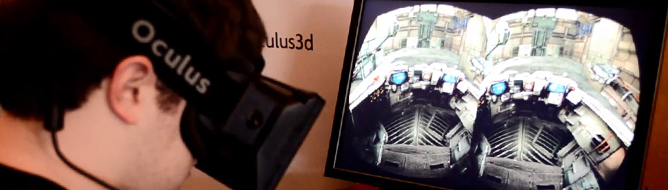
The conference will be looking at both entertainment, commerical and serious applications for Virtual Reality. In addition attendees will have the oppotunity to go hands on with both Sony’s Project Morpheus and the Oculus Rift.

The conference will look at where the future of VR is taking the entertainment and games industry and see what this cutting edge technology can do for serious applications for automotive, modelling, training, marketing etc.

There will be speakers from a number of different companies talking about the different features of VR and how it can be used to create new exciting experiences. Speakers from SCEE, CCP and Zerolight with plenty more that are yet to be announced.

An after-show party is planned which could be excellent for networking and discussing ideas with other like minded individuals.

So attend and witness the future of interactive entertainment first hand. You can sign up using the eventbrite link here.

Train2Game News Oculus Rift researched with Children

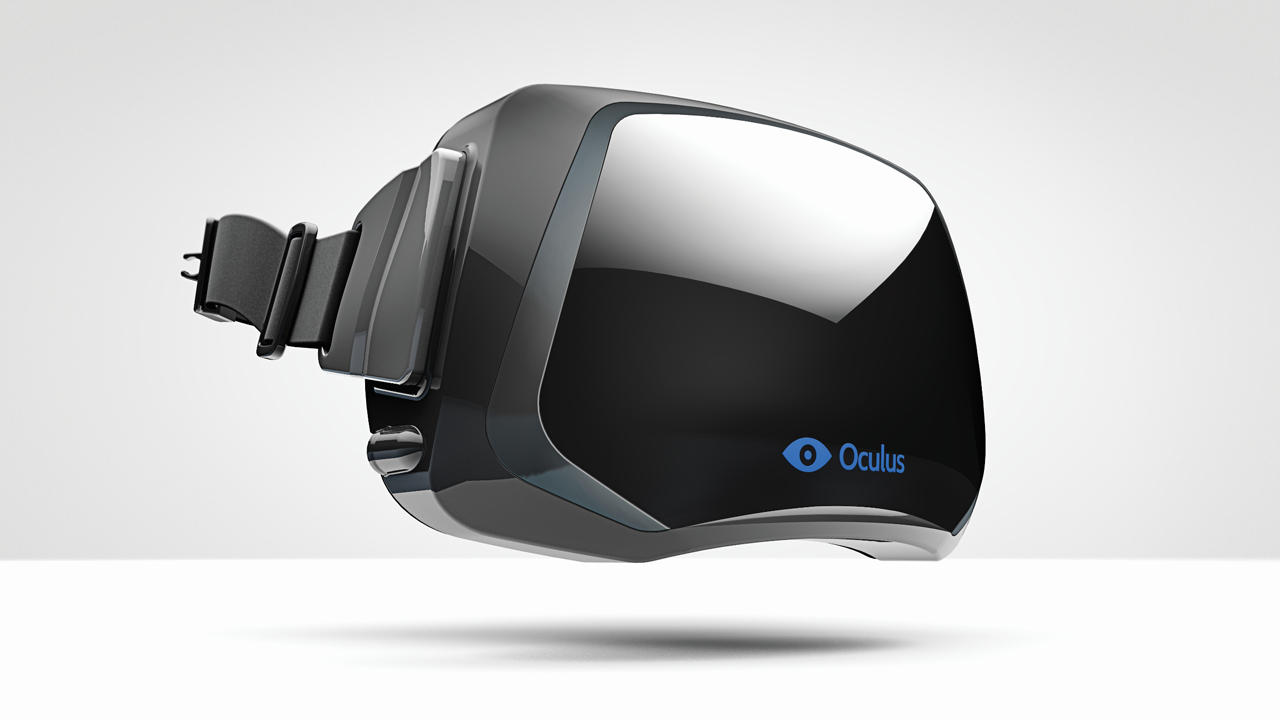
Oculus RiftGood news for Oculus VR and Facebook as new research from Dubit shows kids not only love to use Oculus Rift but they want to see it used in schools and other areas outside of gaming.

They are some of the findings from research recently carried out by youth research and digital entertainment agency, Dubit, and virtual reality consultancy KZero into children’s experiences of, and expectations for Oculus Rift – the virtual reality headset created by Oculus VR, which was acquired by Facebook for $2bn in March this year.

Dubit’s work was carried out with 12 children aged between seven and 12 years-of-age. All 12 played a variety of games using the headset (first development kit version) before working together in pairs to explain their feelings and reactions towards the technology.

Dubit’s head of research, Peter Robinson led the groups. Commenting on the children’s experiences he said: “The overarching message from our sessions is that children love using Oculus Rift and felt immersed in the games in ways they’ve never felt before! Comments along the lines of it being the best way to play games were common. Oculus VR may not see children as their core market but there’s no doubting the device’s potential popularity with kids.”

Robinson continued: “We were glad to see that none of the children in our groups felt dizzy or ill after using the headset; the only usability issues occurred when the children had to move their heads to look down and found the headset heavy. A couple of the younger children also reported fitting issues with the head-straps. With lighter headsets on the way we don’t see Oculus Rift causing many usability issues for young wearers.”

Since Facebook’s acquisition of Oculus VR there has been much discussion around the technology’s application outside of gaming. This was also covered in the research with Robinson saying: “Without prompting all children said they thought virtual reality would be great in their schools. They thought it would make lessons more interesting and allow them to take ‘virtual field tips’. But they wanted to do more than just visit new places; they wanted to go back in time and interact with people, like the Captain of the Titanic or people living in Tudor England and get their views on history. They were more interested about exploring history than changing it through gaming.

“We also found that children placed great emphasis on exploration – a trait they wanted to see in all games, not just educational experiences.”

Bearing in mind the age of the children Robinson didn’t find it surprising to hear them suggest that Minecraft would be great on Oculus Rift: ”It’s striking how much of an impact Minecraft has had on children’s gaming expectations. While most of the children wanted to see Oculus Rift used in first-person-shooter games like Call of Duty – yes, even the young ones – it was games that allowed them to explore, like Skyrim, or create their own content, Minecraft, that came up time and time again as being great fits for virtual reality. We didn’t have the heart to tell them that Notch had refused to bring his game to the system due to the Facebook acquisition – maybe now he’ll reconsider.”

During Dubit’s tests the children controlled the games using either head movements, an Xbox control pad or keyboard and mouse. Robinson said: “Xbox pads were the most familiar to the children and the preferred control method, unless the games were meant to be passive, like the rollercoaster simulator, in these cases they were happy to have no control. In most cases the children wanted even greater immersion and suggested peripherals such as steering wheels would make the experience feel even more realistic. Kinect was suggested so the game could track the player’s movements. The consensus was that an innovative device like the Oculus Rift needed an innovative method of control.

“While we understand that it won’t be children buying this technology with their pocket money it’s still interesting to see how much they think it will cost. It can also help us understand whether they see it as better or worse than current technology.
“While there was quite a swing between estimates the average price suggested by the children was £430, quite a lot higher than we expected. To gauge their ability to estimate such costs we asked them to guess the price of existing technology like games consoles, mobile devices and TVs. In all cases, except for the TV, their average estimates were within £50 of the correct price, showing they have a good idea of tech costs.”

These focus groups are the first in a number of internal research projects being carried out by Dubit on the new technology. The company also comprises of a games development studio, creating virtual worlds for the likes of BBC Worldwide, Cartoon Network and PBS KIDS. Their work in virtual reality began with their first virtual world for Oculus Rift, Fairy Forest. Over the next six months the agency is will publish further work, this time with the University of Sheffield, that looks to provide understanding of how children engage with entertainment across devices and platforms.

Train2Game News Mobile VR Headset

Oculus RiftSamsung and Oculus, the firm behind the Rift virtual reality headset, are working together on a new headset, rumours have claimed.

Engadget, citing “sources close to both companies”, reports that the deal will benefit both companies – Oculus will provide Samsung with early access to its mobile software development kit and will help develop the user interface for the headset, while Samsung will provide Oculus with early access to its upcoming high-resolution OLED screens, which the latter firm plans to integrate into its future headset models.

The screens, which provide a resolution higher than that of Full HD 1080p, will also be used in Samsung’s future smartphone models, the sources added.

The sources also teased some details of Samsung’s rumoured VR headset.

The headset is said to require a connection to a smartphone, which doubles as the display for the device.

The device also includes multiple sensors, including an accelerometer, with the processing power for motion tracking provided by the connected smartphone. The headset is said to support use with a game controller, or can be controlled instead using motion tacking and voice recognition. Physical control buttons are included on the outside of the device.

The sources added that the headset’s rear-facing camera supports for video pass-through, meaning that the user can choose to “see through the phone using the rear camera, which shows a video feed of the outside world to your eyes”.

Unlike the Oculus Rift, Samsung’s VR headset is said to be focused on media experiences rather than gaming, but some games are reportedly in development for the platform.