
Train2Game News: Hideo Kojima on why he can’t walk away from Metal Gear Solid

Metal Gear mastermind Hideo Kojima keeps coming back to it because he isn’t convinced his true vision for the games can be achieved without his involvement.

Kojima has attempted to walk away from the stealth action series since each game after Metal Gear Solid 2, but keeps returning to work on them in order to ensure his ideals are followed.

“It’s very hard to come up with the concept of a game and hand it off to other people, as of course they can’t see what’s in my head.” Kojima told CVG when asked why he keeps coming back to Metal Gear.

“They may not be able to understand the concept completely or the messages that I want to convey and that’s where things went awry in the past as people couldn’t really understand what I wanted.”

I decided at that point that if I was going to make a game based around these ideals that I would do it myself, which is why I keep getting involved.” he added.

The full interview with Hideo Kojima is here, and should make interesting reading for Train2Game students. Metal Gear Rising: Revenge is scheduled to be released next year.

There’s more from Hideo Kojima here on the Train2Game Blog.

What are your thoughts on Kojima’s reluctance to walk away from Metal Gear Solid? When you have ideas in game development, do you find you’d rather work on them yourself than delegate your vision to others?

Leave your comments here on The Train2Game Blog, or on the Train2Game forum.

Train2Game News: Epic want to shorten game development time with Unreal Engine 4

 Epic Games president Mike Capps wants their upcoming Unreal Engine 4 to make game development time much shorter.

“Our goal is to keep bringing budgets down for making games because we get more games and more game content that way. Iteration is really the key to good games.” he told GamesIndustry.biz in an extensive interview, when asked if the new engine will cut down the time needed for making games.

“You build something you think is going to be fun and you try it out and if it’s not, you just keep trying again. The faster that cycle works, the more likely you are to get something that’s really fun.” Capps continued, before discussing how Unreal Engine 3 changed things for game designers.

“For us, Kismet was a big step towards empowering level designers with Unreal Engine 3 to get them to be able to do some of that iteration themselves. They could see what it would be like to kick open the door and have two locust grunts come out from either side and play it themselves.” he said.

“The things we’re doing to empower content creators this time around, and to accelerate that iteration loop, are going to have a pretty profound impact on how fun games get quickly.” the Epic Games president added.

Train2Game recently partnered with Epic Games for Make Something Unreal Live, a contest that saw student teams building mobile games based on the Fighting Fantasy series using the Unreal Engine. There’s more on Make Something Unreal Live  on The Train2Game Blog, while you can keep up to date with the latest from Epic here.

What do you think about Epic Games aiming to make game development shorter with Unreal Engine 4?

Leave your comments here on The Train2Game Blog, or on the Train2Game forum.

Train2Game News: South Park creators on the research going into their RPG

South Park creators Matt Stone and Trey Parker have spoken of the difficulty they’ve had bringing their show accurately to a video game, revealing that a lot of research has gone into the game design of South Park: The Stick of Truth, the upcoming RPG being developed by Obsidian.

“The funny part was writing it and saying, ‘Ok, maybe you’re here, and then you’ve gotta go from Stan’s house to Kyle’s house,’ and after fifteen years of doing the show it was the first time that Matt and I were like, ‘where is Kyle’s house?'” said Parker, speaking at E3

“The only thing that really interested us was if we could make a game where it felt like you were in an episode of South Park,” added Stone, saying that despite South Park’s simple look, a lot of R&D went into it.

“To do that you had to get the look right; it had to look like an episode of South Park- which is pretty crappy. So we worked with Obsidian, and we said we wanted to do this, and you would not believe how hard, how many hours of R&D, how much work went in to really making that distinctive, crappy South Park look, but they did it.”

You can see how South Park: The Stick of Truth is coming along after all that research in the trailer below, right here on The Train2Game Blog.

There’s more news from E3 2012 here on The Train2Game Blog.

What are your thoughts on the research going into South Park: The Stick of Truth? How important is research to game development as a whole?

Leave your comments here on The Train2Game Blog, or on the Train2Game forum.

[Source: Develop Online]

Train2Game News: Quantic Dream “unhappy with everything” about Heavy Rain says David Cage

Heavy Rain Train2Game blog image

Heavy Rain may have been rather successful, even scooping three BAFTAs, but that doesn’t mean developer Quantic Dream is satisfied with what they produced. In fact, game director David Cage has admitted the team thinks they could’ve done better.

“We were pretty much unhappy with everything. We thought we could have done a better job in all areas, and have better rendering, and better visuals, and better gameplay, and better everything,”  Quantic Dream boss David Cage told Gamasutra in an extensive interview.

“This is definitely things we took into account designing the new technology, wanting to work with performance capture. And we wanted a better blend of storytelling and interactivity. We thought that sometimes in Heavy Rain there were moments where the balance wasn’t exactly right. We are working on new ways of merging this in a more natural and fluid way.” he added.

Heavy Rain did, however, sell well, something that Cage was satisfied with.

“I think it performed better than anyone’s expectations, including ours, to be honest,” he said.

As previously reported by The Train2Game Blog, Quantic Dream released their Kara tech demo earlier this year. It’s rumoured to lay the foundations for their next project, with suggestions it could be revealed at E3.

Keep reading The Train2Game Blog for more from Quantic Dream.

What are your thoughts on Cage’s comments about Heavy Rain? How important is it for developers to look at their work and examine what could be done better?

Leave your comments here on The Train2Game Blog, or on the Train2Game forum.

Train2Game News: Reminder – Blitz Games ‘meet the experts’ live stream tonight


Train2Game students can get advice from experienced industry professionals when Blitz Games host a live ‘meet the experts’ web chat at 6:30 p.m. this evening.

“Two of Blitz’s experienced programmers from our BlitzTech and R&D teams will be sharing their knowledge on a variety of topics aimed at aspiring newcomers to the industry as well as experienced coders looking to further their career in a new field or specialism.” reads the announcement on the Blitz website, suggesting that this session will be of particular interest to Train2Game game developers, who’ll be able to watch it here.

Will you be tuning in tonight?

Leave your comments here on The Train2Game Blog, or on the Train2Game forum.

Train2Game news: Gabe Newell praises advantages of fan feedback to developers

Fan feedback is one of the greatest assets available to game developers. That’s according to Valve co-founder and managing director Gabe Newell in an interview with Seven Day Cooldown.
“What I think is best for the industry is that games developers used to be very far away from their customers,” said Newell.

“Nowadays you can have a game developer talking to a customer while they’re playing a game and fix an issue, or improve the experience, and do that in a matter of hours, if not minutes.”

Game developers often use beta tests to get fan feedback ahead of full game releases.

The Valve co-founder said fan-feedback about video games provides better opportunities to make customers happy than it does feedback about films.

“Steven Spielberg is pretty much screwed. By the time he gets feedback on his movie, it’s too late. He’s done. Everything he could do to make customers happy, he’s lost that opportunity by the time he can get reactions from his customers.”

“The closer developers are to their customers, and the more the line blurs between both, that gives us a gigantic advantage over any other entertainment field.” Newell added.

Listen to the full Gabe Newell interview on the Seven Day Cooldown podcast.

Train2Game students can get some great advice from Gabe Newell about being successful by focusing on your customers here on The Train2Game Blog. You can also get a fantastic insight to life at Valve thanks to the recently published online employee handbook

Keep up to date with the latest news from Valve here on The Train2Game Blog..

What are your thoughts on Newell’s comments about fan feedback? Is getting more and more important in game development?

Leave your comments here on The Train2Game Blog, or on the Train2Game forum.

[Source: Develop]

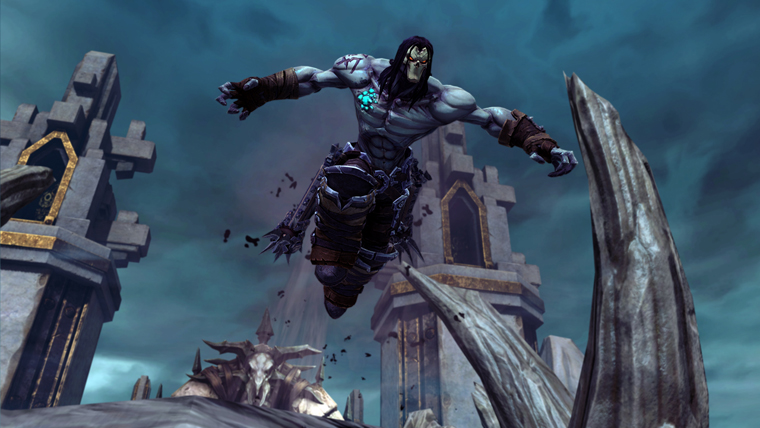
Train2Game news: Impossible for devs “to not get attached” to work even if it’s “not good” say Darksiders II team

Train2Game students will get attached to the work they produce during game development, and might find it difficult to let something go if it needs to be significantly changed or dropped all together.

That’s according to Darksiders II creative director Joe Madureira and Vigil studio general manager David Adams who were speaking in an extensive interview with Gamasutra.

“You totally get attached to stuff… It usually comes to a series of painful realizations, where you try to fix it, and it’s still not good, and you try to fix it, and it’s still not good.” said Adams on getting “precious” with assets produced during game development.”

“And on your third or fourth time trying to fix it, you’re like, “It’s just something we can’t do”. For whatever reason, we don’t have the time to commit to it, or we don’t have the right people… But yeah, I don’t think it’s possible to not get attached to stuff; we’re human beings.” he said.

Darksiders II Creative Director Joe Madureira agreed, adding that developers need to compare what they’re doing by playing other games, even if it means you drop the idea afterwards.

“You just have to be honest about it, too, and play other games, and see how you measure up. And if something’s not good, we all know it; you can see it. Even if you worked on it for two months, it doesn’t really change the fact that it’s just not very good.” he said.

Madureira argues that learning to let go of your work is something you need to do when working in the games industry.

“Sometimes you do get really attached to something, and you’re sad to see it change, but… And there’s morale hits — there’s all that stuff that you mentioned — but it’s just part of working in games. I think the longer you work in games, the more you’re just cool with it.”

“I think people that just are fresh out of school, and super excited, sometimes get crushed by how hard it actually is. And once you’ve been doing it for a while, you just expect that stuff’s going to change at any given moment, even after we’ve worked on it for a long, long time.” the Darksiders II creative director concluded.

The full, four page interview exploring development of Darksiders II is on Gamasutra.

The comments from the Darksiders II team are similar to some made by Bioshock Infinite boss Ken Levine, who as previously reported by The Train2Game Blog, said “Everybody has to get comfortable with throwing their stuff away”

What are your thoughts on the comments from the Darksiders II team? Is it possible to not get attached to your work? Have you struggled to throw a concept away?

Leave your comments here on The Train2Game Blog, or on the Train2Game forum.

Look Who doctored a visit from a Dalek at the Train2Game stand at GSL?

Train2Game at Gadget Show Live gets a surprise visit from a Dr Who Dalek

Train2Game news: Creating new IP “can be gut-wrenching” but worth it says Insomniac CEO

Train2Game students who have already developed their own games may have perhaps found building something completely from scratch a challenging affair.

However, they’re not alone, far from it, as Insomniac CEO Ted Price has told Gamasutra building new IP is challenging, but immensely satisfying.

“It’s always a difficult moment, too, when you’re trying to find out what your new IP is. That’s the challenge we’ve set for ourselves over the year,” said Price.

“We want to continue to create new IP, and going through that process at the very beginning can be gut-wrenching, because you’re making big bets on new stories, new characters and new game mechanics that may be unproven.”

The Insomniac CEO added that development team which features a mix of experience levels can help produce interesting new games.

“We have designers who have made a lot of games and know what good game mechanics are,” he said

“And when you have less-experienced members of the team who may not be as well-versed in basic mechanics, but know what the audience is playing and know where culture is today, it’s a good combination.” Price concluded.

Train2Game students can read the full interview over at Gamasutra.

Insomniac Games are the studio behind Spyro, Ratchet & Clank and Resistance. The Train2Game Blog has previously reported that they’re letting social games influence the development of their other titles.

So Train2Game, what are your thoughts on Price’s comments? Have you experienced the satisfaction of creating your own, unique, games?

Leave your comments on The Train2Game Blog, or here on The Train2Game forum.

Train2Game news: Notch: “It’s easier to be an indie game developer these days”

Train2Game forum users are familiar with the success of Minecraft, the indie game that brought huge success for its creator Markus ‘Notch’ Persson and his studio Mojang.

And while it’s unlikely that all indie titles will match the huge success of Minecraft, Notch believes it’s easier to be an indie developer now than ever before, which is potentially good news for Train2Game students!

“I think it’s easier to be an indie game developer these days because back in the day it wasn’t called being an “indie developer” but a “garage programmer.” You weren’t expected to charge for your game so you couldn’t do it. People never charged. It was just a hobby.” he told PC Gamer.

“I think it’s much easier these days, but there’s still no guarantee you’ll make a profit. If you’re doing it out of passion and just want to get some money back it’s definitely doable.” the Minecraft creator added.

Notch also discussed whether after selling almost 5 million copies of Minecraft, Mojang still count as “indie” developers.

“I don’t think [Mojang] are indie in the sense of how I used to work anymore, because we have a payroll to worry about and we need to do stuff to ensure the company lasts,” he said.

“We have other stuff which influences what we do other than trying to focus on the games. We make sure me and Jacob are only focusing on game development so the founders are still developing” Notch continued.

“But as a company, I don’t think we are indie in the sense that I used to mean it. But in the other sense of indie – as in we make games we want to play without having any external dependencies – then yeah, we’re indie.” The Minecraft creator concluded.

As previously reported by The Train2Game Blog, Notch has stepped down as lead developer of Minecraft in order to concentrate on other projects.

Keep reading The Train2Game Blog for the latest Minecraft news.

So Train2Game, do you agree that it’s easier to be an indie developer nowadays? And  what’s your definition of an “indie” studio or game?

Leave your comments here on The Train2Game Blog, or on the Train2Game forum.

[Source: PC Gamer]